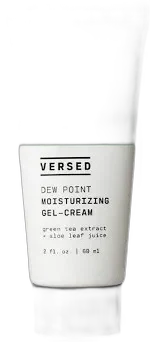
Dew Point Moisturizing Gel-Cream
Budget Gel-Cream Standout
 Verified reviewer
Pros & cons.
- +Multi-humectant stack of five different humectants for layered hydration
- +Meaningful niacinamide concentration for barrier and sebum support
- +Bouncy gel-cream texture finishes dewy without tackiness
- +Plays well under sunscreens and makeup thanks to the dimethicone phase
- +Fragrance-free and alcohol-free base
- +Airless pump tube keeps the formula stable and hygienic
- +Strong pairing with retinoids and vitamin C serums
- −Not rich enough for clinically dry or eczema-prone skin as a standalone
- −PEG-100 stearate and stearic acid make it not fungal-acne-safe
- −Small tube size runs out in about six weeks of daily use
- −Dimethicone can occasionally pill under certain mineral sunscreens
- −No additional actives beyond niacinamide for multi-tasking routines
The full review.
Most customers miss the cleverness in the name Dew Point. In meteorology, the dew point is the temperature where air moisture saturates and condenses into water droplets—why grass is wet in the morning or a cold glass fogs. A moisturizer using this name should be humectant-driven: a product that pulls water from the air and lower skin layers to hold it on the surface. Dew Point does exactly this, and for a drugstore-priced gel-cream, it mostly succeeds.
The formula’s core is a multi-weight humectant stack—glycerin, sodium hyaluronate, saccharide isomerate, sodium PCA, and trehalose—paired with a lightweight emollient phase of squalane and dimethicone and a modest amount of silicone-based slip. Humectants work by hydrogen-bonding with water molecules. Using several at once provides a hydration profile that lasts longer and reaches more stratum corneum depth than a single humectant alone. Glycerin is the workhorse; sodium hyaluronate adds surface plumping; saccharide isomerate (sometimes marketed as Pentavitin) uses a carbohydrate-based anchor to stay bound to the skin for hours; sodium PCA and trehalose add osmoprotectant activity useful in dry or stressful environments. This stack is better than a gel-cream relying on one humectant.
Niacinamide is the other meaningful active, sitting sixth on the ingredient list. This position suggests a functional concentration rather than a decorative inclusion. Niacinamide has a strong evidence base for barrier function, transepidermal water loss, sebum regulation, and mild brightening. For a moisturizer for combination and oily skin, niacinamide does the right work: it strengthens the barrier and nudges oil production down. This makes Dew Point more than a basic hydrating moisturizer. It is a mild multi-tasker, not just a silicone-and-water gel.
Texture
A pea-sized amount looks like a translucent bouncy gel. It holds its shape briefly before warming between your fingers into a slippery cream that spreads easily and absorbs in under a minute. The finish is dewy without being greasy. It works under sunscreen and makeup because the dimethicone-silicone phase creates a smooth, even surface. If you dislike gel-creams that leave a tacky film after ten minutes, Dew Point is the counter-example. It actually finishes.
Best for
Performance varies by skin type. For oily and combination skin, this is one of the most useful drugstore moisturizers available—lightweight for hot weather, hydrating enough to prevent post-cleanse tightness, and containing niacinamide to help control shine. For normal skin, it is a strong daily pick for morning and night, especially if you layer a richer balm over winter patches. For dry skin, usage matters: if you have mildly dehydrated dry skin, applying Dew Point to damp skin and layering a richer cream or occlusive on top provides humectant benefits without the weight. If you have clinically dry or eczema-prone skin, Dew Point is not rich enough alone; use a heavier ceramide cream or an occlusive-rich balm instead.
Works for
The fragrance-free base is an asset for sensitive skin. It contains no essential oils, no added fragrance, and no drying alcohols; the rest of the ingredient list is as boring as needed. For fungal-acne-prone skin, the PEG-100 stearate and stearic acid mean this is not a fungal-acne-safe product, a meaningful caveat for managing malassezia-driven flares. For standard acne, the lightweight texture and niacinamide are helpful, and the dimethicone is a well-studied non-comedogenic ingredient.
Common Praise
Dew Point is a good buy. The ingredient list competes at thirty-five dollars, but the brand sells it for about eighteen. The 1.7 fluid ounce tube size is the practical limit; with no larger option, one tube lasts roughly six to eight weeks with twice-daily use. This raises the per-ounce cost over a year, but the math still works. Against drugstore gel-cream competitors, Dew Point offers a broader, more sophisticated active profile at a comparable price. Against expensive mid-range Sephora gel-creams, it holds its own for daily use. The airless pump tube protects the niacinamide and the humectant system from oxidation, which helps shelf life.
Who Should Buy
The short version: if you have oily, combination, or mildly-dehydrated normal skin, this is one of the clearest recommendations in the Versed lineup. Skip it if you need a rich cream for severe dryness, if you avoid silicones for personal reasons, or if you manage fungal acne. Everyone else can buy this and feel good about the purchase.
Ingredient analysis.
Full INCI list
Water (Aqua/Eau), Glycerin, Propanediol, Dimethicone, Sodium Hyaluronate, Niacinamide, Butylene Glycol, Aloe Barbadensis Leaf Juice, Hydrogenated Polydecene, Stearic Acid, Glyceryl Stearate, PEG-100 Stearate, Squalane, Saccharide Isomerate, Tocopherol, Allantoin, Panthenol, Sodium PCA, Trehalose, Xanthan Gum, Carbomer, Sodium Hydroxide, Phenoxyethanol, Ethylhexylglycerin, Disodium EDTA
Skin match.
The science.
The Science
Niacinamide is a thoroughly studied multi-tasking cosmetic active, and Dew Point uses a strong enough dose to leverage that evidence. A study in the Journal of Cosmetic and Laser Therapy shows that topical niacinamide at four percent improves barrier function, reduces transepidermal water loss, and improves skin appearance after several weeks of twice-daily application. Research in the British Journal of Dermatology shows measurable reductions in hyperpigmentation and sebum output with niacinamide at similar concentrations.
The multi-humectant approach in this formula uses well-established research. Decades of documentation show Glycerin works as a humectant to increase stratum corneum water content and improve barrier recovery in multiple peer-reviewed studies. Sodium hyaluronate at cosmetic concentrations improves skin hydration and elasticity, especially at the surface layer. Saccharide isomerate, sold commercially as Pentavitin, provides sustained stratum corneum hydration for 72 hours after one application; manufacturer-supported but third-party-peer-reviewed research shows it uses a sugar-anchor binding mechanism distinct from typical humectants.
The multi-humectant hydration stack layered under a light silicone-and-squalane finish makes Dew Point feel good, while niacinamide reinforces the barrier and sebum claims. The individual ingredients are well-validated and the combination is sensible. This is not a novel mechanism, but it is a high-quality execution of the well-understood gel-cream formulation approach at this price point.
References
- The effect of 2% niacinamide on facial sebum production — Journal of Cosmetic and Laser Therapy (2006)
Dermatologist Perspective
Dermatologists generally view Versed Dew Point as a well-considered, lightweight daily moisturizer for oily, combination, normal, and mildly sensitive skin types. Board-certified dermatologists note that a gel-cream with a multi-humectant hydration system and meaningful niacinamide is a sensible daily pick, especially for patients on topical retinoids or acne treatments who want barrier support without heavy occlusion. The typical clinical caveat is that Dew Point is not rich enough to be a standalone moisturizer for clinically dry or eczema-prone skin; patients with those concerns should layer it under a heavier cream or use something thicker during winter. Dermatologists also note the fragrance-free, alcohol-free base makes this an easy sensitive-skin recommendation in the drugstore category.
Where it fits in your routine.
Apply a pea-to-nickel-sized amount to clean skin morning and night once serums or treatments absorb. Smooth evenly over the face and neck, pressing into drier areas. Use sunscreen in the morning. When using retinoids, apply the retinoid first, wait one or two minutes, then layer Dew Point on top to buffer tightness. For dry skin or winter weather, apply to slightly damp skin and follow with a thicker cream or occlusive balm. Store at room temperature away from direct sunlight.
At about $18 for 1.7 fluid ounces, Dew Point offers more ingredient depth than its cost suggests. The niacinamide concentration and multi-humectant stack compete with $30-to-$40 products. The tube size is the practical limit; no larger refill exists, so a year of daily use costs more than the headline price. However, the per-ounce cost remains fair against direct gel-cream competitors. For oily and combination skin, this is one of the best ingredient-per-dollar drugstore facial moisturizers and is easy to recommend without caveats.
Oily, combination, normal, or mildly sensitive skin types seeking a lightweight daily moisturizer with real ingredient depth at a drugstore price. It works well for users wanting niacinamide and humectant-driven hydration without an extra serum step, and for anyone on retinoids needing a soothing, non-heavy moisturizer.
People with clinically dry or eczema-prone skin who need a thicker primary moisturizer. Users managing fungal acne — PEG-100 stearate and stearic acid make this not fungal-acne-safe. Anyone who prefers silicone-free formulations.
Product details.
This bouncy, translucent gel-cream melts into skin and leaves a dewy, non-greasy finish.
Fragrance-free with no detectable scent.
1. 7 fl oz airless pump tube protects the niacinamide and humectant system from oxidation.
The first use feels like a cool, jelly-like gel. It turns into a slippery cream when it hits skin warmth and sinks in within about forty-five seconds. It leaves no tack or shine beyond the intended dewiness, and requires no adjustment period. Users typically see a visibly plumper midface within the first few days.
A 1.7 fl oz tube lasts 6-8 weeks if you apply it to your face twice daily.
12 months
All Year
The backstory.
Dew Point was one of the original 2019 Versed launches and was pitched as the brand's answer to the editorial question of what a genuinely lightweight hydrating moisturizer should look like at drugstore prices. Its name references the atmospheric concept — the temperature at which air moisture condenses — and the formulation tries to live up to that imagery with a multi-humectant system built around pulling and holding water rather than delivering heavy lipids.
About Versed
Established Brand (5–20 years)Versed launched in 2019 as a Who What Wear-backed clean-leaning mass-market brand, with Dew Point as a core moisturizer launch. The brand does not run peer-reviewed clinical trials, but its formulations work well for the price. The gel-cream category has plenty of consumer research on its main ingredients.
Common myths.
Gel-cream moisturizers are only for oily skin.
Modern gel-creams like Dew Point hydrate dehydrated skin from oily to mildly dry. They lack the richness for very dry or clinically eczema-prone skin, but dehydrated dry skin often responds well to a humectant-heavy gel-cream layered under a thicker occlusive.
If a moisturizer contains silicone, it's bad for your skin.
Dimethicone, the silicone in this formula, is a well-tolerated and thoroughly studied cosmetic ingredient. It does not clog pores for most users and creates the smooth, dewy finish that makes this gel-cream pleasant under makeup.
FAQ.
Is Versed Dew Point good for oily skin?
Yes. The gel-cream texture adds hydration without weight. The formula contains niacinamide at a meaningful concentration to help regulate sebum. It is a top drugstore gel-cream for oily and combination skin.
Can I use Versed Dew Point if I have dry skin?
Dew Point works well for mildly dehydrated dry skin, especially when applied to damp skin and layered with a thicker cream or occlusive. Clinically dry or eczema-prone skin needs a heavier standalone moisturizer.
Does Versed Dew Point contain niacinamide?
Yes. Niacinamide is the sixth ingredient on the INCI list, indicating a meaningful concentration. It supports the formula's claims for barrier support, brightening, and sebum regulation.
Is Versed Dew Point fragrance-free?
Yes. The formula has no added fragrance and is scent-free. It works for fragrance-sensitive skin.
Can I use Versed Dew Point with retinol?
Yes, this pairing works well. Apply the retinoid first, let it absorb, then layer Dew Point on top. The multi-humectant hydration system and panthenol buffer retinoid-induced tightness and flakiness.
How does Versed Dew Point compare to Neutrogena Hydro Boost?
Both are popular drugstore gel-creams in the same category. Dew Point has a broader humectant stack and includes niacinamide. Hydro Boost is cheaper and easier to find. Dew Point has more ingredient depth; Hydro Boost is more affordable.
How long does a tube of Versed Dew Point last?
A 1.7 fl oz tube lasts 6-8 weeks if applied to the face twice daily. The brand does not offer a larger refill size.
What the community says.
"Plump finish without greasiness"
"Genuinely fragrance-free"
"Pairs well with retinoids"
"Excellent value for the ingredient list"
"Not rich enough for very dry winter skin"
"Tube size runs out quickly"
"Dimethicone can pill under certain sunscreens"
"Airless pump tube can be stubborn at the end"