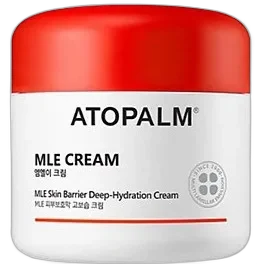
MLE Cream
Barrier Repair Pioneer
 Verified reviewer
Pros & cons.
- +Patented multi-lamellar emulsion lipid structure mimics healthy stratum corneum
- +Pseudo-ceramides, cholesterol and fatty acids in barrier-repair-supporting ratio
- +Fragrance-free and free of common irritants
- +Velvety, non-greasy texture despite rich lipid load
- +Backed by published research including 2019 UCSF collaboration
- +Excellent for eczema, atopic, and post-procedure skin
- +22-year track record of dermatologist recommendations
- −Jar packaging not ideal for barrier-cream hygiene
- −Premium price compared to drugstore ceramide creams
- −Too lipid-rich for oily or breakout-prone skin
- −Scent-free profile feels clinical to some users
- −Not vegan — contains cholesterol of mixed sourcing
The full review.
Texture
The cream feels good. This soft white cream softens on contact, spreads thin, and absorbs in under a minute. It leaves a velvety, slightly cushioned finish that is not greasy.
Scent
It has no fragrance, no essential oils, no acids, and no high-active load.
Packaging
The format has limitations. The jar packaging comes from a pre-pump K-beauty era and is less hygienic for a barrier cream. Use clean fingertips or a small spatula. A pump version would be an upgrade.
Common Praise
Compromised, stinging skin feels calmer within a few applications. This subtle effect stops the skin from reacting to things it reacted to the day before.
Best for
This cream excels at its target use: dry, sensitive, atopic, post-procedure, or compromised-barrier skin. It is engineered to integrate into the lipid matrix instead of just sitting on top.
Not ideal for
The formula is too lipid-rich for oily, breakout-prone skin. It suits skin that needs lipids, not skin with too many.
Ingredient analysis.
Full INCI list · pH 5.5
Water, Glycerin, Caprylic/Capric Triglyceride, Cetearyl Alcohol, Pentaerythrityl Stearate/Caprate/Caprylate/Adipate, Pentylene Glycol, Butyrospermum Parkii (Shea) Butter, Propanediol, Sorbitan Stearate, Stearic Acid, Phytosqualane, Polyglyceryl-5 Stearate, Simmondsia Chinensis (Jojoba) Seed Oil, Glyceryl Stearate, Palmitoyl Palmitamide MEA, N-Decanoyl Serinol, Bis-Capryloyloxypalmitamido Isopropanol, Behenic Acid, Sodium Hyaluronate, Tocopheryl Acetate, Tocopherol, Cholesterol, Carbomer, Tromethamine, Allantoin, Disodium EDTA, Phenoxyethanol, Ethylhexylglycerin, Caprylyl Glycol
Skin match.
The science.
The Science
Three pillars support the science of this cream. First, the cholesterol-ceramide-fatty acid trinity. A 1995 paper by Man, Feingold and Elias in the Journal of Clinical Investigation shows that topical application of ceramides, cholesterol and free fatty acids only speeds barrier recovery at a 3:1:1 ratio (or with cholesterol dominant). The wrong ratio slows recovery. Atopalm's MLE technology uses this principle, and a 2019 UCSF collaboration extended this research to atopic dermatitis. Second, the lipid-structure principle. Bouwstra and colleagues, including a 2003 review in the Journal of Investigative Dermatology Symposium Proceedings, established that healthy stratum corneum lipid lamellae exist in a specific liquid-crystal arrangement. Disrupting this arrangement links to atopic dermatitis and ichthyosis. The MLE in this cream mimics that arrangement; structural geometry matters as much as ingredient identity. Third, pseudo-ceramides. Palmitoyl palmitamide MEA and N-decanoyl serinol are lab-synthesized analogs that act like skin's ceramides but offer better stability and lower production costs. Dermatological research has used them since the late 1990s, and controlled studies show they provide barrier-recovery effects comparable to natural ceramides. This fragrance-free, low-irritant formula combines these three principles to differ from a generic ceramide moisturizer.
References
- Optimization of physiological lipid mixtures for barrier repair — Journal of Investigative Dermatology (1996)
- Structure of the skin barrier and its modulation by vesicular formulations — Progress in Lipid Research (2003)
Dermatologist Perspective
Dermatologists often recommend Atopalm MLE Cream for patients with atopic dermatitis, eczema, post-procedure skin, and chronic barrier compromise. Board-certified dermatologists note the lipid-structure technology is a scientifically rigorous approach in the K-beauty barrier-repair category. The fragrance-free formulation suits reactive skin that struggles with most cosmetic moisturizers. This cream works as a maintenance or recovery moisturizer rather than a treatment for active inflammatory eczema flares, where prescription topicals like corticosteroids or calcineurin inhibitors are first-line. For patients wanting a daily moisturizer that supports the stratum corneum lipid matrix without disruption, this cream is a top recommendation in the category, especially for those who dislike the heavier feel of CeraVe or the petrolatum-dominant feel of Aquaphor.
Where it fits in your routine.
Apply to clean, slightly damp skin after toner and serum, morning and night. Use a clean spatula or washed fingertips to scoop a pea-to-quarter sized amount from the jar — keeping the cream uncontaminated preserves the formula's effectiveness. Press into the skin instead of rubbing aggressively to help the MLE lipids integrate with the skin's matrix. In winter or for very dry skin, layer an occlusive balm on top as a final seal. Follow with a sunscreen in the morning.
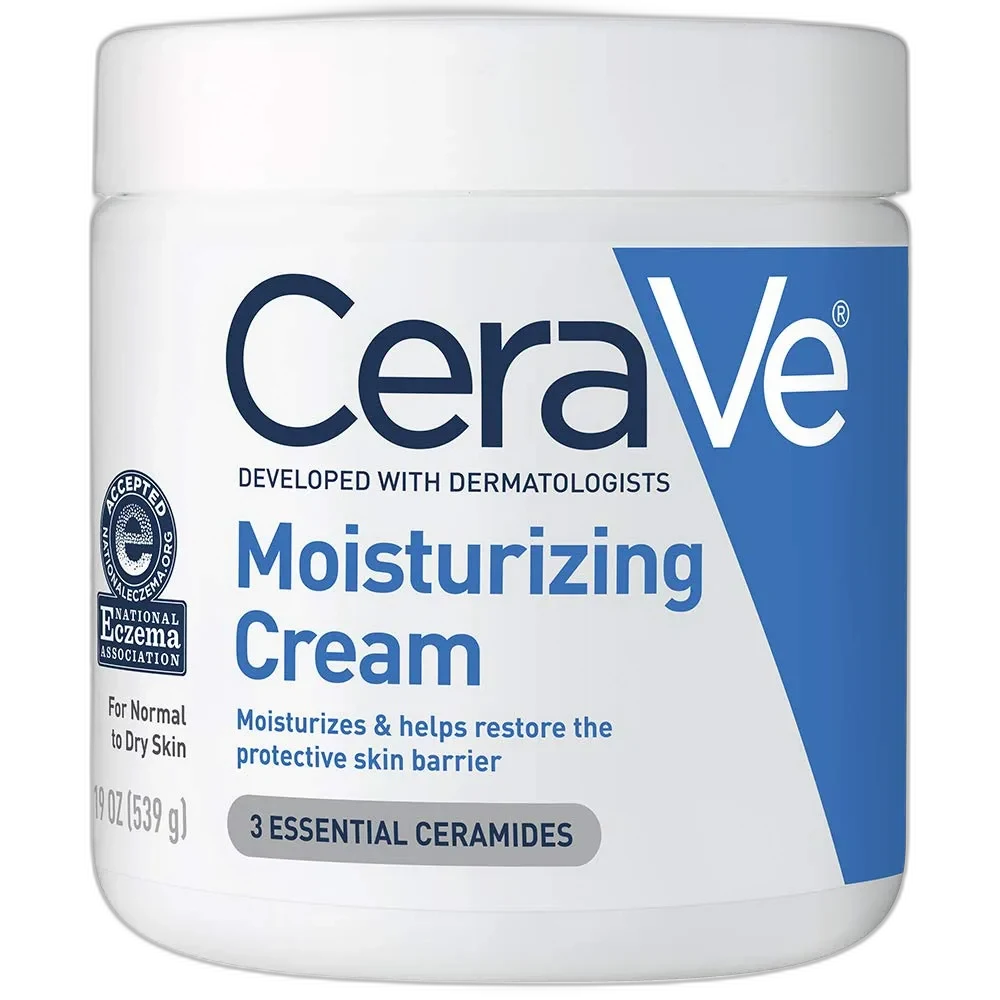
At around $32 for 100ml, Atopalm MLE Cream costs more than CeraVe ($16 for 539g) per ml. However, it matches other dermatologist-developed K-beauty creams and costs less than Korean luxury brands. The price accounts for the patented lipid technology, the fragrance-free clinical formulation, and the 22-year track record. These factors provide value, especially for users needing the MLE structure for compromised skin. Using it on the face twice daily, the 100ml jar lasts 2-3 months at a reasonable monthly cost. A 65ml version exists for travel or trial. The brand also offers a body version with better pricing for full-body use.
This works for eczema, atopic dermatitis, chronic dryness, post-procedure recovery, or a compromised skin barrier. It also fits sensitive skin that reacts to fragrance, K-beauty fans seeking science over marketing, and users wanting the MLE lipid-structure technology.
Oily and acne-prone skin types needing a lighter daily moisturizer, vegan shoppers (cholesterol sourcing is mixed), people preferring scented or sensorial products, and budget shoppers who can find a CeraVe or Cetaphil ceramide cream for half the price.
Product details.
Thick, soft white cream that melts on contact and absorbs to a velvety, slightly cushioned finish
Truly fragrance-free — a faint inherent lipid smell, no perfume
Wide-mouth jar with a sealed inner lid — looks good but is less hygienic for a barrier cream
The first application feels thick but not heavy. The skin absorbs it within a minute and the surface feels smoother almost immediately. Compromised or stinging skin settles within the first few uses. This is unusual for a moisturizer and is when users decide if the MLE technology works as the brand claims.
About 2-3 months with twice-daily face application
12 months
All Year
The backstory.
Atopalm was founded in 2003 by Dr. Raymond Park, a Korean lipid scientist whose research focused on the structural biology of the stratum corneum's intercellular lipid matrix. The MLE technology — Multi-Lamellar Emulsion — came directly from his lab, and the brand was built specifically to commercialize barrier creams that physically rebuilt the geometry of damaged skin. In 2019 Atopalm collaborated with researchers at UCSF on a study examining the optimal cholesterol-to-ceramide-to-fatty-acid ratio for atopic dermatitis recovery, giving the technology a level of clinical pedigree most K-beauty brands can only aspire to.
About Atopalm
Legacy Brand (20+ years)Atopalm was developed in 2003 by Korean lipid scientist Dr. Raymond Park, who later commercialized his Multi-Lamellar Emulsion (MLE) technology — a patented liquid-crystal lipid structure that mimics the skin's own intercellular matrix. The technology has been the subject of clinical research, including a 2019 collaboration with UCSF on the cholesterol-fatty-acid-ceramide ratio for atopic skin, giving the brand a stronger scientific footing than most K-beauty barrier creams.
Common myths.
All ceramide creams are basically the same.
Two creams can list identical ceramides but behave differently based on their lipid phase structure. Atopalm's MLE technology arranges lipids into a liquid-crystal multi-lamellar structure that mimics the skin's natural matrix — a structural choice, not just an ingredient choice.
Eczema creams have to feel medicinal and greasy to work.
MLE Cream is fragrance-free and clinical, but absorbs to a velvety, non-greasy finish. The barrier-repair mechanism works by integrating missing lipids back into the matrix, so the skin does not need an occlusive layer on top.
FAQ.
What does MLE stand for?
Multi-Lamellar Emulsion is Atopalm's patented technology. It arranges lipids — pseudo-ceramides, fatty acids and cholesterol — into a liquid-crystal structure. This structure mimics the bilayer geometry of healthy stratum corneum. The term describes the formulation architecture, not a single ingredient.
Is this safe for eczema and atopic dermatitis?
Yes — it targets atopic and barrier-compromised skin. The fragrance-free formula, pseudo-ceramide system, and clinical research make it a top dermatologist-recommended K-beauty moisturizer for eczema. It does not treat active flares (use a prescribed topical instead), but it works well as a maintenance moisturizer.
Can I use it under makeup?
Yes. The texture absorbs to a velvety finish without tackiness, so foundation and powder sit cleanly on top. Wait 60-90 seconds for full absorption before applying makeup.
How is this different from CeraVe Moisturizing Cream?
Both are ceramide-based barrier creams, but they differ in ingredient sourcing and lipid architecture. CeraVe uses three real ceramides in an MVE delivery system; Atopalm uses pseudo-ceramides in a multi-lamellar emulsion structure. Atopalm feels lighter and more cosmetically elegant, while CeraVe costs less and has more clinical NEA backing in the US market.
Is it safe to use during pregnancy?
Yes — the formula contains no ingredients flagged for pregnancy avoidance. Its fragrance-free, retinoid-free, and salicylic-acid-free profile makes it safe for pregnant and nursing skin.
Does it work on the body too?
It can, but the brand makes a dedicated body version with a better price for larger applications. The face cream is concentrated for facial use, where the per-ml cost makes sense.
Why is the jar packaging?
Jar packaging reflects the brand's heritage from before pump packaging became common in K-beauty. This is not the most hygienic choice for a barrier cream — use a clean spatula or freshly washed fingertips. A pump version would upgrade the next reformulation.
What the community says.
"calms eczema flares without irritation"
"fragrance-free and well-tolerated on reactive skin"
"rich but absorbs without greasiness"
"noticeable barrier improvement within a week"
"jar packaging not ideal for hygiene"
"premium price for the size"
"scent-free can feel clinical for users who like aromatic skincare"
Featured in.
People also looked at.