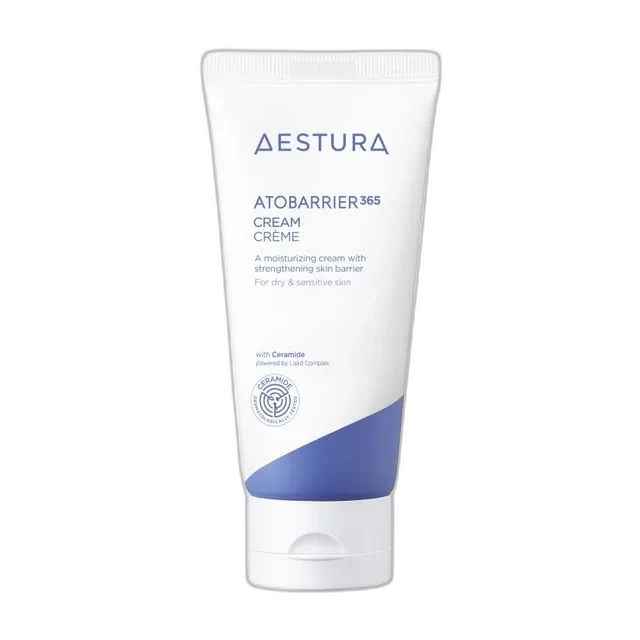
Atobarrier 365 Cream
K-Beauty Barrier Repair Staple
 Verified reviewer
Pros & cons.
- +MLE structure organizes ceramides, cholesterol and fatty acids into a physiologic barrier
- +Fragrance-free and gentle enough for eczema flares
- +Non-greasy finish layers cleanly under sunscreen
- +Madecassoside and panthenol add meaningful soothing
- +Rich without feeling suffocating
- +Backed by two decades of Korean clinical use
- +Improves tolerance to actives over time
- −Jar packaging is less hygienic than a tube
- −Contains silicones which some users prefer to avoid
- −Not fungal-acne safe due to free fatty acids
- −International price is noticeably higher than Korean retail
The full review.
Most ceramide creams use ceramides like seasoning—a small amount added to a basic moisturizer to make the INCI list look better. Aestura’s Atobarrier 365 Cream uses ceramides as structural beams. This difference matters, and its origin explains why.
Aestura launched in 2005 as a dermocosmetic project within Amorepacific’s pharmaceutical division. It targeted patients Korean dermatologists see weekly: atopic-prone children, adults with rosacea and eczema, and people with barriers damaged by over-cleansing and over-exfoliating. The Atobarrier team did not aim to make a spa cream; they aimed to reassemble skin.
The line uses MLE — Multi-Lamellar Emulsion. Healthy skin organizes lipids between stratum corneum cells in a specific lamellar pattern: ceramides, cholesterol, and free fatty acids in ordered layers. When this structure fails, water leaves and irritants enter. MLE is a formulation technique that pre-arranges these lipids into that lamellar organization before they touch your face. You apply ready-made barrier architecture, not just ceramides.
The 365 reformulation, released in 2020, kept the lipid complex that made the original Atobarrier a pharmacy staple and improved the sensory profile. The cream is thick but whipped—dense, yet it does not sit on top of skin. It sinks in within minutes and leaves a satin, non-greasy finish that layers cleanly under sunscreen.
Other ingredients support the formula. Madecassoside, a purified calming active from Centella asiatica, sits alongside whole Centella extract. Panthenol adds humectant support and barrier benefits. Sodium hyaluronate and hydroxyethyl urea pull water into the upper layers for the lipid base to seal in. Bisabolol and allantoin add soothing effects. The fragrance-free preservation system avoids common sensitizers, making this a rich cream safe for use during an eczema flare.
The effect on compromised skin is distinct. Within days, barrier-related tightness lets up. Redness responds within one to two weeks. By the end of the first month, most users report less reactive skin—better tolerance for actives, faster recovery from retinoid nights, and better moisture retention through the afternoon. This is slow, structural improvement rather than TikTok-style drama.
The limitations are clear. The silicone-light base may not suit those who avoid silicones. The jar format is less hygienic than a tube or pump. While the Korean price is reasonable, international markups in Europe and North America make it more expensive, comparable to Dr. Jart Ceramidin or EltaMD products. It is a steal at Korean pharmacy pricing, but a considered purchase internationally.
There is a fungal-acne caveat. The free fatty acid complex—oleic, linoleic, stearic, palmitic—is structurally useful but may cause issues for Malassezia-prone users. If rich creams cause small, uniform bumps, avoid this cream. That is a matter of chemistry, not Aestura’s fault.
For most, this is a quietly competent Korean moisturizer. It does not shout. It was built for hospital supply cabinets and still acts like it.
### Formula
Ingredient analysis.
Full INCI list · pH 5.5
Water, Glycerin, Butylene Glycol, Caprylic/Capric Triglyceride, Cetearyl Olivate, Sorbitan Olivate, Glyceryl Stearate, Cetearyl Alcohol, 1,2-Hexanediol, Sorbitan Stearate, Hydrogenated Poly(C6-14 Olefin), Dimethicone, Panthenol, Madecassoside, Centella Asiatica Extract, Hydrogenated Lecithin, Ceramide NP, Cholesterol, Phytosphingosine, Stearic Acid, Oleic Acid, Linoleic Acid, Palmitic Acid, Hydroxyethyl Urea, Sodium Hyaluronate, Allantoin, Bisabolol, Tocopherol, Xanthan Gum, Carbomer, Arginine, Ethylhexylglycerin, Disodium EDTA
Skin match.
The science.
The Science
This cream uses the physiologic-lipid model of barrier repair, a concept built by dermatology research since the 1990s. Studies led by Peter Elias and colleagues show ceramides alone do not restore barrier function in damaged skin. They must combine ceramides with cholesterol and free fatty acids in specific ratios; in some studies, the ratio matters more than the total amount. Applying that three-lipid combination to barrier-disrupted skin normalizes transepidermal water loss faster than any single lipid class alone. The MLE delivery Aestura uses arranges those lipids into the lamellar pattern of healthy stratum corneum before application. The brand's own publications and several Korean academic studies suggest this accelerates incorporation into the existing lipid matrix. Madecassoside, the purified active from Centella asiatica, has peer-reviewed evidence for reducing inflammatory markers in reactive and wounded skin. A 2008 study in the Journal of Ethnopharmacology documented its ability to modulate TGF-beta and collagen signaling. Panthenol works as both a humectant and a barrier-supporting ingredient; clinical trials show it improves transepidermal water loss and stratum corneum hydration. This specific formula relies on its architecture: a pre-organized lipid complex and a layered soothing strategy in a fragrance-free base designed for use during flares, not between them.
Dermatologist Perspective
Dermatologists routinely recommend ceramide-cholesterol-fatty acid creams for patients with atopic dermatitis, post-procedure skin, and chronic barrier dysfunction. Aestura's Atobarrier line is frequently cited in Korean clinical practice for this purpose. Board-certified dermatologists note that the physiologic lipid ratio approach—not ceramides in isolation—allows a moisturizer to restore barrier function instead of just occluding damaged skin. This cream is commonly suggested as a supportive moisturizer during and after topical steroid tapers, as maintenance therapy between eczema flares, and as a buffer for patients starting retinoids. It is generally safe for children and during pregnancy, though severe barrier disease requires management alongside prescription care.
Where it fits in your routine.
Apply to clean, damp skin after serums and treatments. Use a pea-to-dime-sized amount on the face and press it in with warm palms instead of rubbing. For very dry or compromised skin, layer a hydrating toner or essence underneath. In winter, press a facial oil on top to lock moisture in. Use twice daily on the face, neck, chest, and any dry or eczema-prone body areas. For an actively flaring patch, apply a thicker layer as a short-contact 'mask' for 20 minutes before bed.
At Korean pharmacy pricing (~$25-30), this offers outstanding value. You pay drugstore prices for a cream with hospital-grade formulation heritage and a structured lipid system. At international retail (~$38-45), the math changes. You still get sophisticated formulation and a two-decade track record, which beats most newer K-beauty barrier creams at similar prices. A larger 1L pump version exists for multi-body use and offers better per-gram value for face and body.
Choose this if you have dry, sensitive, eczema-prone, or barrier-damaged skin and want a fragrance-free cream with sophisticated formulation. It also works for people ramping up retinoids, recovering from a chemical peel, or managing winter skin that tight drugstore creams fail to fix.
Oily, acne-prone users who break out from thick creams, fungal-acne sufferers who react to free fatty acids, and anyone who avoids silicone-based emollients on principle. Combination skin may use the Atobarrier 365 Lotion for daytime and save this for night.
Product details.
Rich but whipped cream that melts in without feeling heavy
Unscented
White plastic jar with inner lid, spatula included in some markets
Skin feels softer and less tight after the first application. Severely compromised skin may sting mildly for the first day or two. This is typical for barrier-repair creams on raw skin and subsides quickly. No purging occurs.
3-4 months with twice-daily facial application
12 months
All Year
The backstory.
Aestura grew out of Amorepacific's pharmaceutical division in 2005 to address the needs of atopic-dermatitis patients in Korean hospital settings. The original Atobarrier Cream was one of the first Korean dermocosmetics to use a lamellar-lipid approach. The 365 reformulation in 2020 updated the preservation and sensory profile while keeping the lipid complex that gave the line its clinical reputation.
About Aestura
Established Brand (5–20 years)Aestura is a dermocosmetic brand developed under Amorepacific's pharmaceutical division and has been sold in Korean hospitals and pharmacies since 2005. Its Atobarrier line was developed with Ceramide-3 (now standardized as Ceramide NP) and has been used in clinical settings for managing dry, atopic-prone skin.
Common myths.
All ceramide creams work the same way.
Ceramides rebuild the barrier only when paired with cholesterol and free fatty acids in the correct ratio. This cream's MLE structure distinguishes it from creams that just add ceramide to the INCI list.
FAQ.
Can I use this under sunscreen?
Yes. The silicone-light base in this cream absorbs without tackiness and layers cleanly under Korean and Western sunscreens. Users report no pilling or flashback.
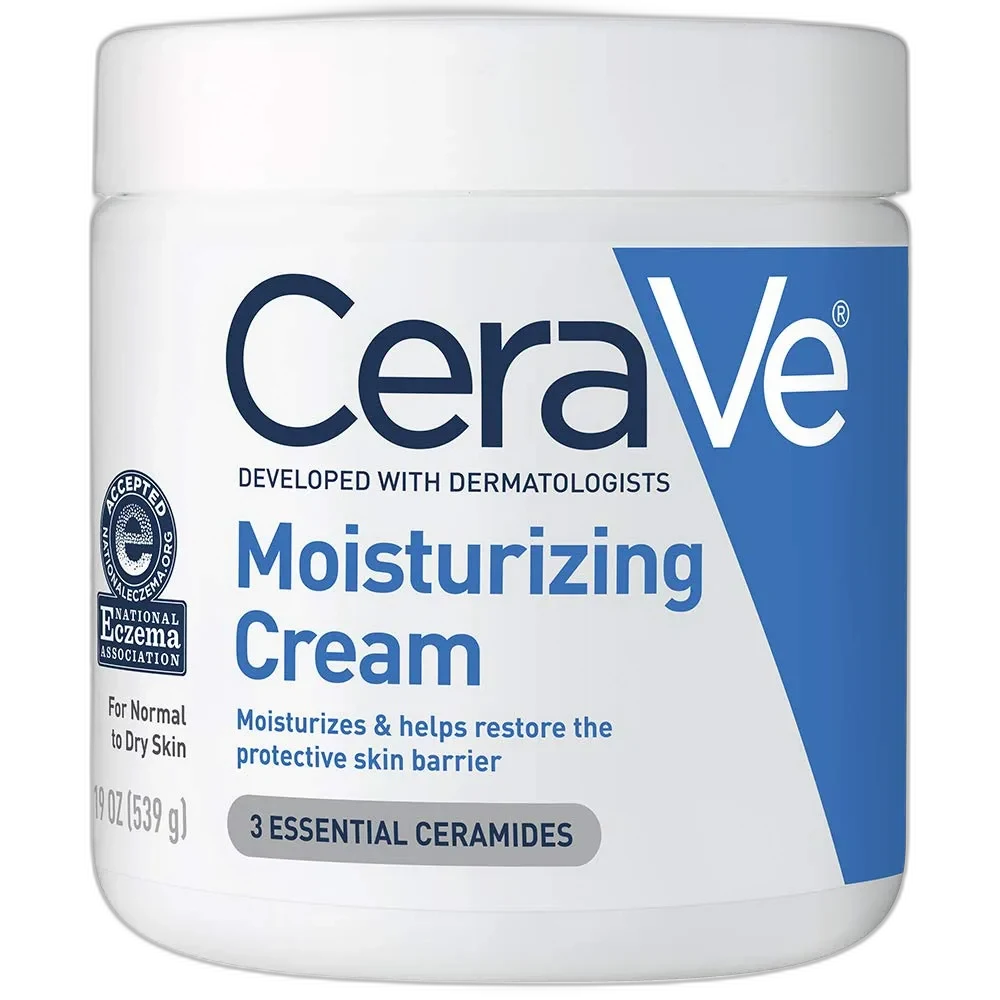
How is this different from CeraVe Moisturizing Cream?
Both use ceramides, but Aestura uses a structured MLE (Multi-Lamellar Emulsion) delivery to organize lipids into the lamellar pattern of healthy stratum corneum. Aestura also includes madecassoside and panthenol to soothe skin, which CeraVe's cream lacks.
Is it fungal-acne safe?
Not entirely. The formula has small amounts of oleic and linoleic acids in the free fatty acid barrier complex. These can feed Malassezia in users prone to fungal-acne.
Is it pregnancy-safe?
Yes. The formula has no retinoids, salicylic acid, or hydroquinone. Ceramides, panthenol, and madecassoside are safe during pregnancy and breastfeeding.
Does this replace a prescription eczema cream?
No. This barrier-repair moisturizer works as a layer over prescription topicals or for maintenance between flares. A dermatologist must manage severe eczema.
What the community says.
"Calms redness quickly"
"Doesn't pill under sunscreen"
"Non-greasy despite richness"
"Helps eczema flare-ups"
"Fragrance-free"
"Contains silicones which some users avoid"
"Jar packaging"
"Price higher outside Korea"