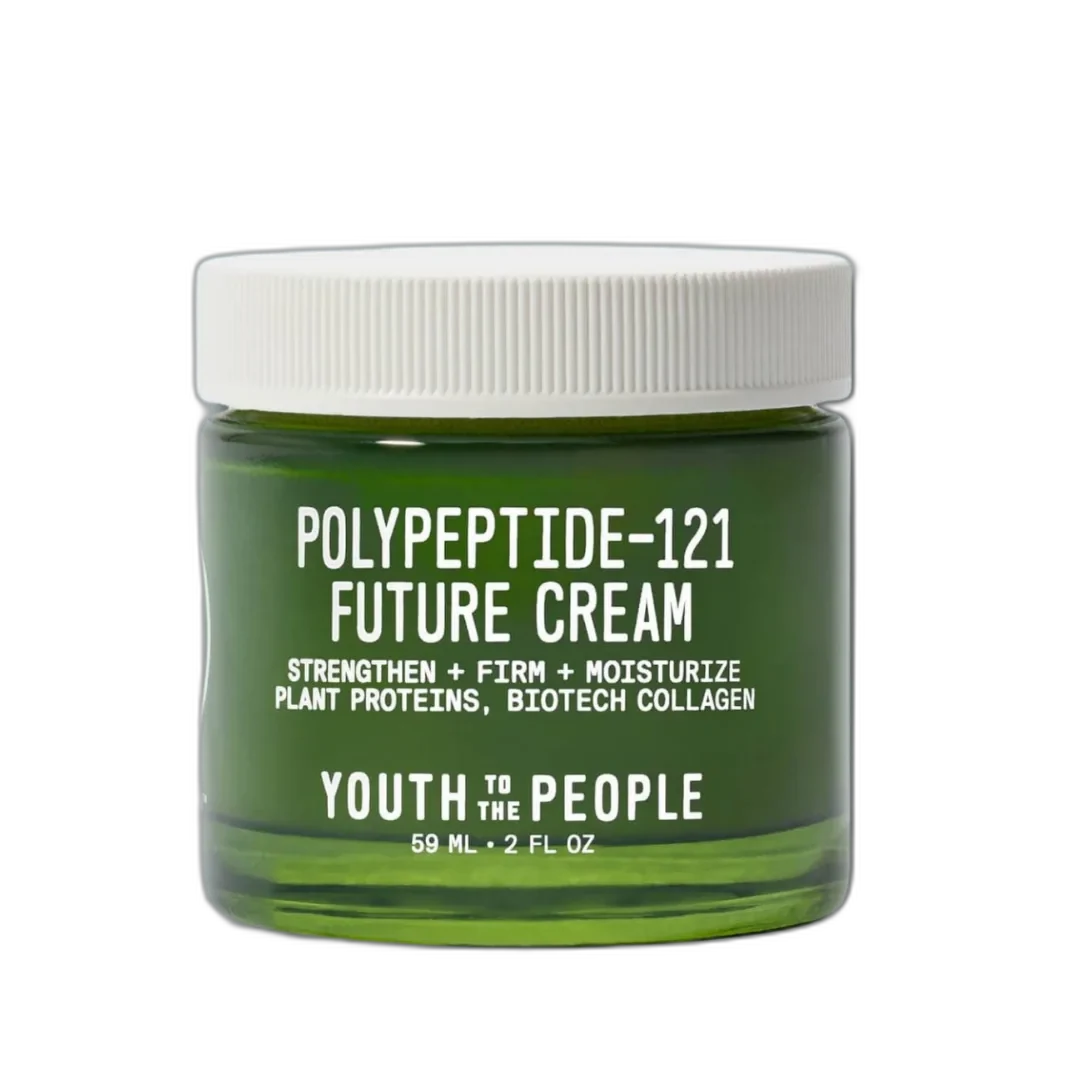
Polypeptide-121 Future Cream
Vegan Collagen Pioneer
 Verified reviewer
Pros & cons.
- +Innovative vegan collagen peptide with 180+ amino acids is genuinely novel
- +Multi-peptide system targets firmness through three distinct pathways
- +Essential ceramides and phytosphingosine provide real barrier repair
- +Rich yet surprisingly absorbent texture with a natural dewy finish
- +Completely fragrance-free with no essential oils or synthetic scent
- +Niacinamide adds brightening, barrier support, and anti-inflammatory benefits
- +Vegan, cruelty-free, and Leaping Bunny certified
- −Sixty-eight dollars for two ounces is a premium price for a moisturizer
- −Headline ingredient SH-Polypeptide-121 has limited independent research
- −Too rich for oily or acne-prone skin types
- −Jar packaging exposes product to air and bacteria with each use
- −Contains benzyl alcohol, which some sensitive users prefer to avoid
The full review.
Cosmetic peptide marketing is often misleading. The industry sells them as collagen-builders and wrinkle-fighters, but most cosmetic peptides are just chains of three to seven amino acids—molecular fragments that signal skin cells. They are useful, but calling these peptides collagen is like calling a single brick a building.
Youth to the People’s Polypeptide-121 Future Cream offers a different approach. SH-Polypeptide-121 is a bio-engineered peptide made of over 180 amino acids via fermentation rather than animal tissue extraction. It more closely mimics the structural complexity of human collagen. It is not collagen, and it cannot integrate into your collagen network directly. However, it is a larger, more architecturally complex molecule than the tripeptides and hexapeptides in most anti-aging products. This complexity may allow for more nuanced signaling to the fibroblasts that synthesize collagen.
The use of “may” is intentional. SH-Polypeptide-121 is an innovative ingredient with promising in-vitro data, but it lacks the decades of independent, peer-reviewed research backing established peptides like Matrixyl or Argireline. Youth to the People is making a forward-looking bet, and its success depends on whether you value novelty or a proven track record.
The rest of the formula provides stability. Three acetyl tetrapeptides—9, 11, and 2—target different mechanisms of skin aging. Acetyl tetrapeptide-9 promotes lumican synthesis, a proteoglycan that organizes collagen fibers into the tight networks found in young skin. Acetyl tetrapeptide-11 supports syndecan-1 expression to maintain skin density and thickness. Acetyl tetrapeptide-2 mimics thymopoietin to support skin regeneration. Together, they offer a multi-pathway approach to firmness that a single peptide cannot match. Unlike the headline polypeptide, these tetrapeptides have more established research.
The ceramide component adds practical utility. Ceramide AP, Ceramide NP, and phytosphingosine rebuild the skin barrier’s lipid matrix—the mortar between the bricks of your stratum corneum that retains moisture and blocks irritants. This is a functional necessity for aging skin, where ceramide production declines. Peptides can signal collagen production, but the skin cannot retain hydration if the barrier is compromised.
Niacinamide adds versatility by supporting barrier function, brightening tone, reducing inflammation, and stimulating ceramide production. It is a versatile ingredient, and its presence here is expected.
The texture is pleasant. The cream has a whipped, cushiony consistency that feels thick without the heaviness of many moisturizers. It melts into the skin when pressed—not rubbed, which is the correct technique for treatment—and leaves a dewy, natural sheen instead of a greasy film. The cream absorbs well for its weight and works under sunscreen, though oily skin types may disagree.
This is not a moisturizer for everyone. The emollient base of dicaprylyl carbonate, trimethylolpropane tricaprylate/tricaprate, and triheptanoin nourishes dry and normal skin but may overwhelm oily complexions. If you get oily by midday, this cream will not help. The cetearyl alcohol adds body and occlusion; those with comedone-prone skin should patch test.
The hydrolyzed plant protein complex—rice, pea, and flaxseed—provides amino acids to supplement peptide signaling. These do not rebuild collagen alone, but they provide the raw materials fibroblasts need to produce structural proteins after receiving peptide instructions. This is a logical choice, even if evidence for topical plant proteins is limited.
The fragrance-free formulation is a benefit. Many premium anti-aging creams use essential oils or botanical fragrances, but a fragrance-free product reduces the risk of sensitization during long-term, twice-daily use. Ginger root extract and bisabolol provide soothing anti-inflammatory benefits without scent.
Limitations: At sixty-eight dollars for two ounces, this is a significant investment, and the headline ingredient has less independent validation than cheaper peptide options. The jar packaging exposes the product to air and bacteria with every use; a pump would better protect the peptide and antioxidant ingredients. Finally, while marketed for all skin types, the rich texture is not appropriate for oily or acne-prone skin.
For dry, normal, and combination skin types wanting a peptide moisturizer that goes beyond the minimum—combining a vegan collagen peptide with tetrapeptides, ceramides, and niacinamide—this cream shows high formulation thoughtfulness. Whether SH-Polypeptide-121 is a breakthrough or just well-marketed remains to be seen, but the surrounding formula is good. You are paying for both the proven and the promising.
Formula
PM routine
Ingredient analysis.
Full INCI list
Water/Aqua/Eau, Dicaprylyl Carbonate, Trimethylolpropane Tricaprylate/Tricaprate, Propanediol, Tridecyl Trimellitate, Cetearyl Alcohol, Triheptanoin, Hydrolyzed Hyaluronic Acid, SH-Polypeptide-121, Polyglyceryl-3 Methylglucose Distearate, Panthenol, Niacinamide, Proline, Tocopheryl Acetate, Aloe Barbadensis Leaf Juice, Hydrolyzed Cannabis Sativa Seed Extract, Hydrolyzed Rice Protein, Hydrolyzed Pea Protein, Salvia Hispanica (Chia) Seed Extract, Acetyl Tetrapeptide-11, Acetyl Tetrapeptide-9, Acetyl Tetrapeptide-2, Hibiscus Sabdariffa Fruit Extract, Ammonium Acryloyldimethyltaurate/Beheneth-25 Methacrylate Crosspolymer, Hydrolyzed Linseed Seed, Castor Oil/IPDI Copolymer, Ceramide AP, Ceramide NP, Cetearyl Glucoside, Glycerin, Hydrolyzed Sodium Hyaluronate, Coco-Caprylate/Caprate, Benzyl Alcohol, Zingiber Officinale (Ginger) Root Extract, Bisabolol, Caprylyl Glycol, Carbomer, Dipropylene Glycol, Erythritol, Ethylhexylglycerin, Glucose, 1,2-Hexanediol, Phytosphingosine, Potassium Sorbate, Sodium Benzoate, Trisodium Ethylenediamine Disuccinate
Skin match.
The science.
The Science
This cream uses both established and emerging peptide science. The acetyl tetrapeptide trio has more documented evidence than the headline ingredient. Acetyl tetrapeptide-9 stimulates lumican synthesis—a small leucine-rich proteoglycan that organizes collagen type I fibers into compact, mechanically strong fibrils. Research in Experimental Dermatology shows that lumican-deficient skin has disorganized collagen architecture and visible laxity.
Acetyl tetrapeptide-11 targets syndecan-1, a transmembrane heparan sulfate proteoglycan that maintains epidermal thickness and integrity. In-vitro studies show this peptide supports keratinocyte differentiation and skin structural density, which declines with chronological aging.
The ceramide component uses decades of barrier science. A foundational study in the Journal of Investigative Dermatology (Imokawa et al., 1991) established that ceramide depletion correlates with impaired barrier function and that topical ceramide application restores barrier integrity. Including ceramide AP, ceramide NP, and phytosphingosine (a ceramide precursor) follows the multi-ceramide approach used in clinical settings.
SH-Polypeptide-121, the headline ingredient, is a recombinant collagen peptide from microbial fermentation. The molecule is complex, with over 180 amino acids compared to the 3-7 typical of cosmetic peptides, but published independent clinical data on SH-Polypeptide-121 is limited. The theory is sound: a larger, more collagen-like peptide may signal dermal fibroblasts more comprehensively than smaller fragments. However, the evidence base is still building; the claims are promising, not proven.
References
- Ceramide function in the epidermis — Journal of Investigative Dermatology (1991)
Dermatologist Perspective
Dermatologists favor multi-peptide formulations for anti-aging because combining signal peptides, carrier peptides, and structural peptides addresses multiple aging mechanisms at once. Board-certified dermatologists note that while SH-Polypeptide-121 is a novel, structurally interesting ingredient, its clinical evidence base is still developing, so patients should manage expectations. Dermatologists consider the ceramide and niacinamide components unambiguously beneficial, especially for aging skin with declining barrier function. Dermatologists typically recommend peptide moisturizers within a comprehensive anti-aging routine that includes retinoids and sunscreen for maximum benefit.
Where it fits in your routine.
Apply a nickel-sized amount to clean skin as the last step before sunscreen in the AM. Press gently into the skin instead of rubbing to help peptides absorb into the skin's surface. Layer it over serums (retinol, vitamin C, hyaluronic acid). Use twice daily for best results. The thick texture works best on normal-to-dry skin; oily skin types may prefer PM-only use.
At $68 for 2 fl oz, this cream competes with luxury anti-aging moisturizers and maintains clean beauty positioning. Use it twice daily on face and neck to make one jar last 2-3 months ($23-34/month). The multi-peptide, multi-ceramide formula is sophisticated; the vegan collagen peptide and tetrapeptide trio shows more formulation ambition than most clean beauty brands. A mini size is available for trial. However, limited independent research on the headline ingredient means you pay partially for innovation potential rather than proven outcomes. The price is justifiable for consumers who value clean, vegan formulations and cutting-edge peptide technology. For maximum proven anti-aging per dollar, established retinoid products offer more value.
Dry, normal, and combination skin types want a premium anti-aging moisturizer with peptide technology and vegan credentials. This fragrance-free, soothing formula works for those in their 30s and beyond to address fine lines, early firmness loss, and barrier depletion.
Oily or acne-prone skin types find thick creams too heavy and pore-clogging. This is also not the best choice for tight budgets — the sixty-eight-dollar price tag requires commitment, and cheaper peptide options have more established ingredient track records.
Product details.
Fragrance-free — contains no added fragrances or essential oils. It is scentless, with only a faint base note from the raw ingredients.
Recyclable glass jar with a screw-off lid. Minimalist YTTP branding. The jar format requires finger contact with the product — a hygiene concern for some, though the preservative system is robust. Finish dewysatinglowy What to Expect on First Use The cream feels thick and hydrating on first use without the heavy, suffocating feel of other thick moisturizers. Skin looks plump and has a dewy, healthy sheen immediately. It causes no stinging, tingling, or irritation. Peptide and firming benefits develop over weeks of consistent use — structural changes do not happen on day one. How Long It Lasts 2-3 months with twice-daily face and neck application Period After Opening 12 months
All Year Certifications Leaping Bunny CertifiedVegan
The backstory.
Youth to the People developed this cream around SH-Polypeptide-121, a fermentation-derived vegan collagen peptide that represents the brand's most technically ambitious ingredient to date. Launched in 2022, it marked YTTP's move into serious anti-aging territory — competing with established peptide brands while maintaining their clean, vegan, cruelty-free positioning.
About Youth to the People
Established Brand (5–20 years)Greg Gonzalez and Joe Cloyes founded Youth to the People in 2015, using their family's 40-year professional skincare legacy. The brand makes vegan, cruelty-free formulations with superfood ingredients, but uses ingredient-transparency positioning instead of independent clinical research.
Common myths.
Vegan collagen peptides work like applying actual collagen to the skin.
Neither animal-derived nor vegan collagen penetrates the skin or integrates into your collagen network because the molecules are too large. SH-Polypeptide-121 works by signaling skin cells to increase their own collagen production instead of replacing collagen directly. The 'vegan collagen' label describes the peptide's origin and structure, not its mechanism.
This cream is too thick for daytime use or for anyone under 40.
The texture is thick, but it absorbs well enough for daytime use under sunscreen, especially for normal-to-dry skin types. Peptide-based barrier support benefits skin at any age; improved collagen production and barrier integrity work even without visible wrinkles.
FAQ.
What is SH-Polypeptide-121 and how is it different from regular peptides?
SH-Polypeptide-121 is a bio-engineered vegan collagen peptide made through fermentation, composed of over 180 amino acids. Most cosmetic peptides contain only 3-7 amino acids. This larger, more structurally complex peptide more closely mimics human collagen's architecture, theoretically providing more comprehensive signaling to skin cells to support collagen production.
Is this moisturizer too heavy for oily skin?
The thick, whipped texture is heavy for oily skin, especially in humid conditions. If you have oily skin but want the peptide benefits, use this only at night or use a lighter peptide serum under a gel moisturizer.
Can I use this cream with retinol?
Yes — this cream pairs well with retinol. The ceramides and niacinamide in the formula buffer retinol irritation, and the thick hydrating base supports the moisture barrier retinol-treated skin needs. Apply retinol serum first, then layer this cream on top.
How long until I see firming results?
Most users report plumper, more hydrated skin within the first week. Visible firming and fine line improvement show after 6-12 weeks of consistent twice-daily use. Peptides work by stimulating your skin's collagen production, a gradual biological process.
Is this product pregnancy-safe?
Yes — this cream lacks retinoids, salicylic acid, or other ingredients flagged during pregnancy. The peptide, ceramide, and niacinamide formula is generally safe for pregnancy and breastfeeding, but always confirm with your OB-GYN.
What the community says.
"Luxuriously rich texture without feeling greasy"
"Noticeable firming effect over time"
"Fragrance-free and gentle on sensitive skin"
"Skin feels plumped and hydrated for 24 hours"
"Expensive at sixty-eight dollars for two ounces"
"May be too rich for oily skin types"
"Peptide results require patience — weeks to months"
"Contains benzyl alcohol which some prefer to avoid"