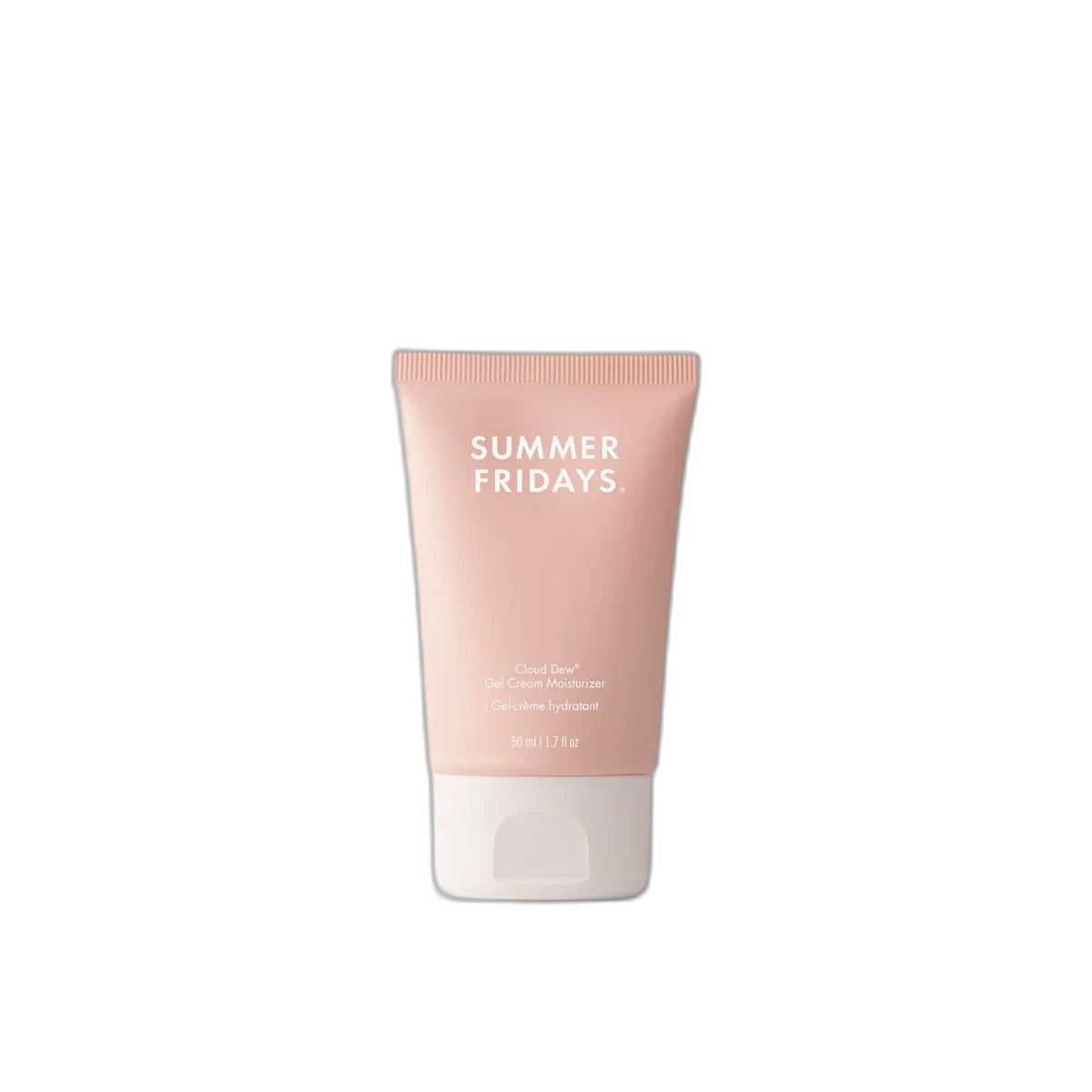
Cloud Dew Oil-Free Gel Cream Moisturizer
Oil-Free Hydration Hero
 Verified reviewer
Pros & cons.
- +Multi-weight hyaluronic acid complex provides deep and surface-level hydration simultaneously
- +Ceramide NP delivers barrier support rare in oil-free gel cream formulations
- +Fragrance-free, silicone-free, oil-free — an unusually clean formulation for the category
- +National Eczema Association Seal of Acceptance validates gentleness for reactive skin
- +Fifteen amino acids mimic the skin's natural moisturizing factor for comprehensive support
- +2026 reformulation removed pineapple enzymes and fragrance allergens from the original
- +Lightweight texture absorbs in seconds and layers beautifully under makeup and SPF
- −Insufficient hydration for dry skin types, especially in cold or arid climates
- −Lacks occlusive ingredients to lock in moisture for extended periods
- −Occasional pilling reported when layered under certain sunscreens or foundations
- −Peptide concentrations are likely too low to deliver significant anti-aging effects
- −At $38 for 1.7 oz, it sits above drugstore gel creams with similar hydrating ingredients
The full review.
About Summer Fridays
When Summer Fridays launched Cloud Dew in January 2021, the brand faced a credibility question. Co-founders Marianna Hewitt and Lauren Gores Ireland had built Summer Fridays on Instagram aesthetics and a viral mask — could they formulate a daily moisturizer that would earn respect from ingredient-focused consumers? The answer came not from a beauty editor or a social media post, but from the National Eczema Association, which awarded Cloud Dew its Seal of Acceptance. That seal requires a product to meet specific criteria for gentleness and ingredient safety. It is not purchased or negotiated. It is earned by formulation, and it tells you more about this moisturizer than any influencer endorsement could.
Myth
The 2026 reformulation makes an already good product better. The original formula contained pineapple enzymes that, while interesting on paper, caused sensitivity reactions in a subset of users — a lesson that the brand clearly absorbed. The updated version replaces those enzymes with coconut water and cherry extract, removes the fragrance allergens that were present in the original, and swaps the impractical glass jar for a squeezable tube. These are not marketing-driven changes. They are responses to real user feedback, and they improve the product in every measurable way.
Reality
The formula opens with water, propanediol, and dicaprylyl carbonate — a clean emollient base that avoids both silicones and traditional oils. Glycerin follows as the foundational humectant, drawing water into the skin and holding it there. The dual hyaluronic acid complex is where the hydration architecture gets interesting: standard sodium hyaluronate provides surface-level hydration and plumping, while hydrolyzed sodium hyaluronate — a smaller molecule — penetrates deeper into the epidermis. The result is hydration that feels like it is coming from within the skin rather than sitting on top of it.
Ceramide NP is the ingredient that elevates this beyond a simple hydrating gel. Oil-free moisturizers often fail at barrier support because they lack the lipid components that reinforce the skin’s natural defenses. Ceramide NP addresses this gap directly — it is one of the key lipids in the skin’s intercellular matrix, and its inclusion means Cloud Dew can repair and maintain the barrier without relying on occlusive oils. For oily and combination skin types whose barriers are often compromised by aggressive acne treatments or over-cleansing, this is genuinely valuable.
The amino acid panel is another thoughtful inclusion. Fifteen amino acids — glutamic acid, arginine, histidine, and twelve others — appear in the formula, collectively mimicking the composition of the skin’s natural moisturizing factor. These are not glamorous ingredients. They will never trend on social media. But they provide the building blocks that support protein synthesis, maintain skin pH, and contribute to antioxidant defense at the cellular level. Their presence suggests a formulator who understands skin biology, not just ingredient marketing.
Peptides appear toward the lower end of the INCI list — Palmitoyl Tripeptide-1 and Hexapeptide-11 — providing mild collagen-signaling benefits. At their likely concentrations, these are supplementary rather than transformative, but they add a long-term anti-aging dimension to what is primarily a hydration product.
Texture
On the skin, Cloud Dew delivers exactly what its name promises. The texture is impossibly light — closer to a hydrating serum than a traditional cream. It absorbs in seconds without any tackiness, greasiness, or film. The finish is naturally dewy: skin looks hydrated and healthy without the shine or slickness that oily skin types dread from moisturizers. Under makeup, it creates an excellent base — smooth, hydrated, and free of the pilling that plagues some gel-based products.
Scent
The fragrance-free formulation deserves specific praise. The original Cloud Dew contained some fragrance allergens from botanical sources; the 2026 version removes them entirely. For a market segment where many brands add fragrance to gel creams simply because consumers associate scent with luxury, the choice to go unscented demonstrates a commitment to function over sensory marketing.
Not ideal for
The honest limitation is straightforward: this moisturizer is not enough for dry skin. If you live in a cold, dry climate or your skin tends toward tight, flaky dehydration, Cloud Dew will feel like a good start that needs a richer finish. It lacks the occlusive oils, butters, and heavier emollients that very dry skin requires to prevent moisture evaporation. For these skin types, layering Cloud Dew under a richer cream can work, but as a standalone moisturizer, it will leave dry skin wanting more by midday.
Best for
For oily and combination skin, however, this product solves a genuine problem. Most moisturizers formulated to provide meaningful hydration also add oils or heavy emollients that exacerbate oiliness, clog pores, or leave a shiny residue. Cloud Dew hydrates through humectant pathways — pulling water in and holding it there — rather than through occlusion. The result is skin that feels moisturized without feeling like it has something on it. For the oily-skinned person who has been told they need to moisturize but hates the feeling of every moisturizer they have tried, this is the product that breaks the cycle.
Price
At $38 for 1.7 ounces, Cloud Dew sits at a reasonable price point for its category. The ingredient list justifies the cost — multi-weight hyaluronic acid, ceramide NP, fifteen amino acids, and peptides in a fragrance-free, silicone-free, oil-free base with an eczema association seal. The mini size offers a lower-commitment entry point for those who want to test the texture before investing. The value is fair, and the reformulation shows a brand that is iterating toward better rather than resting on its launch-day success.
Ingredient analysis.
Full INCI list
Water/Aqua/Eau, Propanediol, Dicaprylyl Carbonate, Glycerin, Cocos Nucifera (Coconut) Fruit Water, Pentylene Glycol, Prunus Avium (Sweet Cherry) Fruit Extract, Sodium Hyaluronate, Hydrolyzed Sodium Hyaluronate, Ceramide NP, Glutamic Acid, Arginine, Histidine, Tyrosine, Alanine, Lysine, Serine, Aspartic Acid, Leucine, Phenylalanine, Threonine, Proline, Valine, Glycine, Isoleucine, Hexapeptide-11, Palmitoyl Tripeptide-1, Saccharide Isomerate, Ascorbic Acid, Tocopheryl Acetate, Saccharomyces/Magnesium Ferment, Saccharomyces/Silicon Ferment, Saccharomyces/Copper Ferment, Leuconostoc/Radish Root Ferment Filtrate, Tocopherol, Glyceryl Caprylate, Cetearyl Olivate, Sorbitan Olivate, Hydroxyacetophenone, Butylene Glycol, Xanthan Gum, Glyceryl Acrylate/Acrylic Acid Copolymer, Carbomer, Sodium Hydroxide, Citric Acid, Sodium Citrate, Cetearyl Alcohol, Phenoxyethanol, Iron Oxides (CI 77491)
Skin match.
The science.
The Science
The Cloud Dew formula hydrates using a multi-weight hyaluronic acid complex. Sodium hyaluronate (high molecular weight) forms a film on the skin surface to reduce transepidermal water loss and provide immediate plumping. Hydrolyzed sodium hyaluronate (low molecular weight) penetrates the stratum corneum to hydrate from within. A 2012 study in the Journal of Clinical and Aesthetic Dermatology shows multi-weight HA formulations outperform single-weight HA in short-term and sustained hydration metrics.
Ceramide NP is one of the most abundant ceramide species in healthy human skin. Research in the Journal of Investigative Dermatology shows ceramide depletion links to barrier dysfunction, increased transepidermal water loss, and irritant susceptibility. Topical ceramide supplementation restores barrier function even without occlusive oils — a principle relevant to this oil-free formulation.
The amino acid complex mimics the skin's natural moisturizing factor (NMF), which consists mainly of free amino acids, pyrrolidone carboxylic acid, and other hygroscopic molecules. These amino acids work as humectants to attract and retain water, and as building blocks for structural proteins and antioxidant enzymes. They support the formula's hydration and barrier goals at the molecular level.
Dermatologist Perspective
Board-certified dermatologists often recommend oil-free gel cream moisturizers for oily and combination skin, as humectant-based hydration avoids the pore-congesting risk of occlusive oil-based formulas. Dermatologists value ceramide NP in an oil-free context, noting that barrier repair does not require heavy creams if the right lipid components exist. The National Eczema Association Seal of Acceptance provides the third-party validation dermatologists cite when recommending products for sensitive and eczema-prone skin. However, dermatologists treating dry skin note that gel creams of this type work best layered under a richer occlusive product rather than as standalone moisturizers.
Where it fits in your routine.
Apply a pea-sized amount to clean skin as your final hydration step in the morning before sunscreen and as the last step in the evening. For extra hydration, layer it over a hyaluronic acid serum on damp skin. Wait 30 seconds for absorption before applying SPF or makeup. It works with actives like retinol, vitamin C, and niacinamide. Dry skin types can use it as a hydrating layer under a thicker cream instead of a standalone moisturizer.
At $38 for 1.7 fl oz, Cloud Dew has a competitive price in the clean beauty gel cream segment. The ingredient list — multi-weight hyaluronic acid, ceramide NP, fifteen amino acids, peptides — in a fragrance-free, silicone-free base shows real formulation depth. A mini size exists for lower-commitment testing. The National Eczema Association seal provides validation most competitors at this price point lack. As an emerging indie brand, Summer Fridays' pricing reflects clean beauty positioning, but the 2026 reformulation shows responsive product development that justifies consumer investment.
Oily and combination skin types struggle to find a moisturizer that hydrates without adding shine or congestion. It also works for sensitive and eczema-prone skin seeking a fragrance-free, silicone-free moisturizer with third-party validation, and for anyone wanting clean beauty credentials without sacrificing formulation substance.
Dry skin types want a thick, occlusive moisturizer that locks in moisture all day. People in very cold or arid climates need heavy-duty barrier protection. Users seeking anti-aging benefits from their moisturizer should note the peptides here are supplementary, not transformative.
Product details.
This near-weightless, cloud-like gel cream feels like a hydrating serum in a moisturizer format. It is soft and light on the skin. The formula has no tackiness or heaviness despite the hyaluronic acid content.
Fragrance-free and has no detectable scent. The reformulated version lacks all fragrance components found in the original formula.
Squeezable tube format (reformulated 2026 version) replacing the original heavy glass jar. The new packaging is travel-friendly and more hygienic than the jar format. Minimalist Summer Fridays aesthetic with a pale blue colorway.
The first application provides immediate, lightweight hydration that sinks in within seconds. The texture feels like water pressed into the skin. It has no tingling or adjustment period. Skin looks plump and naturally dewy immediately. Oily skin types get hydration without added shine.
2-3 months with twice-daily application
12 months
spring summer
The backstory.
Cloud Dew was Summer Fridays' first standalone moisturizer when it launched in January 2021, marking the brand's expansion from masks and serums into the daily essentials category. The name captures the product's identity — a moisturizer that feels as light as a cloud while delivering the dewy finish that became the brand's aesthetic signature. A January 2026 reformulation replaced the pineapple enzymes (which caused sensitivity in some users) with coconut water and cherry extract, and swapped the glass jar for a tube.
About Summer Fridays
Emerging Brand (2–5 years)Summer Fridays was co-founded in 2018 by influencers Marianna Hewitt and Lauren Gores Ireland. The brand holds Leaping Bunny cruelty-free certification and Sephora Clean + Planet Positive status. The Cloud Dew specifically earned the National Eczema Association Seal of Acceptance, providing independent validation of its gentle formulation.
Common myths.
Oil-free moisturizers lack the hydration needed to support the skin barrier.
This formula contains ceramide NP, an amino acid complex that mimics the skin's natural moisturizing factor, and multi-weight hyaluronic acid. It supports the barrier using humectants and lipid repair instead of occlusive oils. This approach often works better for oily and combination skin than oil-based moisturizers that can increase congestion.
Gel cream moisturizers are watered-down versions of real moisturizers.
Gel creams use humectant systems for water-based hydration instead of oil-based occlusion. This works better for oily and combination skin — the skin gets moisture without an occlusive layer that traps sebum and causes breakouts.
FAQ.
What changed in the 2026 Cloud Dew reformulation?
The 2026 version replaces pineapple enzymes, which caused sensitivity for some users, with coconut water and cherry extract for gentler hydration. It also removes fragrance allergens from the original, updates the preservative system, and switches from a glass jar to a tube for better portability and hygiene.
Can I use Cloud Dew under makeup?
Yes — this is a strength. The lightweight gel cream absorbs in seconds. It creates a smooth, hydrated base that most foundations and concealers glide over. The dewy finish enhances a natural or skin-tint look. Wait 30 seconds for absorption before applying primer or SPF.
Is Summer Fridays Cloud Dew safe for eczema-prone skin?
The reformulated version has the National Eczema Association Seal of Acceptance. This requires products to lack common irritants and allergens that cause eczema flares. The fragrance-free, oil-free formula with ceramide NP works for eczema-prone skin, but individual sensitivities vary.
Does the Cloud Dew contain silicone?
No. The reformulated formula is silicone-free, oil-free, fragrance-free, and paraben-free. It uses propanediol and dicaprylyl carbonate as the primary emollient base instead of silicones. Some consumers find this leaves a more natural feel on the skin.
What the community says.
"Lightweight cloud-like texture that never feels heavy or greasy"
"Delivers a natural dewy glow without looking oily"
"Absorbs quickly and layers perfectly under makeup and sunscreen"
"Excellent for oily and combination skin types seeking hydration"
"Gentle enough for sensitive and eczema-prone skin"
"Fragrance-free formula with a clean ingredient list"
"Not moisturizing enough for dry skin types, especially in winter"
"May cause occasional pilling when layered under certain products"
"Price feels high for a gel cream moisturizer at $38 for 1.7 oz"
"Some users find it too light to use as a standalone moisturizer"
"Original glass jar packaging was impractical for travel (resolved in 2026 tube)"