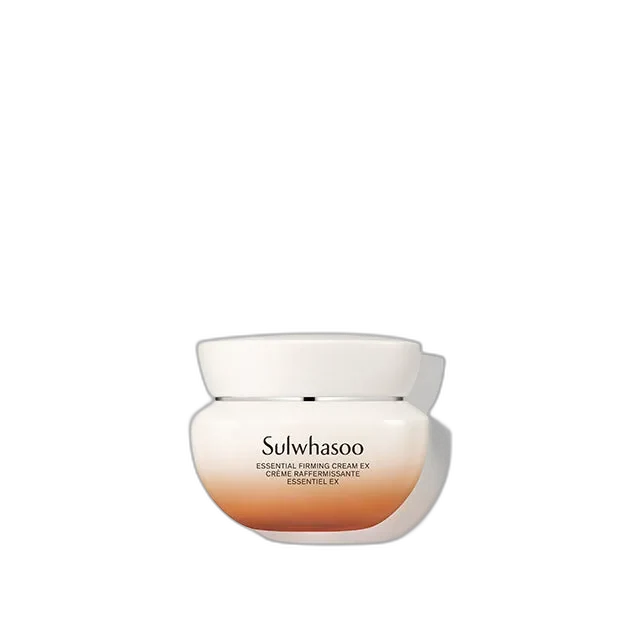
Essential Comfort Moisturizing Cream
K-Beauty Luxury Icon
 Verified reviewer
Pros & cons.
- +Exceptionally silky, whipped texture that melts into skin with a luxurious glide
- +Effective hydration from a well-layered humectant system of glycerin, honey, and hyaluronic acid
- +Distinctive hanbang botanical blend provides gentle antioxidant and soothing conditioning
- +Dewy, satin finish that works beautifully as a makeup base
- +Adenosine provides clinically supported anti-wrinkle benefits for fine line smoothing
- +Rich enough for dry winter skin without feeling heavy or greasy on the surface
- +Beautiful, meditative herbal-floral fragrance for those who appreciate scented skincare
- −Contains fragrance and five identified allergens — unsuitable for fragrance-sensitive skin
- −Silicone-heavy base may feel occlusive or primer-like to those preferring natural textures
- −Jar packaging exposes product to air and bacteria, undermining ingredient stability
- −Premium price not proportional to ingredient quality — base formula is standard moisturizer architecture
- −Botanical extracts appear low on INCI list, suggesting modest concentrations
- −Too rich for oily skin types, especially in humid weather
The full review.
In 1966, Sulwhasoo founder Suh Sungwhan released his first ginseng-infused skincare product, starting Korea’s most storied luxury beauty house. Nearly sixty years later, the Essential Comfort Moisturizing Cream carries that legacy. The formula uses hanbang, the traditional Korean herbal medicine philosophy that treats skincare as an extension of holistic health. The question is whether this history translates to skin results.
The formula uses a water and silicone base—butylene glycol, cyclopentasiloxane, and dimethicone dominate the top of the INCI list. This creates the signature Sulwhasoo slip: a silky cream that dissolves into skin. This is precise texture engineering. The glide is immediate, the finish is satin-dewy without stickiness, and the silicone matrix creates a breathable, protective film that locks moisture in place. If you judge a moisturizer by immediate feel, this one performs.
Beneath the silicone architecture, the humectants work well. Glycerin pulls moisture from the environment into the upper epidermis, sodium hyaluronate adds deeper water retention, and honey provides moisture-binding and antioxidant activity. Meadowfoam seed oil supports the barrier with stable long-chain fatty acids, providing emollient staying power without the grease of heavier plant oils.
The botanicals define Sulwhasoo’s identity. Jujube fruit extract, lotus flower, peony root, mulberry leaf, yuzu, plum blossom, rehmannia, and other traditional Korean medicinal herbs populate the lower third of the ingredient list. Research suggests these have antioxidant or soothing properties, creating a distinctly Sulwhasoo profile. The scent—a complex, herbal-floral bouquet with notes of plum blossom and citrus—is tied to these botanicals and is unapologetically present. You will smell this cream. If you love it, it becomes a meditative ritual. If you dislike it or have fragrance-sensitive skin, this is a dealbreaker.
The fragrance requires scrutiny. The INCI list identifies five EU-regulated fragrance allergens: limonene, linalool, citronellol, citral, and geraniol. This is a heavy load. For those without fragrance sensitivity, these are a non-issue. For consumers whose skin reacts to fragrance compounds, this cream is off the table. This is a limitation for a product at this price point.
The Essential Comfort Moisturizing Cream delivers genuine hydration. Dry skin feels immediately soothed, and the silicone base maintains that moisture throughout the day. The dewy finish layers well under makeup or sunscreen. Over several weeks, skin texture improves—it looks more luminous and resilient. Adenosine, the anti-wrinkle active approved by Korean cosmetics regulators, provides subtle firming, but do not expect dramatic anti-aging results from this alone.
The cream does not offer ingredient-level value proportional to its price. At roughly sixty-three dollars for fifty milliliters, you pay luxury prices for a formula with a base that costs much less to replicate. The botanical extracts appear in the lower portion of the ingredient list, suggesting modest concentrations. The silicone-glycerin-hyaluronate core is standard moisturizer architecture—effective, but not exclusive to luxury.
The packaging is beautiful but impractical. The heavy glass jar with its gold-accented lid looks stunning, but jar packaging exposes the product to air and bacteria. A pump or tube would better protect the botanical ingredients Sulwhasoo uses. Aesthetics won here, while functionality lost.
What are you paying for? You pay for exceptional texture. You pay for a fragrance experience that elevates moisturizing into self-care for those who appreciate it. You pay for decades of hanbang research in a product that feels intentional and culturally rooted. You also pay for the Sulwhasoo name, which carries reverence in Korean beauty similar to legacy European houses in Western markets.
Is it worth it? For dry-skinned consumers who value the ritual—the scent, texture, and beauty—this cream delivers an experience drugstore moisturizers cannot replicate, even if ingredient lists overlap. For ingredient-focused consumers wanting sixty-three dollars’ worth of cutting-edge actives at meaningful concentrations, this feels like paying for poetry instead of proof.
Ingredient analysis.
Full INCI list
Water/Aqua/Eau, Butylene Glycol, Cyclopentasiloxane, Dimethicone, Glycerin, Cyclohexasiloxane, Octyldodecyl Stearoyl Stearate, Limnanthes Alba (Meadowfoam) Seed Oil, 1,2-Hexanediol, Cetearyl Alcohol, Ammonium Acryloyldimethyltaurate/VP Copolymer, PCA Dimethicone, Glyceryl Stearate, Carbomer, Honey/Mel/Miel, Tromethamine, Hydrogenated Lecithin, Ziziphus Jujuba Fruit Extract, Fragrance/Parfum, Glyceryl Caprylate, Stearic Acid, Polyglyceryl-3 Methylglucose Distearate, Palmitic Acid, Limonene, Citrus Junos Fruit Extract, Ethylhexylglycerin, Adenosine, Disodium EDTA, Dioscorea Japonica Root Extract, Crataegus Pinnatifida Fruit Extract, Linalool, Narcissus Tazetta Bulb Extract, Poncirus Trifoliata Fruit Extract, Sodium Hyaluronate, Pueraria Thunbergiana Flower/Leaf/Stem Extract, Cetearyl Olivate, Prunus Mume Flower Extract, Morus Alba Leaf Extract, Sorbitan Olivate, Citronellol, Citral, Rehmannia Glutinosa Root Extract, Geraniol, Myristic Acid, Paeonia Lactiflora Root Extract, Lilium Candidum Bulb Extract, Polygonatum Odoratum Rhizome Extract, Lauric Acid, Nelumbo Nucifera Flower Extract, Tocopherol
Skin match.
The science.
The Science
This formula's hydration mechanism relies on established ingredients. Glycerin, a highly studied humectant, improves skin barrier function and increases stratum corneum hydration in numerous clinical trials. A 2008 British Journal of Dermatology study shows glycerin also directly affects skin barrier recovery, acting as more than a passive moisture-attractor.
Sodium hyaluronate, the salt form of hyaluronic acid, provides deeper hydration. Its lower molecular weight compared to native hyaluronic acid allows better penetration into the epidermis. A 2011 Journal of Clinical and Aesthetic Dermatology study found topical hyaluronic acid significantly improved skin hydration and elasticity in human subjects.
Honey's skincare role goes beyond folk tradition. A 2013 Journal of Cosmetic Dermatology review documented honey's properties as a humectant, antimicrobial, and antioxidant agent in topical formulations. The review noted honey's free hydroxyl groups in reducing sugars attract water through hydrogen bonding, supporting its use as a moisturizing ingredient.
Korea's MFDS validates adenosine, a purine nucleoside naturally present in the body, as an anti-wrinkle functional ingredient. Studies show adenosine stimulates collagen synthesis and smooths fine lines at cosmetic concentrations.
The hanbang botanical complex is harder to evaluate via Western clinical lenses. Laboratory studies show individual ingredients like Paeonia lactiflora (peony) root extract have anti-inflammatory properties, and Morus alba (mulberry) leaf extract contains compounds with mild tyrosinase-inhibiting activity for brightening. However, published clinical trials on these specific botanical combinations at cosmetic concentrations in topical skincare are limited. Their inclusion reflects Sulwhasoo's traditional Korean medicine philosophy rather than a Western evidence-based approach—a legitimate formulation tradition, but one where clinical evidence is primarily empirical rather than clinical-trial-validated.
References
- Honey in dermatology and skin care: a review — Journal of Cosmetic Dermatology (2013)
Dermatologist Perspective
Dermatologists recognize glycerin, sodium hyaluronate, and adenosine as effective, well-tolerated ingredients for hydration and mild anti-aging. The silicone base in this formula creates an occlusive barrier that board-certified dermatologists acknowledge prevents transepidermal water loss, especially in dry or cold climates. However, dermatologists frequently caution against heavily fragranced moisturizers—the five identified allergens in this formula would give most dermatologists pause when recommending it for patients with contact dermatitis or sensitive skin. The jar packaging also contradicts dermatological best practices, which favor airless pumps or tubes to maintain ingredient stability and hygiene. For patients seeking a thick hydrating cream who have no fragrance sensitivity, this is a functional moisturizer, but it is not typically a first-line dermatological recommendation.
Guidance
Where it fits in your routine.
Cleanse, apply toner, and apply any treatment serums. Use the included spatula to scoop a small amount (about the size of a large pea). Warm it briefly between fingertips; heat melts the silicone base for better absorption. Press the cream gently into the face and neck, moving from the center outward. The cream layers well under sunscreen in the morning. At night, use it as the final step or follow with a sleeping mask for extra hydration. Use twice daily for best results. Replace the lid tightly after use to minimize air exposure in the jar.
At about sixty-three dollars for 1.69 ounces, this cream is a luxury item. A larger 2.5-ounce size exists and has slightly better per-ounce value. The price-to-ingredient ratio is poor based on formulation alone — Korean moisturizers use the same silicone-glycerin-hyaluronate base for much less. You pay for the sensorial experience, the hanbang heritage, and the brand prestige. This price works for consumers who value those elements. For ingredient-first shoppers, the cost is hard to justify when the same core humectants cost under fifteen dollars. Sulwhasoo's legacy and Amorepacific's research infrastructure give the brand credibility that newer luxury entrants lack, but that pedigree does not change the ingredients in the jar.
Dry to normal skin types who enjoy fragrant skincare rituals and Korean herbal beauty traditions. This works for those seeking a thick, hydrating cream with a dewy finish who value the sensorial and cultural experience Sulwhasoo delivers.
People with fragrance sensitivity, reactive skin, or contact dermatitis should avoid this cream because it contains five identified fragrance allergens. The silicone-heavy base feels too thick for oily skin, and the formula lacks the potent actives at clinical concentrations that ingredient-focused consumers expect for the price.
Product details.
Herbal-floral fragrance inspired by traditional Korean medicinal herbs, featuring notes of plum blossom, lotus, and yuzu. The scent is noticeable and lingers — not for the fragrance-averse.
A heavy glass jar with a gold-accented lid and spatula reflects Sulwhasoo's luxury positioning. This jar packaging looks beautiful but exposes the product to air and bacteria during use.
The cream feels silky and smooths skin immediately because of the silicone base. The herbal fragrance is noticeable. Skin feels soft and plump within minutes. No adjustment period is expected unless you are sensitive to fragrance; then, patch testing is recommended.
2-3 months with twice-daily face application
12 months
fall winter
The backstory.
Sulwhasoo's Essential Comfort line represents the brand's effort to make hanbang skincare accessible to a broader audience. While the Concentrated Ginseng line targets anti-aging with rare ingredients at premium prices, the Essential Comfort range offers the core Sulwhasoo herbal philosophy at a (relatively) more approachable price point, serving as many customers' introduction to luxury Korean herbal skincare.
About Sulwhasoo
Legacy Brand (20+ years)Amorepacific Corporation launched Sulwhasoo in 1997, using ginseng research from 1966. The brand is a top Korean skincare house. It uses hanbang (traditional Korean herbal medicine) formulations supported by Amorepacific's R&D infrastructure.
Common myths.
Hanbang (Korean herbal) ingredients outperform scientifically validated Western actives.
Many traditional Korean botanical extracts show antioxidant and soothing properties in preliminary research, but they lack the clinical evidence of retinol, niacinamide, or vitamin C. This cream's hanbang complex provides gentle conditioning instead of targeted treatment-level results.
High prices reflect luxury ingredients in the entire formula.
Silicones (cyclopentasiloxane, dimethicone) and butylene glycol form the base of this cream. These ingredients are common, effective, and inexpensive. The botanical extracts sit lower in the INCI list, so they have modest concentrations. The thick texture and fragrance define the experience more than rare actives.
FAQ.
Is Sulwhasoo Essential Comfort Moisturizing Cream worth the price?
The cream has a thick texture and the hanbang botanical blend conditions skin gently. However, the base formula uses silicones and standard humectants like glycerin, which cost much less. You pay for the sensorial experience, the herbal fragrance, and the brand heritage — whether that is worth it depends on how much you value those elements beyond pure ingredient efficacy.
Can I use Sulwhasoo Essential Comfort Moisturizing Cream if I have sensitive skin?
This cream contains fragrance and five identified fragrance allergens (limonene, linalool, citronellol, citral, and geraniol), which risks irritation for sensitive or reactive skin. If you have a history of fragrance sensitivity, patch test on your inner arm for several days before face application.
What is hanbang skincare and how does it work in this cream?
Hanbang means traditional Korean herbal medicine. This cream uses botanical extracts like jujube fruit, lotus flower, peony root, mulberry leaf, and rehmannia root—ingredients used in Korean herbalism for centuries. These ingredients provide antioxidant and soothing properties, but at cosmetic concentrations, they primarily condition rather than treat.
How does Sulwhasoo Essential Comfort Moisturizing Cream compare to the Firming Cream?
The Moisturizing Cream focuses on hydration and nourishment with a dewy finish, while the Firming Cream version adds the JISUN Firming Complex with goji berry and black soybean for additional firming benefits. The Moisturizing Cream has a richer, more emollient texture suited for dry skin, while the Firming Cream is slightly lighter with more anti-aging targeting.
Is Sulwhasoo Essential Comfort Moisturizing Cream good for winter?
Yes — the thick, silicone-heavy base seals in moisture to protect against dry, cold winter air. meadowfoam seed oil and honey add barrier support. It works best as a fall-winter moisturizer; combination and oily skin types may find the texture too heavy for humid summer months.
Does this cream contain any anti-aging ingredients?
Adenosine, a Korean-approved anti-wrinkle ingredient, is included and has well-established evidence for stimulating collagen production and smoothing fine lines. The hanbang botanical extracts also provide antioxidant protection that supports skin aging defense, though they are not as potent as targeted anti-aging actives like retinol or peptides.
Community
What the community says.
"Luxurious texture that melts into skin"
"Beautiful herbal scent"
"Leaves skin feeling plump and dewy"
"Elegant packaging"
"Non-greasy despite rich feel"
"Expensive for the amount of product"
"Fragrance may be too strong for sensitive skin"
"Silicone-heavy formula feels occlusive to some"
"Some users report mild irritation from fragrance components"