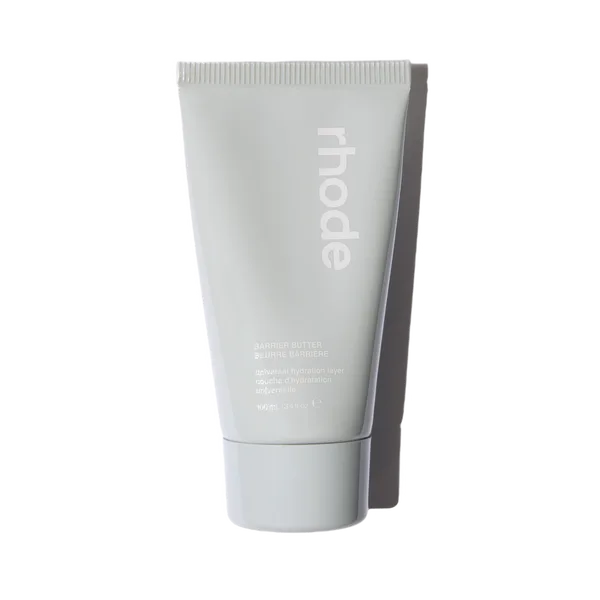
Barrier Butter
Barrier Repair Powerhouse
 Verified reviewer
Pros & cons.
- +Isosorbide Dicaprylate upregulates Aquaporin 3 channels to improve the skin's own hydration transport
- +Water-in-oil emulsion locks humectants against the skin more effectively than standard creams
- +National Eczema Association Seal of Acceptance validates sensitive skin suitability
- +Dual peptide system addresses both calming (Tripeptide-8) and collagen production (Tetrapeptide-10)
- +Multi-weight HA complex plus polyglutamic acid for layered, long-lasting hydration
- +Leaping Bunny certified, vegan, fragrance-free — genuinely clean formulation
- +Strong value at $36 for 3.4 oz with a $22 mini size for testing
- −Too heavy and occlusive for oily or acne-prone skin types
- −Jar packaging is less hygienic than tube or airless pump formats
- −Occlusive ingredients may clog pores in breakout-prone areas, especially around the nose
- −Brand is only 4 years old — limited long-term track record despite strong early formulations
- −External packaging shows cosmetic wear and pilling faster than expected
Ingredient analysis.
Full INCI list
Water (Aqua) (Eau), C13-15 Alkane, Butylene Glycol, C15-19 Alkane, Caprylic/Capric Triglyceride, Glycerin, Trioctyldodecyl Citrate, Polyglyceryl-3 Polyricinoleate, Polyglyceryl-4 Diisostearate/Polyhydroxystearate/Sebacate, Isosorbide Dicaprylate, Synthetic Beeswax, Disteardimonium Hectorite, Panthenol, Tocopherol, Tocopheryl Acetate, Palmitoyl Tripeptide-8, Palmitoyl Tetrapeptide-10, Zingiber Officinale (Ginger) Root Extract, Astrocaryum Murumuru Seed Butter, Polyglutamic Acid, Sodium Hyaluronate, Hydrolyzed Glycosaminoglycans, Bisabolol, Tremella Fuciformis Polysaccharide, Ceramide NP, Hyaluronic Acid, Hydrolyzed Hyaluronic Acid, Caprylhydroxamic Acid, Dextran, Trisodium Ethylenediamine Disuccinate, Phenoxyethanol, Ethylhexylglycerin, Citric Acid, Sodium Chloride, Benzyl Alcohol
Skin match.
The science.
The Science
The barrier repair strategy in this formula centers on a water-in-oil emulsion vehicle that creates a more effective occlusive environment than standard oil-in-water creams. Research on emulsion types has demonstrated that water-in-oil formulations produce lower transepidermal water loss (TEWL) values and higher stratum corneum hydration levels than oil-in-water counterparts, making them the preferred vehicle for compromised barrier treatment.
Ceramide NP is one of the most abundant ceramide species in the human stratum corneum, and its topical application has been shown to restore barrier function in ceramide-depleted skin. Clinical studies on ceramide-containing moisturizers have demonstrated reduced TEWL and improved skin hydration scores in patients with atopic dermatitis and other barrier-dysfunction conditions.
Palmitoyl Tripeptide-8 was identified as the second most commonly used peptide in cosmetics for sensitive skin in a 2021 review published in Cosmetics (MDPI). The peptide functions as an agonist of the cutaneous opioid system, reducing the release of substance P and other neuropeptides responsible for neurogenic inflammation — the itch, redness, and discomfort associated with compromised barriers.
Isosorbide Dicaprylate upregulates Aquaporin 3 (AQP3), a transmembrane protein channel that facilitates the transport of water and glycerol across cell membranes. In vitro studies have shown that enhanced AQP3 expression improves keratinocyte hydration and supports barrier function recovery. This mechanism represents a fundamentally different approach to hydration — improving cellular transport rather than simply increasing surface moisture.
Polyglutamic acid, a fermentation-derived biopolymer, has demonstrated superior moisture retention compared to hyaluronic acid in comparative studies. Additionally, it has been shown to inhibit hyaluronidase activity, potentially extending the functional lifespan of the hyaluronic acid complex in the same formula.
References
- Usage of Synthetic Peptides in Cosmetics for Sensitive Skin — Cosmetics (MDPI) (2021)
Dermatologist Perspective
Board-certified dermatologists recognize ceramide-containing water-in-oil emulsions as a gold-standard approach to barrier repair, and the Barrier Butter's formulation aligns with clinical best practices for treating compromised, eczema-prone, and severely dry skin. Dermatologists note that the National Eczema Association Seal of Acceptance provides meaningful clinical validation beyond standard marketing claims. The dual peptide system and Aquaporin 3 technology represent formulation sophistication that is uncommon in the consumer skincare market. Dermatologists recommend using this product as a final PM step to maximize the occlusive benefits, and caution patients with acne-prone skin to patch test before full-face application.
Guidance
Where it fits in your routine.
Apply this as the last PM skincare step, once all water-based serums and treatments absorb. Scoop a small amount from the jar, warm it between your fingers, then press and smooth it over your face and neck. The balm melts on contact and forms a protective occlusive layer. Use it as a targeted treatment on dry patches, flaky areas, or retinol-treated skin for overnight barrier support. Use SPF in the morning.
At $36 for 3.4 oz, the Barrier Butter is a high-value ceramide, peptide, and multi-weight HA barrier product. The larger size lasts about 2-3 months with nightly use, costing roughly $12-18 per month. A $22 mini (1.35 oz) makes testing easier. The larger jar has better per-ounce value ($10.59/oz vs $16.30/oz). Rhode's pricing is competitive against clinical brands, which often cost $30-50 for 1-2 oz, despite the ingredient quality. e.l.f. Beauty's ~$1 billion acquisition of the brand suggests the accessible pricing model is a long-term strategy.
Use this for dry, dehydrated, eczema-prone, or barrier-compromised skin needing intensive overnight repair. It works well as a retinol buffer — apply over retinol to seal the treatment and minimize overnight moisture loss. It suits winter skin and anyone whose current moisturizer lacks efficacy.
Oily, acne-prone skin often clogs from rich occlusive products. If thick balms, shea butters, or coconut-derived oils cause breakouts, the lighter Barrier Restore Cream is the safer Rhode option. Most people will find it unsuitable as a daytime moisturizer; the texture is for PM use.
Product details.
This water-in-oil emulsion is a thick, buttery balm. It feels thick in the jar but melts on contact, leaving a protective moisture barrier without heavy grease.
Completely fragrance-free with no noticeable scent
A screw-off lid jar uses post-consumer recycled (PCR) materials. It has Rhode's signature minimalist aesthetic. Sizes include 1.35 oz and 3.4 oz. Rhode's recycling program gives 10% off your next order when you return 3+ empty products.
The balm feels thick at first but melts quickly into the skin. Within minutes, skin feels cushioned and hydrated, not coated. By morning, skin looks plumper and calmer. Dry or compromised skin gets immediate relief; oily skin types may find it too occlusive for anything but spot treatment on dry patches.
2-3 months with nightly use (3.4 oz size)
12 months
fall winter
The backstory.
Rhode launched in 2022 with the 'glazed donut skin' aesthetic, but the Barrier Butter — released in October 2024 with Claudia Schiffer as its campaign face — represents the brand's most scientifically ambitious product. It was developed with cosmetic chemist Dr. Ron Robinson and dermatologist Dr. Dhaval Bhanusali, and earned the National Eczema Association Seal of Acceptance — a validation that many established skincare brands never pursue.
About Rhode
Emerging Brand (2–5 years)Hailey Bieber founded Rhode in 2022. e.l.f. Beauty acquired Rhode in 2025 for approximately $1 billion. Cosmetic chemist Dr. Ron Robinson and dermatologist Dr. Dhaval Bhanusali develop the products. Multiple products carry the National Eczema Association Seal of Acceptance. Rhode has Leaping Bunny and PETA cruelty-free certifications.
Common myths.
Celebrity skincare brands use basic formulas and rely on marketing.
This formula contains Isosorbide Dicaprylate (Aquaporin 3 upregulator), a dual peptide system, polyglutamic acid, ceramide NP, and a three-weight hyaluronic acid complex. Formulation scientists chose these ingredients for function, not marketing. The National Eczema Association seal requires a real formulation review.
Thicker moisturizers are always better for dry skin
The Barrier Butter works because of its water-in-oil emulsion structure and active ingredients, not just its thickness. The occlusive matrix locks in humectants and lets the Aquaporin 3 upregulator work over time — the formula's engineering, not just its thick texture, repairs barriers.
FAQ.
Is Rhode Barrier Butter good for oily skin?
Do not use this as an all-over moisturizer for oily skin. The water-in-oil emulsion and occlusive butters target dry, normal, and compromised skin. Oily skin types may find it too heavy or pore-clogging. It works as a targeted treatment for dry patches.
Can I use Rhode Barrier Butter as a sleeping mask?
Yes — it works well as a final-step sleeping mask. Apply it over your regular PM routine to seal in preceding products. The occlusive water-in-oil formula prevents overnight moisture loss, while ceramide, peptides, and hyaluronic acid work all night. Morning skin looks visibly plumper.
Is Rhode Barrier Butter pregnancy-safe?
Yes — this formula lacks retinoids, salicylic acid, or other pregnancy-contraindicated ingredients. This fragrance-free, National Eczema Association-accepted formula is safe for pregnancy and breastfeeding.
What's the difference between Rhode Barrier Butter and Barrier Restore Cream?
The Barrier Restore Cream is a light oil-in-water cream containing niacinamide and a four-peptide complex. All skin types can use it daily. The Barrier Butter is a thick water-in-oil balm with ceramide NP, Aquaporin 3 technology, and polyglutamic acid. It repairs the barrier on dry, compromised, or eczema-prone skin.
Does Rhode Barrier Butter clog pores?
The formula contains caprylic/capric triglyceride and murumuru seed butter, both with moderate comedogenic potential. Most users report no breakouts, though a small percentage of acne-prone users note clogged pores around the nose. Breakout-prone users may prefer the lighter Barrier Restore Cream.
What the community says.
"Deep, lasting hydration without feeling greasy despite the rich texture"
"Visibly plumper, bouncier skin by morning when used as a sleeping mask"
"Strengthens skin barrier noticeably within weeks of consistent use"
"Fragrance-free formulation appreciated by sensitive and eczema-prone skin"
"Excellent value for the amount of product in the larger size"
"Too heavy and occlusive for oily or combination skin types"
"Some acne-prone users experienced clogged pores around the nose area"
"24-hour hydration claim may not hold for all skin types — some need reapplication"
"Jar packaging is less hygienic than a pump or tube"
"Exterior packaging shows wear and pilling faster than expected"