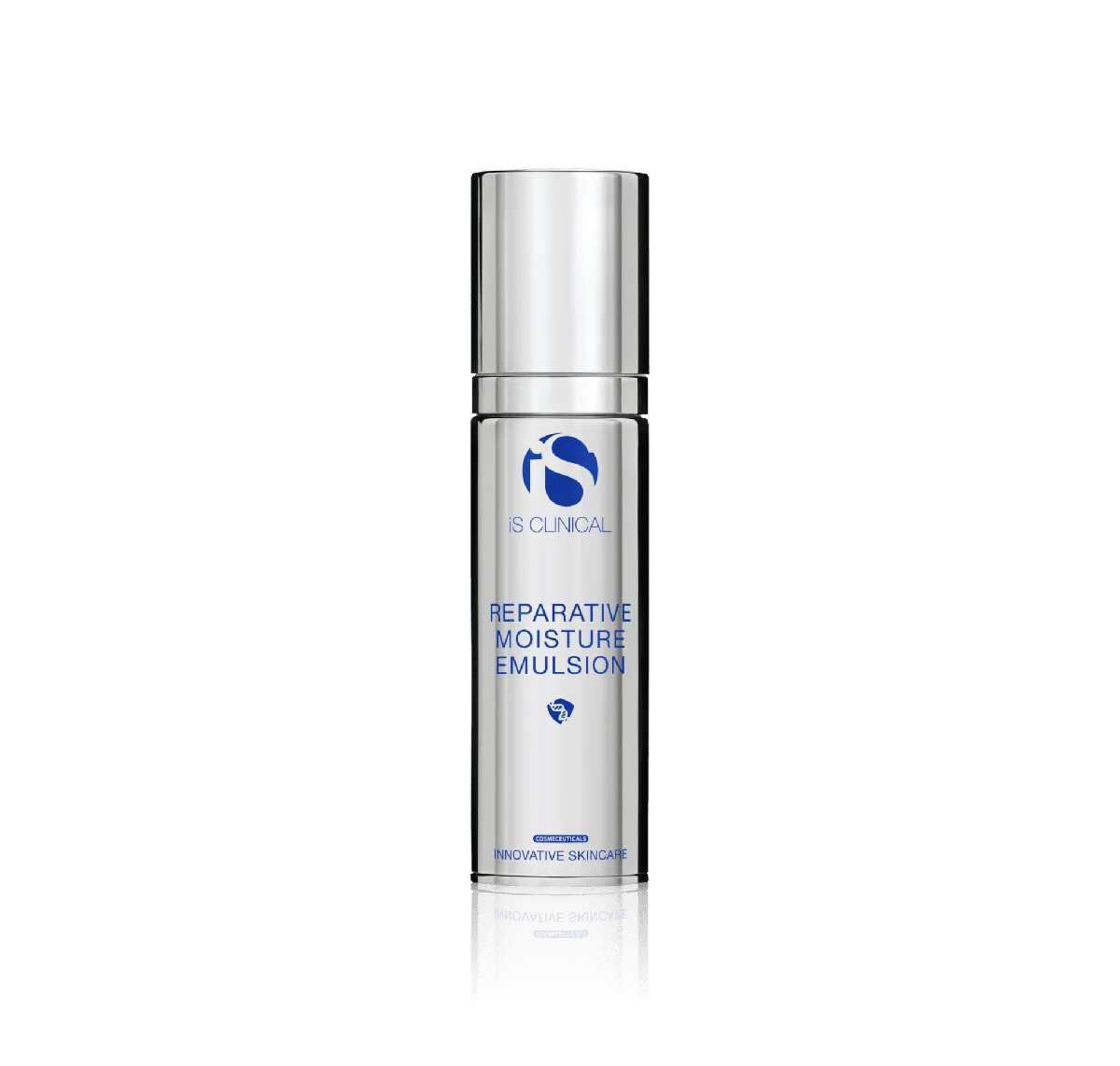
Reparative Moisture Emulsion
Barrier Repair Workhorse
 Verified reviewer
Pros & cons.
- +Haberlea rhodopensis Extremozyme DNA-repair technology is a genuinely novel protective ingredient
- +Dual-peptide system addresses both collagen production quantity and fiber organization quality
- +Superoxide dismutase provides enzymatic antioxidant protection that degrades with age
- +Lightweight emulsion texture absorbs without greasiness and works as a makeup primer
- +Comprehensive hydration from three mechanisms: humectant, emollient, and barrier-reinforcing
- +Fragrance-free and gentle enough for post-procedure and sensitive skin
- +Layered vitamin complex (A, B5, C, E) provides multi-pathway nutritional support
- −At $116 for 1.7 oz, the price is premium even by clinical skincare standards
- −Contains silicones which some users prefer to avoid in their moisturizer
- −Hydrolyzed soy protein may be a concern for those with soy allergies
- −Peptide-driven results require 6-8 weeks of consistent use to become visible
- −Jar packaging exposes the formula to air and potential contamination with each use
The full review.
Haberlea rhodopensis has survived extreme conditions for millions of years. This ‘resurrection plant’ grows on limestone cliffs in southeastern Europe, loses up to 95% of its water, looks dead, and recovers within hours of rehydration. iS Clinical uses the enzymes that enable this—protecting cellular DNA during environmental stress—in the Reparative Moisture Emulsion. It is one of the few moisturizers built on a novel biological concept instead of repackaging familiar actives.
The ingredient list shows a formula that works thoroughly. The hydration layer uses sodium hyaluronate, glycerin, and squalane to provide humectant, emollient, and barrier-reinforcing moisture. The repair layer adds Tripeptide-1 (the famous GHK peptide) to stimulate collagen synthesis and Tripeptide-10 Citrulline to regulate collagen organization into functional fibers. Most peptide moisturizers only address collagen quantity; this one addresses collagen architecture.
The antioxidant system is also layered. Superoxide dismutase—an enzymatic antioxidant skin naturally produces but loses with age—neutralizes superoxide radicals through direct catalytic activity. Tocopherol and ascorbyl palmitate provide vitamin E and C protection via a different chemical pathway. Haberlea rhodopensis extract adds DNA-protective enzymes (branded as Extremozymes) that shield against UV-induced cellular damage at the genetic level. This is an antioxidant network with depth, not just vitamin E with a marketing story.
The emulsion lives up to its name on the skin. It is lighter than a cream and thicker than a serum. This middle weight spreads easily, absorbs quickly, and leaves a soft, satin finish. It is not sticky or heavy and dries fast. It sits well under makeup and functions as a de facto primer. The texture is elegant for a product with this many actives.
The formula also includes amino acids (proline, lysine, acetyl tyrosine), hydrolyzed proteins for surface smoothing, glycosaminoglycans for moisture binding, and urea for gentle keratolytic action. Yeast extract (Faex) adds B vitamins and minerals to support cellular metabolism. Each ingredient has a specific, coordinated job.
Results follow a peptide-driven trajectory. Hydration is immediate; skin feels softer and more supple after the first application. Within two weeks, the barrier-reinforcing effects of squalane and glycerin help skin retain moisture throughout the day. By six to eight weeks, the peptides’ collagen-stimulating effects show: skin looks firmer, fine lines soften, and skin quality improves beyond simple hydration.
The Reparative Moisture Emulsion excels at recovery. Post-procedure skin—after peels, laser treatments, or microneedling—responds well to the peptides, hyaluronic acid, and anti-inflammatory panthenol. Extremozyme technology adds DNA protection when skin is most vulnerable. This reflects the product’s clinical-channel origins: it was built to repair skin, not just moisturize it.
The limitations are clear. At $116 for 1.7 ounces, this is a premium moisturizer. The formula contains silicones (dimethicone, cyclomethicone), which work for most but not the silicone-averse. Hydrolyzed soy protein is a concern for those with soy allergies. The large number of components may also deter strict minimalists.
For those seeking formulation depth, the Reparative Moisture Emulsion delivers sophistication that matches its clinical positioning. The resurrection plant story is a genuine biological innovation applied with the pharmaceutical rigor iS Clinical uses to build its reputation.
Ingredient analysis.
Full INCI list
Water/Aqua/Eau, Sodium Hyaluronate, Glycerin, Squalane, Caprylic/Capric Triglyceride, Beta Vulgaris (Beet) Root Extract, Haberlea Rhodopensis Leaf Extract, Faex (Yeast) Extract, Tocopherol, Panthenyl Triacetate, Ethyl Linoleate, Butylene Glycol, Acetyl Tyrosine, Proline, Hydrolyzed Vegetable Protein, Hydrolyzed Soy Protein, Tripeptide-10 Citrulline, Tripeptide-1, Lecithin, Xanthan Gum, Carbomer, Triethanolamine, Glycosaminoglycans, Urea, Glucose, Guanidine HCl, Cetearyl Alcohol, Ceteareth-20, Dimethicone, Dipalmitoyl Hydroxyproline, Cyclomethicone, Polysorbate 40, Superoxide Dismutase, PVP, Panthenol, Phospholipids, Retinyl Palmitate, Tocopheryl Acetate, Ascorbyl Palmitate, Pantothenic Acid, Ethylbisiminomethylguaiacol Manganese Chloride, 1,2-Hexanediol, Caprylyl Glycol, Disodium EDTA
Skin match.
The science.
The Science
Haberlea rhodopensis leaf extract drives this formula's innovation. This 'resurrection plant' uses extremozyme technology backed by increasing research. A study in the Journal of Medicinal Plants Research shows Haberlea rhodopensis has antioxidant activity and contains myconoside, a unique phenylpropanoid glycoside with documented photoprotective properties. The plant protects its own DNA during extreme desiccation cycles, which inspires its use in topical skincare to prevent UV-damage.
The dual-peptide system — Tripeptide-1 and Tripeptide-10 Citrulline — targets collagen from two angles. Tripeptide-1, or the GHK fragment, has extensive research on its wound-healing and collagen-stimulating properties. Research in the Journal of Biomedicine and Biotechnology shows GHK peptides stimulate collagen synthesis, decorin production, and growth factor release. Tripeptide-10 Citrulline works differently: instead of just producing more collagen, it regulates the diameter and organization of collagen fibrils to improve the structural quality of newly synthesized collagen.
Superoxide dismutase (SOD) acts as an enzymatic antioxidant. This naturally occurring enzyme catalyzes the dismutation of superoxide radicals into hydrogen peroxide and oxygen. Research in the Journal of Investigative Dermatology shows topical SOD reduces UV-induced skin damage and inflammatory responses. This provides a catalytic antioxidant mechanism different from the stoichiometric scavenging of vitamins C and E.
Squalane repairs the barrier through biomimicry. As a hydrogenated form of squalene (which is approximately 12% of human sebum), it integrates into the skin's lipid matrix to reinforce barrier function without the comedogenic risk of heavier oils.
References
- Biological activities of Haberlea rhodopensis extracts and their application in cosmetics — Journal of Medicinal Plants Research (2012)
- Tripeptide-10 Citrulline regulates collagen fibril diameter — International Journal of Cosmetic Science (2013)
Dermatologist Perspective
Board-certified dermatologists often recommend the Reparative Moisture Emulsion for patients in post-procedure recovery. The combination of peptides, hyaluronic acid, and DNA-protective Extremozymes addresses immediate comfort and long-term cellular repair. Dermatologists note the dual-peptide system offers a more sophisticated approach to collagen support than single-peptide formulations because it addresses both collagen production and the organizational quality of new collagen fibers. The formula works for all skin types, including oily and sensitive, making it a versatile recommendation.
Where it fits in your routine.
Apply a small amount to clean skin and smooth it evenly over the face and neck. Use morning and evening as the final step before sunscreen (AM) or the last step in your evening routine. Layer it over treatment serums like vitamin C and retinoids. It also works as a makeup primer — let it absorb for 1-2 minutes before applying foundation.
At $116 for 1.7 oz, the Reparative Moisture Emulsion costs more than most clinical moisturizers but provides a larger volume than many competitors. A professional 8 oz size offers better per-ounce value for regular users. The formulation uses dual peptides, Extremozyme technology, superoxide dismutase, and a layered vitamin complex, making it a multi-functional treatment moisturizer instead of a simple hydrator. For users with an anti-aging regimen of separate serums and treatments, this combines barrier repair, antioxidant protection, and collagen support into one step.
Adults targeting aging, barrier repair, and environmental protection want a moisturizer that hydrates and treats. It works well for post-procedure recovery and those seeking pharmaceutical-grade formulation sophistication.
People with soy allergies should avoid this because of the hydrolyzed soy protein. Those avoiding silicones will find dimethicone and cyclomethicone in the formula. This product's complexity may not suit a minimalist skincare philosophy with short ingredient lists.
Product details.
Lightweight, silky emulsion that spreads easily and absorbs without heaviness. Leaves a soft, smooth finish that works well under makeup.
No added fragrance. Virtually undetectable scent.
A frosted glass jar with a screw-top lid matches iS Clinical's clinical aesthetic.
Smooths and hydrates immediately on application. It causes no stinging, tingling, or adjustment period. Skin feels softer and more supple within minutes. Use from day one without titration.
2-3 months with twice-daily application to face and neck
12 months
All Year
The backstory.
Developed around iS Clinical's proprietary Extremozyme technology, this moisturizer was designed to be the repair step in the brand's clinical protocol. The Haberlea rhodopensis — a plant that survives complete desiccation in the Rhodope Mountains of Bulgaria and springs back to life when rehydrated — inspired the formula's DNA-protective approach. The product was built for skin that needs both immediate hydration and long-term structural repair.
About iS Clinical
Established Brand (5–20 years)iS Clinical was founded in 2002 by biochemists Bryan Johns and Alec Call under the Innovative Skincare umbrella. The brand is widely used in dermatology offices and medical spas, with multiple peer-reviewed clinical studies supporting its formulations. Products are pharmaceutical-grade and free from parabens, phthalates, and sulfates.
Common myths.
Emulsions lack the weight to moisturize dry skin effectively.
This emulsion uses sodium hyaluronate, glycerin, squalane, and dimethicone in a layered hydration system to provide humectant and emollient benefits. The thin texture improves absorption of the active peptides and antioxidants compared to heavier creams.
Silicones in moisturizers clog pores and stop skin from breathing.
The dimethicone in this formula creates a breathable, semi-occlusive film that locks in moisture without blocking pores. Silicones are extensively studied and non-comedogenic — they sit on the surface instead of penetrating, which makes this an excellent makeup primer.
What the community says.
"Deeply hydrating without feeling heavy or greasy"
"Works beautifully as a primer under makeup"
"Noticeably firmer and smoother skin over time"
"Gentle enough for sensitive and post-procedure skin"
"Price is steep for a moisturizer"
"Contains silicones which some users prefer to avoid"
"Soy protein may concern those with soy allergies"
"Results take several weeks to become visible"