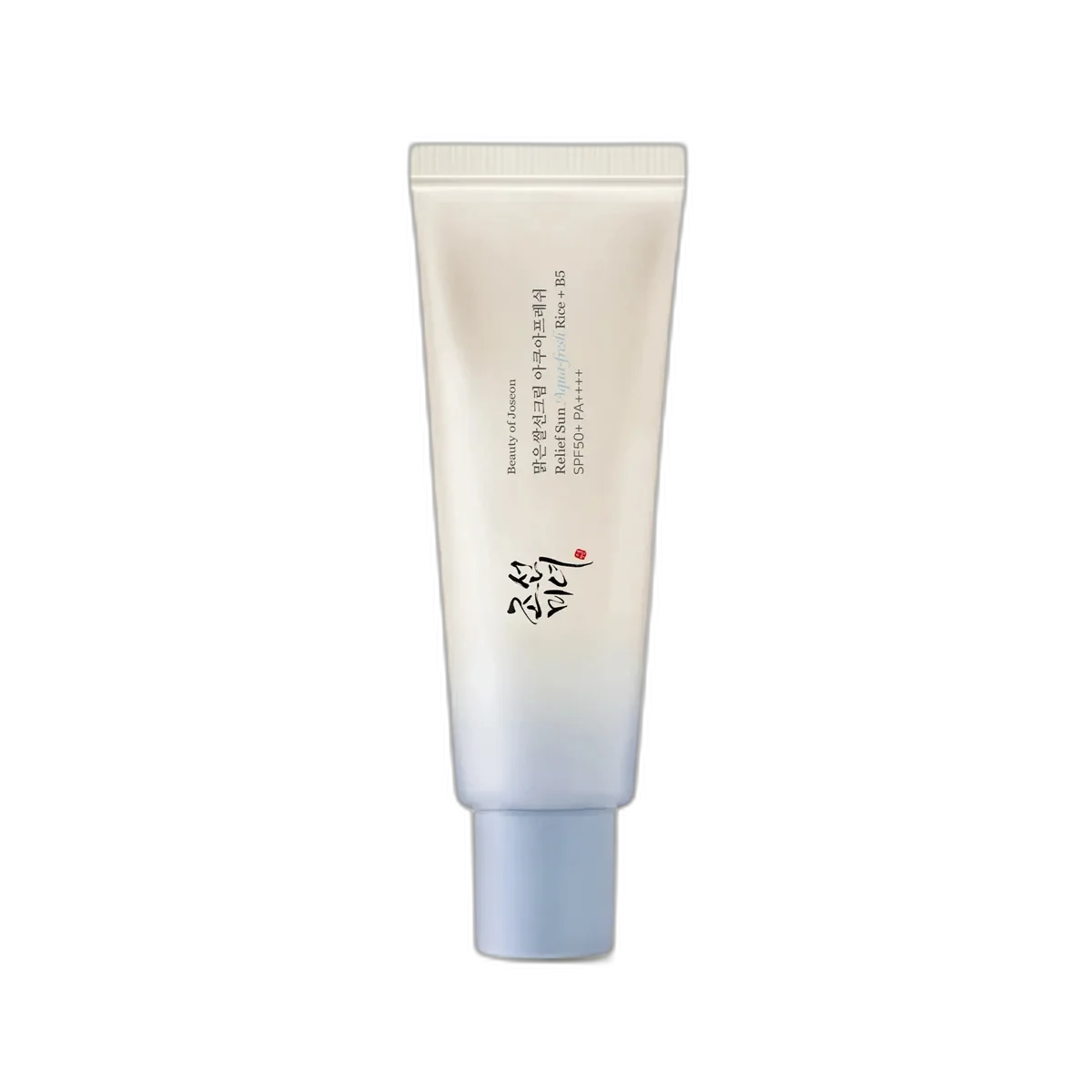
Relief Sun Aqua-Fresh: Rice + B5 SPF 50+
K-Beauty Sunscreen Evolution
 Verified reviewer
Pros & cons.
- +Five-filter UV system provides comprehensive, photostable broad-spectrum protection
- +Ceramide NP and phytosphingosine deliver genuine barrier repair alongside sun protection
- +Ferulic acid antioxidant boosts protection at the cellular level beyond UV filtering alone
- +Aqua-fresh texture absorbs instantly and leaves a dewy, glass-skin finish
- +Zero white cast — works beautifully on all skin tones
- +Exceptional ingredient sophistication for a $14.40 sunscreen
- −Dewy finish may be too glossy for very oily skin types in humid conditions
- −50ml runs out within a month with proper daily application amount
- −New formulation may disappoint fans who preferred the original Relief Sun's texture
- −Slightly more expensive per ml than the original version
- −May feel insufficiently matte for those who prefer completely shine-free sunscreens
The full review.
Beauty of Joseon Relief Sun: Rice + Probiotics went viral for simple reasons: it was a good sunscreen at a low price that felt weightless. It moved beyond the K-beauty niche into mainstream popularity. When Beauty of Joseon developed the Aqua-Fresh version, they had to improve the formula while keeping its core appeal.
The upgrade is significant. The UV filter system now uses five complementary filters. Ethylhexyl triazone handles UVB. DHHB (Diethylamino Hydroxybenzoyl Hexyl Benzoate) targets the UVA1 range responsible for photoaging. Tinosorb S provides broad-spectrum UVA and UVB coverage. Drometrizole trisiloxane (Mexoryl XL) adds more UVA protection. Terephthalylidene dicamphor sulfonic acid (Mexoryl SX) adds water-soluble UVA coverage. This filter cocktail is ambitious, matching premium European sunscreens rather than a $14.40 K-beauty product.
The Aqua-Fresh story centers on the skincare layer around the UV filters. Panthenol (Vitamin B5) is early in the INCI list; it soothes and binds moisture for comfortable daily wear. Ceramide NP and phytosphingosine form a barrier-repair duo that supports the skin’s lipid layer. Ferulic acid adds antioxidant properties to neutralize free radicals that UV filters miss. Colloidal oat extract provides gentle anti-inflammatory protection for sensitive, reactive skin.
The Aqua-Fresh texture matches its name. It is fluid and watery, unlike thick, sticky sunscreens. It absorbs in seconds and leaves a dewy finish that mimics the Korean glass-skin aesthetic. It delivers a natural glow. It also layers well under setting powder for those who prefer a matte look.
The rice seed water base (second ingredient) maintains the Beauty of Joseon tradition of using rice. It provides lightweight hydration and mild brightening. Rice amino acids and a rice-derived peptide at the end of the INCI list add extra benefits. Every ingredient supports UV protection, skin barrier health, or sensory experience.
Limitations: Very oily skin may find the dewy finish too glossy in humid conditions. The 50ml size runs out within a month if you apply the proper two-finger-length amount daily. Fans of the original Relief Sun may notice the Aqua-Fresh version is more hydrating and dewy than the original matte finish.
For normal, dry, combination, and sensitive skin, this sunscreen removes excuses for skipping daily SPF. It feels good, looks good, and protects comprehensively. It treats skin with ceramides, peptides, and antioxidants. At $14.40 for 50ml, the value is strong even without the skincare benefits. With them, it is one of the most compelling sunscreens in the K-beauty market.
Ingredient analysis.
Full INCI list
Water, Oryza Sativa (Rice) Seed Water, Dibutyl Adipate, Butyloctyl Salicylate, Ethylhexyl Triazone, Drometrizole Trisiloxane, Polyglyceryl-3 Distearate, Terephthalylidene Dicamphor Sulfonic Acid, Diethylamino Hydroxybenzoyl Hexyl Benzoate, Polymethylsilsesquioxane, Tromethamine, 1,2-Hexanediol, Panthenol, Pentylene Glycol, Glyceryl Stearate, Silica, Caprylyl Methicone, Bis-Ethylhexyloxyphenol Methoxyphenyl Triazine, Propanediol, Potassium Cetyl Phosphate, Poly C10-30 Alkyl Acrylate, Methylpropanediol, Carbomer, Acrylates/C10-30 Alkyl Acrylate Crosspolymer, Ethylhexylglycerin, Xanthan Gum, Glycerin, Polyether-1, Avena Sativa (Oat) Kernel Extract, Cynara Scolymus (Artichoke) Leaf Extract, Polyquaternium-51, Camellia Sinensis Leaf Water, Hydrogenated Lecithin, Beta-Glucan, Biosaccharide Gum-1, Inositol, Tocopherol, Ferulic Acid, Oryza Sativa (Rice) Bran Oil, Citric Acid, Ceramide NP, Phytosphingosine, Sodium Hyaluronate, Rice Amino Acids, Rice SH-Oligopeptide-1
Skin match.
The science.
The Science
The five-filter UV system in this sunscreen uses a best-in-class approach to photoprotection.
Tinosorb S, DHHB, and Mexoryl XL combine to provide overlapping UVA coverage. This fixes a common sunscreen weakness: inadequate UVA1 (340-400nm) protection. Research in the Journal of the American Academy of Dermatology shows UVA1 radiation penetrates deeper into the dermis than UVA2 or UVB, causing the collagen degradation and elastin damage that drive photoaging. DHHB targets this range.
Duke University research, published in the Journal of Investigative Dermatology (2005), shows topical ferulic acid provides photoprotection and improves the stability and efficacy of other antioxidants. In this sunscreen, ferulic acid works as a secondary defense layer. UV filters block photons at the surface, while ferulic acid neutralizes free radicals from any UV that penetrates.
The ceramide NP and phytosphingosine combination supports barrier function during sun exposure. Research in Clinical, Cosmetic and Investigational Dermatology shows UV exposure disrupts the skin's lipid barrier. Adding barrier-repair lipids directly to the sunscreen provides real-time barrier support during the conditions that challenge it most.
Studies show panthenol (provitamin B5) has hydrating, anti-inflammatory, and wound-healing properties. A review in the Journal of the German Society of Dermatology confirmed panthenol improves skin hydration, reduces transepidermal water loss, and accelerates barrier repair—all key benefits for a daily sunscreen.
Dermatologist Perspective
Dermatologists often recommend sunscreens that combine UV protection with barrier-supporting ingredients to address both prevention (UV filtering) and repair (barrier maintenance). Board-certified dermatologists note the five-filter system in this sunscreen provides the comprehensive, photostable protection found in European pharmacological sunscreens. The ceramide NP, phytosphingosine, and ferulic acid align with the dermatological view that sunscreen should be a treatment step, not just a protective barrier. Dermatologists commonly recommend panthenol-containing sunscreens for patients with sensitive or post-procedure skin.
Where it fits in your routine.
Apply about two finger-lengths of product to your face as the final morning skincare step. Spread it evenly over your face and neck, including the hairline, ears, and jawline. Let it set for 1-2 minutes before applying makeup. Reapply every 2 hours during long sun exposure, or after swimming or heavy sweating. Remove it thoroughly in the evening using an oil-based cleanser.
At $14.40 for 50ml, this sunscreen has a sophisticated formulation for its price. The five-filter UV system alone justifies a higher price; European brands with comparable multi-filter sunscreens often cost $25-40 for 50ml. Adding ceramide NP, phytosphingosine, ferulic acid, and colloidal oat makes the value exceptional. Because 50ml lasts about 3-5 weeks with daily use, the monthly cost is $14-20—a reasonable price for these ingredients.
Normal, dry, and combination skin types wanting a daily sunscreen that also acts as a skincare treatment. This works for people seeking UV protection with barrier-repair and antioxidant benefits, Relief Sun fans wanting an upgrade, and anyone wanting a dewy-finish sunscreen that feels like a lightweight moisturizer.
If you have very oily skin and want a matte finish, use the Matte Sun Stick instead. Skip this if you prefer the lighter texture of the original Relief Sun and do not want the Aqua-Fresh formulation's added dewiness.
Product details.
This lightweight, fluid cream has an aqueous, fresh feel and absorbs quickly. It leaves a slightly dewy finish for a healthy glow without looking greasy.
No added fragrance. A very faint neutral scent that dissipates immediately.
50ml squeeze tube with a flip-top cap. Clean Beauty of Joseon branding. Travel-friendly size.
The aqua-fresh texture is obvious — it feels like a lightweight moisturizer rather than a sunscreen. It absorbs in seconds without a white cast. The dewy finish leaves skin with a healthy, glass-skin glow. It does not sting or irritate sensitive areas.
3-5 weeks with daily face and neck application (proper amount)
12 months
All Year
The backstory.
The original Beauty of Joseon Relief Sun: Rice + Probiotics became one of K-beauty's most viral sunscreens, praised for its lightweight texture and affordable price. The Aqua-Fresh version represents an evolution — reformulated with an upgraded filter system, added barrier-repair ingredients (ceramide NP, phytosphingosine), and a more hydrating texture designed for those who found the original slightly mattifying.
About Beauty of Joseon
Established Brand (5–20 years)Beauty of Joseon launched in 2016 and updated its approach in 2019. The brand combines traditional Korean hanbang ingredients with modern formulation science. Beauty of Joseon has a large global following and sells at Sephora, with products that earn high user ratings on many retail platforms.
Common myths.
Korean sunscreens lack the strength for Western sun exposure.
SPF and PA rating systems are standardized. SPF 50+ PA++++ provides the same protection level everywhere. This sunscreen uses five photostable UV filters across the full UV spectrum, matching or exceeding filter systems in most European sunscreens.
Lightweight sunscreens are not necessarily less protective.
Sunscreen texture does not affect SPF efficacy. Modern UV filter technology (Tinosorb S, DHHB, Mexoryl XL) enables elegant formulations with strong protection. Applying the right amount and reapplying regularly is what matters.
FAQ.
How is the Aqua-Fresh different from the original Relief Sun?
The Aqua-Fresh uses an upgraded UV filter system with Tinosorb S and Mexoryl XL. It adds ceramide NP and phytosphingosine to repair the barrier and includes ferulic acid as an antioxidant booster. The finish is more hydrating and dewy than the original's slightly matte texture.
Is this sunscreen good for oily skin?
The dewy, hydrating finish is too heavy for very oily skin. Use the Beauty of Joseon Matte Sun Stick if you prefer a matte finish. Combination skin types often find the Aqua-Fresh comfortable on dry areas and manageable with T-zone blotting.
Can I skip moisturizer and just use this sunscreen?
Yes, for normal and combination skin in humid weather. The rice seed water, panthenol, ceramide NP, and hyaluronic acid hydrate enough to work as both moisturizer and sunscreen. Dry skin types still need a separate moisturizer underneath.
Does this leave a white cast?
No — this chemical sunscreen uses organic UV filters that are transparent on all skin tones. It leaves no white cast on any skin color.
How much should I apply?
Use about two finger-lengths (approximately 1.25ml) for the face, plus more for the neck. This equals roughly one-quarter of a teaspoon. Apply generously; using less than this amount reduces the actual SPF protection.
What the community says.
"Fresh, lightweight feel unlike typical heavy sunscreens"
"No white cast and layers beautifully under makeup"
"Soothing formula doesn't irritate sensitive skin"
"Hydrating enough to skip separate moisturizer for some"
"Slightly dewy finish may not suit very oily skin"
"50ml tube runs out within a month with proper daily use"
"New formulation different from the beloved original Relief Sun"
"May feel slightly greasy in very humid conditions"
Featured in.
People also looked at.