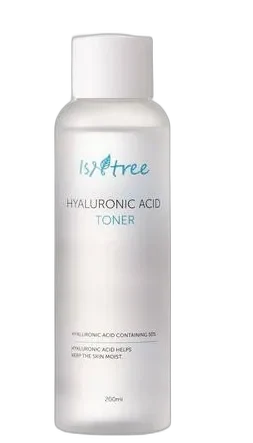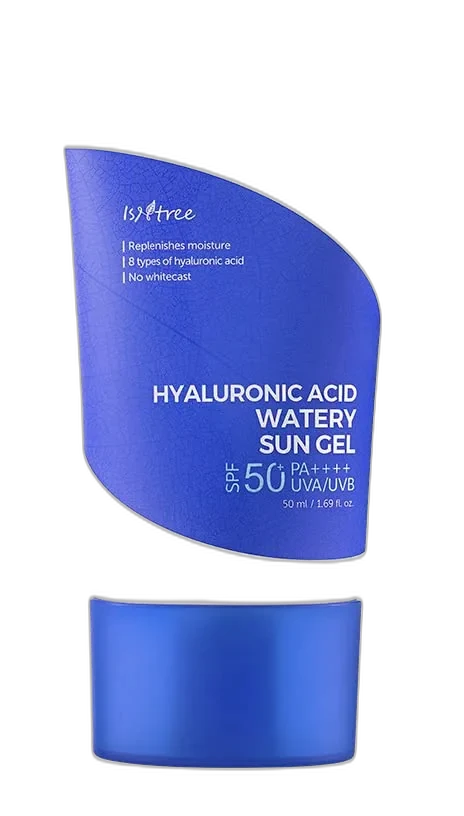
Hyaluronic Acid Watery Sun Gel SPF 50+
K-Beauty Daily SPF Standout
 Verified reviewer
Pros & cons.
- +Modern filter system with Tinosorb S, Tinosorb M, and DHHB
- +No white cast — works across all skin tones
- +Fragrance-free, alcohol-free, and well-tolerated by sensitive skin
- +Six-weight HA complex plus niacinamide keeps wear hydrating
- +Lightweight gel texture absorbs quickly with natural finish
- +Broad-spectrum SPF 50+ with strong UVA coverage
- +Reasonable price for a modern-filter daily sunscreen
- −50ml tube size empties relatively quickly with proper application
- −Not water-resistant — not for beach or pool days
- −Can occasionally pill under heavy makeup
- −Limited US retail distribution
- −Gel format may not suit users who prefer richer cream sunscreens
The full review.
To understand why K-beauty and European sunscreens became the international gold standard this decade, look at the filter list on this product. The United States has approved only two new sunscreen filters since 1999; American sunscreen brands still use chemistry from the 1970s and 80s. Europe, Korea, Japan, and Australia have approved modern filters—Tinosorb S, Tinosorb M, Uvinul A Plus, Uvinul T 150, and others—that offer stronger photostability, better UVA coverage, and lower skin reactivity than the older filters dominant in the US market. Isntree’s Hyaluronic Acid Watery Sun Gel uses three of these modern filters: Tinosorb S (BEMT), Tinosorb M (MBBT), and Uvinul A Plus (DHHB), plus octinoxate and octisalate. This is a sophisticated chemical sunscreen formulation in the Korean drugstore category and holds an advantage over most comparable American products.
The filter system determines how stable protection stays throughout the day. Older filters like avobenzone degrade under UV, which is why sunscreen reapplication guidance exists—the protection from 8am is not the same as the protection at 2pm. Tinosorb S and Tinosorb M are photostable and do not break down under UV exposure. DHHB is a long-wave UVA filter that extends coverage into the spectrum responsible for deep skin damage and pigmentation. The combination produces a broad-spectrum SPF 50+ with stable UVA coverage that avoids single-point-of-failure filters. This is superior to most American drugstore options at the same price.
The formulation is equally thoughtful. Niacinamide sits high in the INCI at likely 2-5%, providing barrier support, anti-inflammatory effects, and a small brightening benefit. The six-weight hyaluronic acid complex—the same one in Isntree’s famous toner—adds hydration, including the crosspolymer and acetylated forms that persist longer in the skin than standard HA. Panthenol, centella asiatica extract, isolated madecassoside, and allantoin provide soothing support for reactive skin. The product is fragrance-free, alcohol-free, and lacks common K-beauty irritants. The ingredient list is well-designed for photoprotection without adding problems.
The wear experience earns its cult status. The gel applies as a clear, lightweight layer that absorbs within about a minute into an almost invisible finish. There is no white cast across skin tones because the formula uses only chemical filters and no mineral whitening agents. The finish is natural, neither dewy nor matte, and does not interfere with makeup. On dry skin, the HA complex keeps the wear comfortable without needing mid-day moisturizer. On oily skin, the oil-free finish holds up without breaking into shine quickly. On sensitive skin, the fragrance-free and soothing-ingredient profile produces minimal reactivity. Throughout the day, the modern filter system keeps protection stable instead of degrading like older chemical filters. You apply it and forget you are wearing sunscreen—the most important quality for a daily SPF, as people do not wear products they hate.
Limitations are minor. At 50ml, the tube finishes faster than larger-format body sunscreens, so the per-use cost is higher than drugstore lotion SPFs. The product is not water-resistant; use a dedicated water-resistant option for beach days, swimming, or heavy sweating. The gel texture occasionally pills under certain heavy makeup, though this is rare. The product is not widely distributed in the US; order from YesStyle, Amazon third-party sellers, or international K-beauty retailers. These do not change the recommendation: this is one of the first sunscreens anyone interested in K-beauty or modern photoprotection should try. For a daily-wear sunscreen combining modern filters with a fragrance-free, HA-supported, niacinamide-boosted formulation at a drugstore price, this is a clear answer. It is not the cheapest sunscreen, nor the only option. It is one of the best in its category.
Formula
Ingredient analysis.
Full INCI list · pH 6.5
Water, Butylene Glycol, Ethylhexyl Methoxycinnamate, Diethylamino Hydroxybenzoyl Hexyl Benzoate, Ethylhexyl Salicylate, Bis-Ethylhexyloxyphenol Methoxyphenyl Triazine, Methylene Bis-Benzotriazolyl Tetramethylbutylphenol, Glycerin, Niacinamide, Propanediol, Dicaprylyl Carbonate, Dibutyl Adipate, 1,2-Hexanediol, Caprylic/Capric Triglyceride, Hydrogenated Poly(C6-14 Olefin), Sodium Hyaluronate Crosspolymer, Sodium Acetylated Hyaluronate, Hydrolyzed Sodium Hyaluronate, Hydrolyzed Hyaluronic Acid, Sodium Hyaluronate, Hyaluronic Acid, Panthenol, Centella Asiatica Extract, Madecassoside, Allantoin, Tocopherol, Acrylates/C10-30 Alkyl Acrylate Crosspolymer, Carbomer, Tromethamine, Dimethicone, Polysilicone-15, Disodium EDTA, Ethylhexylglycerin
Skin match.
The science.
The Science
This photoprotection relies on research favoring modern photostable filters over older chemical filter chemistry. Tinosorb S (BEMT) provides broad-spectrum UVB and UVA coverage with high photostability; published research shows minimal filter degradation after long UV exposure. Tinosorb M (MBBT) is an organic microfine filter that adds broad-spectrum effects and stability. DHHB (diethylamino hydroxybenzoyl hexyl benzoate) has published evidence for long-wave UVA protection, covering wavelengths linked to photoaging, pigmentation, and DNA damage—areas where older filters like avobenzone often fail. Combining these three modern filters with octinoxate and octisalate creates a layered, photostable protection profile that meets current European and Asian formulation standards. Niacinamide at 2-5% has well-documented research for improving barrier function, reducing transepidermal water loss, reducing hyperpigmentation, and modulating inflammatory response—all relevant to daily sun-exposed skin. The six-weight HA complex uses crosspolymer and acetylated forms with published evidence for better persistence and less water loss than standard HA formulations. Centella asiatica actives have research supporting anti-inflammatory effects at topical cosmetic concentrations. Every significant ingredient category in this formulation aligns with evidence.
Dermatologist Perspective
Dermatologists familiar with European and Asian sunscreen formulations generally favor modern-filter sunscreens like this one, especially for daily facial use where photostability and UVA coverage matter more than water resistance. Board-certified dermatologists note that sunscreens combining Tinosorb filters with DHHB provide stable broad-spectrum coverage that older US-market formulations struggle to match. The addition of niacinamide and soothing ingredients makes these products suitable for many patients, including those with sensitive skin or post-procedure needs. Clinical advice is to apply about a quarter teaspoon to the face, reapply every two hours during sun exposure, and use protective clothing and shade for extended outdoor time.
Where it fits in your routine.
Apply this as the final morning step after moisturizer. Use about a quarter teaspoon for the face — roughly two full finger-lengths — and spread evenly. Let it absorb for 1-2 minutes before applying makeup. Reapply every 2 hours during active sun exposure, or after heavy sweating or towel-drying. Apply more to ears, neck, and chest. This is not water-resistant; reapply immediately after swimming.
At twenty-two dollars for 50ml, the per-ml cost exceeds drugstore Western sunscreens but matches mid-tier K-beauty SPFs and costs significantly less than premium sunscreen brands. The value is high because the filter system is modern — you pay for a formulation unavailable in a US-market sunscreen — and the supporting ingredients (niacinamide, HA, centella, panthenol) add skincare value beyond UV protection. For daily facial wear, this is a top value choice in the international sunscreen category. To lower the cost, you must use older-filter drugstore sunscreens, but the photostability tradeoff is not worth it for most users.
This sunscreen suits K-beauty enthusiasts, people with combination to oily skin, and anyone wanting no white cast. It works for fragrance-free users and those seeking European-style filters not in US sunscreens. It also suits sensitive skin and anyone switching from mineral to chemical sunscreens.
People needing water-resistant sunscreen for swimming, beach, or heavy sports activities should choose a dedicated water-resistant product. Those who strongly prefer mineral-only sunscreens or cream textures over gels will want to look elsewhere.
Product details.
Clear, lightweight gel that spreads easily and absorbs within about a minute
Truly fragrance-free
50ml squeeze tube with flip cap — functional and hygienic
It applies smoothly without initial stickiness and absorbs into a natural, nearly invisible finish. There is no tingling, no fragrance, and no adjustment period — it works like a well-designed lightweight moisturizer that has SPF.
Apply daily to the face for 4-6 weeks, or 6-8 weeks with lighter use
12 months
All Year
The backstory.
The Watery Sun Gel was developed as an extension of Isntree's Hyaluronic Acid line, applying the brand's signature HA-forward philosophy to the sunscreen category. The launch in 2020 coincided with a broader K-beauty shift toward modern European filters (Tinosorb and DHHB) replacing older chemical filter profiles, and the product was positioned specifically to solve the 'chemical sunscreens feel drying' complaint that had limited adoption in the Korean market.
About Isntree
Established Brand (5–20 years)Isntree launched in 2016 and gained fame with its Hyaluronic Acid Toner. The Watery Sun Gel applies that HA-focused philosophy to sunscreen. Since its 2020 launch, it is one of the better-reviewed K-beauty gel sunscreens in international markets.
Common myths.
Gel sunscreens provide less protection than cream or lotion sunscreens.
SPF depends on the filter system and concentration, not the vehicle format. Gel sunscreens with modern filters at SPF 50+ provide the same protection as cream or lotion sunscreens with the same filter profile — if you apply enough product (approximately a quarter teaspoon for the face).
FAQ.
Does Isntree Watery Sun Gel leave a white cast?
No — the hybrid chemical filter system leaves a clear, nearly invisible finish on all skin tones. The formula lacks titanium dioxide or zinc oxide, so it has no mineral whitening. This makes it popular with deeper skin tones.
Is this sunscreen good for oily skin?
Yes — the lightweight gel texture, oil-free finish, and niacinamide make it suitable for oily and combination skin. The product absorbs to a non-greasy finish that works under makeup or alone.
What modern UV filters does this contain?
Five filters total: octinoxate, octisalate, Tinosorb S (BEMT), Tinosorb M (MBBT), and Uvinul A Plus (DHHB). The last three are modern European photostable filters not approved in US sunscreens. This makes the formula more advanced than most American-market alternatives.
Is this sunscreen water-resistant?
No — this is a daily-wear facial sunscreen, not a water-resistant beach sunscreen. Use a dedicated water-resistant SPF for swimming, heavy sweating, or extended water exposure.
Can sensitive skin use this sunscreen?
Yes — it is fragrance-free and alcohol-free. It uses centella and madecassoside to soothe and panthenol for barrier support. This is one of the better-tolerated chemical sunscreens in the K-beauty category for reactive skin. Patch test first if you have severe sensitivity.
How much should I apply?
Approximately a quarter teaspoon (about 1/4 tsp) for the face, which is roughly two finger lengths of product. Most people underapply sunscreen, which is the single biggest reason real-world SPF falls short of labeled values. Be generous.
Community
What the community says.
"No white cast at all"
"Genuinely lightweight and non-greasy"
"Modern filter system"
"Fragrance-free formulation"
"Hydrating rather than drying"
"50ml goes quickly with proper application"
"Gel texture can pill under certain makeup"
"Not water-resistant"
Featured in.
People also looked at.