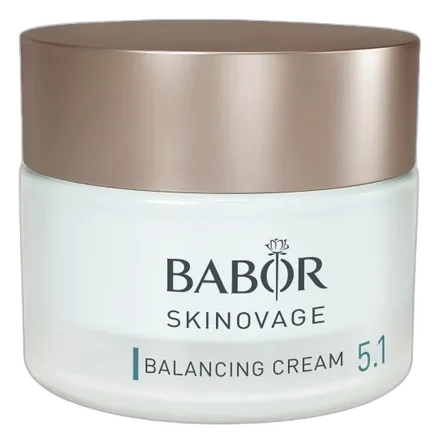
Skinovage Balancing Cream
European Spa Combo-Skin Pick
 Verified reviewer
Pros & cons.
- +Modified rice starch absorbs T-zone oil while humectants hydrate cheeks
- +Single cream handles combination skin without needing two products
- +Glycerin-trehalose-pullulan stack delivers comfortable lightweight hydration
- +Powdery satin finish is one of the most makeup-friendly in the Babor line
- +Subtle pleasant fragrance most users tolerate
- +Smart formulation philosophy from a long-running European spa brand
- +Pregnancy-safe with no problematic actives
- −Milk protein 'Sebucon' active is more marketing than measurable benefit
- −Contains hydrolyzed milk protein and royal jelly — not vegan, dairy-allergen risk
- −Not formulated for active acne or genuinely oily skin
- −Pricier than equivalent pharmacy-brand combination-skin gel-creams
- −Subtle rather than transformative results
The full review.
Most brands fail at moisturizers for combination skin. They usually tweak a normal-skin formula and call it “balancing,” but these often feel too thick for the T-zone, too matte for the cheeks, or simply average and drying. The Skinovage Balancing Cream takes a different approach visible in the ingredient list. Dimethylimidazolidinone rice starch sits in the fifth position. This is an unusual choice. Modified rice starches act as soft-focus oil absorbers; they sit on the surface, soak up sebum, and leave a powdery finish that minimizes pores and shine. These usually appear in primers or finishing powders, not jar moisturizers. Babor uses this high concentration in a hydrating cream to address mixed skin needs: the rice starch manages the T-zone, while glycerin in fourth place, trehalose, urea, sodium hyaluronate, and pullulan handle hydration for the cheeks. This is a thoughtful solution that works as advertised. The cream uses coco-caprylate and caprylic/capric triglyceride for slip, sweet almond oil and sunflower oil as the emollient layer, and shea butter as a gentle occlusive accent deeper in the list. Tocopheryl acetate provides antioxidants, allantoin softens the surface, and serine adds amino acid hydration. The formulation follows a European philosophy—gentle and multi-ingredient without a single hero—consistent with the Skinovage line Babor relaunched in 2020. The hydrolyzed milk protein and royal jelly protein combination, marketed as a sebum-regulating “Sebucon” complex, deserves skepticism. Babor claims it nudges combination skin toward a balanced oil-and-moisture state. However, cosmetic literature on milk protein for sebum regulation is much thinner than literature on niacinamide, salicylic acid, or retinoids, none of which are in this cream. Treat this as a brand-identity active rather than a workhorse. The rice starch, not the milk protein, controls shine. This is fine if you know what you are buying. The texture and feel are excellent. The cream turns slightly liquid on contact, sets within thirty to sixty seconds, and leaves a powdery soft finish that works well under makeup. The parfum provides a subtle, clean spa fragrance that most users will find pleasant, though it is light enough for most skin types. There is no tingling, purging, or break-in period. After one week, combination skin looks less shiny by mid-afternoon and dry cheek patches feel more comfortable. By four weeks, results are steady rather than dramatic; the cream performs quiet maintenance rather than skin transformation. There are two weak points. First, this is not for active acne or skin that is oily across the whole face. The sweet almond oil and coco-caprylate base, combined with the lack of salicylic acid or niacinamide, means acne-prone skin will prefer a niacinamide gel-cream from a clinical or pharmacy brand. Second, the milk protein and royal jelly protein make this unsuitable for vegan users or anyone with a dairy allergy or bee-product sensitivity. The price is around fifty-eight dollars for 50 ml, which is the lower end of the Babor lineup and fair for the value. You pay for a thoughtfully constructed combination-skin moisturizer with a clever soft-focus mattifying mechanism, a professional-channel track record, and the spa fragrance and feel Babor customers value. If you have combination skin and value these traits, this is a sensible Skinovage choice. If you want maximum active per dollar and prefer a clinical brand, niacinamide-based gel-creams elsewhere offer more.
Ingredient analysis.
Full INCI list
Aqua, Coco-Caprylate, Caprylic/Capric Triglyceride, Glycerin, Dimethylimidazolidinone Rice Starch, Prunus Amygdalus Dulcis Oil, Tocopheryl Acetate, Phenoxyethanol, Sodium Polyacrylate, Hydrolyzed Milk Protein, Parfum, Glyceryl Polyacrylate, Helianthus Annuus Seed Oil, Trehalose, Urea, Xanthan Gum, Tocopherol, Butyrospermum Parkii Butter, Allantoin, Ethylhexylglycerin, Pentylene Glycol, Serine, Sodium Stearoyl Glutamate, Hydrogenated Lecithin, Sodium Hydroxide, Biosaccharide Gum-1, Phenethyl Alcohol, Disodium Phosphate, Algin, Caprylyl Glycol, Sodium Hyaluronate, Pullulan, Potassium Phosphate, Maltodextrin, Hydrolyzed Royal Jelly Protein, CI 42090, CI 19140.
Skin match.
The science.
The Science
The most interesting cosmetic chemistry here is the high level of dimethylimidazolidinone rice starch. Modified rice starches act as soft-focus particles in skincare. These refractive-index-matched powders sit on the skin surface, scatter incident light to hide pores and shine, and absorb some sebum without drying the tissue. In a leave-on moisturizer, this provides an immediate optical mattifying effect on the T-zone and reduces mid-day shine over several hours. The humectant backbone of glycerin, trehalose, urea, sodium hyaluronate, and pullulan uses a layered approach. Cosmetic literature shows this produces better stratum corneum hydration than any single humectant alone. Glycerin is the gold-standard small-molecule humectant. Trehalose is a glass-forming non-reducing sugar that protects membrane lipids from desiccation damage and appears more often in dehydration-targeted products. Urea at these low concentrations (well below keratolytic doses) works as a humectant and adds to the natural moisturizing factor pool. Sodium hyaluronate and pullulan together provide deep water binding and immediate film-forming smoothness, a combination from K-beauty essences. The hydrolyzed milk protein and royal jelly protein actives Babor markets as a sebum-balancing complex have less literature support. Early studies on milk-derived peptides suggest mild effects on sebum gland activity, but the evidence lacks the clinical weight of niacinamide or topical retinoids for oily skin. The rice starch and humectant stack do the meaningful work; the milk protein actives follow the brand's gentle, multi-extract European formulation tradition rather than acting as a primary mechanism.
Dermatologist Perspective
Dermatologists view combination skin as a moisturizer formulation problem rather than a treatment problem. The most useful clinical approach finds a single product that delivers humectant hydration without occluding the T-zone. This cream's architecture—soft-focus mattifying particles paired with a layered humectant stack—matches what board-certified dermatologists frequently recommend for mixed skin types. Dermatologists note that any cream containing hydrolyzed milk protein and royal jelly is inappropriate for patients with dairy allergy or bee-product sensitivity. This formula is not a substitute for active acne treatment when acne is present. For straightforward combination skin without active breakouts, the cream is clinically uncontroversial and fits the role well.
Where it fits in your routine.
Apply a hazelnut-sized amount morning and night to clean skin, after any serum and before sunscreen. Press the cream into the face and neck instead of rubbing; rice starch sets best with a brief pat-and-leave application. Wait 30-60 seconds for the cream to set before applying makeup. The texture works under foundation and is thick enough for night use without an additional night cream. Use the Skinovage Balancing Serum to extend the line's combination-skin approach.
At around 58 dollars for 50 ml, this is affordable within the Babor catalog and offers fair value. You pay for a combination-skin moisturizer with long spa-channel heritage and a sensory experience that matches the Babor brand identity. A Skinovage Balancing Cream Rich version exists for drier mixed skin, and Babor sometimes ships a 200 ml professional size at a lower per-milliliter cost via licensed estheticians. Pharmacy-brand niacinamide gel-creams may offer more active mattification per dollar, making the Babor option more elegant but less aggressive. For most combination-skin users seeking a gentle daily moisturizer instead of a clinical treatment, the price is defensible.
Buy this if you have combination or normal skin that is slightly oily in the T-zone but normal to dry on the cheeks. Choose this if you like thoughtful European spa formulations and want one moisturizer that handles both zones without using two separate creams.
Skip this if you are vegan, have a dairy or bee product allergy, have active acne or oily skin (use Skinovage Purifying or a clinical niacinamide gel-cream instead), or want maximum clinical actives per dollar. Skip this if you have very reactive sensitive skin — the Skinovage Calming variant fits better.
Product details.
This medium-light, satin cream turns slightly liquid on contact and finishes powdery-soft.
Subtle clean spa fragrance from the parfum.
50 ml frosted glass jar with screw lid; professional channels sometimes sell an airless tube version.
The first application feels lighter than most cream-textured moisturizers — the rice starch sets fast and skin feels hydrated without a dewy finish. It causes no tingling or purging. Within the first week, combination skin reacts less to midday sebum, and dry cheek patches look more comfortable.
Around 3-4 months with twice-daily face and neck application.
12 months
All Year
The backstory.
Skinovage was relaunched in 2020 after a long history as Babor's Skinovage PX line. The new range moved away from age-targeted positioning toward skin-type-matching, with separate variants for sensitive, balancing (combination), moisturizing (dry), purifying (oily), and vitalizing (dull) skin. The Balancing Cream is the workhorse of the line for normal-to-combination skin.
About Babor
Legacy Brand (20+ years)Babor started in Aachen, Germany in 1956. For decades, the Skinovage line has been the brand's everyday-skincare pillar, sold mostly through licensed estheticians and spa channels. The current Skinovage range relaunched and reformulated in 2020 to match skin types instead of targeting age.
Common myths.
Combination skin requires two different moisturizers — one for the T-zone and one for the cheeks.
It does not, if the formula is built correctly. A well-designed balancing cream like this one uses oil-absorbing soft-focus particles and humectants in one product. This allows a single cream to handle both areas without compromise.
Milk protein actives meaningfully regulate sebum.
Evidence is thin compared to retinoids, niacinamide, or salicylic acid. The milk protein is reasonable marketing but is not a primary acne or oil-control treatment.
FAQ.
Is this cream really suitable for combination skin?
Yes — high-positioned rice starch absorbs T-zone oil while the glycerin-trehalose-pullulan humectant stack hydrates cheeks. One cream handles both areas so you do not need two different products.
Will it cause breakouts on acne-prone skin?
This formula is not for active acne. The sweet almond oil and coco-caprylate do not suit oily acne-prone skin, and the product lacks acne-targeting actives. Niacinamide gel-creams work better for acne-prone combination skin.
Is there a vegan version?
No. This formula uses hydrolyzed milk protein and hydrolyzed royal jelly protein. It is not vegan and is not suitable for anyone with a dairy allergy.
Can I wear makeup over it?
Yes — the satin powdery finish is a makeup-friendly texture in the Babor catalog. Wait 60 seconds for the cream to set before you apply foundation.
Is it pregnancy-safe?
Yes. The formula has humectants, plant oils, milk protein, and a small dose of urea. It lacks retinoids, hydroquinone, or salicylic acid above safe levels.
What is the difference between Skinovage Balancing and Skinovage Purifying?
Balancing is for combination skin that runs slightly oily in the T-zone but normal-to-dry on the cheeks. Purifying is for genuinely oily skin and contains different actives targeted at sebum control. Pick Balancing for mixed skin, Purifying for skin that feels uniformly oily.
Can I use it morning and night?
Yes — the texture is light enough for daytime under sunscreen and thick enough for night use without feeling thin on the cheeks. You do not need a separate night cream.
What the community says.
"Light hydrating finish that works under makeup"
"Reduces midday shine without drying cheeks"
"Pleasant subtle scent"
"Pricey for a non-active moisturizer"
"Milk protein content is a problem for vegan and dairy-allergic users"
"Subtle rather than transformative results"