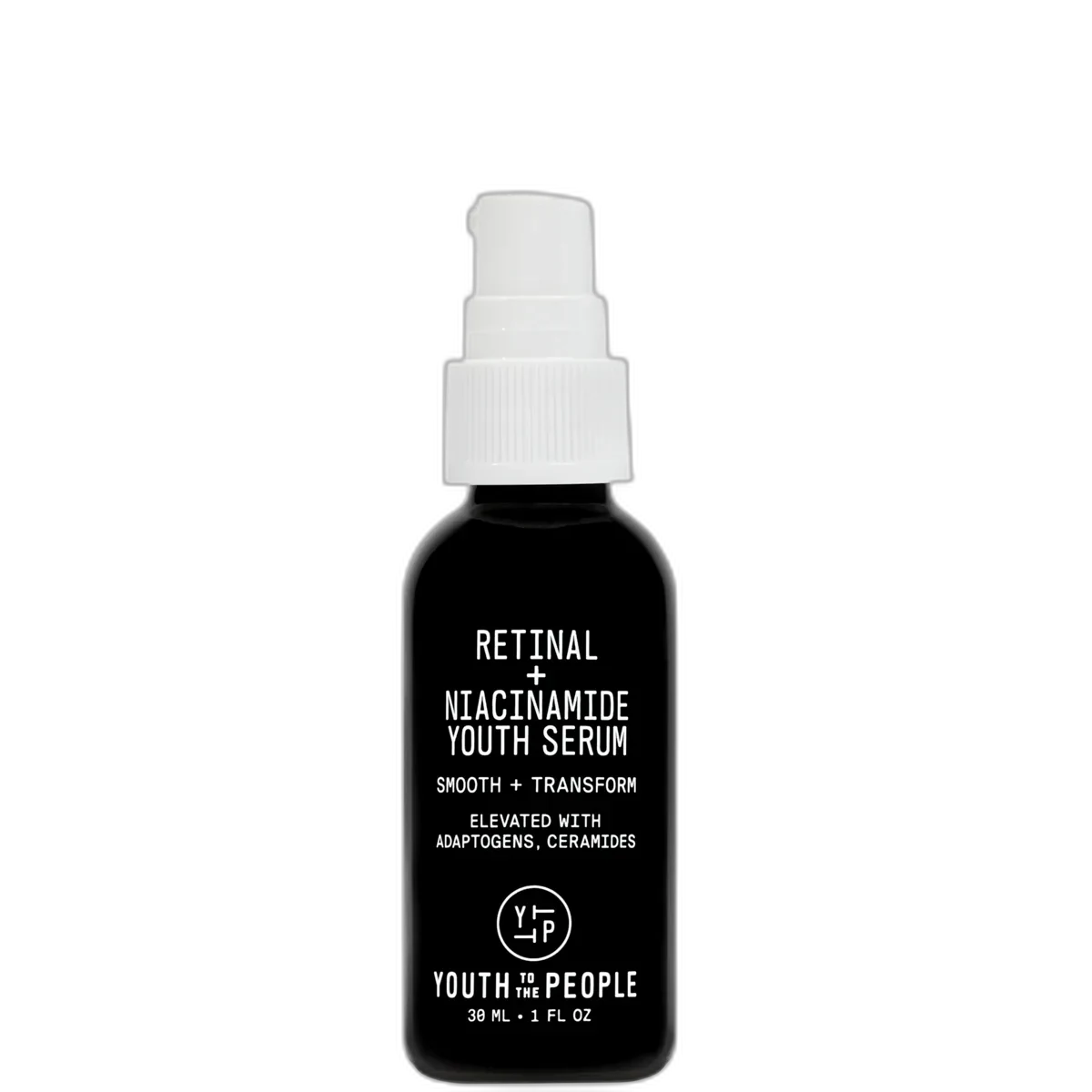
Retinal + Niacinamide Youth Serum
Cleanical Retinal Pioneer
 Verified reviewer
Pros & cons.
- +0.15% retinaldehyde is the most potent OTC retinoid, delivering faster results than retinol
- +Cyclodextrin encapsulation controls retinal release to reduce irritation peaks
- +Full ceramide complex (NP, AP, EOP) with cholesterol and phytosphingosine for barrier support
- +5% niacinamide provides synergistic brightening and barrier-strengthening benefits
- +Multi-weight hyaluronic acid system provides sustained hydration during retinization
- +Dark glass pump packaging protects light-sensitive retinaldehyde
- −$68 for 30ml is a significant investment
- −Retinization period still occurs despite the buffering system
- −Not suitable for sensitive skin, pregnant individuals, or those on prescription retinoids
- −6-month PAO means the product must be used quickly after opening
- −Results take 8-12 weeks to become visible
The full review.
Retinaldehyde is the strongest retinoid available without a prescription. Most brands use it as a headline ingredient, pairing it with basic moisturizers. Youth to the People took a different approach. They built a support system around the retinal to make this serum interesting.
The formulation shows how to make a potent active more tolerable. It uses 0.15% retinaldehyde encapsulated in cyclodextrin—a ring-shaped sugar molecule that cages the retinal to control its release into the skin. This encapsulation is functional. Controlled-release mechanisms lower the peak concentration hitting the skin, which reduces the irritation spike that causes many users to quit retinal products in the first two weeks.
The barrier-support arsenal surrounding the retinal is impressive. Three ceramides—NP, AP, and EOP—work with cholesterol and phytosphingosine to replenish the intercellular lipid matrix that retinoids deplete. This is not a token ceramide mention. The ceramide-cholesterol-phytosphingosine complex mirrors the ratio found in healthy skin barriers.
Niacinamide at 5% is the co-star. At this concentration, it strengthens the barrier, reduces sebum production, brightens hyperpigmentation, and reduces inflammation from retinaldehyde. The niacinamide-retinal combination is pharmacologically synergistic: niacinamide helps the skin tolerate the retinal, while both ingredients independently address fine lines, uneven tone, and acne.
Squalane and a multi-weight hyaluronic acid system provide hydration. The crosspolymer form creates a sustained-release hydration reservoir on the skin surface.
The mushroom extract complex—maitake, reishi, and shiitake—adds an adaptogenic and antioxidant layer. While clinical evidence for topical adaptogens is emerging, these mushroom extracts contain beta-glucans with documented anti-inflammatory properties.
The texture is a lightweight, milky fluid that absorbs quickly without residue. The dark glass pump bottle protects retinaldehyde from light degradation.
The retinization period occurs even with buffering. During weeks one through three, expect dryness, mild flaking, and possibly increased sensitivity. The ceramides and niacinamide reduce the severity compared to a bare retinal formula, but they do not eliminate it. Start with two to three times per week.
At $68 for 30ml, the price is premium. However, retinaldehyde is an expensive raw material. Adding cyclodextrin encapsulation, a full ceramide complex, 5% niacinamide, and multi-weight hyaluronic acid increases the formulation cost. You pay for sophistication.
For sensitive skin, this remains too potent despite the buffering. Pregnant individuals must avoid all retinoids. Those on prescription tretinoin do not need this. But for consumers wanting the strongest OTC retinoid in a formulation designed to minimize irritation, this serum delivers. The retinal is the star, but the supporting cast makes the serum work.
Formula
Ingredient analysis.
Full INCI list
Water/Aqua/Eau, Butylene Glycol, Triethylhexanoin, Niacinamide, Squalane, Cyclodextrin, Glycerin, Hydrogenated Lecithin, Polyglyceryl-10 Myristate, Grifola Frondosa Fruiting Body Extract, Rubus Chamaemorus (Cloudberry) Seed Oil, Arginine, Retinal, Withania Somnifera (Ashwagandha) Root Extract, Helianthus Annuus (Sunflower) Seed Oil, Hordeum Vulgare Extract, Ganoderma Lucidum (Reishi Mushroom) Stem Extract, Sodium Hyaluronate Crosspolymer, Cucumis Sativus (Cucumber) Seed Oil, Lonicera Japonica (Honeysuckle) Flower Extract, Ceramide NP, Ceramide AP, Phytosphingosine, Cholesterol, Lentinus Edodes Mycelium Extract, Lonicera Caprifolium (Honeysuckle) Flower Extract, Butyrospermum Parkii (Shea) Oil, Ceramide EOP, Sodium Lauroyl Lactylate, Acrylates/C10-30 Alkyl Acrylate Crosspolymer, Capryloyl Glycerin/Sebacic Acid Copolymer, Xanthan Gum, Tocopherol, Carbomer, Hydrolyzed Glycosaminoglycans, Sodium Hyaluronate, Hyaluronic Acid
Skin match.
The science.
The Science
Retinaldehyde sits in a unique spot in the retinoid hierarchy. Retinol requires two enzymatic conversions, but retinaldehyde needs only one step to become tretinoin. A landmark study in the Journal of Investigative Dermatology shows that 0.05% retinaldehyde produces photoaging improvements comparable to 0.05% tretinoin with significantly less irritation.
Multiple clinical trials support the 5% niacinamide concentration. Research in the British Journal of Dermatology found that 5% niacinamide reduces hyperpigmentation and improves skin elasticity after 12 weeks.
The ceramide complex replicates the intercellular lipid composition of a healthy stratum corneum. Research shows retinoid use depletes ceramides, which contributes to retinization. Topical ceramide supplementation during retinoid therapy reduces barrier disruption.
Cyclodextrin encapsulation is a standard pharmaceutical technology that controls drug release and reduces the peak skin concentration that drives acute irritation.
Dermatologist Perspective
Dermatologists view retinaldehyde as the most efficacious OTC retinoid. Board-certified dermatologists note that pairing retinal with ceramides, niacinamide, and controlled-release encapsulation follows clinical best practices to maximize retinoid tolerability. Dermatologists emphasize that daily broad-spectrum sunscreen is non-negotiable when using any retinoid.
Where it fits in your routine.
Apply 1-2 pumps to clean, dry skin in the evening after cleansing and toning. Avoid the eye area. Use 2-3 evenings per week for the first 2-4 weeks, then increase to nightly as tolerated. Apply sunscreen every morning. Do not use on the same evening as AHA/BHA exfoliants or benzoyl peroxide.
At $68 for 30ml, this serum is a premium product but competes well with other retinal serums. The formulation shows real ingredient investment. A $22 travel size is available for testing. Compared to prescription tretinoin, this serum offers convenience and cosmetic elegance at a comparable total cost.
Ideal for normal, combination, and oily skin types aged 25+ seeking the strongest OTC retinoid with built-in barrier protection. This works for those new to retinoids starting with retinaldehyde, and anyone targeting fine lines, texture, hyperpigmentation, or adult acne.
Skip this if you have sensitive, eczema-prone, or rosacea-affected skin. Pregnant or nursing individuals must avoid all retinoids. Users of prescription tretinoin do not need this. Budget-conscious consumers can find retinol serums for one-third the price.
Product details.
Lightweight, fluid serum with a slightly milky consistency that absorbs quickly
No added fragrance
Dark glass pump bottle protecting light-sensitive retinaldehyde
This lightweight, milky fluid absorbs in 30-60 seconds. It causes no immediate tingling. During weeks 1-3, skin undergoes retinization, which causes mild dryness and flaking. The ceramides and niacinamide buffer this transition.
1.5-2 months with nightly use
6 months
All Year
The backstory.
Launched in 2022, this serum represented YTTP's entry into the potent retinoid category. The formulation challenge was delivering retinaldehyde while maintaining clean-beauty standards and minimizing irritation. The solution was cyclodextrin encapsulation paired with a full ceramide complex.
About Youth to the People
Established Brand (5–20 years)Greg Gonzalez and Joe Cloyes founded Youth to the People in 2015 in Los Angeles, using three generations of skincare expertise. L’Oréal acquired the brand in 2022, providing access to large R&D resources. YTTP uses a 'cleanical' approach — clean ingredients with clinical results — and sells exclusively at Sephora.
FAQ.
Is retinaldehyde stronger than retinol?
Yes. Retinaldehyde is one enzymatic step closer to the active form than retinol, so it works at lower concentrations. This serum's 0.15% retinaldehyde delivers results faster than most retinol products.
Can I use this if I have never used a retinoid?
Yes, but start slowly. Use it 2-3 evenings per week. The ceramide complex and niacinamide buffer retinal's effects. Some dermatologists recommend starting with retinol first.
Can I use this with vitamin C?
Yes, but not simultaneously. Use vitamin C in the morning and this retinal serum in the evening.
How long until I see results?
Texture improves at 4-6 weeks. Fine lines reduce at 8-12 weeks. Full benefits take 3-6 months.
Is this serum safe during pregnancy?
No. All retinoids are contraindicated during pregnancy and breastfeeding.
---
What the community says.
"Retinaldehyde delivers visible results faster than retinol"
"Ceramide complex reduces typical dryness and peeling"
"Lightweight texture absorbs well without greasiness"
"5% niacinamide provides noticeable brightening"
"$68 for 30ml is a significant investment"
"Still causes retinization in the first few weeks"
"Not suitable for those already using prescription retinoids"
"Some users find it not potent enough compared to tretinoin"
People also looked at.