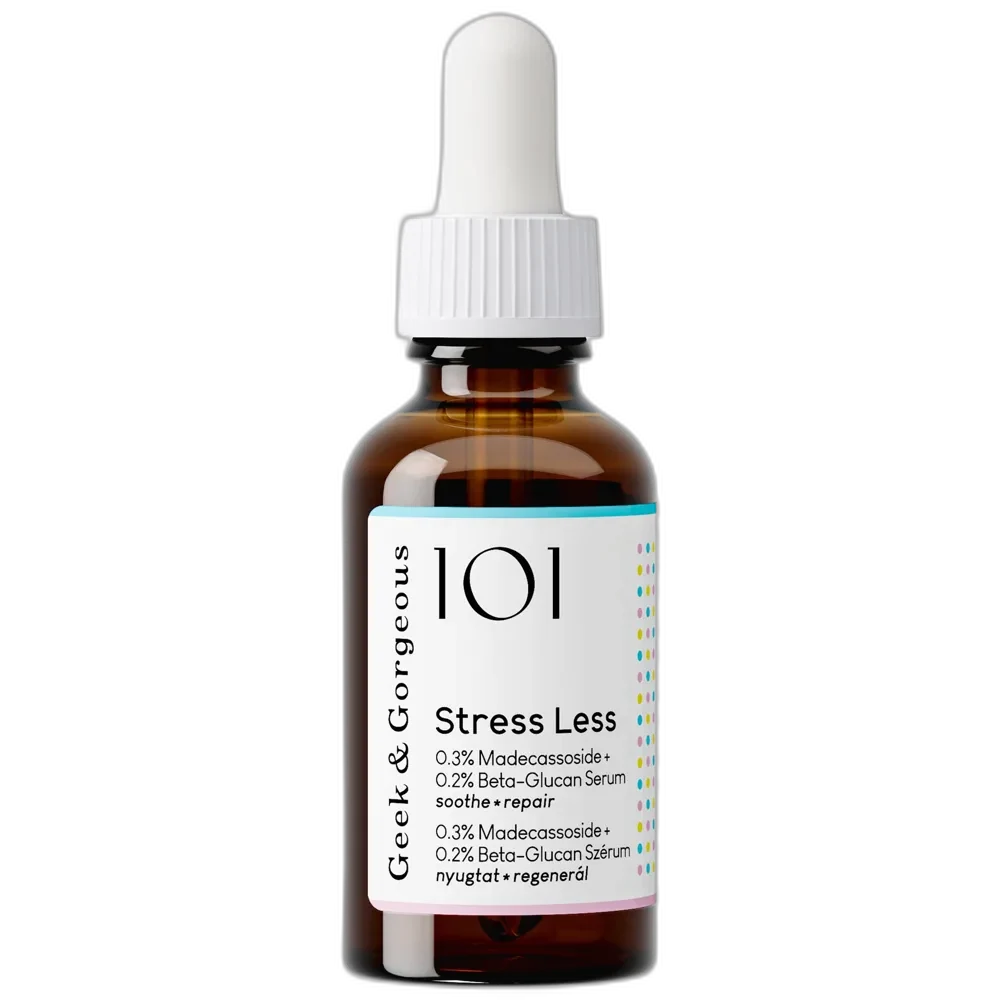
Stress Less 0.3% Retinal Serum
Derm-Grade Retinal at Drugstore Price
 Verified reviewer
Pros & cons.
- +0.3% retinaldehyde concentration matches premium luxury brands at a fraction of the cost
- +Ceramide NP, bisabolol, panthenol, and allantoin meaningfully buffer irritation
- +Opaque airless pump packaging protects retinaldehyde stability properly
- +Fragrance-free formulation appropriate for reactive users with retinoid tolerance
- +Visible texture, tone, and fine line improvements within 12-16 weeks
- +Cruelty-free and vegan certified
- +One of the best price-to-concentration ratios in the retinaldehyde category
- −Not appropriate for retinoid beginners — start with a lower concentration first
- −Not pregnancy or breastfeeding safe
- −30ml runs out in 2-3 months with nightly use
- −Requires careful storage to maintain retinaldehyde stability
- −Initial retinization phase can include dryness and mild flaking
The full review.
A retinoid hierarchy exists that most people never see. Prescription tretinoin is at the top; it is pure retinoic acid, the active form that binds to retinoid receptors and produces visible results in weeks. Below that is adapalene, which is available over the counter in the US and is effective but gentler. Below that is retinaldehyde, which is one enzymatic step from retinoic acid and roughly ten times more potent than retinol at equivalent concentrations. Below that is retinol, the most common OTC retinoid, which requires two conversion steps and shows slower results. For most of the past decade, retinaldehyde was a luxury ingredient. Medik8 owned the category with their Crystal Retinal line, and the premium pricing—$60 to $110 for 30ml—reflected the formulation difficulty (retinaldehyde is notoriously unstable) and the lack of competition.
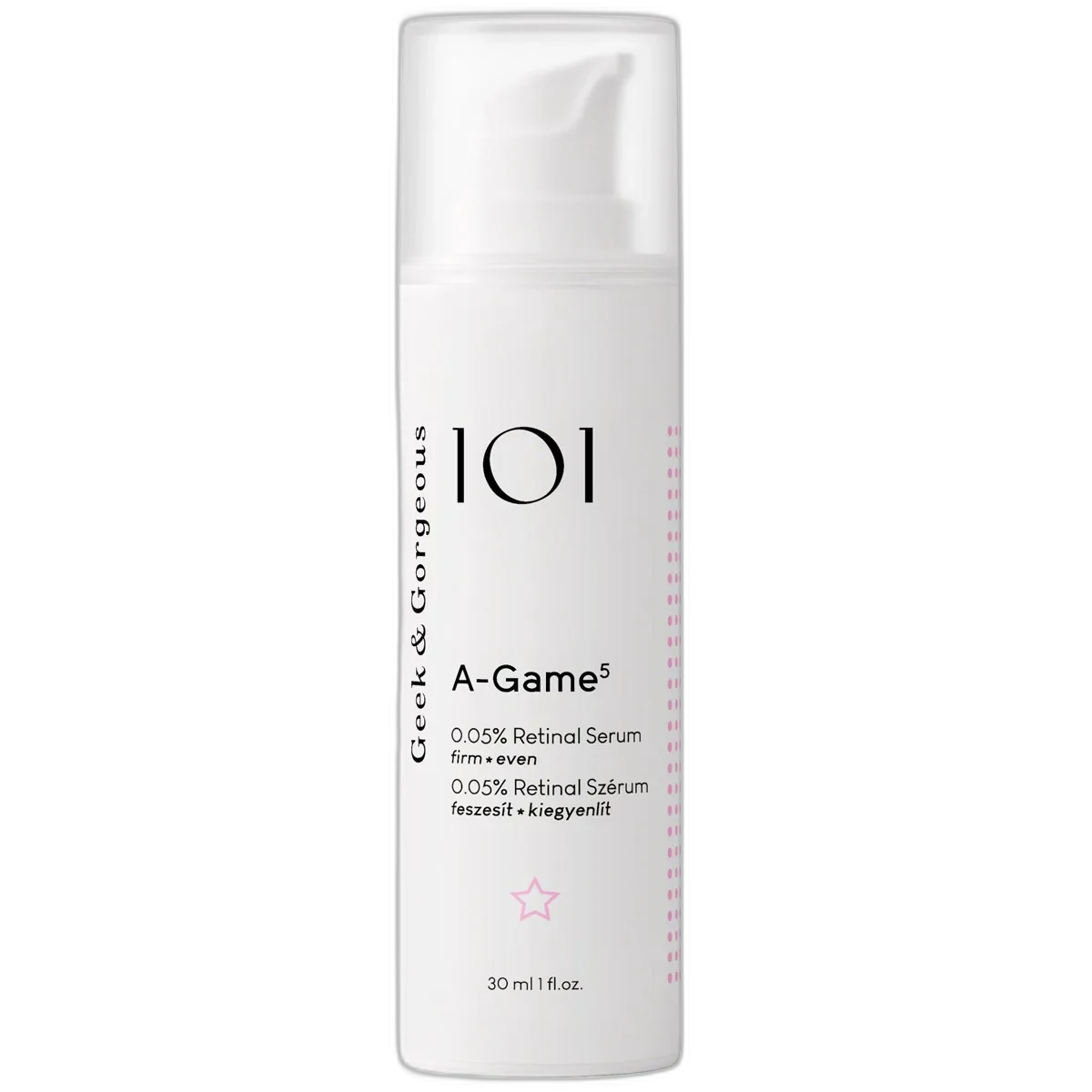
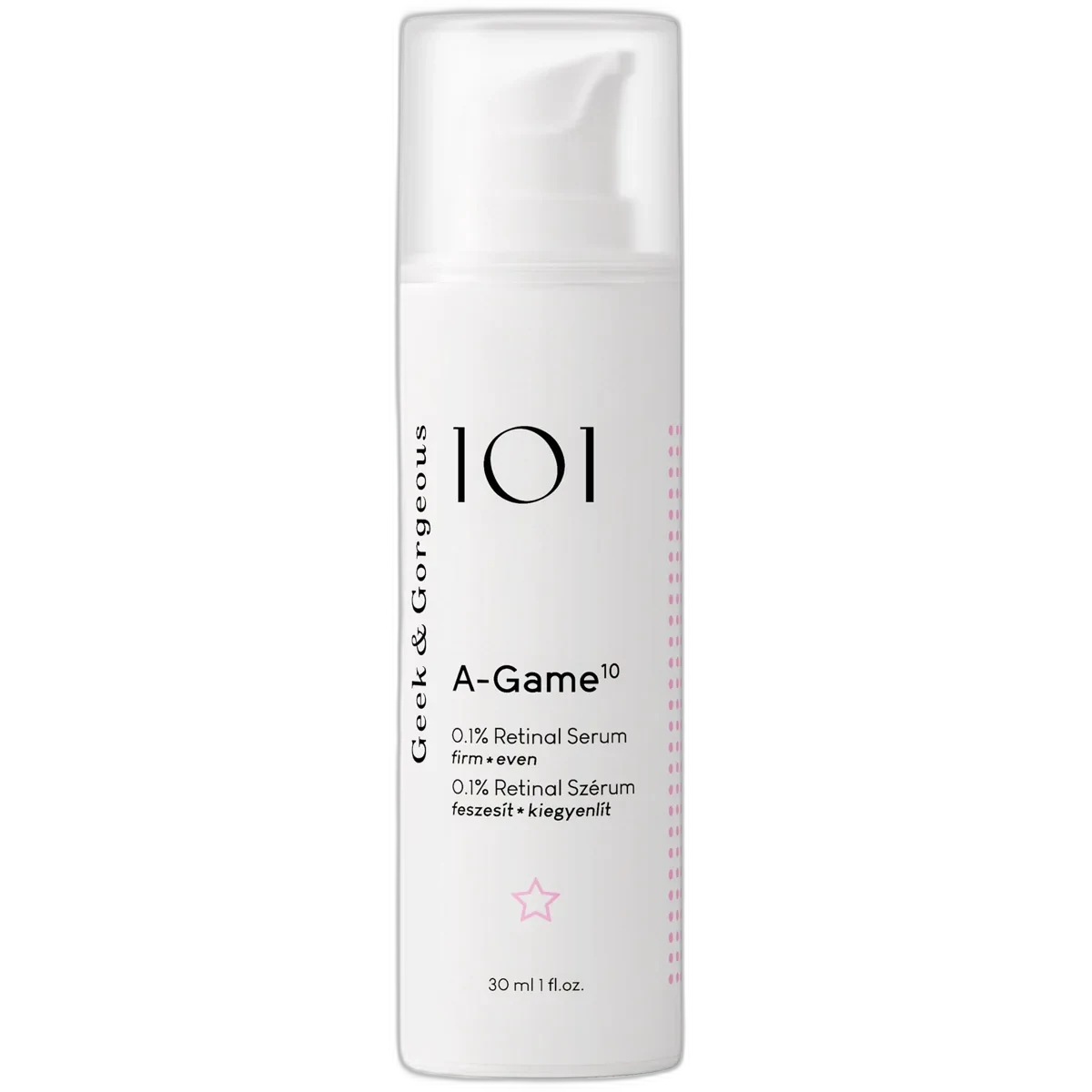
Geek & Gorgeous entered this market with their original A-Game lineup—retinal at 0.05%, 0.1%, and 0.2%—and priced it near-cost. This disrupted the European budget market, and within a couple of years, the brand had enough technical credibility to add a 0.3% version: Stress Less. That concentration matters. 0.3% retinaldehyde is at the upper end of what is commercially viable over-the-counter, a strength experienced retinoid users traditionally pay premium prices to access. The $17 price seemed suspicious at first, but the formulation details explain it.
The active ingredient is the easy part of a 0.3% retinal formula. The hard part is stability and tolerability. Retinaldehyde degrades when exposed to light, air, and heat; it turns brown and loses potency within weeks if packaged incorrectly. Stress Less uses an opaque airless pump bottle, the same packaging approach used by Medik8 and other premium brands. Including BHT as a secondary antioxidant extends the stability window. Stored properly, the serum holds its potency for the full 2-3 month use period at nightly application.
The formulation is clever regarding tolerability. Ceramide NP, panthenol, bisabolol, and allantoin are included at functional concentrations, not trace marketing amounts. Ceramide NP supports the stratum corneum lipid matrix that retinoids disrupt during the adaptation phase. Panthenol and allantoin add barrier support and soothing. Bisabolol is a chamomile-derived anti-inflammatory with real evidence. Together, they form a buffering base that reduces the acute irritation response most users experience with 0.3% retinoids. The ‘Stress Less’ branding is accurate; the formulation does the work.
User reports match the formulation logic. Most experienced retinoid users—those who have built tolerance with a 0.2% version or an adapalene—can ramp up to nightly Stress Less over 3-4 weeks without significant drama. A mild retinization phase still occurs, with some initial dryness and possible flaking in weeks 1-2, but it is less aggressive than the same concentration without the soothing base. Beginners who jump straight to 0.3% without prior retinoid experience will have a harder time and should start lower; the brand’s A-Game 0.1% is the appropriate entry point for that group.
Results follow the adaptation phase. Texture smoothing begins around week 4-6. Reduction in post-inflammatory hyperpigmentation from acne appears by week 8-10. Fine lines and general skin tone improve at 12-16 weeks. These timelines are roughly comparable to prescription tretinoin at moderate doses, given retinaldehyde’s proximity to retinoic acid in the conversion chain. Results are slower than tretinoin but faster and more visible than retinol at equivalent ‘strength’ labels. The combination of concentration and buffering puts Stress Less in a category where it competes with premium retinal brands on outcome.
The caveats apply to any strong retinoid. It is not pregnancy-safe. Do not use it during active rosacea flares or on compromised barriers without a careful ramp-up. Do not layer it with AHAs, BHAs, or benzoyl peroxide in the same evening, and do not combine it with morning L-ascorbic acid in a way that overstresses the skin. These are retinoid rules, not criticisms of this specific product, but they matter for anyone using a 0.3% formula for the first time. The 30ml bottle lasts 2-3 months with nightly use, which is the standard size for retinaldehyde products but shorter than some other categories.
For the price, performance, and the buffering system, Stress Less is one of the most impressive products Geek & Gorgeous has shipped. It makes a concentration normally gatekept by luxury pricing accessible to anyone following a proper ramp-up schedule. For experienced retinoid users looking for a budget upgrade from retinol, or for people who have outgrown lower-concentration retinals and want to step up without premium-brand pricing, this is the obvious pick. It is not a beginner product, and you must respect the concentration, but at this price and level of formulation care, it earns one of the highest recommendations the category allows.
Formula
Ingredient analysis.
Full INCI list · pH 5.5
Aqua, Isohexadecane, Glycerin, Propanediol, Caprylic/Capric Triglyceride, Dimethicone, Polyglyceryl-3 Methylglucose Distearate, Retinal, Tocopheryl Acetate, Squalane, Panthenol, Bisabolol, Allantoin, Ceramide NP, Sodium Hyaluronate, Cetyl Alcohol, Xanthan Gum, BHT, Disodium EDTA, Phenoxyethanol, Ethylhexylglycerin
Skin match.
The science.
The Science
Retinaldehyde works because of its place in the retinoid conversion chain. Topical retinoids bind to retinoic acid receptors in skin cells to regulate gene expression, collagen synthesis, pigment production, and keratinocyte behavior. Only retinoic acid binds these receptors directly; all other retinoids require conversion. Retinol needs two enzymatic steps (retinol to retinaldehyde to retinoic acid), but retinaldehyde needs only one. This one-step proximity to the active form means comparative studies show retinaldehyde produces visible effects at concentrations roughly 10x lower than equivalent retinol. This makes 0.3% retinaldehyde a potent OTC strength rather than a mild one.
Published research on topical retinaldehyde includes multi-month studies. These show reduced photoaging markers, improved fine lines, and reduced post-inflammatory hyperpigmentation, especially at concentrations of 0.05% and above. At 0.3%, the efficacy curve is steep. Meaningful results should appear within 8-16 weeks of consistent nightly use, matching prescription retinoid outcomes for many users.
Stability is the main challenge with retinaldehyde. The aldehyde group is highly reactive and degrades fast when exposed to light, oxygen, and heat. Commercial retinaldehyde products need opaque, airtight, light-protective packaging—usually an airless pump—and antioxidant stabilizers to extend shelf life. Stress Less uses an opaque airless pump and BHT as a secondary antioxidant, matching the packaging used by premium retinaldehyde brands.
The buffering system differentiates this formulation from a minimal-active retinal serum. Ceramide NP is one of the three primary ceramide subtypes in the stratum corneum; it supports the lipid lamellae that retinoids can disrupt during adaptation. Panthenol supports barrier function by converting to pantothenic acid, which participates in fatty acid synthesis. Bisabolol has documented anti-inflammatory activity, and allantoin supports epithelial turnover. This base reduces the acute and sub-acute irritation response to retinaldehyde, which improves compliance and real-world efficacy.
Dermatologist Perspective
Dermatologists often recommend retinaldehyde as a middle-ground option for patients wanting stronger results than retinol without a tretinoin prescription. Board-certified dermatologists note that retinaldehyde's single-step conversion to retinoic acid yields faster visible results than retinol, especially for fine lines, post-inflammatory hyperpigmentation, and texture. At 0.3%, this serum is at the upper end of OTC retinaldehyde concentrations. Dermatologists typically recommend this strength only to patients who already have tolerance from lower-concentration retinoids. Including ceramide NP and anti-inflammatory actives in the base aligns with how clinicians approach retinoid tolerability. A well-buffered formulation often produces better long-term outcomes than a minimal-ingredient high-concentration serum because patients continue using it.
Where it fits in your routine.
Apply only in the evening. Cleanse skin and wait 10-15 minutes until it is dry before application; applying retinaldehyde to damp skin increases penetration and irritation. Use one pump to spread a pea-sized amount across the full face. Avoid the immediate eye area and corners of the mouth to prevent common irritation. Follow with a soothing moisturizer like the Jelly Joker Gel Moisturizer. Use 2x/week for the first 2 weeks, 3x/week for weeks 3-4, every other night for weeks 5-8, and move to nightly only if skin tolerates it. Use a broad-spectrum SPF every morning while using this product. Do not layer with AHAs, BHAs, benzoyl peroxide, or L-ascorbic acid in the same evening.
At about $17 for 30ml of 0.3% retinaldehyde, this serum costs much less than premium retinaldehyde products, which usually cost $60 to $110 for similar concentrations. The 30ml size is standard and lasts 2-3 months with nightly use. With its buffering system, airless pump packaging, and fragrance-free formulation, the per-use cost is among the lowest in the serious retinoid category. For experienced retinoid users, the value is uncontested — few other products in this concentration range match this price without sacrificing formulation quality.
Retinoid users ready to move past retinol, adapalene, or low-concentration retinals. This works for fine lines, photoaging, acne, or post-inflammatory hyperpigmentation when milder products no longer suffice and the strongest OTC option is needed.
Skip this if you are a retinoid beginner; use the brand's A-Game 0.1% first. Also skip if you are pregnant, breastfeeding, trying to conceive, or have an active rosacea flare, eczema, or compromised barrier.
Product details.
All Year Certifications Cruelty-FreeVegan
The backstory.
Geek & Gorgeous's original A-Game retinal line offered 0.05%, 0.1%, and 0.2% concentrations at near-cost pricing, effectively democratizing retinaldehyde. Stress Less 0.3% was added as the top-tier option for experienced retinoid users who wanted the strongest OTC concentration without paying premium brand prices, and it was built with additional soothing support to account for the higher-irritation tradeoff.
About Geek & Gorgeous
Emerging Brand (2–5 years)Geek & Gorgeous launched in 2020. This Hungarian indie brand makes formulator-led single-active products and sells them at near-cost prices. The brand makes potent retinaldehyde formulations accessible, a category where larger brands usually charge premium prices.
FAQ.
What's the difference between retinal and retinol?
Retinaldehyde (retinal) is one enzymatic conversion step from retinoic acid, the active form that affects skin cells. Retinol requires two steps. This makes retinaldehyde roughly ten times more potent than retinol at equivalent concentrations and shows visible results faster.
Is 0.3% retinal too strong for beginners?
Yes — this concentration is high. New retinoid users should start with A-Game 0.1% or 0.2% to build tolerance over 8-12 weeks, then switch to Stress Less 0.3% if they want. Using 0.3% without prior retinoid experience causes significant irritation.
How does it compare to Medik8 Crystal Retinal 10?
Both use 0.1% retinaldehyde in stable airless packaging (note: 'Crystal Retinal 10' = 0.1%, not 1.0%). To compare 0.3% directly, use Medik8's Crystal Retinal 24 or a similar tier; Stress Less costs much less. The retinaldehyde concentration is comparable.
Is it pregnancy safe?
No — retinoids including retinaldehyde are contraindicated during pregnancy and breastfeeding because of systemic retinoid effects. Stop use before trying to conceive.
Can I use it every night?
Yes, eventually—but start with 2x/week for the first 2 weeks, then 3x/week for weeks 3-4, then every other night. Move to nightly only if your skin tolerates it. Rushing the ramp-up causes most retinoid failures.
Do I need a moisturizer after this?
Yes — always follow with a moisturizer. The brand's own Jelly Joker Gel Moisturizer was specifically designed for this pairing and buffers the retinaldehyde's drying effect.
Community
What the community says.
"visible results faster than retinol"
"surprisingly tolerable for 0.3%"
"fades PIH and acne scars"
"improves texture significantly"
"extraordinary price for the concentration"
"oxidizes if not stored carefully"
"30ml bottle runs out in 2-3 months"
"initial retinization period is real"
"not for absolute beginners"
People also looked at.