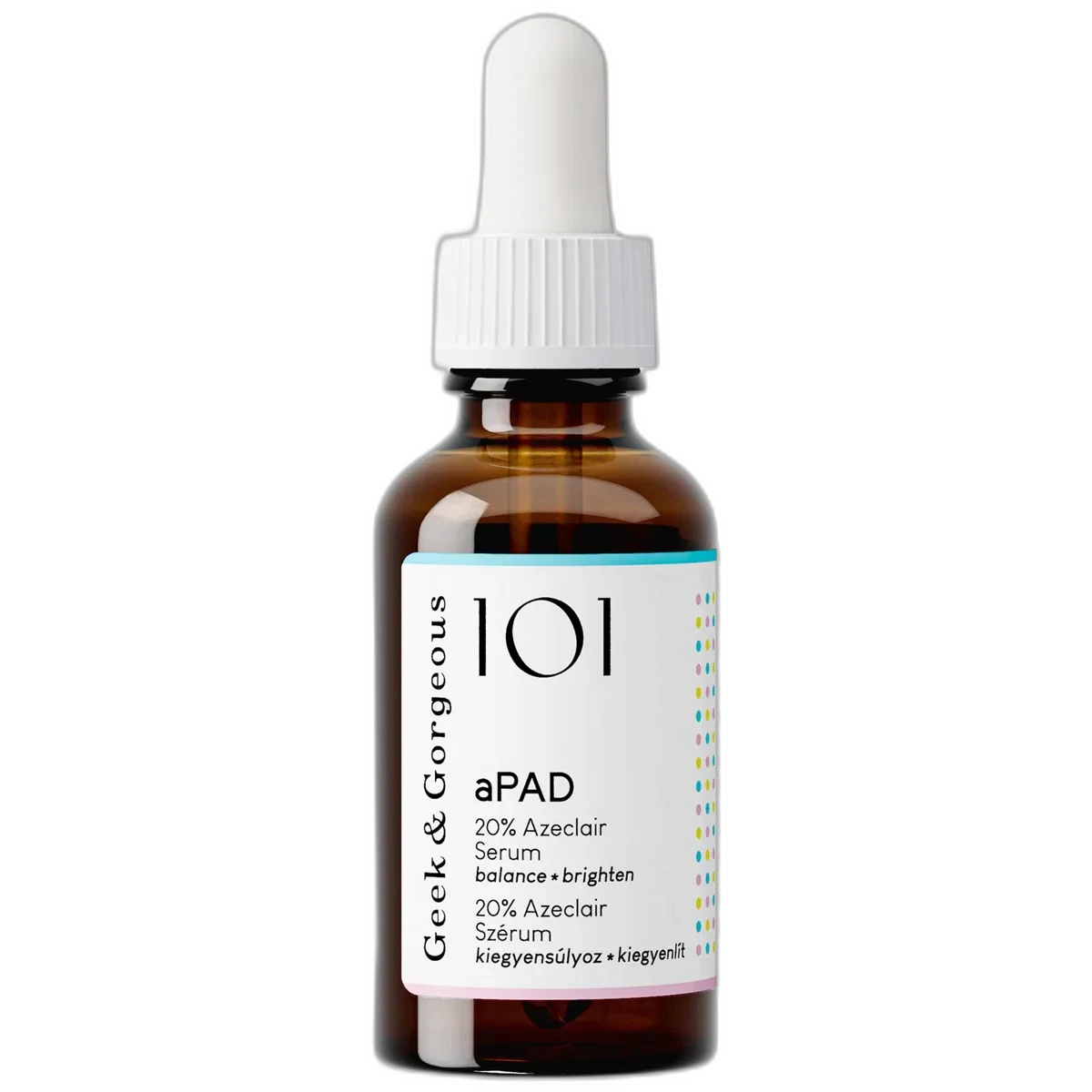
aPAD 20% Azelaic Acid Derivative Serum
Gentle Azelaic Alternative
 Verified reviewer
Pros & cons.
- +Delivers azelaic acid-like benefits without stinging or gritty texture
- +Lightweight water-gel serum unlike traditional azelaic creams
- +Pregnancy-safe and suitable for sensitive and rosacea-prone skin
- +Fragrance-free, alcohol-free, additive-minimal formula
- +Exceptional budget pricing for a tone-evening active
- +Pairs with niacinamide, vitamin C, and even retinoids without conflict
- −Not as potent per unit as pure 15-20% azelaic acid for severe cases
- −Results are slower than prescription-strength alternatives
- −PAD has a smaller research base than traditional azelaic acid
- −Shipping from Europe adds delivery time for US buyers
The full review.
Azelaic acid has been one of dermatology’s quiet workhorses for decades. It treats rosacea, mild-to-moderate acne, and post-inflammatory hyperpigmentation; it’s pregnancy-safe; it’s well-tolerated enough for sensitive skin; and it has multiple mechanisms of action that make it useful where few other single ingredients are. By every measure of clinical usefulness, it should be in everyone’s routine. And yet it mostly isn’t, because pure azelaic acid is one of the most difficult actives to formulate elegantly. At the 10-20% concentrations that produce clinical benefits, it requires either a gritty suspension or a thick cream base, it stings on application for many users, and the texture experience has kept it out of mainstream skincare for a long time. This is the formulation problem that PAD solves.
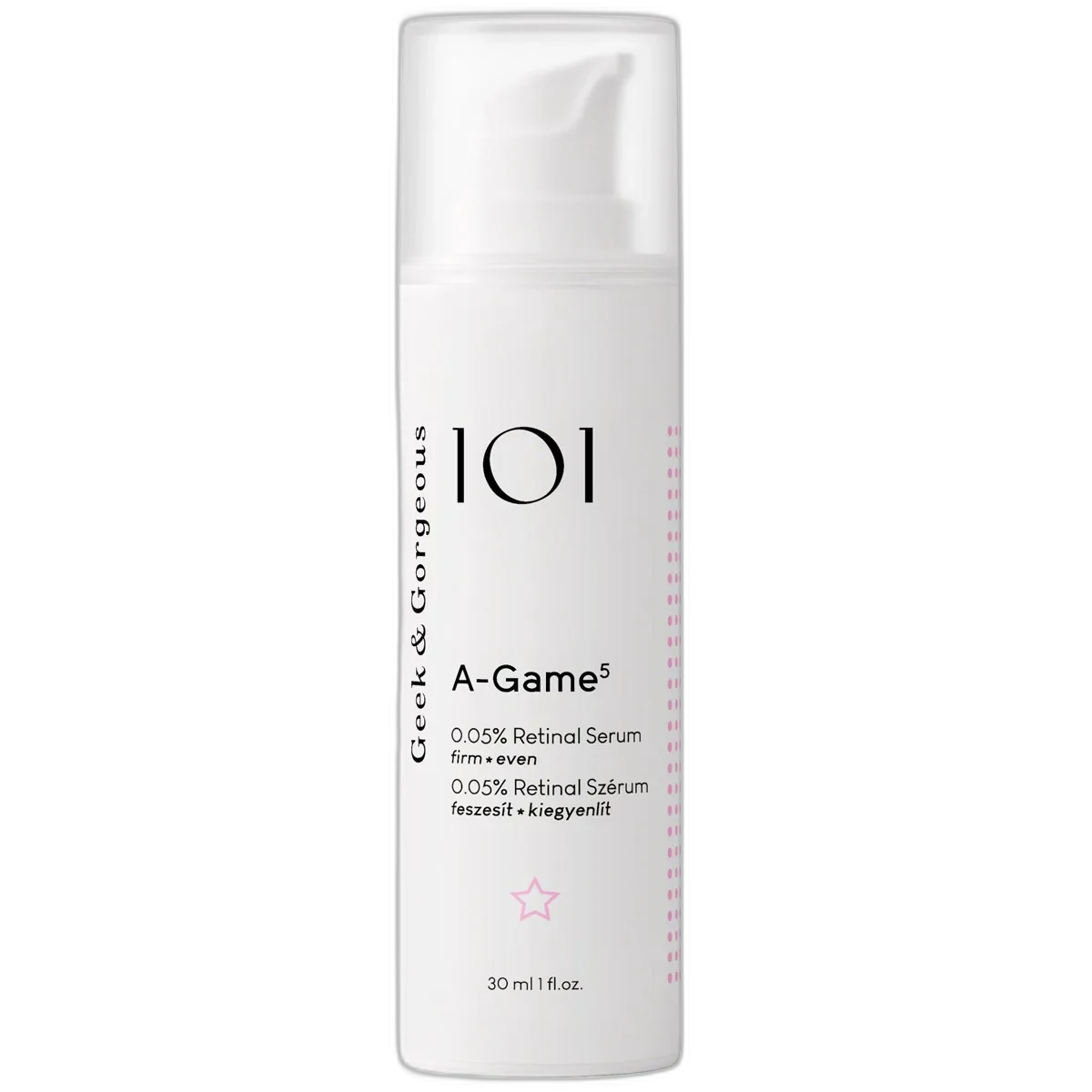
Potassium azeloyl diglycinate — PAD — is a water-soluble derivative of azelaic acid that delivers comparable benefits through a different mechanism. It’s not quite as potent per unit as pure 15-20% azelaic acid for severe cases, but it’s gentler, easier to formulate in a light serum, and doesn’t produce the stinging sensation that pure azelaic routinely causes on reactive skin. The aPAD serum from Geek & Gorgeous uses PAD at 20% of a commercial formulation called Azeclair, which translates to approximately 6% pure active — a meaningful dose for the derivative form. And because PAD is water-soluble, the product can be a lightweight, oil-free, fragrance-free water-gel serum rather than a heavy cream.
The full ingredient list is remarkably short. Water, PAD, propanediol and glycerin for humectant hydration, methyl gluceth-20 as a gentle humectant booster, allantoin for soothing support, standard thickeners and preservatives, and nothing else. No fragrance, no alcohol, no botanicals with sensitizing potential, no marketing ingredients. For a product targeting rosacea and reactive skin, that ingredient simplicity is the right approach — every added ingredient is a potential trigger, and the formula respects that.
The practical experience of using aPAD is the opposite of dramatic, which is exactly what users with rosacea and reactive skin need. There’s no stinging, no flushing, no adaptation period. You apply it, it absorbs into a comfortable finish, and your routine continues. Over 2-4 weeks of consistent use, users with rosacea-like flushing often report reduced redness and fewer flare episodes. Post-inflammatory pigmentation from acne gradually softens over 8-12 weeks. Active acne responds more slowly than it would to a retinoid or benzoyl peroxide, but the anti-inflammatory and sebum-regulating effects produce measurable improvement for many users. None of these changes are fast or dramatic, which is the nature of azelaic acid in any form — it’s a multi-function supporting active that earns its place through consistency rather than immediate impact.
Where PAD specifically shines is in the use cases that are poorly served by other actives. Sensitive and rosacea-prone users often can’t tolerate retinoids at effective doses, can’t use acids without irritation, and can’t handle vitamin C at high enough concentrations to matter. PAD fits into those routines without asking for compromise. Pregnancy users, who lose access to retinoids and hydroquinone during that window, get one of their few effective tone-evening options in a derivative like this. Post-procedure recovery routines — after chemical peels, laser, or other dermatologic interventions that leave skin temporarily reactive — can often incorporate PAD when more aggressive actives would irritate. These are the users who should put this product at the top of their consideration list.
Pairing is worth mentioning because PAD is exceptionally cooperative. It pairs naturally with niacinamide for enhanced tone-evening and barrier support. It works alongside vitamin C without pH conflicts. It can be used on the same night as a retinoid without compounding irritation, thanks to its gentle profile. It’s fine under sunscreen in the morning. It doesn’t fight any other common active, and for users building an active-heavy routine, it’s one of the easiest additions to slot in.
The honest limitations: PAD is not as potent per unit as pure 15-20% azelaic acid for severe rosacea or severe acne. Users with significant clinical concerns should still talk to a dermatologist about prescription-strength alternatives (azelaic acid 15% gel or 20% cream), and for some users, the additional potency of the pure form is worth the texture and tolerability trade-offs. For everyone else — which is most users — the derivative form is the right choice for daily use, and this product is close to the most accessible way to buy it.
The price is what closes the case. At around $11 for 30 mL, this is one of the most affordable azelaic-adjacent serums on the market, in any form. A bottle lasts 2-3 months with twice-daily use. The value is particularly meaningful because azelaic acid and its derivatives have historically been either prescription-only or premium-priced, and this brings the active into the accessible tier for the first time in many markets. For users with rosacea, sensitive skin, acne-related pigmentation, or pregnancy considerations, it’s a close-to-obvious addition to a routine. For users with severe clinical presentations, it’s a useful supporting active alongside stronger options. In either case, the price makes the experiment low-stakes, which is exactly the kind of product that belongs in a budget-conscious skincare lineup.
Ingredient analysis.
Full INCI list · pH 5.0
Water, Potassium Azeloyl Diglycinate, Propanediol, Glycerin, Methyl Gluceth-20, Allantoin, Hydroxyethylcellulose, Xanthan Gum, Citric Acid, Chlorphenesin, Ethylhexylglycerin, Phenoxyethanol
Skin match.
The science.
The Science
Azelaic acid has clear clinical evidence for treating rosacea, mild-to-moderate acne, and post-inflammatory hyperpigmentation. Research shows its anti-inflammatory, antimicrobial, and tyrosinase-inhibiting effects at 15-20% clinical concentrations. Dermatological guidelines for rosacea management often cite prescription azelaic acid (Finacea 15%, Azelex 20%). Potassium azeloyl diglycinate (PAD) is a newer derivative with a smaller research base supporting similar mechanisms. Studies show PAD reduces sebum production, modulates melanogenesis, and calms inflammatory responses, though clinical evidence is less extensive than for pure azelaic acid. PAD's main advantage is water-solubility, which allows for lightweight formulations that pure azelaic acid cannot support. Allantoin is a well-established soothing and barrier-supporting active in dermatological literature and appears in many rosacea and sensitive-skin formulations. The humectant system (glycerin, propanediol, methyl gluceth-20) follows standard practice for light serums. This formulation uses evidence-based derivative delivery rather than novel mechanism claims—PAD acts as a middle ground between the tolerability of gentler actives and the potency of prescription azelaic acid.
Dermatologist Perspective
Dermatologists often recommend azelaic acid (and its derivatives) for patients with rosacea, post-inflammatory hyperpigmentation, mild-to-moderate acne, and reactive skin that fails to tolerate other active ingredients. Board-certified dermatologists note that azelaic acid's multi-function profile—anti-inflammatory, anti-bacterial, tyrosinase-inhibiting—works well for conditions overlapping acne and rosacea features. For patients who find pure azelaic acid too irritating due to stinging or texture, dermatologists suggest derivatives like PAD as gentler alternatives. Pregnancy patients benefit from azelaic acid and its derivatives as pregnancy-safe tone-evening options when retinoids and hydroquinone are contraindicated. Dermatologists typically recommend daily use for 8-12 weeks to see results.
Where it fits in your routine.
Apply morning and night after cleansing and before moisturizer. Press 3-4 drops into the entire face. This works with niacinamide, vitamin C, or hyaluronic acid in the same routine. Follow with moisturizer and (in the morning) broad-spectrum SPF. Rosacea users typically need consistent twice-daily use for 8-12 weeks to see results.
At about $11 for 30 mL, this is one of the cheapest azelaic-adjacent products available. It is the only one at this price using a meaningful concentration of PAD in a well-formulated vehicle. One bottle lasts 2-3 months with twice-daily use. Compared to premium azelaic serums at $30-60 and prescription azelaic acid that requires a doctor visit and often costs more, this derivative form offers better value. This improves access for users priced out of the azelaic acid category.
Users with rosacea, sensitive or reactive skin targeting redness, post-inflammatory hyperpigmentation from acne, pregnancy users needing a safe tone-evening active, and anyone wanting azelaic acid benefits without the stinging and texture of pure azelaic creams.
Users with severe rosacea or severe acne needing prescription-strength azelaic acid, people who respond well to pure azelaic acid and want maximum potency, and users without tone-evening or redness-related goals.
Product details.
This lightweight water-gel serum absorbs fast without residue or tackiness.
Fragrance-free.
Frosted dropper bottle matching the 101 line's standard format.
Most users feel no tingling, stinging, or flushing upon application — PAD is gentler than pure azelaic acid. Results show gradually over weeks instead of days.
About 2-3 months with twice-daily face application.
12 months
All Year
The backstory.
Geek & Gorgeous included aPAD in its 101 line as an answer to the formulation challenges that have kept pure azelaic acid out of most gentle sensitive-skin routines. The choice of PAD over traditional azelaic reflects the brand's cosmetic-chemist leadership and willingness to use newer actives when they solve real problems.
About Geek & Gorgeous
Emerging Brand (2–5 years)Geek & Gorgeous is a Hungarian indie brand founded in 2020. Cosmetic chemists lead the brand, which uses transparent formulation and direct-to-consumer pricing. The aPAD serum belongs to the brand's 101 beginner-friendly line.
Common myths.
PAD is just a weaker version of azelaic acid.
PAD uses a different delivery mechanism to provide azelaic-acid-like benefits. It lacks the per-unit potency of pure 15-20% azelaic acid for severe cases, but it is more tolerable for sensitive and rosacea-prone users who cannot tolerate the pure form. It also has a smoother formulation profile.
Azelaic acid treatments always sting on application.
Pure azelaic acid at 10-20% often stings, especially on reactive skin. PAD is a water-soluble derivative and typically doesn't sting — this is a main reason to choose the derivative form.
FAQ.
Is PAD as effective as traditional azelaic acid?
PAD reduces redness, pigmentation, and sebum like azelaic acid. However, PAD lacks the potency of pure 15-20% azelaic acid for severe cases. PAD works better for moderate rosacea, mild-to-moderate acne, and pigmentation because it is more tolerable and fits daily routines easily. Prescription azelaic acid (15-20%) remains the stronger option for severe rosacea or acne.
Does it sting like azelaic acid creams?
Usually no. PAD's main advantage over pure azelaic acid is its water solubility. This prevents the stinging sensation pure azelaic acid causes, especially on sensitive or rosacea-prone skin.
Can I use it with niacinamide?
Yes — PAD and niacinamide work well together. Both target pigmentation, redness, and barrier health using different mechanisms, and they have no conflicts. Many users stack them to even skin tone more effectively.
Is it safe during pregnancy?
Yes — traditional azelaic acid is one of the few pregnancy-safe tone-evening actives, and PAD has that same safety profile. It is a common pregnancy-safe alternative to retinoids and hydroquinone.
Can sensitive or rosacea-prone skin use it?
Yes — this works well here. PAD's gentle profile, fragrance-free formulation, and calming allantoin support make it suitable for reactive skin that cannot tolerate aggressive actives.
How long until I see results?
Redness and flushing reduce within 2-4 weeks. Fading pigmentation and evening skin tone takes 8-12 weeks of consistent use. Like all tone-evening actives, PAD requires long-term commitment instead of a quick fix.
What the community says.
"Lightweight texture unlike traditional azelaic acid creams"
"No stinging or flushing from the active"
"Safe for sensitive and rosacea-prone skin"
"Pregnancy-safe alternative to prescription options"
"Pairs with almost any other skincare active"
"PAD is less potent per unit than pure azelaic acid at 15-20%"
"Results are slower than prescription strengths"
"Ships from Europe — delivery time for US buyers"
"Not widely available at US retailers"
People also looked at.