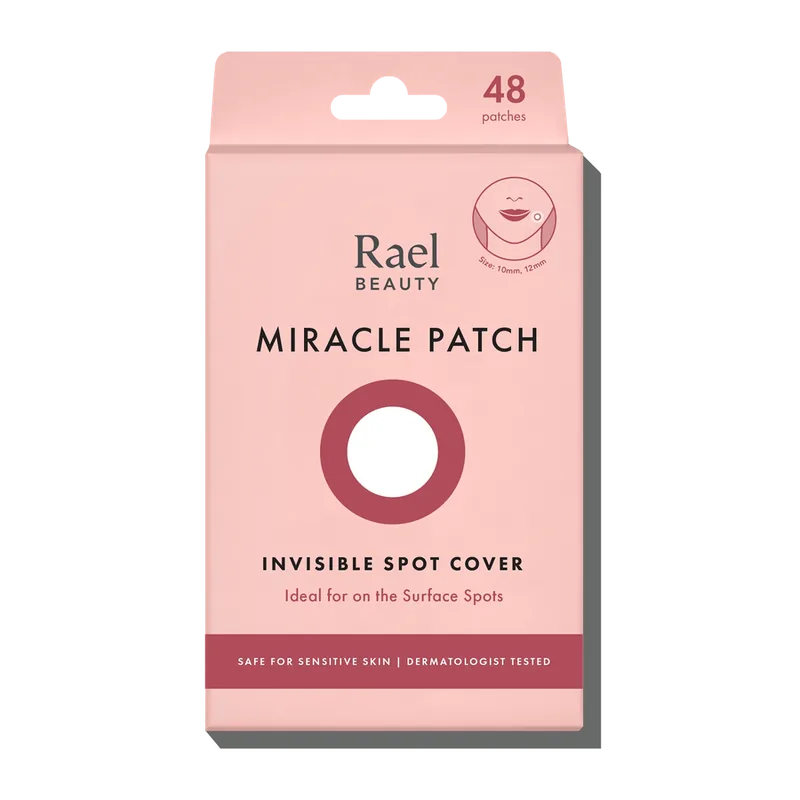
Miracle Patch Invisible Spot Cover
Daytime Hydrocolloid Patch
 Verified reviewer
Pros & cons.
- +Pure hydrocolloid construction (cellulose gum, polyisoprene, polyisobutene) — no fragrance, dyes, or actives that could irritate broken skin
- +Ultra-thin matte finish disappears under foundation and concealer, so you can wear them through a work day
- +Mixed sizes (three diameters per sheet) cover everything from a microcomedone to a full-blown cyst opening
- +Visible turnover — the patch goes opaque as it draws exudate, so you know it's working and when to swap
- +Stops the pick-scab-pick loop that prolongs acne marks for weeks
- +Dermatologist-tested and broadly tolerated on sensitive skin and barrier-compromised acne
- +Bulk-friendly value at roughly 29¢ per patch in the 48-count sleeve
- −Only works on surfaced whiteheads — cystic, deep, or unbroken comedones get no benefit because there's nothing to absorb
- −The adhesive can lift slightly under heavy sweat or oily skin in humid weather
- −No active ingredients means a slower clinical effect than salicylic acid or retinoid spot treatments
- −Single-use plastic packaging that isn't recyclable curbside
The full review.
The Rael Miracle Patch Invisible Spot Cover is the K-beauty hydrocolloid patch most often credited with mainstreaming the format in the United States. The category existed before Rael — Nexcare had hydrocolloid bandages in the 1990s, Cosrx introduced acne-marketed patches in Korea around 2014 — but Rael’s 2019 U.S. launch, in retail-aisle distribution at Target, is when American consumers started using patches as a default acne intervention rather than a niche K-beauty curiosity.
The product itself is mechanically simple. Each sheet contains 48 patches across three sizes — small, medium, large — printed on a clear backing film. The patch is hydrocolloid: a hydrophilic gel (cellulose gum) bonded to a tacky, occlusive polymer (polyisobutene) with polyisoprene as a flexibility modifier. There are no active ingredients, no salicylic acid, no benzoyl peroxide, no retinoid. It works by physics rather than chemistry.
The mechanism is exudate absorption. When a pimple comes to a head — meaning the inflammatory contents have moved upward through the follicle and surfaced as a whitehead — there’s a microscopic opening at the skin surface through which serum and pus can drain. A hydrocolloid patch applied to that surface absorbs that fluid as the cellulose gum swells, and the patch turns visibly white as it saturates. The occlusive backing prevents bacterial recontamination of the now-draining lesion and maintains the moist environment that dermatology literature has long established accelerates re-epithelialization over dry healing.
This means a hydrocolloid patch only works on a surfaced whitehead. It will do nothing for a closed comedone (no opening to absorb through), nothing for a deep cyst (the inflammation is too far from the skin surface), and nothing for a blackhead (the contents are already exposed; there’s no fluid to draw out). Rael acknowledges this in the product copy — “best for surfaced blemishes and whiteheads” — but a sizable fraction of negative reviews come from users who applied it to cystic acne and expected results.
The behavioral benefit may matter more than the absorption. Acne picking is one of the strongest predictors of post-inflammatory hyperpigmentation and atrophic scarring, particularly in deeper skin tones where the inflammatory marks persist for months. A patch physically prevents touching the lesion for the four-to-eight hours it’s worn. The visible saturation feedback — the patch going from clear to milky as it pulls exudate — serves a similar dopamine function to picking, satisfyingly. For most users, the patches’ value is better measured in marks not formed than in pimples cleared overnight.
The “Invisible” naming refers to the daytime use case Rael optimized around: the patches are ultra-thin, matte, and engineered to blend at the edges, so foundation and concealer go cleanly on top without the bumpy outline you get from older, glossier hydrocolloid bandages. In profile and in bright lateral lighting they’re still visible, but head-on they read as skin texture. This is the SKU you wear to a meeting, a date, or a school day. The microcrystal and overnight variants in Rael’s range are formatted for different use cases.
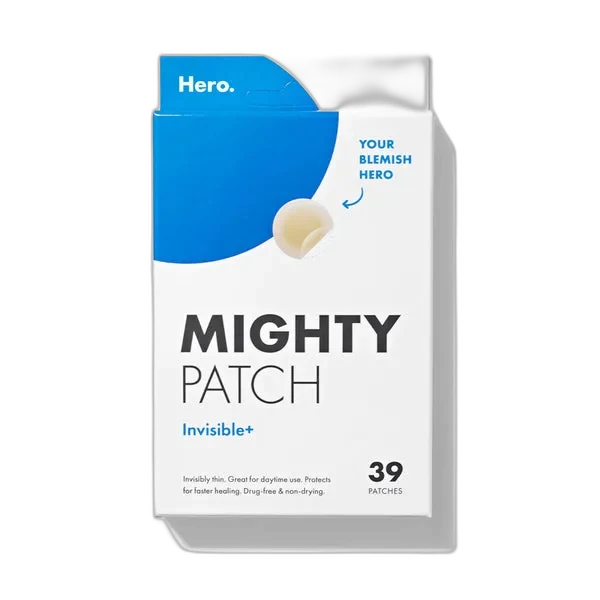
The formulation is unremarkable — it’s the same three-ingredient hydrocolloid the entire category uses. What Rael does well is the construction: the patches lift cleanly off the backing card, the adhesive holds for the full wear window without lifting at the edges under normal conditions, and the matte finish under makeup is among the best in the category. Hero Cosmetics’ Mighty Patch performs comparably; Starface uses a thicker, more decorative format that’s not meant to be invisible. Among true daytime invisible patches, Rael and Mighty Patch are the two reference SKUs.
At $13.99 for 48 patches, the unit cost (~29¢) is within a few cents of the major hydrocolloid alternatives. Heavy users — anyone with hormonal monthly breakouts or daily small whiteheads — burn through a sleeve in a month or so; users who reach for them sporadically will go six months on one pack. The shelf life is essentially indefinite if the foil sleeve stays sealed.
Not ideal for
Cystic, comedonal, or fungal acne won’t respond — there’s no exudate path. Patches in those cases get reviewed as “didn’t work” because they were applied to the wrong lesion type. Skin that sweats heavily under the patch (forehead during summer, jawline under masks) also see lifted edges; the patch needs a dry, oil-free seal. Around the eyes and mouth, where skin folds during expression, the adhesive can pull off prematurely.
Ingredient analysis.
Full INCI list
Cellulose Gum, Polyisoprene, Polyisobutene
Skin match.
The science.
How hydrocolloid patches work
Hydrocolloid was developed in the 1980s as a wound dressing — gauze impregnated with hydrophilic gel that absorbs serous fluid from an open wound while maintaining a moist, sealed healing environment. The same principle is what Rael (and every other patch brand) uses on a surfaced whitehead: the patch's cellulose-gum matrix swells as it absorbs exudate, the polyisobutene backing keeps the area sealed and protected from bacterial recontamination, and the moist environment is shown in dermatology literature to accelerate re-epithelialization compared to dry healing.
The reason patches matter clinically isn't novel chemistry — it's behavioral. Acne picking is one of the strongest predictors of post-inflammatory hyperpigmentation and atrophic scarring, particularly in skin of color. A hydrocolloid patch physically prevents touching the lesion for the hours it's on, and the visible saturation feedback (the patch turning white) gives the dopamine hit that picking otherwise would. For most users, the value of pimple patches is better measured in marks not formed than in pimples cleared overnight.
Rael's formulation is mechanically standard hydrocolloid — cellulose gum, polyisoprene, polyisobutene — which is also what Hero Cosmetics, Peace Out, and the original Nexcare patches use. What differentiates Rael within the category is the thinness and matte finish of the top film (better under makeup) and the inclusion of mixed sizes per sheet (less waste). There are no active ingredients.
Where it fits in your routine.
Cleanse and dry the area thoroughly — the patch will not stick to damp or oily skin. Peel a patch using the tab on the backing card (don't touch the adhesive side with your fingers). Press it directly over a surfaced whitehead for two to three seconds to seal. Leave on for 4–8 hours, or until the gel turns visibly white. Peel slowly from the edge and discard. Re-apply a fresh patch if the lesion is still draining.
At $13.99 for 48 patches, this is one of the better-value hydrocolloid patches on the U.S. market — roughly 29¢ per patch, comparable to Mighty Patch and substantially cheaper than Peace Out's dot pricing. The mixed-size sheet means you don't waste large patches on tiny spots.
Anyone with periodic surfaced whiteheads, hormonal monthly breakouts, or a habit of picking. Especially useful if you work in an environment (camera, classroom, customer-facing) where you can't apply a visible spot treatment.
People whose acne is primarily cystic or comedonal — patches don't address what's under the skin. Skip also if your acne is concentrated in areas that sweat heavily, where adhesion fails.
Product details.
Fragrance free
Resealable foil sleeve, 48 patches across three sizes (small, medium, large)
All Year
The backstory.
Rael was founded in 2017 by Yanghee Paik, Aness An, and Binna Won, all Korean-American women, after a year of looking for organic-cotton period products in the U.S. The brand's expansion into skincare started with the Miracle Patch in 2019 — a quiet K-beauty SKU at the time that became the format-defining product for the now-saturated hydrocolloid pimple-patch category in the U.S. market.
About Rael
K-beauty / wellnessRael's skincare line runs adjacent to its feminine-care core, anchored by the Miracle Patch family and the Miracle Clear acne regimen. Manufacturing is in South Korea; formulations skew K-beauty (centella, fermented tea, hydrocolloid) rather than the actives-heavy Western pattern. The brand is cruelty-free and most SKUs are vegan-formulated.
Common myths.
Hydrocolloid patches will draw out a deep pimple under the skin.
Hydrocolloid only absorbs exudate that already has an exit path. A pimple under intact skin is sealed off from the patch and won't drain through it. You need a needling patch (microcrystal) or topical actives to reach those.
Wearing a patch overnight will get me better results than a few hours.
The patch saturates and stops working as soon as it's drawn the available fluid — usually within four to eight hours. Beyond that point you're just wearing an inert film. A fresh patch on a fresh secretion does more than one worn for 12 hours straight.
FAQ.
How is this different from the Miracle Patch Microcrystal cover?
This one is plain hydrocolloid — passive absorption only, best for whiteheads that have already surfaced. The Microcrystal version has dissolving needles loaded with salicylic acid, niacinamide, and tea tree, which lets it work on under-the-skin bumps that haven't broken yet. Pick this SKU for everyday surfaced spots and the Microcrystal for cystic flares.
Can I wear these under makeup?
Yes — that's the headline use case. The patches are matte, blendable at the edges, and roughly the thickness of a sticker. Foundation and concealer go on top without bunching. They're noticeable in profile in good light but virtually invisible head-on, which is why the SKU is called "Invisible."
How long do I leave them on?
Four to eight hours, or until the patch goes from clear to milky white. The cloudiness is exudate the patch has absorbed — once it's saturated, it stops working, so replace rather than try to extend the wear time.
Will it work on cystic acne?
No. Cystic acne is inflammation deep in the dermis with no opening to the surface, so a hydrocolloid patch has nothing to absorb. Use it once a cyst has surfaced into a whitehead. For unbroken cysts, the Microcrystal version (with microneedles) is the closer Rael product.
Is the adhesive safe on sensitive or eczema-prone skin?
For the vast majority of users, yes — Rael uses a hypoallergenic medical-grade adhesive without fragrance, latex, or formaldehyde donors. Patch-test on the jawline first if you've reacted to bandage adhesive in the past. Don't apply over actively eczematous skin around an unrelated lesion.
How does the price compare to Hero Cosmetics Mighty Patch?
Roughly equivalent — both sit around 25–35¢ per patch at sleeve volume. Rael runs a hair thinner and more matte; Mighty Patch holds a little firmer in humidity. The two formulations are interchangeable at the hydrocolloid level.
What the community says.
"Disappears under makeup"
"Stops me picking — that alone is worth the price"
"Three sizes in one pack covers everything"
"Visibly works overnight on surfaced spots"
"Bulk pack lasts months"
"Useless on deep cystic bumps"
"Adhesive lifts when I sweat in summer"
"Wish they came in fully recyclable packaging"