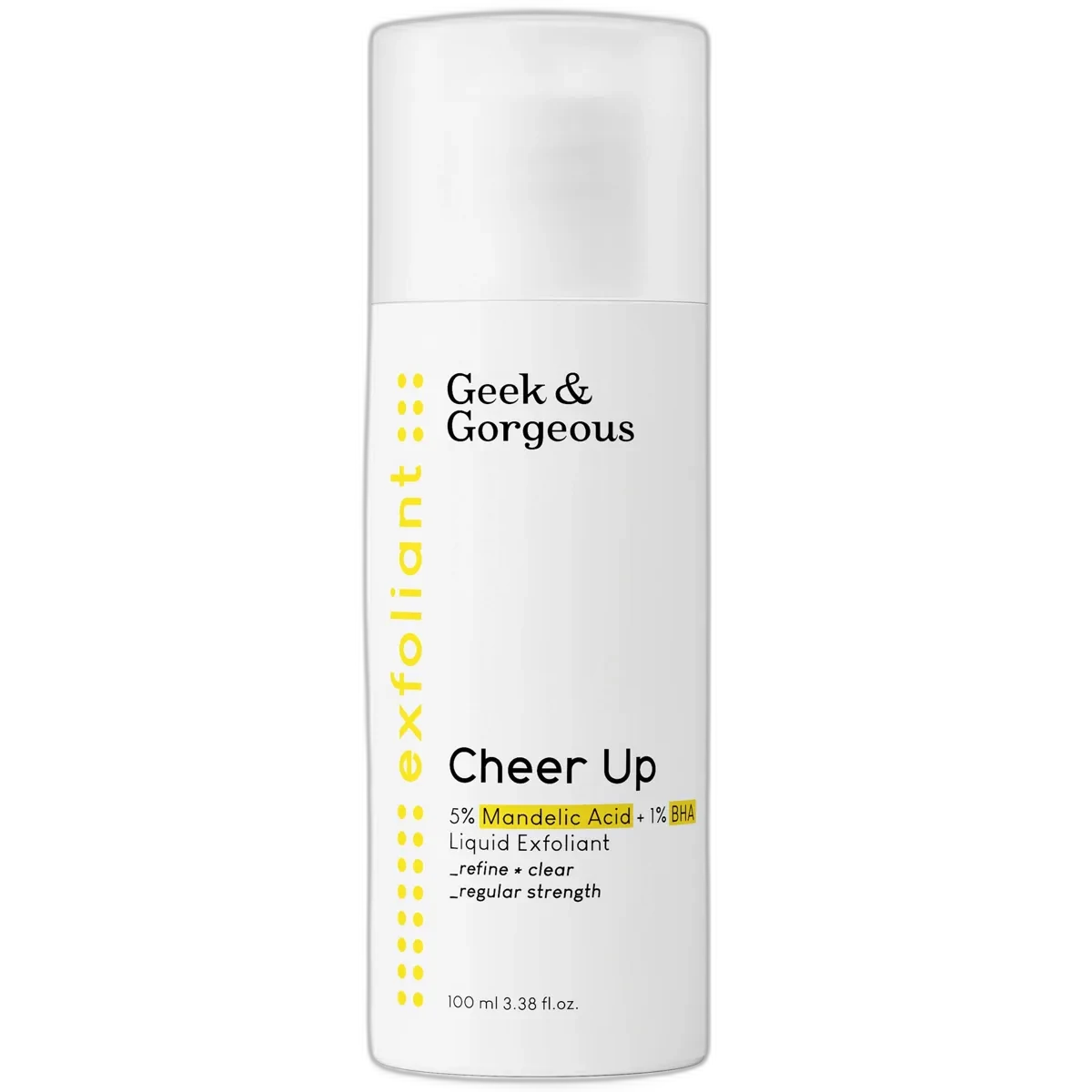
Cheer Up 5% Mandelic + 1% Salicylic Exfoliant
Beginner Exfoliant Pick
 Verified reviewer
Pros & cons.
- +Uses mandelic acid — the gentlest mainstream AHA — instead of harsh glycolic
- +Combines with low-strength salicylic for pore support
- +Sugar-humectant complex prevents drying feel
- +Large 100mL bottle delivers exceptional per-use value
- +Fragrance-free and formulation-minimal
- +Ideal for beginners and sensitive skin starting with acids
- −Not strong enough for users adapted to higher-concentration AHAs
- −Not pregnancy-safe due to salicylic acid
- −Brief acid tingle on application
- −Shipping from Europe for US buyers
The full review.
Mandelic acid is the AHA underdog. Most beginners ignore it for the more famous glycolic acid. This is a mistake. If you design an exfoliant for sensitive skin or chemical exfoliation beginners, mandelic acid is the obvious choice. This is due to molecular kinetics: mandelic acid has the largest molecular size of any common alpha-hydroxy acid. It penetrates the skin more slowly than glycolic acid, which has the smallest molecular size. Slower penetration means gentler exfoliation, less stinging, less flushing, and less adaptation irritation. For beginners, this is almost entirely upside.
Geek & Gorgeous understood this when they formulated Cheer Up. Choosing 5% mandelic acid over glycolic acid is the most important design decision in the product. The supporting ingredients are equally thoughtful. 1% salicylic acid adds BHA activity. Its lipid-solubility lets it penetrate pores to address sebum-related congestion and blackheads, which water-soluble AHAs cannot do as effectively. This combination of a surface-acting AHA and a pore-acting BHA meets the texture-refining and anti-congestion goals most users want from a chemical exfoliant. 1% salicylic acid is gentle enough that it does not raise the irritation ceiling; it complements the mandelic acid without making the product a harsh peel.
The humectant system is another key detail. Most budget chemical exfoliants use propylene glycol and water, which does not offset the drying tendency of acids. Cheer Up uses a sugar-based humectant complex (Aquaxyl, the combination of xylitylglucoside, anhydroxylitol, and xylitol) to provide deep surface hydration and a comfortable, non-stripping feel. Sarcosine adds amino-acid-based sebum modulation to complement the salicylic acid’s pore activity. Glycerin and pentylene glycol complete the hydration layer. The pH is around 3.4, which is effective for AHA activity without aggressive peeling.
Usage is quiet. Apply the product to clean, dry skin with a cotton pad or fingertips at night. A brief tingling sensation may occur and usually subsides within a minute; this is normal for low-pH acid products and does not signal irritation. Most users experience no redness, peeling, or flaking. The gentle profile allows you to follow with hydrating steps immediately. For those starting their first chemical exfoliant, this experience builds confidence instead of the panic caused by harsher products.
Results follow a gentle timeline. In the first 2-3 weeks, surface texture smooths and congestion around the nose and chin reduces. By 6-8 weeks, users with post-acne marks often see visible softening of pigmentation as cell turnover accelerates. Skin clarity and brightness also improve during this time. These results are subtle compared to a stronger AHA or retinoid, but they arrive without the adaptation cost. Users wanting faster or more dramatic exfoliation can use higher-strength products from the same brand or move to a retinoid once their skin adapts to actives.
The target audience is clear. It is ideal for chemical exfoliation beginners, sensitive or reactive skin types that cannot tolerate glycolic acid, and users with combination-to-oily skin targeting mild congestion and post-acne marks. It also works for anyone building a budget-conscious routine with real actives. It is a strong, gentler alternative to use alongside a stronger exfoliant or retinoid on nights when skin needs pore support without aggressive active ingredient exposure. It is not for users already adapted to 10% glycolic or prescription-strength retinoids who want the strongest exfoliation; those users need higher-concentration options.
Pregnancy users should note that salicylic acid in leave-on products is generally advised against during pregnancy due to theoretical systemic absorption concerns. This is not a pregnancy-safe exfoliant. For those users, a lactic-acid-only alternative or gentle physical exfoliation is safer until after breastfeeding.
At around $12 for 100mL, the value is exceptional. The large bottle size is unusual for exfoliants; most competitors sell 30-50mL at similar or higher prices. One bottle lasts 4-6 months with every-other-night use. The per-use cost is cents rather than dollars, making long-term use economically trivial. With its thoughtful formulation and gentle profile, this is one of the most sensible entry points to chemical exfoliation in the budget skincare tier and supports the Geek & Gorgeous pricing philosophy.
Ingredient analysis.
Full INCI list · pH 3.4
Aqua, Propanediol, Mandelic Acid, Salicylic Acid, Xylitylglucoside, Anhydroxylitol, Xylitol, Sarcosine, Butylene Glycol, Pentylene Glycol, Glucose, Xanthan Gum, Sodium Hydroxide, Phenoxyethanol
Skin match.
The science.
The Science
Published research shows mandelic acid is a gentler alternative to glycolic acid. Studies show mandelic acid at 5-10% improves skin texture, pigmentation, and acne similarly to glycolic acid at similar concentrations, but with less irritation because mandelic acid has a larger molecular size (approximately 152 g/mol vs glycolic's 76 g/mol). This molecular size difference matters: larger molecules penetrate the stratum corneum more slowly, causing more gradual keratinocyte turnover and less acute disruption. Salicylic acid at 1-2% has extensive clinical evidence for anti-comedogenic and anti-inflammatory effects in acne-prone skin. Combining AHAs and BHAs in one formulation is a proven strategy to address surface texture and pore congestion at once. The pH of 3.2-3.6 is in the effective range for chemical exfoliation; mandelic acid requires a pH below 4.0 to stay in its protonated, active form, and this product's pH is appropriately calibrated. The Aquaxyl humectant complex (xylitylglucoside, anhydroxylitol, xylitol) has published evidence for improving stratum corneum hydration and reducing transepidermal water loss. Sarcosine has less sebum-modulating evidence than the other actives. Overall, the formulation uses evidence-based exfoliant design with conservative, well-validated choices.
Dermatologist Perspective
Dermatologists often recommend chemical exfoliants for texture irregularities, mild acne, post-inflammatory pigmentation, and dullness. Board-certified dermatologists note mandelic acid is better for sensitive skin, rosacea-prone patients, and those starting their first acid routine because it penetrates more gently than glycolic acid. Using AHA and BHA in a single product follows dermatological advice for treating both surface and pore-related concerns. Dermatologists typically advise applying 2-3 times weekly and building to every other night, and they emphasize using daily broad-spectrum SPF 30+ when using any chemical exfoliant.
Where it fits in your routine.
Apply at night after cleansing. Use a few drops on the face and neck with clean fingertips or a cotton pad, avoiding the immediate eye area. Use twice weekly for 2-3 weeks, then increase to every other night as tolerated. Follow with hydrating serums and moisturizer. Always apply broad-spectrum SPF 30+ the next morning. Do not use with retinoids, high-strength vitamin C, or benzoyl peroxide in the same routine; alternate nights instead.
At approximately $12 for 100 mL, the value is exceptional. Most beginner exfoliants in this category sell 30-50 mL at similar or higher prices. One bottle lasts 4-6 months using it every-other-night, so each application costs pennies. This delivers formulation quality comparable to premium exfoliants at $30-80 without the markup. The size, price, and formulation make this one of the best value options in the chemical exfoliant category.
Users starting their first chemical exfoliant, sensitive or reactive skin types needing a gentle AHA introduction, combination/oily skin with mild congestion and post-acne marks, and budget-conscious shoppers wanting thoughtful formulation without premium pricing.
This is for users adapted to stronger AHAs seeking maximum potency. It is not for pregnant or breastfeeding users (salicylic acid contraindicated), people with severe rosacea or compromised-barrier skin, or users who skip daily SPF — exfoliants increase photosensitivity.
Product details.
A thin, clear, water-like liquid that applies easily via cotton pad or fingertips.
Fragrance-free with only the faint tang of the acid system itself.
Glass bottle with a screw-top dispenser, standard for the 101 line exfoliants.
Expect a brief tingling sensation upon application that lasts less than a minute. This is normal for low-pH acid products and does not mean irritation. This gentle strength typically requires no peeling or flaking during adaptation.
About 4-6 months with use every other night.
12 months
All Year
The backstory.
Geek & Gorgeous positioned Cheer Up as the entry point to their exfoliation ladder — a gentle enough product that beginners can start with, but properly dosed enough that it delivers real results rather than placebo-strength exfoliation. The mandelic acid choice reflects the brand's preference for less-popular but gentler actives when they make formulation sense.
About Geek & Gorgeous
Emerging Brand (2–5 years)Geek & Gorgeous is a Hungarian indie brand of cosmetic chemists founded in 2020. It uses a transparent, direct-to-consumer pricing model. Cheer Up is the brand's entry-level AHA/BHA exfoliant; it is gentler than most mid-tier chemical exfoliants and targets beginners.
Common myths.
Mandelic acid is weaker than glycolic and not worth using.
Mandelic acid shows results similar to glycolic acid at the same concentrations. It works over a slightly longer timeline but causes less irritation. Mandelic acid is often the better choice for sensitive skin or AHA beginners because it provides benefits without the adaptation punishment.
A 5% AHA won't do anything if you're used to 10% glycolic.
Mandelic at 5% works like a lower-concentration glycolic due to different molecular kinetics. Users used to higher-strength glycolic may find it gentler, but it still exfoliates. Paired with salicylic acid, the effect is more balanced.
FAQ.
How often should I use it?
Use 2-3 times per week for the first 2-3 weeks, then increase to every other night as tolerated. Well-adapted skin can use it daily, but most users see optimal results from every-other-night application. Do not combine with retinoids, vitamin C, or benzoyl peroxide in the same routine.
Is it safe for sensitive skin?
Yes, relatively. Mandelic acid has the largest molecular size of mainstream AHAs and penetrates more slowly, making it the gentlest option for reactive skin. The sugar-humectant complex in this formula also reduces drying potential. Sensitive users can start with twice weekly use and build up gradually.
Is it pregnancy-safe?
No. Leave-on products with salicylic acid carry theoretical systemic absorption risks during pregnancy. Use gentle physical exfoliation or lactic acid-only products instead, or consult your provider.
Will it cause purging?
Some users experience breakouts during the first 2-3 weeks as cellular turnover increases and underlying congestion surfaces. This differs from an allergic reaction. Stop use if breakouts appear in unusual areas or cause significant irritation.
Can I use it in the morning?
Technically yes, but nighttime use is better because exfoliated skin is more photosensitive. If you use it in the morning, sunscreen is non-negotiable — you must use broad-spectrum SPF 30+.
What the community says.
"Gentle enough for sensitive skin beginners"
"Mandelic + salicylic combination addresses both surface and pore concerns"
"Large 100mL bottle delivers exceptional value per use"
"Sugar-humectant base prevents the drying feeling common with acid exfoliants"
"Not strong enough for users adapted to higher-strength exfoliants"
"Slight acid tingle on application"
"Glass bottle is fragile for travel"
People also looked at.