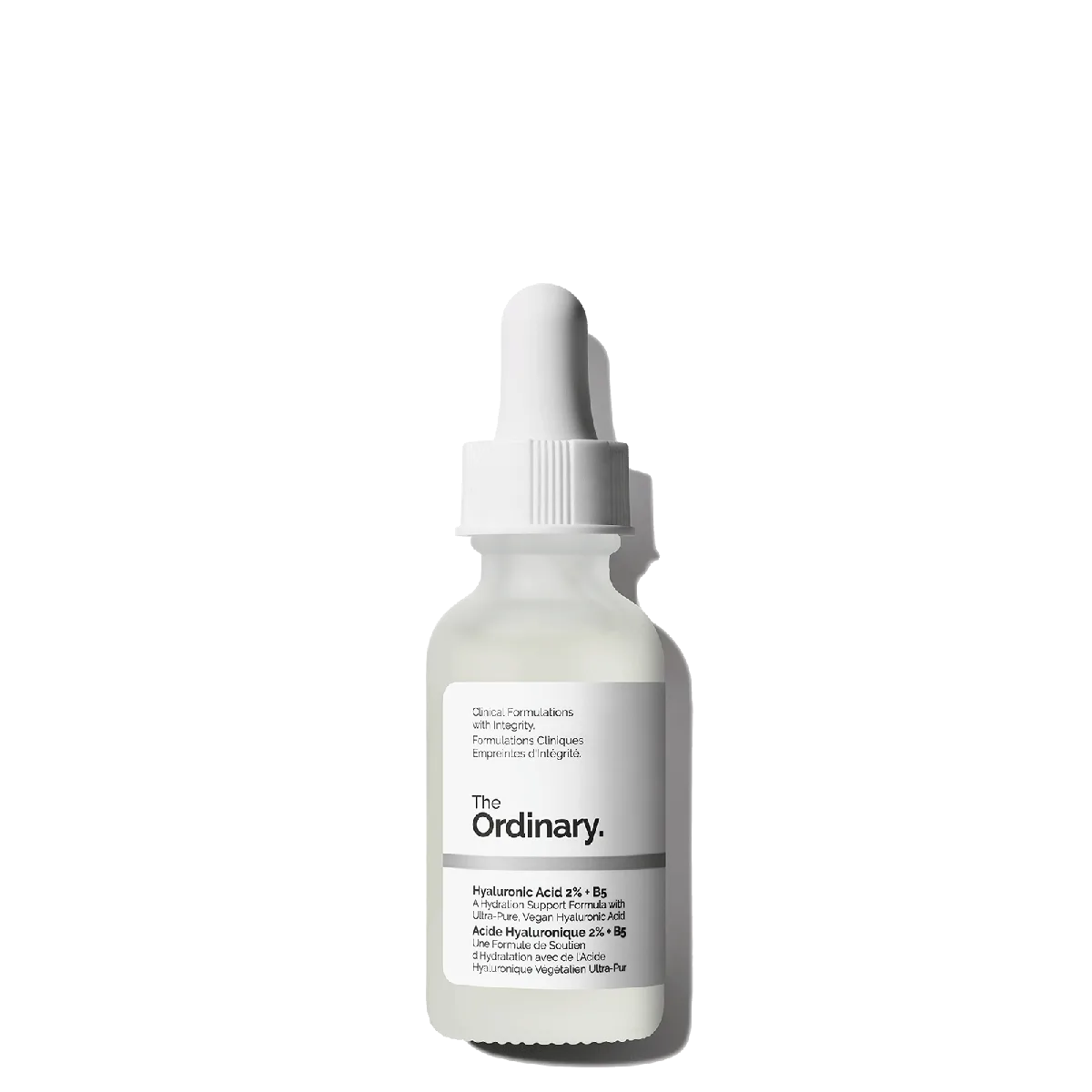
Hyaluronic Acid 2% + B5
Hydration on a Shoestring
 Verified reviewer
Pros & cons.
- +Exceptional value at $8.90 for a multi-weight hyaluronic acid serum with panthenol
- +Four forms of HA targeting different skin depths for comprehensive hydration
- +Universally tolerable formula with zero common irritants or allergens
- +Pairs seamlessly with virtually every other skincare active in any routine
- +Immediate visible plumping effect that improves with consistent use over weeks
- +Fragrance-free, oil-free, silicone-free, vegan, and cruelty-free
- −Noticeably sticky, tacky texture that some users find cosmetically unpleasant
- −Small 30ml bottle depletes quickly with twice-daily use on face and neck
- −Reformulated ceramide version offers objectively better texture and added benefits
- −Must be applied to damp skin for optimal results — dry application can feel tight
- −Purely hydrating with no additional active benefits beyond moisture delivery
The full review.
Before The Ordinary launched in 2016, the skincare industry had little interest in multi-weight hyaluronic acid serums costing under ten dollars. Hydrating serums usually cost $40-80, and brands had no incentive to check if that price reflected the actual cost of sodium hyaluronate. Then DECIEM released this product at $6.80, and the conversation changed.
The Hyaluronic Acid 2% + B5 was transparently cheap. The name lists exactly what is inside: 2% hyaluronic acid and pro-vitamin B5. There are no proprietary complexes or claims about how the hyaluronic acid was harvested. It is a well-formulated hydrating serum that works at a price that makes similar product markups visible.
The formula uses what The Ordinary calls a multi-depth hydration approach. Three molecular weights of sodium hyaluronate—high, medium, and low—target different skin levels. High-molecular-weight HA sits on the surface, forming a moisture-retaining film for immediate plumping and a dewy finish. Medium-weight molecules penetrate the upper epidermis to support skin structural integrity. Low-molecular-weight HA reaches deeper layers that surface-level hydrators cannot reach. Additionally, a sodium hyaluronate crosspolymer—a cross-linked HA with higher water-binding capacity—provides sustained hydration.
Panthenol, the pro-vitamin B5, performs an important role. Hyaluronic acid attracts and holds water, but it does not manage the skin barrier that prevents evaporation. Panthenol supports barrier function and reduces transepidermal water loss. In a hydration-focused formula, an ingredient that protects delivered hydration is essential.
The texture is the product’s only real criticism. The original formulation is noticeably sticky—a tacky, gummy feel that lasts a minute or two after application. This diminishes when you apply the serum to damp skin (which optimizes HA performance), but the sensation makes some users avoid twice-daily use. The Ordinary addressed this in the reformulated ceramide version. However, the original formula’s stickiness is a cosmetic issue, not a performance issue; the hydration remains uncompromised.
Results follow a predictable arc. The first application provides immediate plumping—skin looks dewy, feels softer, and fine dehydration lines temporarily fill. This is the hyaluronic acid pulling water to the surface. After one to two weeks of consistent use, hydration becomes more sustained. Skin retains moisture better, the tight-dry feeling of dehydrated skin fades, and makeup sits more smoothly. Long-term benefits—improved skin texture, a more resilient moisture barrier, and baseline hydration that helps other products work better—emerge over four to six weeks.
The ingredient list is short. Sixteen ingredients mean there is little to irritate reactive skin—no fragrance, essential oils, acids, or retinoids. It is a hydrating serum that does not interfere with other products. However, it is purely for hydration; it does not brighten, exfoliate, or address hyperpigmentation. It does one thing.
For most, the answer is yes. Hyaluronic acid is a universally tolerated and researched ingredient, and this multi-weight approach delivers better hydration than single-weight HA serums. At $8.90 for a bottle that lasts two to three months, the value remains exceptional despite the price increase from launch.
You must decide between this or the reformulated version with ceramides. If you are new to the product, the reformulation is likely better—it fixes the texture, adds barrier-supporting ceramides, and includes a fifth molecular weight of HA. If the original works for you, there is no reason to change. The original Hyaluronic Acid 2% + B5 is not outdated; it just has an improved sibling.
This serum matters. It proved effective skincare does not require luxury pricing, that ingredient transparency builds more trust than proprietary names, and that consumers evaluate formulas on merit rather than marketing. Nearly a decade later, the industry looks different because of this product. The sticky texture is a small price for a serum that changed the rules.
Ingredient analysis.
Full INCI list
Aqua (Water), Sodium Hyaluronate, Pentylene Glycol, Propanediol, Sodium Hyaluronate Crosspolymer, Panthenol, Ahnfeltia Concinna Extract, Glycerin, Trisodium Ethylenediamine Disuccinate, Citric Acid, Isoceteth-20, Ethoxydiglycol, Ethylhexylglycerin, Hexylene Glycol, 1,2-Hexanediol, Phenoxyethanol, Caprylyl Glycol
Skin match.
The science.
The Science
Hyaluronic acid is a top-studied humectant in dermatology. It binds up to 1,000 times its own weight in water. This formula uses multiple molecular weights because research shows HA skin benefits change with molecular size.
A 2014 study in the Journal of Drugs in Dermatology by Pavicic et al. shows that low-molecular-weight hyaluronic acid (50-130 kDa) penetrates the epidermis better and provides superior deep hydration. Meanwhile, high-molecular-weight HA (1,000-1,400 kDa) forms a protective, moisture-retaining film on the skin surface. Using multiple weights in this formula delivers immediate surface hydration and sustained deeper moisturization that single-weight HA products cannot match.
The sodium hyaluronate crosspolymer adds more. Cross-linked HA forms a three-dimensional network that resists degradation by hyaluronidase, the enzyme that breaks down standard HA in the skin. This structure provides longer-lasting hydration; the crosspolymer binds water hours after standard HA forms are metabolized.
A review in the Journal of Cosmetic Science (Camargo et al., 2011) shows that topical panthenol improves skin moisture content, reduces transepidermal water loss, and accelerates barrier recovery. In this hydration-focused formula, panthenol does more than add moisture—it helps the skin retain the moisture the hyaluronic acid attracts. This creates a mechanism that addresses both moisture supply and retention.
References
- Efficacy of cream-based novel formulations of hyaluronic acid of different molecular weights in anti-wrinkle treatment — Journal of Drugs in Dermatology (2011)
Dermatologist Perspective
Dermatologists recommend hyaluronic acid serums as a foundational hydration step for almost all skin types, and they often cite this product as an accessible entry point. Board-certified dermatologists note the multi-weight HA approach matches current science on how molecular sizes interact with the skin: large molecules hydrate and protect the surface, while smaller molecules penetrate for deeper moisturization. The addition of panthenol supports barrier function alongside hydration. Dermatologists often suggest this serum as a layering product under tretinoin or other drying treatments to use its barrier-supporting properties to improve retinoid tolerability.
Guidance
Where it fits in your routine.
Apply 3-4 drops to the face and neck morning and evening. Use it immediately after cleansing while skin is damp. Pat it into skin; do not rub. Follow immediately with a moisturizer to seal in hydration. Layer it under any serum, cream, or sunscreen. In dry climates, mist the face with water before application and always seal with an occlusive or thick moisturizer. Do not apply to completely dry skin.
At $8.90 for 30ml, this serum uses a multi-weight hyaluronic acid complex and panthenol for less than a single-serve specialty coffee in most cities. Applying it twice daily costs roughly ten to fifteen cents per use. The single size option lacks a larger format for better per-ml value, but the price is low enough that this is negligible. The Ordinary's vertically integrated manufacturing through DECIEM keeps costs low, and this product shows that model — nearly every dollar goes to the formula instead of marketing overhead. This remains one of the best values for a hydrating serum in skincare.
This hydrating serum works for anyone wanting a simple, effective, and affordable option. It suits dehydrated, dry, or normal skin and layers well with every other active in a routine. It also works for sensitive skin types seeking hydration without irritation risk.
Choose this if you want elegant textures without any sticky or tacky feel. Users of the reformulated version with ceramides do not need to switch back. This hydration-only formula does not provide anti-aging, brightening, or acne-fighting benefits.
Product details.
Clear, viscous gel-serum. It feels sticky and tacky, taking one minute to absorb — the most common complaint about the original formulation
Completely unscented — no detectable fragrance or chemical smell
A frosted glass dropper bottle with a white pipette cap feels more premium than most The Ordinary products, but the dropper lacks precision.
The first application feels dewy and plump but leaves some surface tackiness. This stickiness fades in 2-3 minutes as the serum absorbs, especially on damp skin followed by a moisturizer. There is no adjustment period, purging, or tingling. This serum provides immediate texture improvement.
2-3 months with twice-daily use on face
12 months
All Year
The backstory.
Launched alongside The Ordinary's debut collection in 2016, this was one of the products that made DECIEM a household name in skincare. It proved that a multi-weight hyaluronic acid serum didn't need to cost $50-80 — sparking a price war in the hydrating serum category that reshaped the entire industry. The formula has since been updated with a ceramide-enhanced version, but the original remains available for those who prefer the proven formulation.
About The Ordinary
Established Brand (5–20 years)DECIEM launched The Ordinary in 2016. It is now a top name in affordable, ingredient-focused skincare. The brand does not run proprietary clinical trials on its specific formulations, but it uses well-studied actives at transparent concentrations. This approach earns widespread dermatologist acknowledgment.
Common myths.
Hyaluronic acid pulls moisture out of your skin in dry climates.
In very low humidity, high-molecular-weight HA on the surface can draw moisture from deeper skin layers. This formula uses a multi-weight approach and a crosspolymer with water-retention capacity to stop this. Applying to damp skin and sealing with moisturizer prevents trans-epidermal water loss.
Higher concentrations of hyaluronic acid are always better.
Concentrations above 2% create a gummy, pilling texture that interferes with product layering. The 2% in this formula is the sweet spot; it maximizes hydration benefits without compromising cosmetic elegance or product absorption.
FAQ.
Should I buy the original or reformulated Hyaluronic Acid 2% + B5?
The reformulated version adds ceramides for barrier support, a fifth molecular weight of HA, and a less sticky texture. Buy the reformulated version if you are a first-time purchaser. The original remains a solid option for those who already love it or prefer the simpler ingredient list.
Can I use The Ordinary Hyaluronic Acid with vitamin C?
Yes — this HA serum pairs well with vitamin C serums. Apply the vitamin C to clean skin first, then layer this HA serum on top while skin stays slightly damp from the vitamin C. The hyaluronic acid does not interfere with vitamin C absorption and adds hydration to buffer potential vitamin C irritation.
Why does The Ordinary Hyaluronic Acid feel sticky?
High concentrations of hyaluronic acid and the crosspolymer cause the stickiness; both are naturally viscous humectants. Applying to damp skin instead of dry skin, using less product, and following immediately with a moisturizer reduces the tacky feeling. The reformulated version has an improved texture to address this.
Do I need to apply this serum to wet skin?
Yes — hyaluronic acid is a humectant that draws water to itself. Applying it to damp skin pulls surface moisture in instead of drawing moisture from deeper skin layers. Mist your face with water or apply it immediately after cleansing while skin is still wet for best results.
Can I use The Ordinary Hyaluronic Acid with retinol?
This HA serum works well with retinol. Apply your retinoid first, wait a few minutes, then layer this serum. The hydration buffers retinol dryness and irritation. Panthenol in the formula also supports the barrier during retinoid use.
Is The Ordinary Hyaluronic Acid safe during pregnancy?
Yes. Hyaluronic acid and panthenol are safe during pregnancy. This formula lacks retinoids, salicylic acid, or other pregnancy-restricted ingredients. Its gentle, hydrating profile makes it one of the safest serum options for expectant mothers.
How long does a 30ml bottle of The Ordinary HA last?
Apply 3-4 drops to the face twice daily, and a 30ml bottle lasts 2-3 months. If you apply to the neck or use more, it lasts 6-8 weeks. The dropper dispenses more than needed per squeeze, so use sparingly.
What the community says.
"Delivers noticeable plumping and hydration at an unbeatable price point"
"Lightweight formula layers well under any moisturizer or sunscreen"
"Suitable for virtually every skin type including sensitive and acne-prone"
"Visible reduction in fine dehydration lines within the first week"
"Simple ingredient list minimizes risk of reactions or breakouts"
"Original formula has a noticeably sticky, tacky texture that some find unpleasant"
"Small 30ml bottle runs out quickly with twice-daily use on face and neck"
"Must be applied to damp skin for optimal results which adds a step"
"The reformulated ceramide version makes this original feel outdated"
Featured in.
People also looked at.