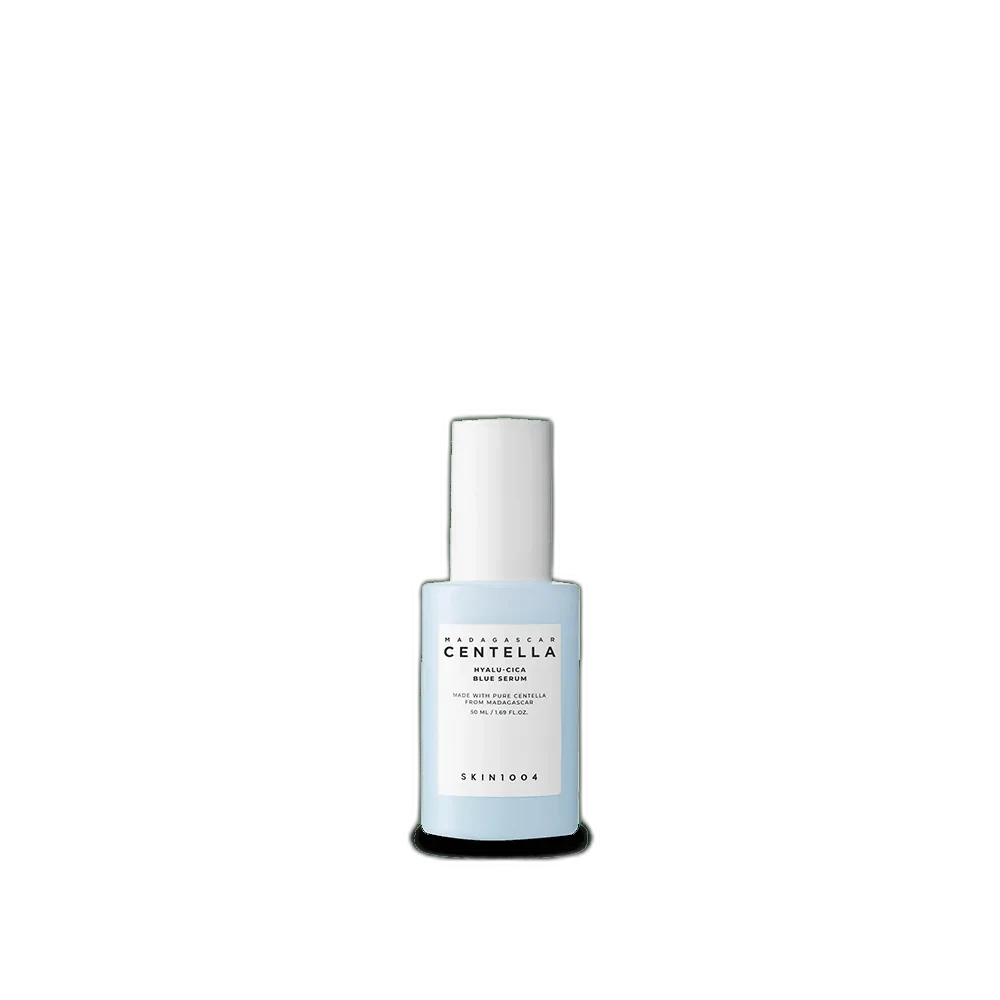
Hyalu-Cica Blue Serum
Budget Hydration Holy Grail
 Verified reviewer
Pros & cons.
- +Uses 38% Centella asiatica leaf water as the base instead of plain water
- +Five types of hyaluronic acid layered for multi-depth hydration
- +Includes niacinamide, ceramide NP, panthenol, and adenosine — rare in a budget serum
- +Fragrance-free, alcohol-free, and silicone-free formulation
- +Exceptional tolerance for sensitive, reactive, and rosacea-prone skin
- +Layers cleanly under any active treatment or cream
- +Strong global review base with consistent positive feedback
- +Absurd value at under $20 for the ingredient list
- −Not enough occlusion alone for very dry skin — needs a cream on top
- −Slight stickiness possible with over-application
- −Natural blue color is purely sensory, not functional
The full review.
Compare the back labels of SKIN1004 Hyalu-Cica Blue Serum and Sisley Sisleÿa L’Intégral. A dermatologist would need to read closely to find the $600 one. Both use adenosine and Centella asiatica. SKIN1004 also includes niacinamide, five molecular weights of hyaluronic acid, ceramide NP, panthenol, and polyglutamic acid. It uses a 38% Centella asiatica leaf water base instead of plain water. SKIN1004 costs roughly $16, while Sisley costs $620. These are not identical products—the texture, base, scent, and ritual differ—but for functional actives, the Korean brand provides more for two and a half percent of the cost.
The Centella asiatica leaf water base is key. Most Centella serums add extract to a plain water base. SKIN1004 uses 38% Centella leaf water, so every drop carries Centella triterpenes: asiaticoside, madecassoside, asiatic acid, and madecassic acid. This is a formulation choice, not just marketing. It separates this from generic ‘cica’ serums that use the name without high concentrations. Centella has strong clinical data for soothing, wound healing, and barrier repair. Use this base if you have reactive skin, rosacea, a compromised barrier, or use strong actives and need a buffer.
The formula stacks a layered hyaluronic acid system on the Centella base. It contains sodium hyaluronate (large molecular weight for surface plumping), hydrolyzed hyaluronic acid (smaller fragments for deeper penetration), hyaluronic acid, sodium hyaluronate crosspolymer (for a long-lasting film), and hydrolyzed sodium hyaluronate. The benefit of multiple HA weights over one is modest and may be mostly marketing, but the layered approach creates a more sophisticated hydration feel. Including all these in a mass-market serum costs very little.
Niacinamide sits high enough on the INCI to suggest a functional concentration, providing well-studied barrier and mild brightening benefits without the cost of a dedicated niacinamide serum. Panthenol adds humectant and soothing properties. Ceramide NP is a meaningful inclusion; ceramides are often expensive and difficult to stabilize in water-based formulas, so finding one in a sub-$20 serum is a formulation flex. Adenosine provides anti-aging benefits; it is the same molecule luxury brands charge hundreds for. Arginine helps with pH buffering and mild skin support. Hydrolyzed gardenia extract provides the natural blue color; it is a sensory addition, not a functional ingredient, but it looks good and contains no common allergens.
The texture is a lightweight water-gel that absorbs quickly and leaves a slight film. It layers cleanly under any moisturizer or treatment product. It is fragrance-free, alcohol-free, silicone-free, and lacks common cheap-serum issues like tackiness, pilling, or burning. On reactive skin, the Centella-plus-panthenol combination settles redness within minutes. On dry skin, it works as a hydration base but requires a cream on top to seal in moisture, as hyaluronic acid pulls water but needs an occlusive layer to hold it.
This review is simple. There is no downside to this product at this price. If you like it, you added a functional, well-formulated hydration serum for the cost of two coffees. If you don’t, you spent less than a single CVS trip. The worst outcome is a slightly meh experience at a negligible cost. The best outcome is replacing a $60 niacinamide serum, a $40 HA serum, a $45 ceramide treatment, and a $50 adenosine product with one $16 bottle that performs all four jobs well. For most skin types, the best-case scenario is what happens.
The value-for-money calculation is lopsided. I am not saying this serum is as luxurious as Sisley. It isn’t. The Sisley cream has a different melt, scent, and feel, and carries a cultural weight this blue bottle lacks. If those factors matter to you, pay for them. I am saying that for functional hydration, soothing, barrier support, and a small anti-aging boost, this serum delivers measurable output for a fraction of the price with good ingredient quality. For sensitive, rosacea-prone, or post-procedure skin, and for anyone building a budget routine, this is why Korean skincare dominates the value tier.
The badge for this bottle: Budget Holy Grail. The serum isn’t flashy, lacks an influencer launch story, and isn’t in a weighted glass jar. It just works, quietly and well, at a price that is hard to argue against.
Ingredient analysis.
Full INCI list · pH 5.5
Water, Centella Asiatica Leaf Water 38%, Butylene Glycol, 1,2-Hexanediol, Niacinamide, Glycerin, Pantolactone, Hibiscus Esculentus Fruit Extract, Sodium Hyaluronate, Hydrolyzed Hyaluronic Acid, Hyaluronic Acid, Methylpropanediol, Panthenol, Cetearyl Olivate, Carbomer, Arginine, Sorbitan Olivate, Caprylic/Capric Triglyceride, Pyrus Communis Fruit Extract, Pentylene Glycol, Adenosine, Polyglutamic Acid, Rosa Damascena Flower Water, Artemisia Princeps Leaf Extract, Cucumis Melo Fruit Extract, Iris Florentina Root Extract, Ethylhexylglycerin, Hedera Helix Leaf/Stem Extract, Sodium Phytate, Xanthan Gum, Maltodextrin, Hydrolyzed Gardenia Florida Extract, Hydrogenated Lecithin, Ceramide NP, Sodium Hyaluronate Crosspolymer, Hydrolyzed Sodium Hyaluronate
Skin match.
The science.
The Science
The mechanism works in layers. Centella asiatica's active triterpenes — asiaticoside, madecassoside, asiatic acid, madecassic acid — have published evidence for wound healing, barrier repair, and anti-inflammatory activity. Studies in the Indian Journal of Pharmaceutical Sciences and Phytomedicine show Centella extracts support collagen synthesis and reduce erythema in compromised skin. SKIN1004 uses 38% Centella leaf water as the base to ensure consistent functional exposure to these triterpenes, rather than using a trace extract at the bottom of the INCI. The hyaluronic acid stack uses molecular weights with different penetration profiles: high molecular weight HA (sodium hyaluronate) forms a plumping film on the surface, while hydrolyzed (smaller fragment) HA penetrates slightly deeper into the upper stratum corneum. Research on layered HA systems suggests a modest additive benefit over single-weight formulations, though the effect size is small. Niacinamide has strong clinical literature at 2-5% concentrations for barrier support, mild brightening, and reducing skin surface irritation, with published work in the British Journal of Dermatology and elsewhere. Ceramide NP contributes to stratum corneum lipid architecture — but at trace concentrations in a water-based serum, it likely signals the formulation more than provides standalone barrier reinforcement. Adenosine has clinical support for mild wrinkle-smoothing effects, as discussed in reviews of Sisleÿa and Supremÿa. This formulation excels because it lacks irritants: no added fragrance, no denatured alcohol, no essential oils, and no parabens. For reactive skin, removing risk factors is often as valuable as adding active ingredients.
Dermatologist Perspective
Dermatologists often recommend Centella asiatica-based serums for patients with compromised barriers, rosacea, or post-procedure skin, and frequently cite this formulation as a strong budget option. Board-certified dermatologists note that the combination of Centella, niacinamide, hyaluronic acid, and ceramides in a fragrance-free base is a near-textbook formulation for barrier support; the adenosine adds a mild anti-aging benefit without meaningful irritation. For patients needing a well-tolerated hydration serum to pair with stronger actives — retinoids, acids, vitamin C — dermatologists typically suggest this kind of formulation: soothing, hydrating, barrier-supportive, and affordable for consistent daily use. The absence of fragrance and alcohol makes it appropriate for post-procedure skin, where ingredient tolerability matters more than price.
Where it fits in your routine.
Apply 3-4 drops to damp, cleansed skin morning and night. Pat gently into face and neck, allowing the serum to absorb before layering your next product. It works well as a hydration base under active treatments — apply this first, let it absorb for 30 seconds, then apply your vitamin C, retinoid, or acid. Follow with a moisturizer to seal in the hydration. For very dry skin, layer a hydrating toner underneath this serum and a richer cream on top. Safe for morning and night use.
At around $16 for 50ml, this serum is one of the best value propositions in skincare at any price point. The formulation quality rivals or exceeds serums costing five to ten times as much, and the ingredient stack (Centella, five HAs, niacinamide, ceramide NP, adenosine, panthenol) would cost considerably more if purchased as separate single-active products. For buyers building an affordable but effective routine, or for anyone wanting to test whether Centella and hyaluronic acid serums work for their skin before committing to more expensive options, this is nearly a no-risk purchase. The per-use cost is negligible, the formulation is fragrance-free and well-tolerated, and the ingredient quality is legitimate rather than bargain-bin. There is no version of the value calculation where this doesn't look good.
Everyone building a skincare routine on any budget benefits—sensitive skin, reactive skin, compromised barriers, post-procedure skin, combination, oily, normal, and dry skin included. It is especially valuable for people wanting evidence-based Centella and multi-HA hydration without luxury prices, and for anyone needing a soothing layer to pair with strong actives.
Few people should avoid this—it is a safe recommendation. Only very dry skin needing occlusion instead of hydration should skip it, or pair it with a thick cream. Buyers prioritizing luxury sensory experience over functional hydration will find this too utilitarian.
Product details.
Lightweight, water-gel serum with a slight slip that absorbs quickly
Fruit extracts provide a mild natural melon-and-pear character; no added fragrance.
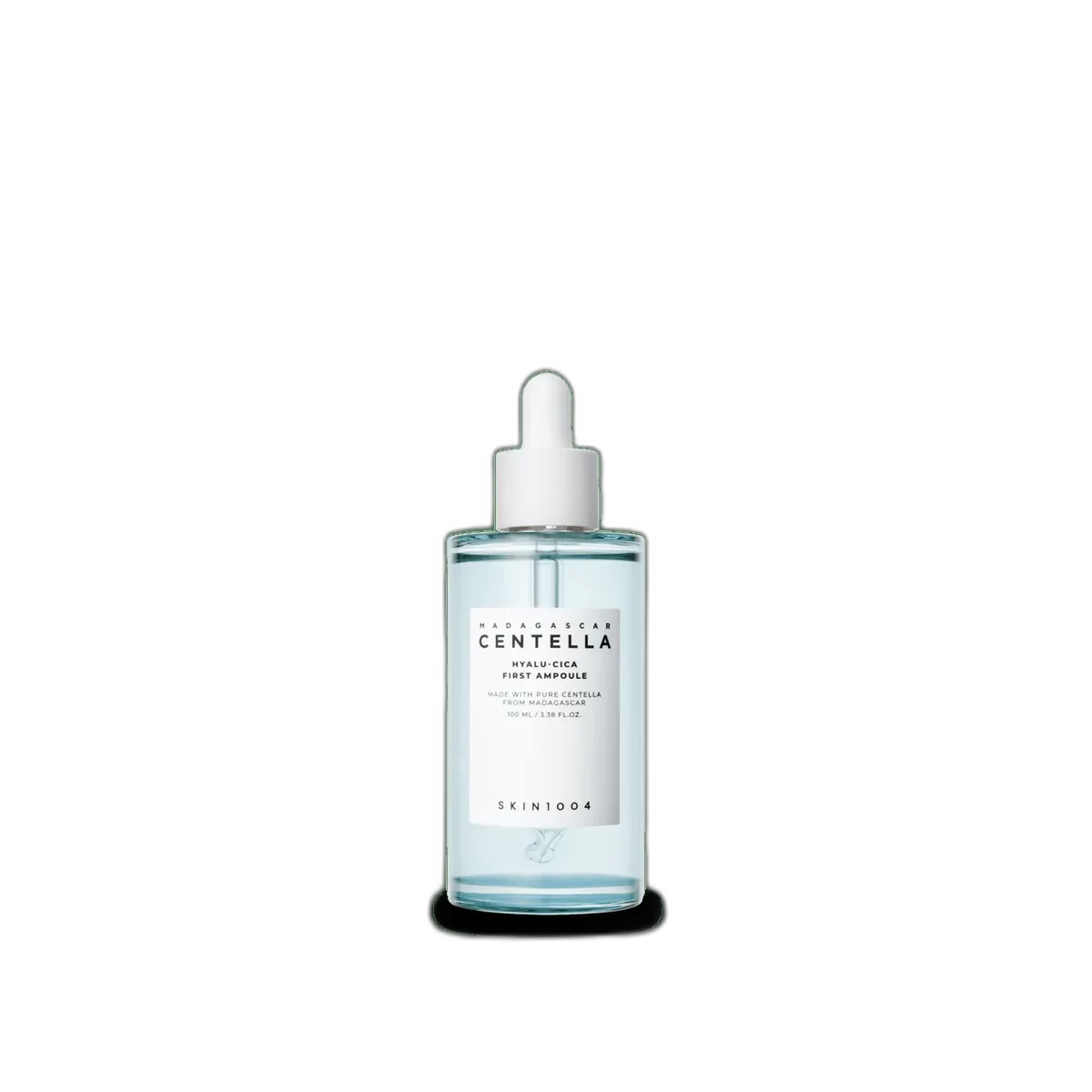
Clear glass bottle with dropper applicator; blue color shows through the glass
The first use hydrates immediately without tingling or an adjustment period. The blue hue shows but washes clear on application. Skin looks plumper within minutes.
About 2-3 months with twice-daily use
12 months
All Year
The backstory.
SKIN1004 built its Madagascar Centella line around a direct-source supply chain for Centella asiatica from Madagascar, which the brand uses as its origin story. The Blue Serum was a 2021 addition to the line that took the Centella base and layered in a multi-HA system, ceramides, and adenosine to create an all-in-one hydration plus barrier serum. The natural blue color comes from gardenia extract — a sensory touch rather than a functional one.
About SKIN1004
Established Brand (5–20 years)SKIN1004 launched in Korea in 2004. The brand builds its identity on the Madagascar Centella line, which sources Centella asiatica directly from Madagascar. This line has a broad international retail presence and a loyal following for affordable, evidence-based formulations.
Common myths.
The blue color is from artificial dye
hydrolyzed Gardenia florida extract, a natural plant-derived pigment, provides the color. This is a cosmetic ingredient, not a functional one, but it is not a synthetic dye.
Having five types of hyaluronic acid is just marketing
Different molecular weights of hyaluronic acid hydrate different levels of the stratum corneum. The real-world benefit over a single-HA formula is modest but exists, and K-beauty hydration serums often use this layered approach.
FAQ.
Is the blue color natural?
Yes — hydrolyzed Gardenia florida (gardenia) extract, a natural plant pigment, provides the color. This color is cosmetic, not functional, and rinses clear on the skin.
Can sensitive skin use this serum?
Yes — this is a strong serum choice for sensitive or reactive skin. The Centella asiatica base, panthenol, niacinamide, and ceramides all support barrier recovery. The formula is fragrance-free and alcohol-free.
Does it replace a hydrating toner?
Layer it with one product or use it as a replacement. Apply the hydrating toner first, then this serum, for very dry skin. For combination or oily skin, this serum alone provides enough hydration.
Is it safe to use with retinol?
Yes, and it pairs well with retinoids. Apply the serum to damp skin first as a hydration layer. Let it absorb, then apply your retinoid. The Centella and ceramides buffer retinoid irritation.
Why are there five types of hyaluronic acid?
Different molecular weights of hyaluronic acid hydrate at different depths of the stratum corneum. Larger molecules stay on the surface and plump; smaller molecules penetrate slightly deeper. The layered approach is a K-beauty formulation standard.
Is it enough hydration on its own for dry skin?
Normal to combination skin works well. Very dry skin needs a moisturizer layered on top to lock in hydration. Hyaluronic acid pulls water but does not seal it; the cream does that.
Is this pregnancy-safe?
Yes — it lacks retinoids, salicylic acid, or hydroquinone. The active profile (Centella, niacinamide, hyaluronic acid, ceramides, adenosine) is safe for pregnancy.
What the community says.
"Instantly hydrating without stickiness"
"Calms redness"
"Great value for the ingredient list"
"Blue color is fun without being gimmicky"
"Slight stickiness on first application"
"Not enough for very dry skin alone"
"Unique packaging can be hard to dispense evenly"
Featured in.
People also looked at.