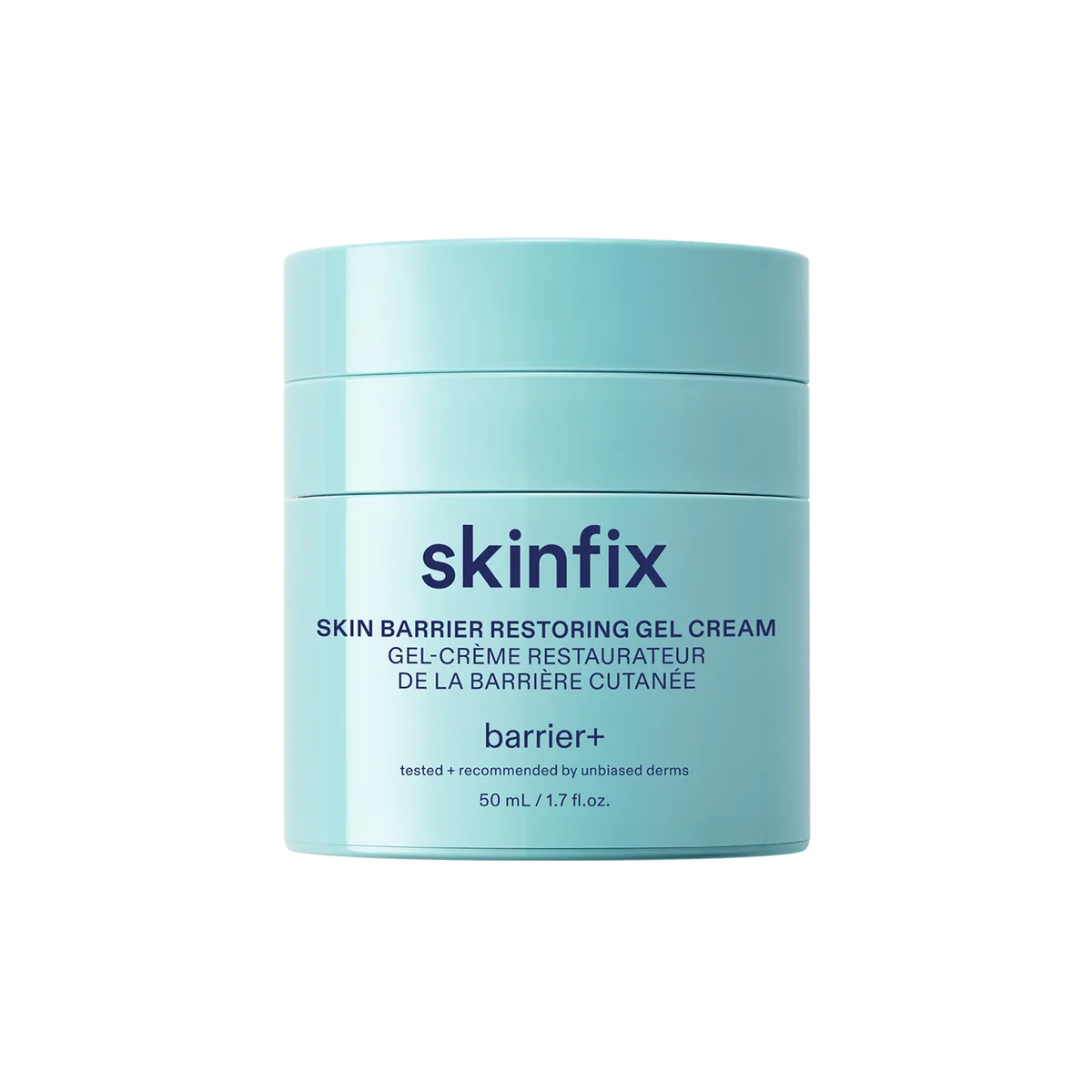
Barrier+ Skin Barrier Niacinamide Restoring Gel Cream
Lightweight Barrier Fix
 Verified reviewer
Pros & cons.
- +Lightweight gel-cream texture designed specifically for oily and combination skin barrier repair
- +Niacinamide at ~4% provides pore-refining and sebum-regulating benefits alongside barrier support
- +Squalane-based lipid system delivers barrier repair without heaviness or comedogenicity
- +Saccharide isomerate provides 72-hour moisture binding — unusually durable for a lightweight product
- +Absorbs within seconds and layers perfectly under sunscreen and makeup
- +Fragrance-free, silicone-free, clean formulation with very low irritation risk
- +Refillable packaging with genuine sustainability credentials
- −$54 for 1.7 oz is premium for a gel cream moisturizer
- −Not hydrating enough for dry skin or harsh winter climates
- −Not fungal acne safe despite the lightweight texture
- −Peptide concentrations are likely at trace levels — more of a bonus than a feature
- −Soy-derived ferment extract may concern those with soy allergies
The full review.
There is a cruel irony in the barrier repair world: the people who damage their barriers most aggressively tend to be the ones who can least tolerate the products designed to fix them. Oily skin types over-exfoliate with BHA. Combination skin types overdo the retinoid. Acne-prone skin types strip their faces with harsh cleansers. And then, when the barrier is wrecked — the redness, the sensitivity, the paradoxical increase in oiliness — they reach for a barrier repair cream and discover it feels like wearing a second skin made of butter. Skinfix’s Barrier+ Niacinamide Restoring Gel Cream exists to break this cycle.
This is not the Barrier+ Triple Lipid-Peptide Cream with a lighter texture. It is a fundamentally different product, engineered from the ground up for skin that needs barrier repair without lipid overload. Where the cream leads with shea butter and heavy emollients, this gel cream builds its moisture architecture around squalane — a skin-identical lipid that absorbs with the ease of water and leaves behind none of the heaviness that oily skin types dread.
The niacinamide at approximately 4% is the star, and it earns its top billing. At this concentration, niacinamide does three things simultaneously: it regulates sebum production (directly addressing the oiliness that barrier-compromised skin amplifies), it visibly refines pore appearance (the most common cosmetic concern of combination skin types), and it stimulates the skin’s own ceramide synthesis — effectively making the barrier repair work partly endogenous rather than relying entirely on topically applied lipids. The research on niacinamide’s ability to boost ceramide production is robust, and at 4%, you get the benefit without the flushing risk of higher concentrations.
Zinc PCA at roughly 1.7% reinforces the oil-control story. It is an antimicrobial, anti-inflammatory zinc derivative that helps prevent the small breakouts that often accompany barrier damage — the irritation-triggered spots that are not really “acne” but look and feel like it. Working alongside the niacinamide, it creates a dual sebum-regulation system that addresses excess oil from two different angles.
The hydration system is where Skinfix shows its formulation sophistication. Saccharide isomerate — a plant-derived sugar that physically bonds to the skin’s lysine residues — provides up to 72 hours of continuous moisture retention per application. Unlike conventional humectants that wash off or evaporate, saccharide isomerate stays put, creating a durable hydration base that this gel cream’s lightweight texture might otherwise struggle to maintain. Layered on top of that is a dual hyaluronic acid system: hydrolyzed HA (smaller fragments for deeper penetration) and standard sodium hyaluronate (for surface plumping).
The lipid complex is deliberately lightweight: squalane, jojoba and macadamia seed oil esters, phytosterols, and phytosteryl macadamiate. These are barrier-supporting lipids — they contribute to the intercellular matrix reconstruction that defines genuine barrier repair — but they do so without the weight and occlusion of traditional barrier ingredients. It is a trade-off: you get less raw occlusive power than the cream, but the lipids you get are skin-identical and non-comedogenic, making them suitable for pores that react poorly to heavier formulations.
In practice, this gel cream is a textural revelation. It applies as a silky, almost watery gel that disappears into the skin within ten to fifteen seconds. No tackiness, no film, no heaviness. You can apply sunscreen immediately after without pilling. You can wear it under makeup without compromise. It is, genuinely, a moisturizer that feels like nothing — which is exactly what oily and combination skin types need.
The flip side of this lightness is predictable: if you have truly dry skin, this will not be enough. It was not designed to be. In cold climates or during harsh winters, even combination skin types may need to layer this over a hydrating serum or under a richer night cream. This is a product that knows its audience and does not pretend to be universal.
The peptide component — acetyl heptapeptide-4 (a SNAP-8 analog), hexapeptide-11, and several oligopeptides — adds a subtle anti-aging dimension, though the concentrations are likely at trace levels. Consider them a thoughtful bonus rather than a primary feature.
At $54 for 1.7 oz, this gel cream shares the same pricing pressure as its cream sibling. The refillable system at $46 for refill pods helps, and the sustainable packaging demonstrates genuine commitment. But the price remains the most common complaint — and in a category where K-beauty and drugstore alternatives offer niacinamide and hyaluronic acid for a fraction of the cost, Skinfix needs the barrier repair architecture to justify the premium.
For combination and oily skin types who have been burned — sometimes literally — by barrier repair products that were too heavy, too greasy, or too pore-clogging, this gel cream is a genuine solution. It treats barrier damage without creating new problems, controls oil without stripping moisture, and refines pores without harsh actives. It is the product that proves barrier repair is not exclusively a dry-skin concern.
Formula
Ingredient analysis.
Full INCI list
Water/Eau/Aqua, Squalane, Propanediol, Jojoba Oil/Macadamia Seed Oil Esters, Triheptanoin, Niacinamide, Saccharide Isomerate, Ammonium Acryloyldimethyltaurate/VP Copolymer, Squalene, Zinc PCA, Hydrolyzed Hyaluronic Acid, Glycerin, Camellia Sinensis Seed Extract, Allantoin, Phytosteryl Macadamiate, Phytosterols, Acetyl Glutamine, Lecithin, Caprylyl Glycol, Amylopectin, Sodium Hyaluronate, Folic Acid, Oligopeptide-3, Bacillus/Soybean Ferment Extract, Oligopeptide-1, Oligopeptide-2, Hexapeptide-11, Tocopherol, Lithothamnion Calcareum Extract, Lactic Acid, Glucose, Acetyl Heptapeptide-4, C14-22 Alcohols, C12-20 Alkyl Glucoside, Ethylhexylglycerin, Trisodium Ethylenediamine Disuccinate, Potassium Sorbate, Citric Acid, Sodium Citrate, Pentylene Glycol, Sodium Benzoate, Xanthan Gum, Phenoxyethanol
Skin match.
The science.
The Science
The niacinamide in this gel cream uses a robust evidence base in cosmetic dermatology. A landmark study by Tanno et al. (2000) in the British Journal of Dermatology shows niacinamide stimulates de novo ceramide synthesis in human keratinocytes. It does not just support the barrier; it promotes the skin's own production of lipids needed for barrier integrity. This makes niacinamide synergistic with topically applied barrier lipids like the squalane and phytosterols in this formula.
Draelos et al. (2006) published in the Journal of Cosmetic and Laser Therapy that 2% niacinamide significantly reduced casual sebum excretion rates, proving the ingredient regulates sebum. At the approximately 4% concentration in this gel cream, the sebum-controlling effect is likely stronger, addressing the excess oil production that often follows barrier damage in oily skin types.
Squalane — the primary emollient here — is a hydrogenated form of squalene, a lipid the human body produces naturally but which declines with age. Research shows squalane is non-comedogenic, non-irritating, and integrates with the skin's own lipid matrix. This makes it an ideal barrier repair ingredient for acne-prone and sensitive skin types that cannot tolerate heavier lipids.
Saccharide isomerate uses a newer approach to skin hydration. Research in the International Journal of Cosmetic Science shows this plant-derived sugar binds covalently to the amino group of lysine residues in the stratum corneum, providing sustained moisture retention through washing and environmental exposure. Clinical studies showed measurable improvements in skin hydration lasting up to 72 hours after a single application — longer than conventional humectants like glycerin or hyaluronic acid.
Zinc PCA has a dual role in sebum regulation and antimicrobial activity. Research indicates zinc PCA reduces sebum production and provides anti-inflammatory support, which helps barrier-compromised oily skin prone to irritation-triggered breakouts.
References
- The effect of 2% niacinamide on facial sebum production — Journal of Cosmetic and Laser Therapy (2006)
Dermatologist Perspective
Board-certified dermatologists recognize that oily and combination skin types suffer barrier damage as often as dry skin types — often more so, due to aggressive use of BHAs, retinoids, and stripping cleansers. Dermatologists note this gel cream addresses a clinical need: lightweight barrier repair that oily skin can tolerate. The niacinamide and zinc PCA combination works to support the barrier and regulate sebum, and dermatologists recommend the squalane-based lipid system for patients needing non-comedogenic barrier support. The clean formulation aligns with dermatological guidance for sensitive and reactive skin, and the non-comedogenic clinical testing provides reassurance for acne-prone patients.
Guidance
Where it fits in your routine.
Apply 1-2 pumps to clean skin before sunscreen (AM) or as your final evening step (PM). The gel cream absorbs in seconds, allowing immediate sunscreen or makeup application. Layer over a hydrating toner or serum for extra hydration in dry conditions. Use over retinoids as a lightweight buffer. For best results, use twice daily for 4-6 weeks to see barrier repair and pore-refining effects.
At $54 for 1.7 oz ($46 refills), this gel cream costs the same as the thicker Barrier+ Lipid-Peptide Cream. This price assumes oily skin types pay premium rates for lightweight barrier repair. The formulation is sophisticated; niacinamide, dual HA, saccharide isomerate, zinc PCA, and squalane work together better than simpler products. However, the ingredients are not exotic, and K-beauty gel creams with niacinamide and hyaluronic acid cost much less. The premium price pays for the specific combination, clean credentials, and the refillable packaging system. For oily skin types seeking usable barrier repair products, this positioning may justify the price.
Combination and oily skin types need barrier repair without heavy creams. It works for anyone who over-exfoliated with BHAs or over-used retinoids and needs to repair their barrier without adding oil or heaviness. It also works for those wanting a clean, lightweight moisturizer with pore-refining niacinamide that layers well under all sunscreens and makeup.
Dry skin types needing more moisture will find this gel cream insufficient in cold or dry climates. People with fungal acne should avoid this despite its lightweight texture. For maximum barrier repair potency, the Barrier+ Triple Lipid-Peptide Cream is the more intensive option.
Product details.
This lightweight, silky gel-cream absorbs fast and leaves no sticky or greasy residue. It feels water-based despite the lipid content. It is lighter than the Barrier+ Lipid-Peptide Cream — made for those who find rich creams suffocating.
Fragrance-free and contains no essential oils. It has almost no detectable scent; some users report a faint, clean smell that vanishes immediately.
Refillable jar system uses a 70% post-consumer recycled polypropylene outer jar and a 44% PCR inner pod. A pump cap ensures hygienic dispensing. A Mini (0.5 oz, $20) is also available. Refill pods ($46) reduce plastic use by 80%. The box uses 100% FSC-certified paper and plant-based inks.
It feels lightweight and comfortable immediately—no heaviness, no tackiness, and no adjustment period. The gel-cream texture melts into skin and disappears in seconds. If you avoid barrier repair products because they feel too heavy, this changes that.
2-3 months with twice-daily face and neck application
12 months
All Year
The backstory.
Skinfix developed this gel cream to address a significant gap in their Barrier+ line: the Triple Lipid-Peptide Cream was universally praised by dry and sensitive skin types but consistently rejected by oily and combination skin users who found it too heavy. Rather than simply diluting the cream formula, they redesigned the lipid system around squalane and jojoba esters — lightweight alternatives that deliver barrier support without the density that oily skin types cannot tolerate.
About SkinFix
Skinfix relaunched in 2014, using an 1870 Yorkshire heritage. This gel cream is their lighter-weight barrier repair option for combination and oily skin types. The brand is clinically tested, dermatologist tested, and Leaping Bunny certified.
Common myths.
Oily skin doesn't need barrier repair.
Oily skin often has a compromised barrier due to aggressive cleansing, BHA overuse, or retinoid irritation. A damaged barrier triggers more oil production as the skin compensates for moisture loss. Using lightweight lipids like squalane to repair the barrier can reduce oiliness over time.
Gel creams do not repair the barrier; use thick, occlusive products instead.
Barrier repair delivers specific lipids (ceramide-adjacent phytosterols, squalane, fatty acid esters) to reconstruct the intercellular matrix — not product thickness. This gel cream's lipid complex uses molecular compatibility with the skin's own barrier instead of physical occlusion.
FAQ.
What's the difference between SkinFix Barrier+ Gel Cream and the Lipid-Peptide Cream?
The Gel Cream is lightweight for oily/combination skin. It uses squalane as the main lipid, plus niacinamide and zinc PCA to control oil. The Lipid-Peptide Cream is thicker with shea butter for dry and sensitive skin. Both use barrier-repairing lipid systems, but the Gel Cream focuses on weight and pore-refining.
Is SkinFix Barrier+ Gel Cream good for acne-prone skin?
Yes — clinical tests show it is non-comedogenic. It contains niacinamide and zinc PCA to control sebum and prevent breakouts. The squalane-based lipid system is non-comedogenic. However, some lipid ingredients make it not fungal acne safe.
Can I use SkinFix Barrier+ Gel Cream with retinol?
Yes — this gel cream works well as a lightweight buffer over retinoids. Apply your retinol first, let it absorb, then layer the gel cream on top. Its barrier-repairing lipids reduce retinoid-induced dryness and irritation without feeling heavy.
Is SkinFix Barrier+ Gel Cream hydrating enough for winter?
Oily skin types can use this year-round. Combination and normal skin types may need to layer it over a hydrating serum in colder months. This gel cream lacks enough hydration for dry skin — use the Barrier+ Lipid-Peptide Cream instead.
Is SkinFix Barrier+ Gel Cream safe during pregnancy?
Yes — this gel cream lacks retinoids, salicylic acid, or other pregnancy-flagged ingredients. This fragrance-free barrier repair moisturizer is gentle and safe for use during pregnancy.
What the community says.
"Lightweight texture perfect for oily and combination skin"
"Absorbs quickly without pilling under makeup"
"Visible pore-refining effect within weeks"
"Fragrance-free with no detectable scent"
"Refillable packaging is a genuine sustainability plus"
"Reduces blemishes and calms inflammation"
"$54 is expensive for a gel cream moisturizer"
"Not hydrating enough for dry skin or cold climates"
"Small jar for the price"
"Not fungal acne safe despite lightweight texture"
"Some users detect a faint product scent"