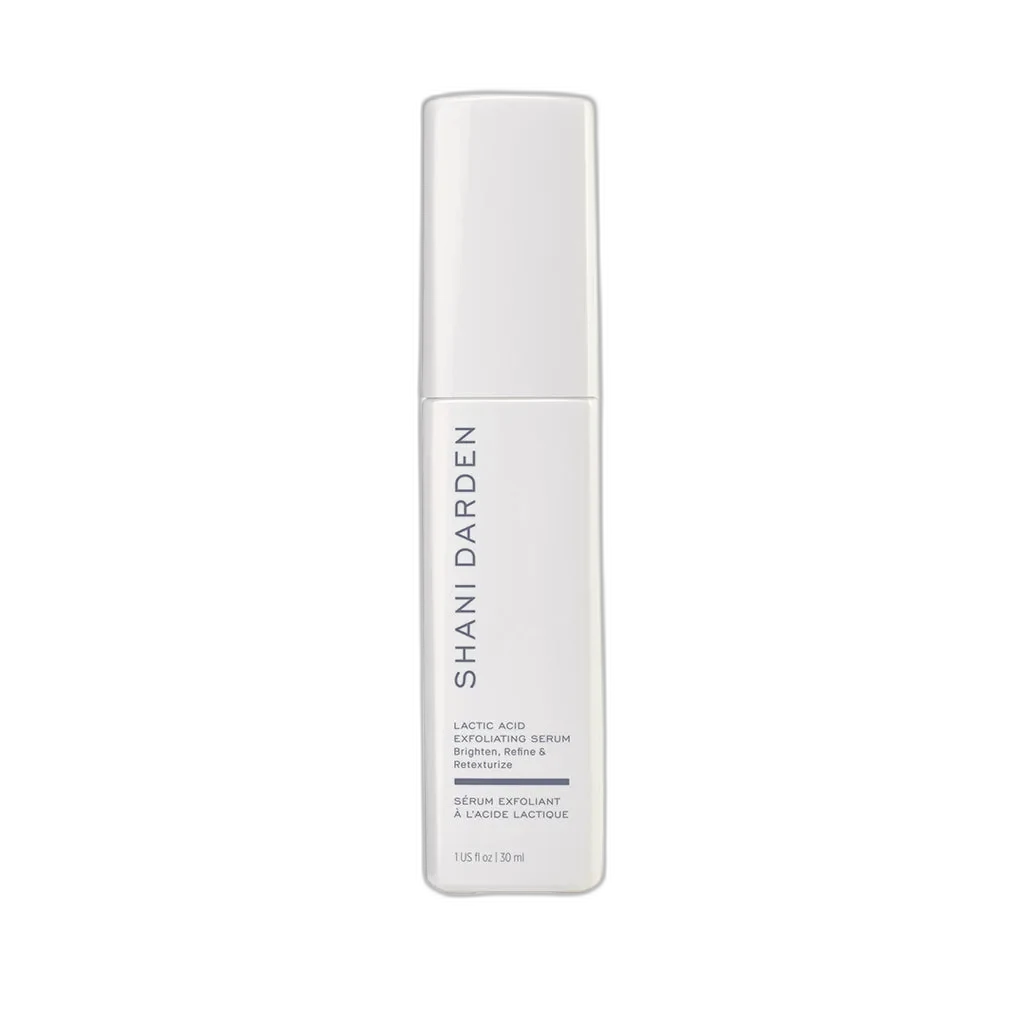
Lactic Acid AHA Resurfacing Serum
Celebrity Esthetician's Lactic Acid
 Verified reviewer
Pros & cons.
- +10% lactic acid at correct pH for full efficacy
- +Meaningful soothing support from centella, panthenol, and chamomile
- +Fragrance-free formulation — rare at the luxury AHA tier
- +Gentler profile than comparable glycolic acid serums
- +Elegant texture and polished user experience
- +Practitioner-led formulation discipline
- +Pregnancy-safe and fungal-acne compatible
- −Significantly overpriced relative to comparable lactic acid serums
- −Celebrity esthetician branding drives much of the cost
- −30 ml bottle depletes quickly for nightly use
- −Frosted glass packaging exposes serum to light
- −No meaningful formulation advantage over mid-price alternatives
The full review.
Every product from a celebrity esthetician faces one question: are you paying for the formulation, or for proximity to Jessica Alba? Celebrity-adjacent skincare has a mixed history. Cynics argue these brands use a famous practitioner’s client list to justify prices the formula alone cannot support. A less cynical view suggests an esthetician with twenty years of clinical experience brings practical intuition that lab-driven brands lack. Shani Darden’s lactic acid serum sits between these two views, and the answer is more nuanced than either extreme.
Shani Darden is not a dermatologist, cosmetic chemist, or research scientist. She is a Los Angeles esthetician whose Pico Boulevard treatment room became a celebrity open secret during the 2010s, serving clients like Jessica Alba, Rosie Huntington-Whiteley, and Shay Mitchell. Her first product, the Retinol Reform serum, launched in 2013 and gained a cult following through her celebrity clientele. This lactic acid serum arrived nine years later, in 2020, as a resurfacing option for clients needing an AHA alternative or complement to retinol. The brand is practitioner-led rather than research-led; the pitch is “this is what Shani uses in her treatment room,” not “this is supported by double-blind clinical trials.”
The formulation is well-executed. The serum uses a reported 10% concentration of lactic acid, which sits at the high end for OTC lactic acid products and provides consistent resurfacing. Lactic acid is gentler than glycolic acid because its larger molecular size limits penetration depth. A 10% lactic acid serum has an irritation profile similar to 5-7% glycolic acid while providing comparable surface-level exfoliation and hydration. The pH is approximately 3.8, keeping the lactic acid in its active protonated form. The base uses water, propanediol, and butylene glycol instead of heavy alcohol, which aids tolerability.
The supporting ingredients reflect Darden’s esthetician perspective. Niacinamide is near the top of the list, providing anti-inflammatory and barrier-supporting effects to offset 10% lactic acid-induced dryness. Centella asiatica, panthenol, allantoin, chamomile, and aloe vera add calming support. Sodium hyaluronate and sodium PCA provide humectant reinforcement. The formula looks designed by someone who has watched clients over-exfoliate and included safeguards to prevent it. This is a different kind of formulation intelligence than what a cosmetic chemist produces from first principles, and it shows in how the serum feels over weeks of use.
The user experience is consistent. The serum is clear, watery, absorbs in seconds, and leaves no tacky residue. Most users feel a mild warming sensation on first application—the lactic acid working—which fades within a minute. Skin texture visibly smooths over the first week. Brightness and tone improve over the first month. Users with chronic dullness or post-inflammatory hyperpigmentation typically see meaningful progress over two to three months. This follows the standard lactic acid benefit arc, but the consistency suggests the soothing ingredients work.
Regarding price: at $88 for 30ml, Shani Darden Lactic Acid Resurfacing Serum sits in the luxury AHA serum tier. Chemical exfoliants are highly commoditized. A well-formulated 10% lactic acid serum is available from Drunk Elephant (also ~$80, similar ingredients), The Ordinary (often under $10, fewer supporting ingredients, same active), SOME BY MI (around $20, Korean formulation), or many other brands. The active, pH, and underlying mechanism are the same. Only the supporting ingredients, packaging, brand positioning, and experience vary.
Shani Darden’s version is among the better-assembled luxury lactic acid serums. The fragrance-free formulation is an advantage over many competitors. The soothing support is well-considered, and the texture is polished. However, polished is not essential. Much of the appeal comes from the brand halo—the association with Darden’s celebrity clients, the elegant packaging, and the Beverly Hills connection. If that halo fits your priorities, this is a legitimate premium option. If not, you can get comparable results for less money without losing efficacy.
This serum is well-formulated at a price that includes more than just the formulation. Every premium brand does this, but it is worth noting. If you love the Shani Darden brand, want the elegant bottle, or value the celebrity-esthetician connection, this serum delivers. If you want to optimize resurfacing per dollar, The Ordinary or similar cheap alternatives do the same work with less ceremony.
Ingredient analysis.
Full INCI list · pH 3.8
Water/Aqua/Eau, Lactic Acid, Propanediol, Butylene Glycol, Glycerin, Niacinamide, Arginine, Hamamelis Virginiana (Witch Hazel) Water, Sodium Hyaluronate, Panthenol, Allantoin, Centella Asiatica Extract, Camellia Sinensis Leaf Extract, Chamomilla Recutita (Matricaria) Flower Extract, Aloe Barbadensis Leaf Juice, Tocopheryl Acetate, Sodium PCA, Betaine, Xanthan Gum, Caprylyl Glycol, Ethylhexylglycerin, Sodium Hydroxide, Disodium EDTA, Phenoxyethanol
Skin match.
The science.
The Science
Lactic acid has worked as a topical exfoliant and humectant since the 1990s. A 1996 Smith study in the Journal of the American Academy of Dermatology shows that 5% and 12% lactic acid improve skin texture, hyperpigmentation, and fine lines over twelve weeks of daily use; 12% produces stronger effects. A 2010 review in Clinical Dermatology confirms lactic acid is a gentler AHA that resurfaces skin at 5-12% concentrations. Lactic acid is a two-carbon alpha-hydroxy acid. Its molecular structure is larger than glycolic acid, so it penetrates the skin less; this mechanism makes lactic acid more tolerable at similar concentrations. A 2004 paper in the International Journal of Cosmetic Science shows lactic acid also acts as a humectant and ceramide-stimulating ingredient. This means lactic acid exfoliates while directly supporting the barrier function that chemical exfoliation usually disrupts. The niacinamide in this formulation has its own research, including the Bissett 2005 Dermatologic Surgery study showing 5% niacinamide improves texture, tone, and fine lines. The science for this formulation is robust—the question is whether this specific brand performs better than a well-formulated generic lactic acid serum.
References
- Comparative effectiveness of alpha-hydroxy acids on skin properties — International Journal of Cosmetic Science (2004)
- Niacinamide: a B vitamin that improves aging facial skin appearance — Dermatologic Surgery (2005)
Dermatologist Perspective
Dermatologists usually see lactic acid as the gentler major AHA and recommend it when glycolic acid causes irritation. Board-certified dermatologists note that 10% lactic acid at the correct pH provides meaningful exfoliation. Adding niacinamide and centella makes this serum's formulation clinically defensible. Dermatologists typically worry less about formulation quality in celebrity-esthetician products and more about the price gap compared to equivalent dermatology-brand alternatives. For patients requesting this serum, dermatologists confirm the formulation works but note that comparable results cost significantly less elsewhere.
Where it fits in your routine.
Apply 3-5 drops to clean, dry skin in the evening after toner and before moisturizer. Use 2-3 nights per week for the first two weeks to test tolerance. If your skin adapts, use 4-5 nights per week or nightly. Do not layer with retinoids, other acids, or benzoyl peroxide on the same night. Always follow with a hydrating moisturizer, and use broad-spectrum SPF every morning — AHA use increases sun sensitivity.
At $88 for 30ml, this serum sits at the high end of the AHA category. The formulation works well, but the price reflects brand positioning instead of clinical superiority. Other 10% lactic acid serums with strong supporting casts cost $20-50. Paying nearly double or quadruple offers mostly experiential and brand-related benefits rather than better results. The premium is defensible for buyers who value the Shani Darden association and the polished user experience. Buyers optimizing for resurfacing per dollar find better values. No larger size is offered.
Normal to dry skin users wanting a polished luxury lactic acid serum and the Shani Darden brand association will like this. It is a reasonable pick for sensitive skin that prefers lactic acid over glycolic, or for pregnant users wanting a resurfacing option without salicylic acid or retinol.
Choose this if you want value, already use a cheaper lactic acid serum, or prioritize efficacy-per-dollar. Skip this if you have severe rosacea or a compromised skin barrier—use gentler options first.
Product details.
Essentially scentless — no added fragrance and only faint botanical notes. ***
Shani Darden's pale pink design uses a frosted glass bottle with a dropper. The design is elegant but exposes the serum to light and air every time you use it.
Mild warmth or light tingling upon first application is normal; the lactic acid interacts with skin. Skin may look slightly pinker over the first two nights but settles by morning. Texture improves within the first week, and brightening benefits build over the first month.
Approximately 2-3 months with nightly use on the full face. ***
6 months ***
All Year ***
The backstory.
Shani Darden is a Los Angeles esthetician whose client list became a kind of open secret in celebrity skincare — her treatment room at Pico Boulevard regularly saw names like Jessica Alba, Rosie Huntington-Whiteley, and Shay Mitchell. She launched her own brand in 2013 as an extension of the in-treatment-room experience, starting with her cult Retinol Reform serum. This lactic acid resurfacing serum was released in 2020 as her answer to clients who wanted an AHA alternative or complement to retinol-based resurfacing.
About Shani Darden
Established Brand (5–20 years)Shani Darden Skin Care is the eponymous brand of celebrity esthetician Shani Darden, whose Beverly Hills clients include Jessica Alba, Rosie Huntington-Whiteley, and Shay Mitchell. The brand's credibility comes from Darden's 20+ years of in-clinic experience with clients rather than from independent clinical research — a practitioner-led brand rather than a derm-lab-led one.
Common myths.
Lactic acid is too weak to deliver real results.
At 10% and the correct pH, lactic acid resurfaces, brightens, and improves texture. Lactic acid is gentler on the barrier than glycolic acid at comparable concentrations, but it is not less effective. Both are useful tools with different profiles.
Expensive acid serums always have better formulations than cheap ones.
Chemical exfoliants are commodity actives. A well-formulated $15 lactic acid serum delivers comparable resurfacing to an $88 version if the concentration, pH, and base are correct. In this category, price often reflects brand positioning and packaging instead of formulation sophistication.
FAQ.
Is this worth $88 when cheaper lactic acid serums exist?
The formulation is well-crafted and includes soothing ingredients, but other products offer comparable lactic acid efficacy at half to a third of the price. The premium price reflects the celebrity-esthetician positioning, the packaging, and the Shani Darden brand halo instead of a formulation that is structurally superior to mid-tier alternatives. Whether that premium is worth it depends on how much you value the brand association.
Can I use this with the Shani Darden Retinol Reform?
Do not use them on the same night. Both products are leave-on actives. Layering retinol and 10% lactic acid increases irritation risk and compromises the barrier. Alternate nights: use Retinol Reform one night and this serum the next.
How often should I use this serum?
Use 2-3 nights per week for the first two weeks. If your skin shows no persistent redness or dryness, increase to 4-5 nights per week. Resilient skin can use it nightly, but most users get benefits without cumulative irritation at 4-5 times per week.
Is lactic acid gentler than glycolic acid?
Yes, at comparable concentrations. Lactic acid has a larger molecular size, which limits penetration depth and makes it gentler on the skin barrier. This serum's 10% lactic acid has an irritation profile similar to 5-7% glycolic acid and delivers similar surface resurfacing benefits.
Is this safe during pregnancy?
Yes — lactic acid is generally pregnancy-safe at topical concentrations, unlike salicylic acid or retinoids. The rest of the formulation contains no pregnancy-restricted actives. It is a reasonable pick for pregnant users who want to maintain an exfoliation routine.
Will this help with hyperpigmentation?
Lactic acid provides modest brightening by accelerating cell turnover. This fades post-inflammatory hyperpigmentation and general dullness over time. For significant hyperpigmentation or melasma, a targeted pigmentation serum (with tranexamic acid, azelaic acid, or hydroquinone) works better; use this serum as a complement.
Can sensitive skin use this?
Sensitive skin usually tolerates this serum at lower frequency (2 nights per week) because it includes soothing ingredients. However, very reactive, rosacea-prone, or eczema-prone skin should start slowly or choose a lower-percentage alternative. Patch test before full-face use.
What the community says.
"Noticeably smoother skin after first use"
"Brightening without dryness"
"Works on stubborn dullness"
"Fragrance-free and comfortable"
"Gentler than glycolic acid alternatives"
"Very expensive for a lactic acid serum"
"30ml bottle disappears quickly"
"Not meaningfully different from cheaper alternatives"
"Celebrity brand pricing"
People also looked at.