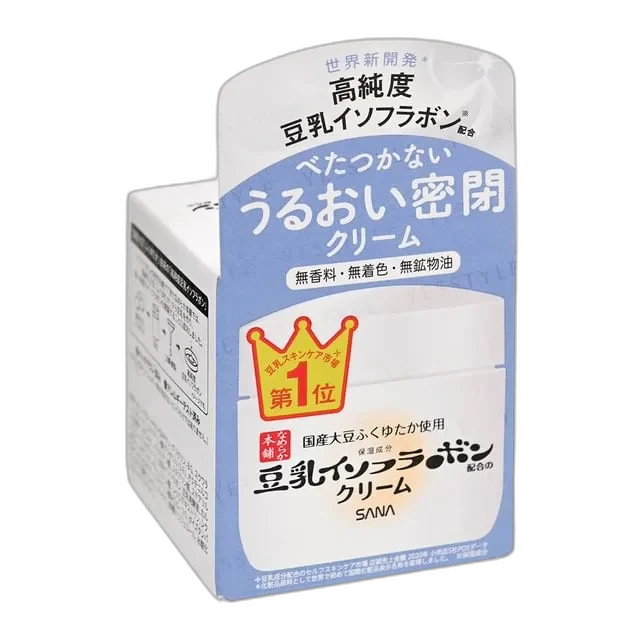
Nameraka Honpo Soy Milk Moisturizing Cream
J-Beauty Drugstore Classic
 Verified reviewer
Pros & cons.
- +Deeply hydrating fermented soy formula at a drugstore price
- +Silky squalane-based finish never feels greasy under makeup
- +Completely fragrance-free, ideal for sensitive noses
- +Includes Ceramide NG and trehalose alongside glycerin
- +Twenty-year track record in Japan with consistent reviews
- +A 50g jar easily lasts three to four months with daily use
- +Gentle enough to layer over actives like retinol and vitamin C
- +Safe to use during pregnancy
- −Contains denatured alcohol that can irritate very sensitive skin
- −Uses methylparaben, a dealbreaker for paraben-averse users
- −Wide-mouth jar is not the best format for fermented actives
- −Some co-emulsifiers may trouble acne-prone skin
- −Not widely stocked at physical stores outside Asia
- −Only one size is available, no travel option
The full review.
Twenty years is a long time in skincare. Most 2005 launches are discontinued, reformulated, or rebranded. Sana Nameraka Honpo’s Soy Milk Moisturizing Cream has done none of these. It looks, feels, and smells the same as when it first hit Japanese drugstore shelves because the formula works, the price is right, and Japanese consumers stay loyal.
Fermented soy defines the cream. Soymilk ferment filtrate, soybean seed extract, soy protein, and soy isoflavones all rank in the top fifteen ingredients. This gives the product its faint bean-milk scent and cushiony skin feel. These ingredients aren’t new or trendy—J-beauty hype now favors rice fermentations and marine extracts—but fermented soy has decades of proven use in Japanese cosmetics. Japanese dermatologists have watched these ingredients work long enough to no longer be surprised.
The emollient architecture is the interesting part. Glycerin is number two, squalane is high on the list, and Ceramide NG provides barrier support. Trehalose acts as a second humectant alongside glycerin. This matters because Japanese apartments are notoriously dry in winter; Sana’s formulators designed this cream to hold hydration when ambient humidity drops. Most global brands ignore this environmental specificity.
Texture provides immediate appeal. In the jar, it looks like a stiff ivory cream that might leave a greasy streak. It softens on warm skin within a second and spreads into a lighter film than the jar suggests. The finish is satin—neither matte nor dewy—making skin look cared for without looking coated. It layers cleanly under sunscreen and makeup, unlike many rich moisturizers. There is no fragrance, tingle, or burning. For those with fragrance sensitivities, this is a rare rich drugstore cream that delivers hydration without scent interference.
The limitations are clear. Denatured alcohol is in the mid-INCI, which is the main reason sensitive users might react. Methylparaben acts as a preservative; this matters to those preferring paraben-free formulas, even though cosmetic-grade parabens are safe. The jar packaging is fine but not ideal for fermented actives long-term—use clean hands or the included spatula. Because some co-emulsifiers are comedogenic on the Fitzpatrick chart, acne-prone users should patch test or use the line’s lighter gel cream.
The value is hard to argue with. A 50g jar costs about eleven dollars and lasts three to four months with twice-daily face and neck use. That is roughly three dollars a month for a moisturizer containing fermented soy, glycerin, squalane, Ceramide NG, and trehalose. Western drugstore products do not match this ingredient profile at this price. You can find cheaper creams with less, or more expensive creams with more, but this cost-to-composition intersection is rare.
Who should buy it
people looking for a no-fragrance rich moisturizer under fifteen dollars, dry and combination skin types who want a J-beauty staple, fans of fermented ingredients, and anyone who wants to try the Nameraka Honpo layering ritual at drugstore cost.
Who should skip it
very sensitive skin that reacts to denatured alcohol, acne-prone users worried about comedogenic emulsifiers, and people who want the absolute latest in barrier science. Everyone else can quietly put it in their cart and move on with their life.
Formula
Ingredient analysis.
Full INCI list
Water, Glycerin, Dipropylene Glycol, Cetyl Ethylhexanoate, Squalane, Pentylene Glycol, Behenyl Alcohol, Diglycerin, Trehalose, Dimethicone, PEG-60 Hydrogenated Castor Oil, Soymilk Ferment Filtrate, Glycine Soja (Soybean) Seed Extract, Glycine Soja (Soybean) Protein, Soy Isoflavones, Ceramide NG, Tocopherol, Butylene Glycol, Stearyl Alcohol, Glyceryl Stearate, Acrylates/C10-30 Alkyl Acrylate Crosspolymer, Xanthan Gum, Alcohol, Ethylhexylglycerin, Glycyrrhiza Glabra (Licorice) Root Extract, Sodium Stearoyl Glutamate, Sodium Hydroxide, Disodium EDTA, Phenoxyethanol, Methylparaben
Skin match.
The science.
The Science
The formulation's science lies in its humectant-emollient-barrier stack rather than one headline active. Studies show Soymilk ferment filtrate and soy isoflavones — specifically genistein and daidzein — provide antioxidant activity and modulate photoaging pathways. Topical use of standardized soy extracts for 12 weeks improves dyspigmentation and elasticity. While cosmetic evidence for fermented soy is less abundant than for pure isoflavones, fermentation breaks large soy proteins into smaller, more bioavailable peptides. Glycerin is the second-highest ingredient by concentration and is a top-tier dermatological humectant; it draws water into the stratum corneum to improve surface hydration within minutes. Trehalose adds a complementary humectant function that works well in low humidity because its hydration effect relies less on ambient moisture than glycerin. Squalane is a stable emollient that mimics native skin lipids without the oxidative issues of squalene, providing long-lasting occlusive comfort. Ceramide NG supports the barrier's lamellar structure, though a single-ceramide level is supplemental rather than dominant. These ingredients are not groundbreaking, but this specific ratio has remained stable, well-tolerated, and effective for two decades.
Dermatologist Perspective
Dermatologists in Japan and the wider Asian skincare community often cite fermented soy as a gentle, well-tolerated active for sensitive and aging skin. Board-certified dermatologists say a moisturizer's job is to deliver humectants, seal them with emollients, and avoid irritants — tasks this cream performs well for its drugstore price. Dermatology literature treats ceramide-supplemented moisturizers as valuable for dry and mature skin; the Ceramide NG and squalane combination gives this cream a modest barrier-support edge over similar priced alternatives. Dermatologists may flag the denatured alcohol as a concern for rosacea-prone or eczema-prone patients.
Where it fits in your routine.
Apply in the morning and evening as the last moisturizing step before sunscreen (AM) or as an overnight hydrator (PM). After cleansing, toning, and applying serums, warm a dime-sized amount between your fingertips. Press it into the face and neck using upward sweeping motions. Wait one to two minutes before applying sunscreen or sleeping. For the full Nameraka Honpo ritual, use the line's skin lotion and milky emulsion beneath it.
At about eleven dollars for 50g, this is one of the best-value thick moisturizers in the drugstore tier. One jar lasts three to four months using it twice daily on the face and neck, making the monthly cost around three dollars. Only one size is sold, but the 50g jar is generous for a thick cream used sparingly. Compared to $40-60 Japanese department-store creams with similar fermented soy actives, the packaging gap is enormous while the formula gap is small. For shoppers prioritizing ingredient substance over prestige, the value is almost uncontested.
Dry and combination skin types seeking a fragrance-free drugstore moisturizer with active ingredients, Japanese skincare fans wanting an authentic and affordable J-beauty staple, and anyone needing a thick cream that layers cleanly under sunscreen.
Skip this if you have very sensitive or rosacea-prone skin that reacts to denatured alcohol, avoid parabens, or have acne-prone skin concerned about comedogenic emulsifiers. Also skip if you want a lightweight gel finish for oily skin — the line's gel cream variant works better.
Product details.
It is fragrance-free; a faint bean-milk note from the soy ferment is the only smell.
Classic 50g wide-mouth plastic jar with a screw cap and a plastic spatula — minimal, functional, and easy to scoop.
This cream feels thicker than most Western drugstore moisturizers on first application, but it sinks in faster than its texture suggests. Skin feels softer and more cushioned immediately. There is no tingling, no fragrance, and no initial adjustment period — just hydration.
Apply to face and neck twice daily for 3-4 months, or 5+ months if used only at night.
12 months
All Year
The backstory.
Launched in 2005 as the centerpiece of Sana's Nameraka Honpo range, the Soy Milk Moisturizing Cream was designed to pair with the line's lotion and milky emulsion to create a complete drugstore anti-aging ritual rooted in soybean biotechnology. Tokiwa Pharmaceutical, Sana's parent, already had experience with fermented plant actives.
About Sana
Legacy Brand (20+ years)Tokiwa Pharmaceutical founded the Japanese skincare brand Sana in 1976. The Nameraka Honpo line launched in 2005 and is a reliable Japanese drugstore moisturizing range. It uses fermented soymilk actives and has a long track record on @cosme and in Japanese dermatology circles.
Common myths.
Drugstore creams this cheap can't contain any real actives.
Fermented soymilk, soybean seed extract, soy protein, squalane, and Ceramide NG are all in the first fifteen ingredients. The formula lacks luxury elegance but works.
Jar packaging ruins fermented ingredients.
Airless packaging is better, but preservatives stabilize the soymilk ferment filtrate here. The concentrations stay functional in the jar for the product's lifespan. Keep the lid closed and use clean hands or the spatula.
FAQ.
Is this the same as the Nameraka Honpo wrinkle cream or the gel cream?
No — Sana sells several creams in this line. This core 50g Soy Milk Moisturizing Cream focuses on hydration and gentle anti-aging. The separate Wrinkle Night Cream adds retinol, while the Extra Moist Gel Cream uses a lighter gel base. All use fermented soy hero actives but have different formulations.
Is it good for oily or acne-prone skin?
The squalane-based finish works for oily skin that needs hydration, but comedogenic co-emulsifiers may cause issues for very acne-prone skin. Patch test first. Use the lighter gel version of the line if you break out easily.
Does it contain fragrance?
This formula has no added fragrance. The fermented actives have a faint bean or soy-milk scent, but the formula contains no perfume oil or masking fragrance.
Can I use it under sunscreen and makeup?
Yes. The thick texture in the jar absorbs into a thin satin film. It layers well under sunscreen, makeup primer, and foundation. Wait one to two minutes after application before layering your SPF.
Is it safe during pregnancy?
Yes, this specific cream (without the retinol from the wrinkle variant) has no restricted ingredients for pregnancy. As always, check with your OB before using new skincare.
Where can I buy it in the US?
Japanese Taste, YesStyle, Amazon third-party sellers, and specialty Asian beauty retailers sell it. It costs about $10-13 USD per jar plus shipping.
How does it compare to a CeraVe-style barrier cream?
A CeraVe-style cream uses a ceramide-cholesterol-fatty acid system and sets the gold standard for pure barrier repair. Sana's cream uses a varied humectant base with fermented soy actives and one ceramide. The CeraVe approach wins for straightforward barrier work. Sana is the better match for anti-aging with hydration and a light Japanese finish.
What the community says.
"Exceptional hydration for the price"
"Rich but non-greasy finish"
"Fragrance-free"
"Lasts for months"
"Works for almost all skin types"
"Contains denatured alcohol"
"Contains methylparaben"
"Hard to find outside Asia"
"Jar packaging not ideal for fermented actives"