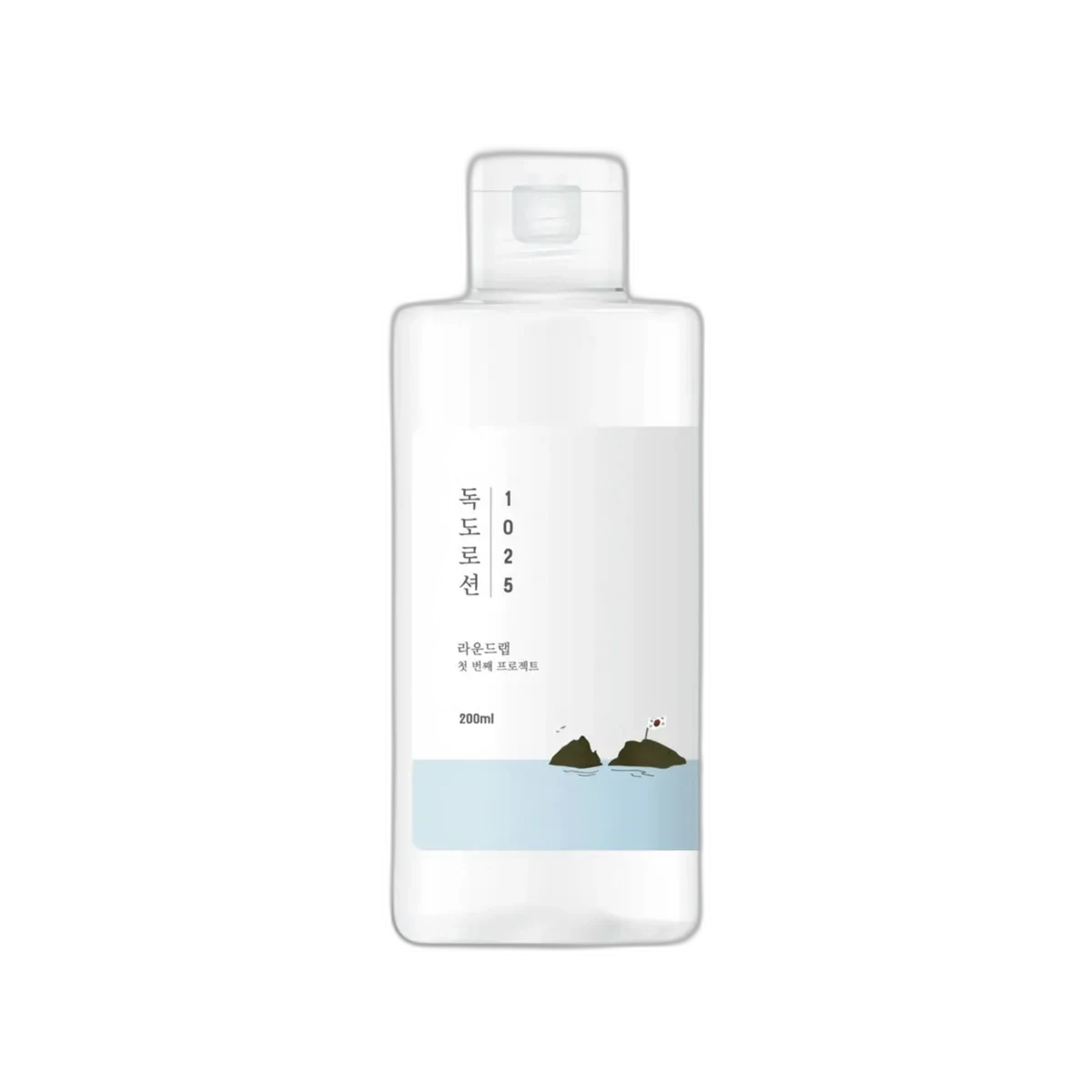
Dokdo Lotion
K-Beauty Lightweight Layer
 Verified reviewer
Pros & cons.
- +Genuinely lightweight emulsion texture — ideal for oily skin
- +Fragrance-free and alcohol-free, consistent with the Dokdo line
- +2% niacinamide + ceramide NP for gentle barrier support
- +Excellent value at under $20 for 200 ml
- +Layers cleanly with toner, serum, cream, and SPF
- +Fast absorption with no residue or stickiness
- +Safe to use alongside retinoids and exfoliating acids
- −Too light as a standalone moisturizer for very dry skin
- −Contains olive emulsifiers and polysorbate — not fungal acne safe
- −Pump top can clog with extended use
- −Overlaps in function with the Dokdo Cream — most users need one, not both
- −Less distinct formulation identity than the hero 1025 Dokdo Toner
The full review.
The Korean skincare sequence — cleanse, tone, essence, serum, lotion, cream, sunscreen — treats the emulsion as a bridge. Most emulsions fit this role: they exist because the routine requires them, not because they offer something a toner or cream cannot. The Dokdo Lotion tries to justify that bridge step, using the same restraint found in the rest of the Dokdo line. It uses a deep seawater base, 2% niacinamide, ceramide NP, panthenol, glycerin, sodium hyaluronate, and calming botanicals, with nothing loud. The ingredient list is a lightened version of the Dokdo Cream, designed for a different finish.
Texture
This is a true emulsion — watery-milky, with enough oil to carry the ceramides and keep skin comfortable, but not as thick as a cream. Pump a small amount onto your fingertips, press it into damp skin, and it absorbs within thirty seconds with no residue. It has no stickiness, no tightness, and no silicone slip left an hour later. For oily and combination users seeking a Korean moisturizer that works on humid days, this texture is the main value. Use it alone in summer, layer it under the Dokdo Cream in winter, or use it across seasons — the formulation fits any of these routines.
Formula
The ingredients match the rest of the Dokdo line. Round Lab uses 2% niacinamide throughout the range. This matters because users can stack the toner, lotion, and cream without hitting a total niacinamide concentration high enough to cause flushing or irritation. Ceramide NP, panthenol, allantoin, centella, licorice root, and houttuynia complete the Round Lab soothing blend. The formula is fragrance-free and alcohol-free like the rest of the line. Sodium hyaluronate and glycerin act as humectants near the top of the list, providing the immediate plumping that makes the lotion feel effective on first use.
Best for
The Dokdo Lotion is weaker as a standalone solution for dry skin. The emulsion is lightweight; in winter or for naturally dry skin, follow with the Dokdo Cream or a more occlusive layer for overnight comfort. Users wanting one moisturizer should pick the Dokdo Cream; users following a traditional Korean layered routine or those with oily skin who find the Cream too heavy should pick the Dokdo Lotion. The two products target different needs with overlapping ingredient philosophies, but they are not strictly additive. Most users won’t need both unless they layer seasonally.
Conflicts With
The formula is not compatible with fungal acne. It contains cetearyl olivate, sorbitan olivate, and polysorbate 60, which are Malassezia food sources. Users with confirmed fungal acne need a strictly FA-safe emulsion, even though the Dokdo Lotion is gentle otherwise. The pump-top bottle occasionally clogs after extended use — a minor issue for a product built for daily use. The packaging shows where Round Lab’s ‘pharmacy minimalism’ meets the limits of cheap plastic. This does not disqualify the product for its target audience. For oily, combination, normal, and most sensitive-skin users wanting a fragrance-free, well-priced K-beauty emulsion, the Dokdo Lotion is an easy recommendation and a natural addition for anyone using the 1025 Dokdo Toner or the Dokdo Cream.
Ingredient analysis.
Full INCI list · pH 5.5
Ulleung-Do Deep Sea Water, Butylene Glycol, Glycerin, Niacinamide, Cetyl Alcohol, Cyclopentasiloxane, Cetearyl Olivate, Sorbitan Olivate, Glyceryl Stearate, Dimethicone, Hydrogenated Polydecene, Polysorbate 60, Panthenol, 1,2-Hexanediol, Carbomer, Tromethamine, Xanthan Gum, Disodium EDTA, Ethylhexylglycerin, Adenosine, Allantoin, Sodium Hyaluronate, Tocopherol, Ceramide NP, Centella Asiatica Extract, Portulaca Oleracea Extract, Camellia Sinensis Leaf Extract, Houttuynia Cordata Extract, Glycyrrhiza Uralensis (Licorice) Root Extract, Pinus Sylvestris Leaf Extract, Rosmarinus Officinalis (Rosemary) Leaf Extract
Skin match.
The science.
The Science
The science of this emulsion follows the Dokdo line: niacinamide has strong evidence for barrier support. At concentrations starting around 2%, niacinamide increases ceramide synthesis, reduces transepidermal water loss, and mildly evens skin tone. Ceramide NP is a well-studied pseudo-ceramide that supports stratum corneum lipid architecture when used with other emollients and humectants. Peer-reviewed studies show ceramide-containing moisturizers help barrier recovery in sensitive-skin and atopic populations. Panthenol converts to pantothenic acid on the skin and helps repair the barrier and reduce irritation. The humectants — glycerin, sodium hyaluronate, and butylene glycol — are established water-binding agents that support stratum corneum hydration. The botanical blend at the end of the INCI list (centella asiatica, houttuynia cordata, licorice root, portulaca) has evidence for anti-inflammatory and antioxidant effects, but these act as support rather than primary drivers here. The Ulleung-Do deep seawater base is the most speculative part; trace minerals are plausible, but independent clinical data is limited. The formula's strongest point is its calibration for tolerance: low niacinamide, minimal emulsifier load, no fragrance, and no alcohol.
Dermatologist Perspective
Dermatologists define the ideal lightweight moisturizer for oily or combination skin as one that supports barrier function without causing occlusion or comedogenicity. The Dokdo Lotion profile — niacinamide, ceramide NP, panthenol, humectants, no fragrance, and no alcohol — matches this clinical preference. Board-certified dermatologists often recommend lightweight emulsion formats for acne-prone or oily skin patients who need barrier support, especially those using prescription retinoids or topical antibiotics that dry the skin. Patients with seborrheic dermatitis or fungal acne should generally avoid olive-derived emulsifiers like cetearyl olivate and polysorbate 60, so this formula is not for that population. For most sensitive-skin and combination-skin patients, the Dokdo Lotion is a reasonable fragrance-free choice that works well with active-ingredient routines.
Where it fits in your routine.
Apply a dime-sized amount to clean palms after cleansing, toner, and serums. Press and pat the emulsion onto damp skin on the forehead, cheeks, nose, and chin. Let it absorb before moving to the next step. For oily or combination skin, use this as the final moisturizer before SPF in the morning. For drier skin or winter routines, apply Dokdo Cream as an occlusive layer. Use morning and night; it works with retinoids, exfoliating acids, and vitamin C. Store at room temperature and replace the bottle if the pump clogs after extended use.
At roughly $17-19 for 200 ml, the Dokdo Lotion offers excellent value. It costs much less per milliliter than the 80 ml Dokdo Cream and uses a similar ingredient philosophy in a lightweight format. It undercuts most fragrance-free, ceramide-containing, well-tolerated K-beauty emulsions in the sensitive-skin category without sacrificing formulation quality. The bottle lasts 3-4 months when used as a layering step with the Dokdo Cream, or roughly 1.5-2 months as a standalone moisturizer. Either way, it is one of the strongest per-dollar picks in the Dokdo lineup.
Oily, combination, normal, and sensitive-skin users can use this lightweight fragrance-free moisturizer alone in warm weather or layered year-round. It works well for users who find traditional creams too heavy and pairs with the 1025 Dokdo Toner.
Users with very dry skin can use Dokdo Cream as a standalone option. People with confirmed fungal acne need a strictly FA-safe alternative because this formula contains olive emulsifiers and polysorbate that feed Malassezia.
Product details.
This watery, milky emulsion spreads easily and dries fast with little residue.
Unscented.
Tall opaque plastic bottle with a pump top.
The first use feels like a slightly thick essence — light, without a heavy film or stickiness. Users often use it as a 'lotion layer' in Korean routines instead of a standalone moisturizer.
Use twice daily as a layering step for 3-4 months, or 1.5-2 months as a standalone moisturizer.
12 months
All Year
The backstory.
Round Lab released the Dokdo Lotion alongside the Dokdo Cream in 2019 to complete the Korean-style layered routine built around the cult 1025 Dokdo Toner. The emulsion format reflects traditional K-beauty sequencing (toner → essence → serum → lotion → cream) while maintaining the brand's minimalist ingredient restraint.
About ROUND LAB
Established Brand (5–20 years)Round Lab launched in 2017 and uses Ulleung-Do deep seawater for the Dokdo line. The Dokdo Lotion is a lightweight emulsion from the brand's most-reviewed product range.
Common myths.
Use both the Dokdo Lotion and the Dokdo Cream in every routine.
No. The Lotion is a standalone lightweight moisturizer for oily or summer skin. The Cream is a slightly thicker standalone option for drier skin. Most users need only one unless they layer for winter or very dry conditions.
Emulsions are just watered-down creams.
An emulsion is a distinct texture category. It has a different oil-to-water ratio than a cream, which changes how fast it absorbs and its finish. The Dokdo Lotion is not a diluted version of the Cream; it is a reformulated lightweight emulsion for a different skin need.
FAQ.
Dokdo Lotion or Dokdo Cream — which should I get?
Choose the Lotion for oily, combination, or acne-prone skin, or for warm climates. Choose the Cream for normal to dry skin or for a thicker winter moisturizer. Users can layer Lotion first, then Cream during cold weather.
Is the Dokdo Lotion fungal acne safe?
No. The formula uses olive-derived emulsifiers (cetearyl olivate, sorbitan olivate) and polysorbate 60, which can feed Malassezia. Users with confirmed fungal acne should use a strictly FA-safe moisturizer.
Can I use it on its own in summer?
Yes — the emulsion is thick enough to work as a standalone moisturizer for oily and combination skin, especially in warm weather. Dry skin needs a thicker option in summer or extra cream layers in winter.
Is it safe to use with retinol or acids?
Yes. The formula is fragrance-free, alcohol-free, and has barrier ingredients (ceramide NP, panthenol, niacinamide). This makes it a safe layering step after active treatments.
Is there fragrance?
No — the formula is unscented and contains no parfum or essential oils, matching the rest of the Dokdo line.
What the community says.
"light texture perfect for oily skin"
"non-sticky finish"
"fragrance-free formulation"
"great value for 200 ml"
"too light as a standalone for dry skin"
"less exciting formulation than the toner"
"jar-style pump top can clog"