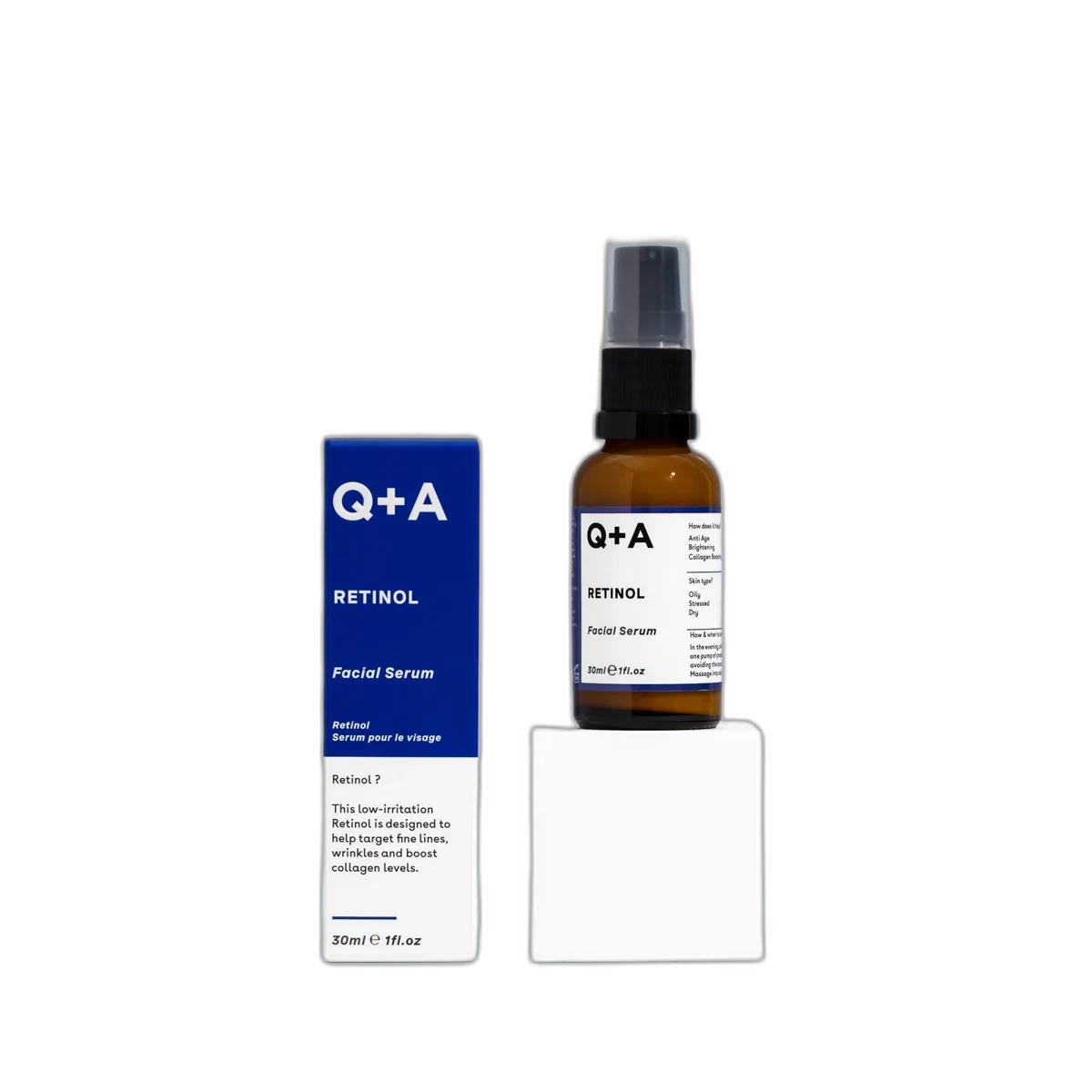
Retinol Facial Serum
Beginner-Friendly Retinol Pick
 Verified reviewer
Pros & cons.
- +Discloses the 0.2% retinol concentration openly, which is rare in the budget category
- +Minimal ingredient list reduces confounding variables during adjustment
- +Glass dropper packaging helps protect retinol from oxidation
- +Accessible £14 price for a legitimate beginner retinol
- +Fragrance-free, alcohol-free base suitable for most skin types
- +Vitamin E supports retinol stability and skin recovery
- +Lightweight gel-serum layers easily under any moisturizer
- −No peptides or ceramides to offset adjustment-phase dryness
- −Too lightweight for dry skin without a supportive moisturizer
- −0.2% may still be too much for rosacea or eczema-prone users
- −Only available in 30ml with no larger value size
- −Distribution limited mainly to UK and EU retailers
The full review.
If you search drugstore retinol bottles for a specific percentage and find nothing, you know why this product matters. Most affordable retinol brands hide their concentration, using vague phrases like “effective levels of retinol” instead of numbers like “0.1%”. Concentration tells you exactly what you are buying, yet brands often omit it. Q+A discloses theirs. The Retinol Facial Serum contains 0.2%, which the brand confirms in product documentation and customer service correspondence. This concentration sits in the beginner-to-intermediate range where most over-the-counter retinol research exists. This transparency matters as much as the formula itself. The formula is solid. It has twelve ingredients: water, two humectants (glycerin and propanediol), retinol, sodium hyaluronate, vitamin E for antioxidant support and retinol stabilization, a gelling agent, pH adjuster, a mild solubilizer, and preservatives. That is all. There are no added peptides, no niacinamide, no snail mucin, and no unnecessary plant extracts. A simple base helps retinol-sensitive skin, as it reduces variables when testing if the active causes a reaction. The texture is a cushiony, fast-absorbing gel-serum that works with any moisturizer. The glass dropper bottle improves on the toner’s plastic packaging; glass helps preserve potency because retinol is photosensitive and oxidation-prone. The scent is the faint retinol note experienced with most decent retinols. It is not unpleasant, just present. The adjustment phase requires realistic expectations. For the first 2-3 weeks, users often notice dryness, tightness, or mild flaking around the nose and chin. This is retinization, not damage. The serum delivers the active, which accelerates cell turnover while your barrier catches up. Use generous moisturizer and consistent morning SPF; dryness typically settles by week four. By week six, most users report smoother texture and fewer breakouts if acne-prone. Fine lines and pigmentation take longer—expect measurable improvement after twelve weeks of use 3-5 nights per week. There is little to criticize, but there are limits. If you use tretinoin or a prescription retinoid, this is a downgrade. If you have rosacea, eczema, or known retinoid sensitivity, 0.2% may still be too much—go slower or skip it. Because it lacks peptides or ceramides, use a supportive moisturizer. For dry skin, the thin gel base may feel underwhelming without a thicker cream. For someone starting retinol on a tight budget with a cautious mindset, this is a clean, low-stakes entry product. Q+A disclosed the concentration even though they did not have to. In a category defined by obfuscation, that matters.
Ingredient analysis.
Full INCI list · pH 5.5
Aqua (Water), Glycerin, Propanediol, Retinol, Sodium Hyaluronate, Tocopherol, Carbomer, Sodium Hydroxide, Polysorbate 20, Caprylyl Glycol, Phenoxyethanol, Ethylhexylglycerin
Skin match.
The science.
The Science
Researchers study topical retinol as an over-the-counter alternative to prescription retinoids. A study in the Journal of Cosmetic Dermatology tested 0.1-0.4% retinol formulations. It found significant improvements in fine wrinkles, skin roughness, and hyperpigmentation after 12 weeks of consistent use, with tolerability improving during the adjustment period. The mechanism is clear: the skin enzymatically converts retinol to retinoic acid via two-step oxidation (retinol → retinaldehyde → retinoic acid). This retinoic acid binds to retinoic acid receptors in the nucleus and upregulates genes for cell proliferation, collagen synthesis, and melanogenesis regulation. Research in the British Journal of Dermatology shows that 0.1-0.3% concentrations produce measurable clinical improvements with consistent use over 8-12 weeks. Q+A's formulation focuses on stability. Tocopherol acts as a secondary antioxidant, glass packaging with a dropper limits air exposure, and the pH stays around 5.5, the optimal stability window for retinol. The minimalist base reduces potential irritants during retinization—a practical choice for a beginner-tier product where tolerability determines if users stay consistent enough to see results.
References
- Improvement in photodamaged skin by topical application of new retinol formulation — International Journal of Cosmetic Science (2016)
Dermatologist Perspective
Dermatologists often suggest 0.2-0.3% retinol as a sensible starting point for patients seeking retinoid benefits without a prescription. Board-certified dermatologists note that retinol tolerability depends on formulation and frequency as much as concentration—a clean base and slow ramp-up schedule usually matter more than the exact percentage. Clinical settings often prefer a formulation like this with minimal secondary actives for first-time retinoid users because it isolates the variable and makes it easier to identify the cause of irritation. Dermatologists emphasize that nightly or alternate-night use plus daily SPF drives long-term improvement, not higher concentrations.
Guidance
Where it fits in your routine.
Use only in the evening. Cleanse, pat skin dry, and apply 2-3 drops to face and neck, avoiding the immediate eye area and corners of the mouth. Follow with moisturizer. Use 2-3 nights per week for the first two weeks, then increase frequency as skin adjusts. Always apply broad-spectrum SPF the next morning — retinol increases UV sensitivity. Do not use with AHAs, BHAs, benzoyl peroxide, or vitamin C in the same routine. Store in a cool, dark place with the dropper sealed.
At £14 for 30ml with a disclosed 0.2% retinol dose, this is a top-value beginner retinol option on the UK high street. Mid-market retinol serums usually cost £25-40 for the same concentration and similar base formulations. The lack of a larger size limits value — 30ml lasts about 3-4 months using it 3-5 nights weekly, so you repurchase more often than with a 50ml bottle. Because it has concentration transparency, glass packaging, and a minimal ingredient list, the value is clear: you pay high-street prices for a formulation that works as well as products at twice the price.
This is for retinol beginners who want a disclosed, appropriate concentration without spending £40 on a serum or booking a dermatology appointment. It works for normal, combination, or oily skin and suits people who value formulation transparency over marketing.
Avoid all retinol products if pregnant or breastfeeding. People with active rosacea, eczema, or compromised skin barriers must consult a dermatologist before using any retinoid. If you use prescription tretinoin, this is a step down and lacks logic.
Product details.
Lightweight gel-serum that absorbs with minimal residue
Very faint — characteristic mild retinol note
Frosted glass bottle with glass dropper
A slight warmth during the first few uses is normal. Expect a 2-3 week adjustment period where skin feels drier or some users see mild flaking. This is the retinization process, not damage — use more moisturizer and reduce frequency if needed.
3-4 months with 3-5 nights per week use on face and neck
6 months
All Year
The backstory.
Q+A launched the Retinol Facial Serum alongside the Niacinamide Toner as part of their original 2019 lineup, built around the premise that high-street shoppers deserved single-active formulations without The Ordinary's waitlist drama. The 0.2% concentration was a deliberate beginner-tier choice — low enough to be tolerable without a prescription, high enough to produce measurable results over three months.
About Q+A Skincare
Emerging Brand (2–5 years)Q+A Skincare launched in 2018 as a UK indie brand. It uses single-active formulations and recyclable packaging at high-street prices. Its retinol serum is among the most-reviewed products in UK retailers, but independent long-term clinical validation is limited.
Common myths.
0.2% retinol is too low to do anything
Published research shows 0.1-0.3% retinol improves fine lines and pigmentation after 12+ weeks of regular use. This dose is for beginners, not cosmetic.
FAQ.
What percentage of retinol is in Q+A Retinol Facial Serum?
The formula contains about 0.2% retinol, which is a beginner-friendly range. This concentration works over 8-12 weeks of consistent use without overwhelming retinol newcomers.
Can I use this every night?
Use it 2-3 nights per week for the first month to let your skin adjust. Once you tolerate it without persistent dryness or flaking, you can use it nightly.
Is Q+A Retinol Serum pregnancy-safe?
No. Avoid retinol and all vitamin A derivatives during pregnancy and breastfeeding. Use a bakuchiol or peptide serum instead, then return to retinol afterward.
Can I use this with vitamin C?
Use vitamin C in the morning and this retinol at night. This separates the routine steps to minimize irritation and maximize each active's effect.
Will this cause purging?
Retinol accelerates turnover and clears surface congestion in the first 4-6 weeks, which some users call purging. At 0.2%, the effect is milder than stronger retinoids but still happens.
How long until I see results?
Expect an adjustment phase for the first few weeks. Skin looks smoother around 6-8 weeks. Consistent nightly or alternate-night use shows more substantial improvements in fine lines and tone at 12 weeks.
Community
What the community says.
"Effective introduction to retinol at a low price"
"Didn't cause the dreaded retinol purge for many users"
"Lightweight and layers easily under moisturizer"
"Some experienced dryness in weeks 2-3"
"Concentration not disclosed on packaging"
"Plastic bottle with basic dropper"
Featured in.
People also looked at.