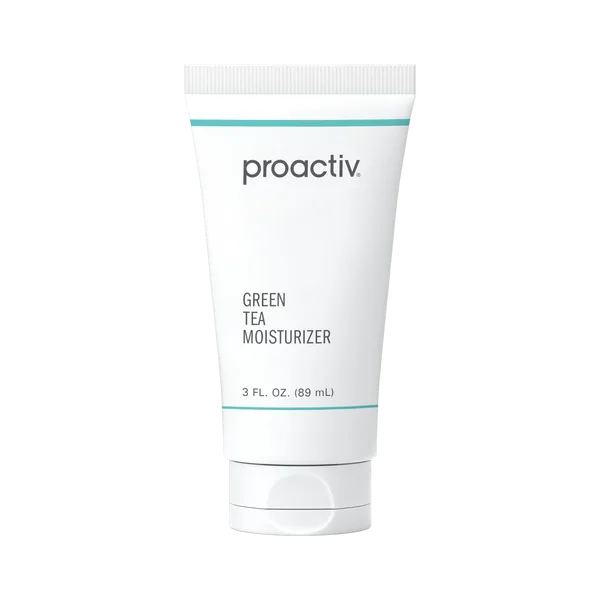
Green Tea Moisturizer
Lightweight Acne Moisturizer
 Verified reviewer
Pros & cons.
- +Pure EGCG catechin provides more targeted antioxidant activity than generic green tea extract
- +Zinc PCA offers dual-action sebum regulation and humectant hydration
- +Lightweight gel-cream absorbs instantly with zero greasy residue
- +Multi-mechanism hydration from glycerin, hyaluronic acid, squalane, and dimethicone
- +Excellent texture that sits well under sunscreen and makeup
- +Allantoin provides soothing benefits for skin irritated by acne treatments
- −Contains comedogenic emollients (ethylhexyl palmitate, PPG-2 myristyl ether propionate) in an acne-focused product
- −Seven fragrance allergens plus Parfum in a moisturizer for sensitized acne-prone skin
- −Contains three parabens — a choice Proactiv's own newer line has moved away from
- −At $23-36 for 3 oz, the tube depletes quickly with twice-daily use
- −Contains alcohol which may contribute to dryness alongside acne treatments
- −Not pregnancy-safe due to retinyl palmitate content
The full review.
The Proactiv Green Tea Moisturizer starts strong. Epigallocatechin gallate—pure EGCG, the specific catechin with the strongest clinical evidence, not generic green tea extract—sits with zinc PCA, sodium hyaluronate, and squalane. This combination works well for oily, acne-prone skin. Clinical studies show EGCG regulates sebum and reduces inflammation. Zinc PCA controls oil and provides humectant hydration. Squalane delivers lightweight moisture that mimics skin sebum. Hyaluronic acid binds water. Together, these ingredients provide exactly what acne-prone skin needs from a moisturizer.
Then the INCI list changes.
Ethylhexyl palmitate has a comedogenic rating of 2-4, meaning it clogs pores for many people. PPG-2 myristyl ether propionate has a comedogenic rating of 3. These emollients make the product feel smooth, but they are odd choices for a product marketed to people who break out. Proactiv calls this non-comedogenic, and most users likely won’t react. However, those who do will experience breakouts from the product meant to accompany their acne treatment.
Then there is the fragrance. Seven declared fragrance allergens—alpha-isomethyl ionone, butylphenyl methylpropional, citronellol, hexyl cinnamal, hydroxycitronellal, linalool, and geraniol—plus ‘Parfum.’ This is in a moisturizer for acne-prone skin, which is often inflamed and sensitized. The scent is a light, calming floral that fades quickly, but it is an aesthetic choice for the brand rather than the skin.
And parabens. Three are present: ethylparaben, methylparaben, and propylparaben. Parabens are well-studied preservatives, and regulatory agencies worldwide support their safety at standard concentrations. But Proactiv’s own Clean+ line—launched in 2023—excludes parabens, acknowledging consumer preference. The Green Tea Moisturizer predates that philosophy.
These issues do not overshadow the product’s strengths. The gel-cream texture is one of the best lightweight moisturizer textures on the market. It feels cooling, absorbs within seconds, and leaves no greasy residue. Oily and combination skin types get hydration without added shine. It sits well under sunscreen and makeup, acting like a primer.
EGCG delivers antioxidant benefits. Studies show topical EGCG reduces lipid peroxidation and inflammatory cytokine expression—important for skin using drying, barrier-disrupting actives like benzoyl peroxide or adapalene. Zinc PCA adds sebum regulation to complement these treatments, and retinyl palmitate provides mild cell-turnover promotion to support texture improvement.
Allantoin, a conditioning agent in the middle of the formula, provides soothing properties to help with irritation from acne treatments. Macadamia seed oil adds fatty acids. The hydration strategy uses multiple mechanisms: humectants (glycerin, hyaluronic acid), emollients (squalane, macadamia oil), and occlusives (dimethicone).
Performance matches the ingredient profile. It provides immediate hydration and a matte, non-greasy feel. Over two to four weeks, oiliness reduces and skin looks calmer. At six to eight weeks, texture improves modestly and skin looks healthier and less reactive. These are supporting results—a moisturizer that enhances active treatments rather than driving transformation alone.
The price is the final concern. At $36 for 3 oz on the Proactiv website—or closer to $23 at Target—the tube lasts six to eight weeks with twice-daily use. That is $12-18 per month for a moisturizer with formulation compromises that cheaper brands avoid. EGCG and zinc PCA justify a premium, but fragrance and comedogenic ingredients undercut that argument.
The Green Tea Moisturizer is at war with itself. The hero ingredients meet the needs of acne-prone skin, but the supporting ingredients focus on luxury feel instead. If Proactiv applied the 2023 Clean+ line philosophy—removing fragrance, swapping comedogenic emollients, and dropping parabens—it would be excellent. As it stands, it is a good moisturizer with a frustrating asterisk.
Formula
PM routine
Ingredient analysis.
Full INCI list
Water, Glycerin, Butylene Glycol, Dimethicone, Sodium Polyacrylate, Iris Florentina Root Extract, Macadamia Ternifolia Seed Oil, Epigallocatechin Gallate, Hydrogenated Polydecene, Trideceth-6, Zinc PCA, Retinyl Palmitate, Sodium Hyaluronate, Squalane, Caprylic/Capric Triglyceride, Ethylhexyl Palmitate, PPG-2 Myristyl Ether Propionate, Alcohol, Allantoin, C12-15 Alkyl Lactate, Polyquaternium-11, Disodium EDTA, Ethylparaben, Methylparaben, Propylparaben, Phenoxyethanol, Fragrance (Parfum), Alpha-Isomethyl Ionone, Butylphenyl Methylpropional, Citronellol, Hexyl Cinnamal, Hydroxycitronellal, Linalool, Geraniol
Skin match.
The science.
The Science
Epigallocatechin gallate (EGCG) is the main catechin in green tea. It works on acne-prone skin through several ways. Research shows EGCG suppresses sebum production by inhibiting lipogenesis in sebaceous glands, lowers inflammatory cytokine expression (specifically IL-1alpha and IL-6), and provides antioxidant protection against oxidative stress that worsens acne inflammation. One clinical study shows that topical 1-3% EGCG significantly reduces sebum production in human subjects over eight weeks.
Zinc PCA combines zinc's antimicrobial and anti-inflammatory properties with pyrrolidone carboxylic acid (PCA), a natural part of the skin's moisturizing factor. Zinc inhibits 5-alpha reductase activity, which reduces the conversion of testosterone to DHT in the skin—a hormonal pathway linked to acne pathogenesis. Meanwhile, the PCA component is hygroscopic (water-attracting) and supports hydration.
The skin converts retinyl palmitate into retinal and then retinoic acid, the biologically active form, via a two-step enzymatic process. This conversion is inefficient, so retinyl palmitate is less potent than direct retinol or adapalene. However, it provides a gentle cell-turnover stimulus for use with stronger retinoid treatments.
Squalane is a hydrogenated form of squalene. It mirrors the skin's sebum composition and reinforces the barrier function without promoting comedogenesis in properly formulated products, making it a suitable lipid for acne-prone skin.
Dermatologist Perspective
Board-certified dermatologists usually recommend lightweight, non-comedogenic gel moisturizers for acne-prone patients using drying treatments like benzoyl peroxide or adapalene. Dermatologists say maintaining barrier hydration is essential during acne treatment to prevent compensatory sebum overproduction. The EGCG and zinc PCA in this formula are effective actives for oily skin. However, dermatologists reviewing ingredient lists may flag the comedogenic emollients and fragrance allergens as unnecessary risks for breakout-prone skin, especially when fragrance-free and comedogenic-free alternatives exist at similar price points.
Where it fits in your routine.
Apply a thin layer to the face and neck morning and evening after cleansing and water-based serums or treatments. The gel-cream texture absorbs fast, so you do not need to wait long before applying sunscreen in the morning. If using with adapalene, apply the adapalene first and wait a few minutes for absorption before applying this moisturizer.
At $23-36 for 3 oz (price varies significantly by retailer), this moisturizer lasts about 6-8 weeks with twice-daily use, costing roughly $12-18 per month. A 1 oz travel size exists but often lacks stock. The EGCG and zinc PCA ingredients justify a premium over basic gel moisturizers, but fragrance, parabens, and comedogenic emollients make the value harder to defend at the higher price end. Proactiv's legacy brand credibility adds purchasing confidence, though the formulation feels dated compared to the brand's own 2023 Clean+ philosophy.
Oily and combination skin types need hydration without heaviness, especially when using drying acne treatments like benzoyl peroxide or adapalene. The gel-cream texture works for anyone who avoids moisturizer to escape greasy, heavy products on acne-prone skin.
People with fragrance sensitivity or a history of comedogenic reactions must use this carefully. This is not enough as a standalone moisturizer for dry skin, especially in winter. Pregnant users or those seeking paraben-free products should look elsewhere.
Product details.
Lightweight gel-cream feels cooling and refreshing when applied. It absorbs fast without a film or greasy residue.
The light, calming fragrance is noticeable but not overpowering; it dissipates within a few minutes of application.
Squeezable tube with screw cap. Compact size. Hygienic tube design minimizes contamination.
It cools and hydrates immediately without heaviness. The gel-cream absorbs into skin within seconds. It does not tingle or burn. Oily skin types will like the non-greasy feel. Dry skin types may need a thicker product, especially in winter.
6-8 weeks with twice-daily use
12 months
spring summer
The backstory.
The Green Tea Moisturizer was part of Proactiv's evolution beyond the basic benzoyl peroxide three-step system. Recognizing that acne treatment products can leave skin dehydrated and barrier-compromised, this moisturizer was designed to restore hydration without triggering new breakouts — a constant anxiety for acne-prone skin.
About Proactiv
Legacy Brand (20+ years)Stanford-trained dermatologists Dr. Katie Rodan and Dr. Kathy Fields developed Proactiv in 1995. This moisturizer belongs to the Proactiv+ line and uses ingredients beyond the brand's usual benzoyl peroxide. Taro Pharmaceutical Industries owns Proactiv now.
FAQ.
Is Proactiv Green Tea Moisturizer non-comedogenic?
Proactiv claims it is non-comedogenic, but the formula uses ethylhexyl palmitate and PPG-2 myristyl ether propionate. Both ingredients have moderate comedogenic ratings. Most users do not breakout from Proactiv, but people sensitive to comedogenic ingredients should be aware.
Can I use this moisturizer with adapalene?
Yes — this lightweight gel-cream works well with adapalene gel. Apply adapalene first to clean, dry skin at night. Wait a few minutes for absorption, then use this moisturizer to manage the dryness adapalene causes.
Is this moisturizer enough for dry skin?
It likely won't work alone. The gel-cream texture targets oily and combination skin. Dry skin users may need a thicker cream on top, or can use this as a daytime moisturizer with a heavier product at night.
Does this moisturizer have SPF?
No — this is a standalone moisturizer without sun protection. Apply a separate SPF product on top during the day. This is vital if you use adapalene or other retinoids that increase photosensitivity.
Is Proactiv Green Tea Moisturizer pregnancy-safe?
This product contains retinyl palmitate (a vitamin A derivative). Some healthcare providers advise avoiding this during pregnancy as a precaution. Consult your OB-GYN before use during pregnancy or breastfeeding.
What the community says.
"Lightweight gel texture absorbs instantly without greasiness"
"Effective hydration that works well under makeup"
"Soothing and calming on irritated acne-prone skin"
"Skin feels soft and plump after application"
"Good pairing with Proactiv acne treatment products"
"Price is too high for 3 oz — tube runs out quickly"
"Contains fragrance and parabens despite acne-prone positioning"
"Insufficient hydration for dry skin or dry climates"
"Can cause shininess within an hour on very oily skin"
"Contains comedogenic ingredients that may trigger breakouts for some"