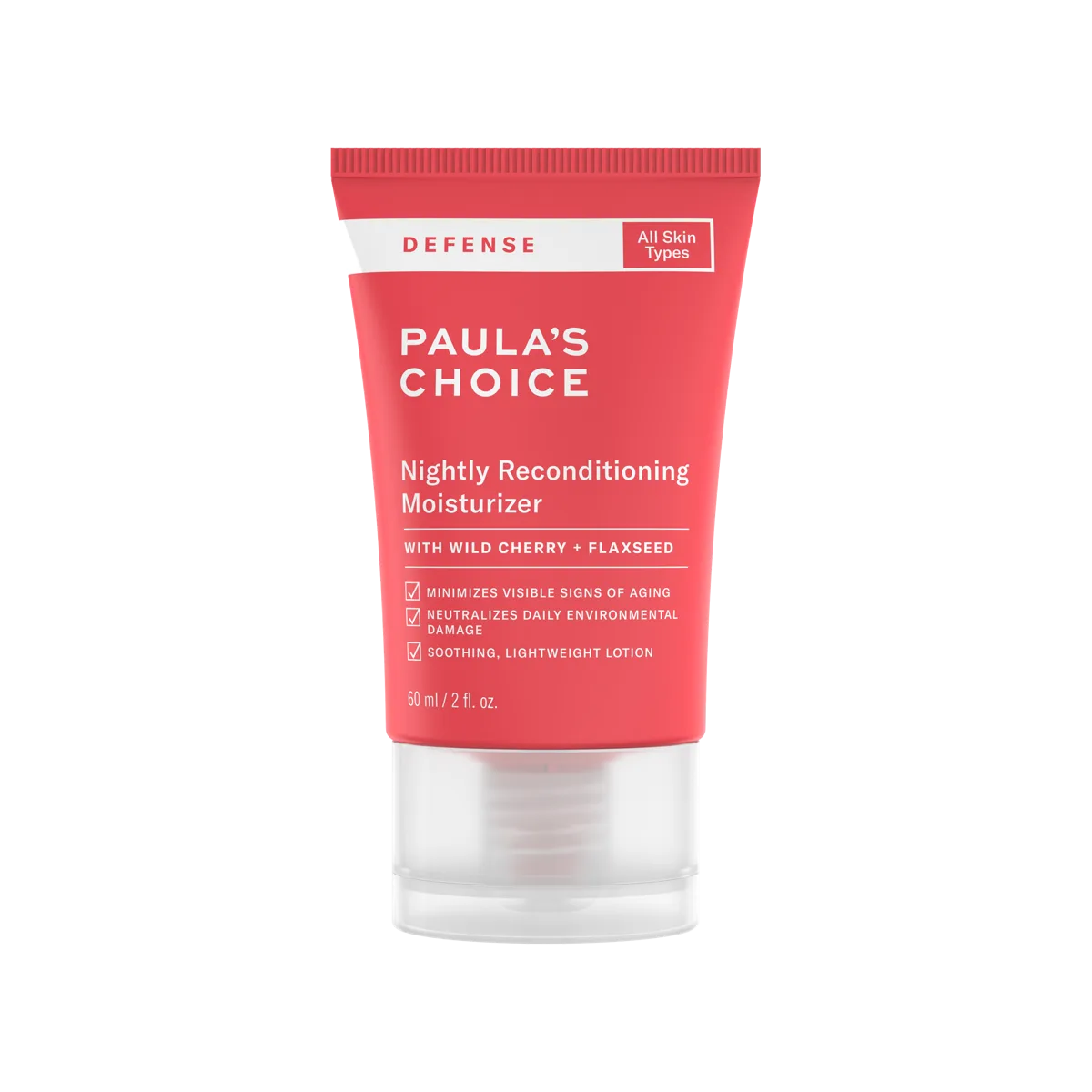
Defense Nightly Reconditioning Moisturizer
Urban Skin Shield
 Verified reviewer
Pros & cons.
- +Eight-antioxidant superfood blend provides broad-spectrum environmental defense
- +Fragrance-free and silicone-free formula suits sensitive skin beautifully
- +Ceramide NG and dual peptides add barrier repair and anti-aging benefits
- +Lightweight texture absorbs quickly without greasy residue on pillowcases
- +Potassium azeloyl diglycinate brightens without the irritation of pure azelaic acid
- +Pairs exceptionally well with retinol and other active treatments
- +Opaque tube packaging protects light-sensitive antioxidants from degradation
- −Too lightweight for very dry skin types who need richer overnight hydration
- −Anti-pollution claims lack published clinical trials on this specific formula
- −Natural botanical scent may bother those extremely sensitive to plant aromas
- −Ethylhexyl palmitate makes it unsuitable for fungal acne-prone skin
- −Mid-range price for a moisturizer that excels in breadth over depth
The full review.
Paula’s Choice built its identity on debunking skincare marketing. When the brand launched an anti-pollution line in 2018, the community watched closely. This company spent decades calling out pseudoscience and buzzwords. If Paula’s Choice entered the anti-pollution space, it needed evidence. The Defense Nightly Reconditioning Moisturizer is their nighttime answer to whether anti-pollution skincare works, and the answer is a qualified yes.
The formula uses what Paula’s Choice calls its Anti Pollution Factor—a proprietary blend of eight superfood-derived antioxidants. Wild cherry, flaxseed, arugula, neem, algae, cactus, moringa, and sesame seed extracts form the botanical backbone. This approach has logic: different antioxidants neutralize different free radicals, so a wide net works better than one single star ingredient. The inclusion of potassium azeloyl diglycinate—a gentler version of azelaic acid—adds brightening capacity to address the dullness and uneven tone that chronic pollution exposure accelerates.
Beyond antioxidants, the formula delivers skin-repair ingredients. Ceramide NG patches the lipid barrier that environmental stressors chip away at. A duo of peptides—palmitoyl hexapeptide-12 and palmitoyl dipeptide-10—provides signaling support for collagen synthesis. Marula oil and sunflower seed oil contribute fatty acids that soften skin without suffocation. Sodium hyaluronate draws moisture into the upper layers. It is a complete night cream that leans into antioxidant defense rather than the retinol-and-ceramide playbook most brands use.
The texture may lose some night cream traditionalists. It is lightweight—a lotion rather than the thick, balmy cream many associate with nighttime skincare. It absorbs in under a minute and leaves a satin finish. For those who hate waking up with a greasy face and pillowcase impressions, this works. For those who want a night cream that feels like a weighted blanket, it feels insufficient.
This is the honest tension in the product. It does many things competently—hydrates, repairs, protects, and signals peptide activity—but it does none with the intensity of a single-goal product. The ceramide content is meaningful but lower than a ceramide-focused moisturizer. The peptide inclusion is smart but lacks the concentrations of a dedicated peptide treatment. You pay for breadth of protection, not depth in one area.
The fragrance-free formulation is notable. The only scent comes from the botanical extracts, which some users describe as faintly earthy or herbal. It is mild enough that most people will not notice it once the product absorbs. The absence of added fragrance and the silicone-free base make this one of the gentler options in the Paula’s Choice moisturizer lineup—a solid choice for sensitive skin that wants active ingredients overnight.
The silicone-free aspect changes the sensory profile. There is no dimethicone slip or silicone-smoothed finish. The texture relies on olivate emulsifiers and plant oils, which feels more natural but lacks the blurred, velvety effect some prefer. This trade-off aligns with the formula’s clean-ish ingredient philosophy without using fear-based marketing.
Priced around thirty-three dollars for two ounces, this sits in the mid-range of the Paula’s Choice moisturizer catalog. A travel size is available to test before committing. At this price, you get a well-formulated product with interesting active ingredients, though value depends on whether you prioritize anti-pollution protection over retinol or concentrated barrier repair.
The product performs best in a layered routine—over a serum and under nothing. It works well with retinol treatments, where allantoin and ceramide help buffer irritation, and with vitamin C serums used in the morning to create a continuous antioxidant rotation. As a standalone moisturizer for truly dry skin, it will disappoint. As the finishing layer in an active-heavy PM routine for normal to combination skin, it earns its spot.
Seven years on the market provides enough of a track record to assess this moisturizer. It has devoted fans—people in high-pollution urban environments who notice a difference in skin brightness and resilience with consistent use. It also has skeptics, and their skepticism is not unfounded. Ingredient logic supports the anti-pollution claim more than clinical trials on this specific formula. Paula’s Choice has the research infrastructure to run those trials, but their choice not to publish them leaves a gap between the marketing promise and provable reality.
Ingredient analysis.
Full INCI list
Water, Glycerin, Ethylhexyl Palmitate, Hydroxyethyl Acrylate/Sodium Acryloyldimethyl Taurate Copolymer, Isoamyl Laurate, Prunus Serotina Fruit Extract, Almond/Borage/Linseed/Olive Acids/Glycerides, Medicago Sativa Extract, Sesamum Indicum Seed Extract, Hydrolyzed Eruca Sativa Leaf, Sclerocarya Birrea Seed Oil, Hydrolyzed Algae Extract, Palmitoyl Hexapeptide-12, Palmitoyl Dipeptide-10, Sodium Hyaluronate, Ceramide NG, Helianthus Annuus Seed Oil, Cocoyl Proline, Tocopherol, Allantoin, Trehalose, Eclipta Prostrata Extract, Potassium Azeloyl Diglycinate, Opuntia Ficus-Indica Stem Extract, Melia Azadirachta Leaf Extract, Leuconostoc/Radish Root Ferment Filtrate, Moringa Oleifera Seed Oil, Alaria Esculenta Extract, Adenosine Phosphate, PEG-10 Phytosterol, Tribehenin, Hydrolyzed Vegetable Protein, Sorbitan Olivate, Sodium Gluconate, Zinc Gluconate, Copper Gluconate, Magnesium Aspartate, Cetearyl Olivate, Pentylene Glycol, Butylene Glycol, Phenoxyethanol, Potassium Sorbate, Ethylhexylglycerin
Skin match.
The science.
The Science
This formula relies on the known link between environmental pollutants and cutaneous oxidative stress. A 2012 review in the Journal of Investigative Dermatology shows that particulate matter and ozone deplete skin antioxidant reserves—specifically vitamins C and E—and trigger inflammatory cascades that accelerate photoaging. Research in Free Radical Biology and Medicine (2019) shows blue light from screens compounds this damage by generating reactive oxygen species in the epidermis.
Paula's Choice uses a multi-antioxidant strategy instead of one single compound. The tocopherol (vitamin E) in the formula is one of the most studied topical antioxidants; decades of evidence show it quenches lipid peroxidation in the stratum corneum. Marula oil adds antioxidant capacity via its natural polyphenols and proanthocyanidins.
The ceramide NG inclusion follows barrier repair research showing environmental stressors compromise the skin's lipid matrix. Studies in the British Journal of Dermatology show topical ceramide application can partially restore barrier function in environmentally stressed skin and reduce transepidermal water loss.
The peptide duo—palmitoyl hexapeptide-12 and palmitoyl dipeptide-10—acts as the formula's anti-aging component. While evidence for these specific peptides is less extensive than for compounds like retinol, preliminary studies suggest they upregulate extracellular matrix protein production. The trehalose in the formula offers cellular protection; basic science research shows this disaccharide sugar protects cells from desiccation stress.
It is unproven if the specific concentrations and combination of ingredients in the Anti Pollution Factor blend deliver more clinical protection than a standard antioxidant moisturizer. The concept is sound, but a clinical validation gap exists for a brand that usually leads with evidence.
References
- Airborne Particle Exposure and Extrinsic Skin Aging — Journal of Investigative Dermatology (2010)
Dermatologist Perspective
Dermatologists agree that environmental pollution contributes to premature skin aging, and topical antioxidants are a reasonable defense. Board-certified dermatologists note that while anti-pollution can be marketing, the science of antioxidant protection against oxidative stress is well-established. This formula's ceramide and peptide content adds value beyond the anti-pollution angle, making it a reasonable recommendation for patients seeking a gentle, antioxidant-rich night cream. Dermatologists often note that a comprehensive approach—including sunscreen, antioxidants, and barrier repair—matters more than any single anti-pollution product, and this moisturizer fits that framework.
Where it fits in your routine.
Apply a nickel-sized amount to clean, dry skin as your last evening step. If you use serums or treatments (retinol, vitamin C, BHA), apply them first. Wait one minute for absorption before layering this moisturizer on top. Massage gently into face, neck, and décolletage using upward strokes. You do not need to wait before bed. Use nightly; antioxidant benefits are cumulative. During the day, always follow with a broad-spectrum sunscreen for complete environmental protection.
At about $33 for two ounces, this moisturizer is moderately priced for Paula's Choice and competitive for its ingredient quality. The multi-antioxidant formula, ceramide, dual peptides, and azelaic acid derivative show real formulation complexity instead of filler ingredients in a short INCI list. A $12 travel size lets users test compatibility with low risk. This offers the best value for people using active treatments who need a gentle, antioxidant-rich finishing layer rather than a heavy-duty standalone moisturizer. Paula's Choice has a track record of transparent formulation that gives it credibility an unknown brand with an identical ingredient list lacks.
Urban dwellers with normal to combination skin want antioxidant protection beyond a basic vitamin C serum. It works well for those using active treatments at night who need a gentle, non-greasy finishing moisturizer that does not interfere with other products.
People with very dry skin needing intensive overnight hydration will find this too lightweight. Those prone to fungal acne should avoid the ethylhexyl palmitate and plant oils. This lacks the concentration of a retinol night cream or a ceramide-heavy barrier repair product to act as a primary solution.
Product details.
All Year Certifications
The backstory.
Launched in 2018 as part of Paula's Choice Defense collection, this moisturizer was the brand's answer to growing research on how urban pollution accelerates skin aging. It represented a shift for the typically no-nonsense brand into the then-buzzy anti-pollution skincare category, but stayed true to form by backing the concept with a well-researched antioxidant blend rather than marketing gimmicks.
About Paula's Choice
Established Brand (5–20 years)Beauty journalist Paula Begoun founded Paula's Choice in 1995. The brand builds its reputation on ingredient transparency and evidence-based formulations. Skincare communities cite Paula's Choice for its research-driven approach, and the brand publishes detailed ingredient explanations for every product.
Common myths.
Anti-pollution skincare is a marketing trend without real science.
Research shows particulate matter, ozone, and blue light cause oxidative stress and premature aging. This formula uses antioxidants like tocopherol, wild cherry extract, and algae derivatives to address this—but protection levels depend on the total antioxidant load, which is hard to verify without concentration data.
Night creams need to be thick and heavy to be effective.
This lightweight formula uses ceramides, peptides, and botanical oils in a sheer base. It allows skin to breathe and repairs the barrier. Efficacy comes from ingredient quality, not texture weight.
FAQ.
Is Paula's Choice Defense Nightly Reconditioning Moisturizer good for dry skin?
It works for mildly dry skin, but very dry or dehydrated skin may find it too lightweight alone. The marula oil and ceramide NG provide barrier repair, but this formula prioritizes antioxidant protection over deep hydration. Layering a hyaluronic acid serum underneath helps bridge the moisture gap.
Does this moisturizer actually protect against pollution?
It contains an antioxidant blend that neutralizes free radicals from pollution and blue light. The wild cherry, algae, and arugula extracts mitigate oxidative stress from urban environments, though they do not create a physical barrier against particulate matter. Use it with a good daytime sunscreen for comprehensive protection.
Can I use this with retinol?
Yes — this fragrance-free, antioxidant-rich formula works well with retinol treatments. Apply your retinol first, let it absorb, then layer this moisturizer on top. The ceramide NG and allantoin buffer potential retinol irritation while the peptides complement the anti-aging effects.
Is this product safe for fungal acne-prone skin?
No — this formula contains ethylhexyl palmitate and several plant oils (marula, sunflower, moringa) that can feed Malassezia yeast. Those prone to fungal acne should look for an oil-free alternative.
How does this compare to other Paula's Choice moisturizers?
The Defense Nightly Reconditioning Moisturizer stands out in the Paula's Choice lineup because it focuses on anti-pollution and uses a superfood antioxidant blend. It is lighter than the Barrier Repair Moisturizer and uses more botanicals than the Clinical Ceramide Enriched Firming Moisturizer. Pick this if environmental protection and antioxidant defense are your main nighttime concerns.
Community
What the community says.
"Lightweight texture that absorbs quickly"
"No greasy residue in the morning"
"Skin feels soft and radiant overnight"
"Fragrance-free and gentle on sensitive skin"
"Works well under other products"
"Not moisturizing enough for very dry skin"
"Some users find the natural scent off-putting"
"Expensive for the amount of product"
"Tube packaging makes it hard to get last bit out"