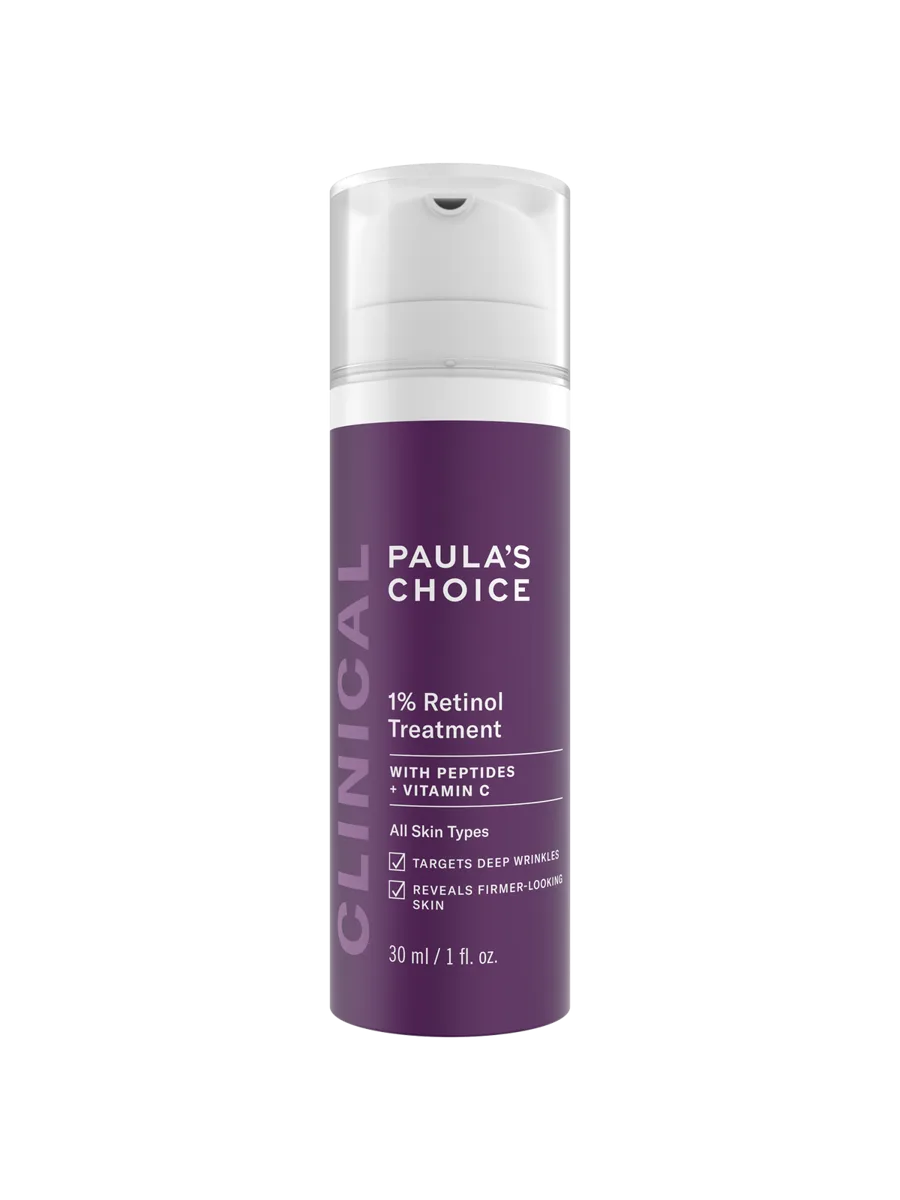
Clinical 1% Retinol Treatment
Maximum-Strength OTC Retinol
 Verified reviewer
Pros & cons.
- +Maximum 1% OTC retinol concentration backed by published clinical research showing results comparable to tretinoin
- +Four peptides activate collagen through different signaling pathways than retinol for multi-vector anti-aging
- +Stabilized lipid-soluble vitamin C complements retinol without the pH compatibility issues of L-ascorbic acid
- +Ceramide NP built directly into the formula reduces barrier disruption during retinol adjustment
- +Fragrance-free and Leaping Bunny certified cruelty-free
- +Airless pump packaging protects light-sensitive retinol from degradation
- +Trial size available for testing tolerance before committing to full size
- +Oat extract, licorice root, and allantoin buffer the irritation that 1% retinol inevitably causes
- −Slightly tacky texture on application takes several minutes to fully absorb
- −1% concentration is genuinely too strong for retinol beginners and sensitive skin
- −Faint characteristic retinol odor is noticeable though not masked by fragrance
- −Fifty-two dollars for one ounce requires commitment to the full adjustment period to see value
- −Contraindicated during pregnancy and breastfeeding like all retinol products
- −Contains soy-derived ingredients that may concern those with soy allergies
The full review.
About Paula’s Choice
Paula Begoun spent decades exposing skincare lies. She published books ranking products by ingredient lists and built an online database cataloging what every cosmetic ingredient does and does not do. When her brand’s Clinical line labels 1% retinol, that amount is exactly what is in the bottle. The supporting formula uses the same obsessive ingredient scrutiny that made Begoun famous.
Reality
This is not a retinol for the retinol-curious. At 1%, this is the maximum over-the-counter concentration, and it behaves like it. The first two to three weeks involve a negotiation between your skin and the retinol. Expect flaking, possible tightness, or a day or two where your face looks like it is disagreeing with your life choices. This is normal. It is the retinoid response: accelerated cell turnover pushes dead cells off the surface faster than your skin is used to. The formula uses ceramide NP to shore up the barrier, oat kernel extract and licorice root to calm inflammation, and allantoin to soothe. These are not token additions; they separate a well-formulated high-strength retinol from one that just throws the active at your face and hopes for the best.
How to Use
The ingredient architecture is sophisticated. Retinol handles the heavy lifting—stimulating collagen synthesis, accelerating epidermal turnover, and regulating melanin production. But the formula does more. Tetrahexyldecyl ascorbate, a lipid-soluble vitamin C derivative, complements the retinol through its own procollagen activity and provides antioxidant defense. A 2005 study in Skin Pharmacology and Physiology confirmed that retinol-vitamin C combinations reverse both chronologic and photoaging at the histological level. Four peptides—palmitoyl oligopeptide, palmitoyl tetrapeptide-7, acetyl dipeptide-1 cetyl ester, and hydrolyzed soy protein—activate fibroblast signaling through different pathways than retinol, creating a multi-vector approach to wrinkle reduction instead of hammering a single mechanism.
Texture
The texture is a slight sticking point. It dispenses as a thick cream that spreads easily but leaves a tacky feel for several minutes before it fully absorbs. This is common for retinol formulations that must balance ingredient stability with cosmetic elegance, and it resolves as the product sets. There is a faint characteristic retinol odor—slightly medicinal and slightly waxy—that comes with this concentration. No fragrance is added to mask it, which is the right call for a product designed for nightly use on potentially sensitized skin.
Common Praise
A 2015 randomized, double-blind split-face study in the Journal of Drugs in Dermatology compared retinol at 0.25%, 0.5%, and 1% against tretinoin at 0.025%, 0.05%, and 0.1%. At twelve weeks, no significant differences in efficacy existed between the retinol and tretinoin groups for improving photodamage parameters, but retinol was better tolerated. This is the core argument for this product: prescription-comparable results with a lower irritation ceiling, if you allow time for the adjustment curve.
Works for
The ceramide NP inclusion deserves recognition. A 2023 study in the Journal of Drugs in Dermatology showed that ceramide-containing products reduced transepidermal water loss and dryness when used with retinoid treatment. Building the ceramide directly into the retinol formula is practical; it ensures barrier support happens every time the retinol is applied, not just when users remember to layer a second product.
Not ideal for
The limitation is the audience. This product works for normal and combination skin types who have built retinol tolerance and want to push further. But sensitive skin, rosacea-prone skin, eczema, and anyone who has not used retinol before should look elsewhere. The 1% concentration will punish unprepared skin regardless of the soothing ingredients. It is also contraindicated during pregnancy and breastfeeding, as all retinol products are.
Packaging
At fifty-two dollars for one ounce, pricing is competitive. You get a twelve-plus-year-old formula with clinical backing, maximum-strength retinol, and a supporting cast most prescription retinoids do not include. A tube lasts two to three months of nightly use. Compared to the cost of prescription tretinoin plus a separate ceramide moisturizer plus a vitamin C serum, the math works. Paula’s Choice also offers a 5 mL trial size for around eleven dollars—a smart option to test 1% retinol before committing.
Best for
The airless pump packaging protects the retinol from light and oxygen exposure that degrade it. This matters more at this concentration than at lower levels. This detail shows the brand understands that formulation quality means nothing if the delivery system undermines stability.
AM routine
This product is for people who take skincare seriously and have the tolerance to prove it. It rewards patience and consistency with visible results in wrinkle reduction, skin texture, tone evenness, and firmness. It does not overpromise; it delivers exactly what published research says 1% retinol should deliver, using a formulation buffer system to make the journey less punishing.
PM routine
Formula
Ingredient analysis.
Full INCI list
Aqua, Dimethicone, Glycerin, Butylene Glycol, Isononyl Isononanoate, Castor Isostearate Succinate, Glyceryl Stearate, C12-15 Alkyl Benzoate, Dimethicone Crosspolymer, PEG-33, Polysorbate 20, Behenyl Alcohol, Retinol, Tetrahexyldecyl Ascorbate, Ceramide NP, Palmitoyl Oligopeptide, Palmitoyl Tetrapeptide-7, Sodium Hyaluronate, Dipotassium Glycyrrhizate, Glycyrrhiza Glabra (Licorice) Root Extract, Avena Sativa (Avena) Kernel Extract, Arctium Lappa (Burdock) Root Extract, Salix Alba (Willow) Bark Extract, Glycine Soja Sterols, Lecithin, Allantoin, Tocopheryl Acetate, Hydrolyzed Soy Protein, Sorbitan Laurate, Acetyl Dipeptide-1 Cetyl Ester, Disodium EDTA, Hydroxyethylcellulose, Sodium Hydroxide, Tribehenin, Caprylyl Glycol, Ethylhexylglycerin, Pentylene Glycol, PEG-100 Stearate, PEG-75 Shea Butter Glycerides, PPG-12/SMDI Copolymer, PEG-10 Phytosterol, PEG-8 Dimethicone, PEG-14, Pentaerythrityl Tetraisostearate, Polymethylsilsesquioxane, Magnesium Aluminum Silicate, Arachidyl Glucoside, Sclerotium Gum, Arachidyl Alcohol, Benzoic Acid, Sodium Carbomer, Phenoxyethanol
Skin match.
The science.
The Science
1% retinol is the maximum potency for over-the-counter retinoids, backed by robust evidence. A 2015 randomized, double-blind, split-face study in the Journal of Drugs in Dermatology compared retinol at 0.25%, 0.5%, and 1.0% against tretinoin at 0.025%, 0.05%, and 0.1% in subjects with moderate to severe facial photodamage. After twelve weeks, both retinol and tretinoin groups showed statistically significant improvements in photodamage parameters with no significant differences between them, though retinol was better tolerated. A 2007 study by Kafi et al. in Archives of Dermatology showed that 0.4% retinol applied three times weekly for twenty-four weeks significantly improved fine wrinkles in aged skin, with histological evidence of increased glycosaminoglycan content and collagen production.
A 2005 study in Skin Pharmacology and Physiology shows that repeated application of a retinol-vitamin C combination reverses skin changes from chronologic aging and photoaging. A 2016 open-label clinical trial in the Journal of Drugs in Dermatology tested a regimen of 0.5% retinol and 30% tetrahexyldecyl ascorbate — the same vitamin C form used here — and found significant improvements in skin tone evenness, hyperpigmentation, and radiance after twelve weeks.
A study in the International Journal of Cosmetic Science shows that topical palmitoyl pentapeptide — structurally related to the palmitoyl oligopeptide in this formula — improves photoaged facial skin appearance and reduces wrinkle depth. A 2023 study in the Journal of Drugs in Dermatology confirms that ceramide-containing products significantly reduce transepidermal water loss and dryness when used with retinoid treatment, supporting the strategy of adding barrier repair to a high-strength retinol product.
References
- A Randomized, Double-blind, Split-face Study Comparing the Efficacy and Tolerability of Three Retinol-based Products vs. Three Tretinoin-based Products in Subjects With Moderate to Severe Facial Photodamage — Journal of Drugs in Dermatology (2015)
- Improvement of naturally aged skin with vitamin A (retinol) — Archives of Dermatology (2007)
- Histological evaluation of a topically applied retinol-vitamin C combination — Skin Pharmacology and Physiology (2005)
- An Open Label Clinical Trial to Evaluate the Efficacy and Tolerance of a Retinol and Vitamin C Facial Regimen in Women With Mild-to-Moderate Hyperpigmentation and Photodamaged Facial Skin — Journal of Drugs in Dermatology (2016)
- Ceramide-Containing Adjunctive Skin Care for Skin Barrier Restoration During Acne Vulgaris Treatment — Journal of Drugs in Dermatology (2023)
Dermatologist Perspective
Dermatologists often use 1% retinol as a bridge to prescription tretinoin for patients seeking anti-aging results without a prescription. Board-certified dermatologists say this concentration works for patients who built tolerance with lower-strength retinol products and are ready to escalate. Including ceramides and soothing botanicals follows dermatological guidance to pair retinoids with barrier-supportive ingredients to improve tolerability and compliance. Dermatologists typically recommend starting three nights per week, increasing gradually, and always using broad-spectrum SPF 30 or higher during the day.
Where it fits in your routine.
Apply one pump to clean, dry skin in the evening as your treatment step. Use it three nights per week for the first two to four weeks. Then use it every other night, then nightly as tolerance builds. Normal-to-oily skin can use it as a standalone night treatment. Dry skin types should follow with a ceramide-rich moisturizer. Do not apply to wet or damp skin, as this increases irritation. Always use SPF 30 or higher the next morning. Do not combine with other retinoids; instead, alternate nights with AHA or BHA exfoliants.
At $52 for one ounce, this costs mid-range for clinical-grade retinol treatments. It costs less than most prescription retinoids when you include dermatologist visit costs, and it competes with 1% retinol products from premium brands. One tube lasts two to three months of nightly use. The formula contains ceramides, peptides, and vitamin C, which many users buy separately. This makes the per-ingredient value higher than the sticker price. A 5 mL trial size costs roughly $11 for testing tolerance. Paula's Choice frequently offers promotions and loyalty discounts.
Retinol users in their thirties and older who tolerate lower concentrations and want maximum OTC anti-aging results. This fragrance-free, evidence-backed formula works for normal and combination skin types targeting wrinkles, uneven tone, texture, and sun damage.
Retinol beginners, sensitive or rosacea-prone skin, anyone with active eczema, and pregnant or breastfeeding individuals. If you have not used retinol, start with a 0.3% or 0.5% concentration to build tolerance before using this product. Those with soy allergies should avoid this formula.
Product details.
This cream-to-serum hybrid feels thick when dispensed but spreads easily. It feels tacky at first, then absorbs over several minutes to a smooth, non-greasy finish. It is heavier than a serum but lighter than a traditional night cream.
No added fragrance. A faint, medicinal, waxy retinol scent is noticeable during application but dissipates quickly. Most users find it detectable but not unpleasant.
The white and teal opaque pump bottle protects the retinol from light and air degradation. The airless pump dispenses controlled amounts and limits oxidation exposure during use. This design works well for an ingredient that requires stability.
The first one to two weeks may cause mild flaking, tightness, or redness as skin adjusts to 1% retinol. Use it three nights per week to start. Some users feel parchment-like dryness at first. After two to three weeks, skin adjusts, peeling stops, and the retinol glow appears. Acne-prone users may purge, but this is not universal.
2-3 months with nightly use at one pump per application
12 months
All Year
The backstory.
Paula Begoun built her brand on being the industry's most outspoken critic of misleading beauty marketing. The Clinical line represents Paula's Choice at its most potent — formulations where every ingredient earns its place through published evidence. This 1% Retinol Treatment launched around 2014 for experienced retinol users who wanted maximum OTC strength with a buffer system to manage the irritation that typically accompanies it. The peptide and ceramide additions weren't afterthoughts — they were specifically chosen to complement retinol's mechanism while mitigating its downsides.
About Paula's Choice
Legacy Brand (20+ years)Paula Begoun, 'The Cosmetics Cop,' founded Paula's Choice in 1995 as an early online-only beauty brand. The brand uses ingredient transparency and evidence-based formulations, and its cosmetics ingredient dictionary serves millions. Unilever acquired Paula's Choice in 2021. Paula's Choice products are Leaping Bunny certified and dermatologists and cosmetic chemists widely recommend them.
Common myths.
1% retinol is as strong as prescription tretinoin
Retinol requires a two-step enzymatic conversion to retinoic acid in the skin. This makes Retinol 10-20 times less potent than tretinoin at equivalent concentrations. A 2015 split-face study in the Journal of Drugs in Dermatology showed retinol and tretinoin yield comparable long-term results, though retinol works more gradually and has better tolerability.
Retinol and vitamin C cancel each other out if combined.
This product pairs retinol with tetrahexyldecyl ascorbate, a stable lipid-soluble vitamin C. The pH compatibility concern affects L-ascorbic acid at low pH, which this formula avoids. Research in Skin Pharmacology and Physiology shows retinol-vitamin C combinations reverse chronologic and photoaging at the histological level.
Retinol thins the skin over time
Retinol thickens the dermis. It stimulates collagen synthesis and increases glycosaminoglycan content. Initial peeling shows accelerated epidermal turnover—old cells shed faster—not thinning. A 2007 Archives of Dermatology study by Kafi et al. confirmed retinol increases dermal collagen production.
FAQ.
Is Paula's Choice 1% Retinol too strong for beginners?
Yes — 1% is the highest OTC retinol concentration available. This product targets experienced retinol users. New users can use lower-concentration options like the 0.3% Retinol + Bakuchiol Treatment from Paula's Choice. Build tolerance over several months before using this formula.
Can I use this retinol with vitamin C?
This product contains tetrahexyldecyl ascorbate, a stable lipid-soluble vitamin C that works with retinol without compatibility issues. You do not need extra vitamin C at night, but you can use an L-ascorbic acid serum in your morning routine for daytime antioxidant protection.
How long before I see results from Paula's Choice 1% Retinol?
An independent clinical study shows visible wrinkle reduction at 4 weeks. Most users see improvements in texture and tone within 4-8 weeks, and firmness and fine lines improve over 3-6 months. The first 2-3 weeks may involve a peeling adjustment period before visible benefits emerge.
Can I use Paula's Choice 1% Retinol while pregnant or breastfeeding?
No. Retinol is a vitamin A form contraindicated during pregnancy and breastfeeding because of teratogenic effects. Use bakuchiol-based alternatives instead; they offer retinol-like benefits without the pregnancy safety concerns.
Do I need a separate moisturizer with this retinol treatment?
The cream base contains ceramide NP, hyaluronic acid, and multiple emollients. This makes it moisturizing enough for normal-to-oily skin to use as a standalone night treatment. Dry skin types and anyone with retinol-related flaking should layer a ceramide-rich moisturizer on top, especially during the first month of use.
Will Paula's Choice 1% Retinol make my skin peel?
Users often see mild flaking during the first 2-3 weeks while skin adjusts to the 1% concentration. The formula's ceramide, oat extract, licorice root, and allantoin manage this. Start at 3 nights per week and increase frequency gradually to minimize peeling.
Is this retinol the same strength as tretinoin?
No. Retinol is a precursor. It converts to retinoic acid via a two-step enzymatic process in the skin, so it is less potent than prescription tretinoin. However, a 2015 clinical study showed retinol and tretinoin produced comparable photodamage improvements at 12 weeks, and retinol was better tolerated.
What the community says.
"Visible improvement in fine lines and wrinkles within four to eight weeks"
"Cream texture feels moisturizing rather than drying like many retinol products"
"Noticeable glow and radiance improvement after the adjustment period"
"Works well as a one-step PM treatment for normal and oily skin"
"Fragrance-free formula suitable for ingredient-conscious users"
"Peptide and ceramide additions genuinely help manage retinol irritation"
"Slightly sticky or tacky texture on initial application"
"Initial peeling and flaking during first two to three weeks of use"
"Faint characteristic retinol odor that some users find unpleasant"
"Price feels high at fifty-two dollars for one ounce"
"Too strong for retinol beginners who experience significant irritation"
People also looked at.