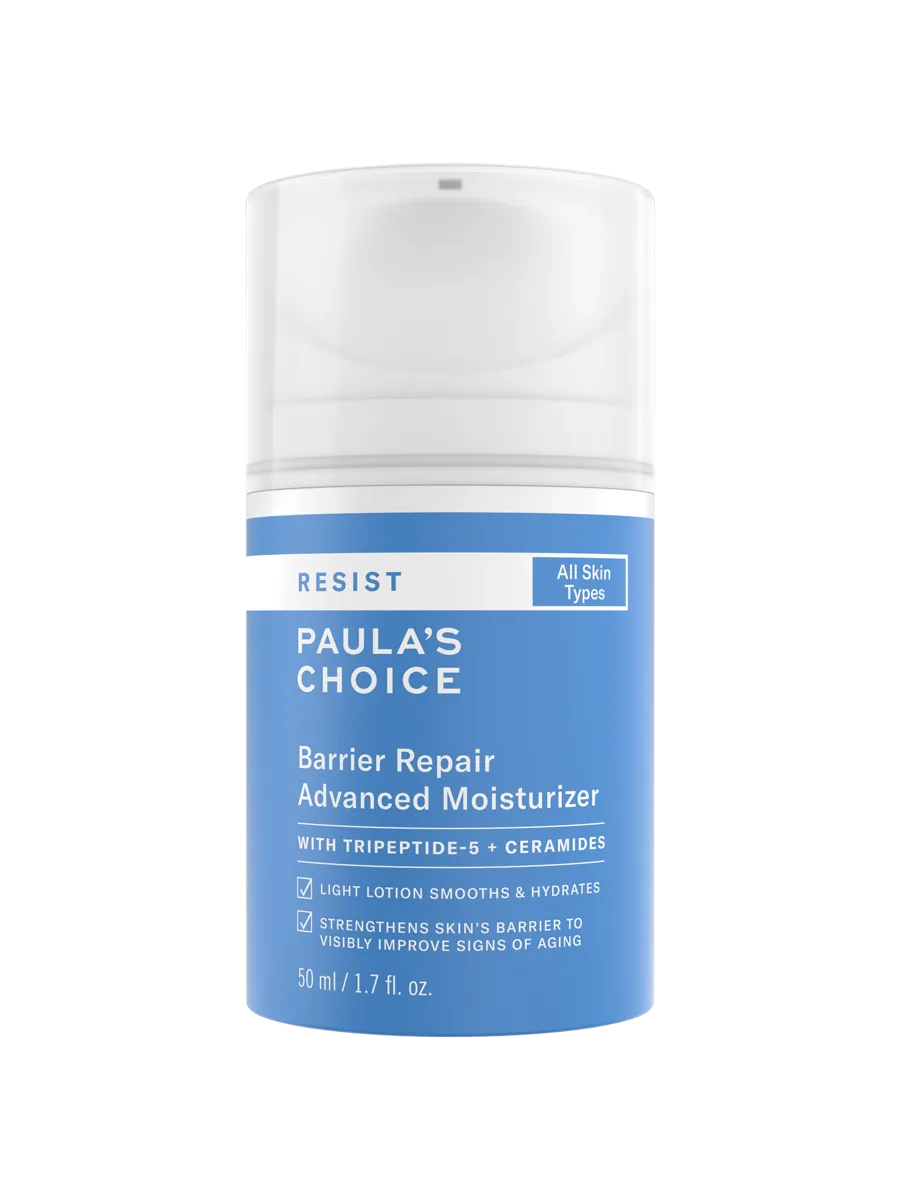
Barrier Repair Moisturizer
Barrier Rebuilder
 Verified reviewer
Pros & cons.
- +Five ceramide types plus cholesterol create a scientifically complete barrier repair system
- +Silicone-free formula relies on squalane and shea butter for natural-feeling emollience
- +Palmitoyl Tripeptide-5 adds collagen support beyond surface-level barrier repair
- +Fragrance-free with zero common irritants — genuinely safe for compromised skin
- +Rich texture absorbs well without greasy residue or pilling under sunscreen
- +Excellent recovery partner for retinol, AHA, and BHA users
- −Jar packaging exposes air-sensitive ceramides and peptides to degradation
- −Too rich for oily skin types, especially in humid conditions
- −$42 for 1.7 oz is a significant investment for a single-size offering
- −Not vegan due to cholesterol and lanolin-derived ingredients
The full review.
The ceramide moisturizer market lacks credibility. “Ceramide” is often just a marketing term used to turn basic moisturizers into “barrier repair treatments.” A single ceramide in a formula full of silicones and fragrance repairs nothing. It is the skincare equivalent of putting racing stripes on a sedan.
Paula’s Choice Barrier Repair Moisturizer follows the research. It uses five distinct ceramide types — NP, AP, AS, NS, and EOP — that match specific ceramide subtypes in the stratum corneum’s lamellar lipid structure. It includes cholesterol because decades of research (notably the work of Dr. Peter Elias) shows ceramides need cholesterol to organize into the bilayer structures that make a barrier work. Hydrogenated lecithin adds the fatty acid component to complete the essential trio.
This formula reflects the Elias and Feingold papers on epidermal barrier homeostasis. The 3:1:1 molar ratio of ceramides to cholesterol to free fatty acids accelerates barrier recovery in chronologically aged skin. While we cannot confirm the exact ratios in this commercial formula, the ingredient architecture follows this research.
Texture
The texture is a pleasant surprise. It is thick enough to feel substantial on compromised skin, but not so heavy that it sits on the surface like a mask. The squalane and shea butter base provides emollience without the occlusive film silicone-heavy creams create. It melts into the skin instead of coating it, so layering over serums and under sunscreen is smooth and uncomplicated.
Works for
The results track with the science. Tight, dry, reactive skin calms quickly — usually within the first few applications. It addresses sensitivity where your face stings when applying a basic toner. Users recovering from chemical peels or aggressive retinol protocols will find value here. The formula does not interfere with other actives; it creates an environment where they work without pushing skin past its tolerance.
Common Praise
The Palmitoyl Tripeptide-5 addition is noteworthy. Most barrier repair products focus only on the stratum corneum. This peptide targets the deeper dermal matrix and stimulates collagen synthesis by mimicking the body’s own wound-healing signals. This adds a different dimension of repair, moving the formula beyond a simple barrier cream to address skin integrity at multiple levels.
Supporting Ingredients
The supporting ingredients matter too. Low concentrations of Urea act as a humectant and a mild keratolytic, helping the skin hold water while improving the function of a damaged barrier. Adenosine, a cell signaling molecule with anti-wrinkle data, adds anti-aging benefits. Trehalose protects skin cells from desiccation stress. Every background player has a defined role.
Packaging
The jar packaging is the most significant weakness. Ceramides and peptides are sensitive to air and light. Opening a jar introduces oxidative stress and bacteria to the formula. A tube or airless pump would better protect these high-value ingredients. For a brand focused on evidence-based thinking, this is an uncharacteristic lapse in practicality.
Price
At $42 for 1.7 ounces, this is not cheap, but the price is fair for the ingredient quality. You pay for five ceramides, cholesterol, a bioactive peptide, hyaluronic acid, and intelligent formula design. Generic ceramide creams cost less because they contain less. Whether the premium is worth it depends on your barrier damage. You do not need this for everyday moisturizing on healthy skin. For skin pushed too hard by actives, weather, or medical treatments, it is a worthwhile investment in recovery.
Ingredient analysis.
Full INCI list
Water, Dicaprylyl Carbonate, Ethylhexyl Stearate, Glycerin, Cocoglycerides, Squalane, Sodium Polyacrylate, Butyrospermum Parkii (Shea) Butter, Ceramide NP, Ceramide AP, Ceramide AS, Ceramide NS, Ceramide EOP, Sodium Hyaluronate, Adenosine, Palmitoyl Tripeptide-5, Citrullus Lanatus (Watermelon) Seed Oil, Glyceryl Stearate, Caprylyl Glycol, Hydroxyacetophenone, Sodium Stearoyl Glutamate, Hexylene Glycol, Tocopherol, 2,3-Butanediol, Xanthan Gum, Ethylhexylglycerin, Sodium Phytate, Sodium PCA, Urea, Hydrogenated Lecithin, Trehalose, Polyquaternium-51, Triacetin, Cholesterol, Phenoxyethanol
Skin match.
The science.
The Science
Dr. Peter Elias and colleagues established that the stratum corneum barrier relies on lamellar lipid structures of ceramides, cholesterol, and free fatty acids in specific ratios. A 1997 study in the Journal of Clinical Investigation showed that applying a mixture of all three lipid classes in equimolar ratios speeds barrier recovery, whereas applying only one lipid class delays repair.
Research in the Journal of Investigative Dermatology showed a 3:1:1 ratio of ceramides to cholesterol to free fatty acids optimizes barrier recovery in aged skin. This formula uses five ceramide types with cholesterol and lecithin-derived fatty acids to match this research.
The five ceramides (NP, AP, AS, NS, EOP) are the most abundant ceramide subclasses in human stratum corneum, according to liquid chromatography-mass spectrometry studies. A 2021 review in the International Journal of Cosmetic Science confirmed multi-ceramide formulations restore barrier function better than single-ceramide products, especially in compromised skin.
Palmitoyl Tripeptide-5 stimulates collagen synthesis by activating TGF-beta signaling, mimicking thrombospondin-1. Data in the International Journal of Cosmetic Science (2009) shows it increases collagen production in fibroblast cultures, supporting the structure beneath the surface barrier.
References
- Optimization of physiological lipid mixtures for barrier repair — Journal of Investigative Dermatology (1996)
- Optimal ratios of topical stratum corneum lipids improve barrier recovery in chronologically aged skin — Journal of Clinical Investigation (1997)
Dermatologist Perspective
Dermatologists recommend ceramide-based moisturizers for patients with compromised barriers from atopic dermatitis, over-exfoliation, or post-procedure recovery. Board-certified dermatologists note that effective barrier repair needs the complete lipid trio: ceramides, cholesterol, and free fatty acids. This formula includes all three and is fragrance-free, so dermatologists can recommend it. It works well with prescription retinoids to manage expected barrier disruption, and helps patients recovering from laser treatments or chemical peels where rapid barrier restoration is clinically important.
Where it fits in your routine.
Apply a nickel-sized amount to clean, dry skin as your final moisturizing step. In the morning, follow with sunscreen. In the evening, apply after serums and treatments. Apply more to areas with dryness or barrier compromise. Use the included spatula instead of fingers to maintain hygiene.
At $42 for 1.7 ounces, the price is premium but matches the ingredient quality. Five ceramides, cholesterol, a bioactive peptide, hyaluronic acid, and squalane make a sophisticated formulation. The cost competes with medical-grade barrier repair products from brands like SkinCeuticals and Epionce. If used as a recovery moisturizer after acids or retinol instead of an everyday cream, the bottle lasts 2-3 months.
This works for damaged or compromised skin barriers caused by over-exfoliation, retinol use, harsh weather, or eczema. It also suits dry and sensitive skin types that need a moisturizer with proven barrier-strengthening ingredients.
Oily skin types without barrier concerns will find the thickness excessive. Skip this if you are vegan, because this formula contains cholesterol and other animal-derived ingredients.
Product details.
Thick, velvety cream with body that isn't heavy. It spreads easily and sinks in within a minute. Skin feels soft and cushioned, not greasy.
No fragrance. Clean, neutral scent with no detectable product odor.
Jar packaging includes a spatula. The jar format gives easy access to the thick cream but exposes the product to air and bacteria every time you open it. A tube format protects the ceramides and peptides from degradation better.
Immediate comfort — dry, tight skin feels relieved after the first application. It does not sting, burn, or irritate even on compromised skin. The thick texture absorbs fast and leaves a dewy, non-oily finish.
2-3 months with twice-daily face and neck application
12 months
All Year
The backstory.
Developed as part of Paula's Choice RESIST line for aging skin, this moisturizer fills the gap between lightweight daily moisturizers and heavy occlusive balms. It was designed to be the recovery partner for the brand's potent retinol and acid products — a moisturizer that could rebuild what exfoliation temporarily disrupts.
About Paula's Choice
Established Brand (5–20 years)Paula Begoun founded Paula's Choice in 1995. Unilever acquired the brand in 2021. Dermatologists frequently reference Paula's Choice, which uses evidence-based formulations without fragrance or unnecessary irritants.
Common myths.
Ceramide products must include all nine ceramide types found in skin
Research shows the ratio of ceramides to cholesterol to fatty acids matters more than including every ceramide subtype. This formula uses five key ceramides and cholesterol to support the lamellar lipid structures essential for barrier function.
Rich moisturizers cause acne
This formula is non-comedogenic despite its thick feel. The emollient base uses squalane and plant-derived oils instead of pore-clogging waxes. However, oily skin may not need this level of richness and could feel overloaded.
FAQ.
Is this moisturizer good for repairing skin barrier damage?
Yes — this formula targets barrier repair. The five ceramides and cholesterol mimic the stratum corneum's natural lipid composition, while hyaluronic acid and urea restore moisture. It works well for barrier damage from over-exfoliation, retinol use, or harsh weather.
Can I use this moisturizer with retinol?
This is an ideal partner for retinol. The ceramide complex offsets retinol's tendency to temporarily disrupt the skin barrier. Applying this after retinol reduces dryness and peeling. Many Paula's Choice users pair it with Paula's Choice retinol products for this reason.
Is this too heavy for combination skin?
Season matters. In winter or dry climates, combination skin uses the extra ceramide support well. In hot, humid weather, the texture is too thick for the T-zone. Apply a thin layer on oilier areas and a full layer on drier patches.
Does this contain any anti-aging ingredients?
Yes. Besides barrier-repairing ceramides, this formula has Palmitoyl Tripeptide-5 (a collagen-stimulating peptide), adenosine (which reduces wrinkle appearance), and tocopherol (vitamin E, an antioxidant). It targets aging at the barrier and structural levels.
Why does this have five ceramides instead of just one?
The skin's natural barrier uses specific ratios of multiple ceramide types. Using five ceramides (NP, AP, AS, NS, EOP) mimics this natural composition. This helps the formula integrate with your skin's lipid matrix instead of sitting on top. Adding cholesterol creates a more complete barrier repair system.
Community
What the community says.
"Dramatically improves dry, tight, irritated skin"
"Rich but absorbs well without feeling greasy"
"Excellent recovery moisturizer after retinol or acid use"
"Skin feels stronger and less reactive within days"
"Price is high for the size"
"May be too rich for oily skin in humid climates"
"Packaging could be more hygienic — some prefer a tube over a jar"