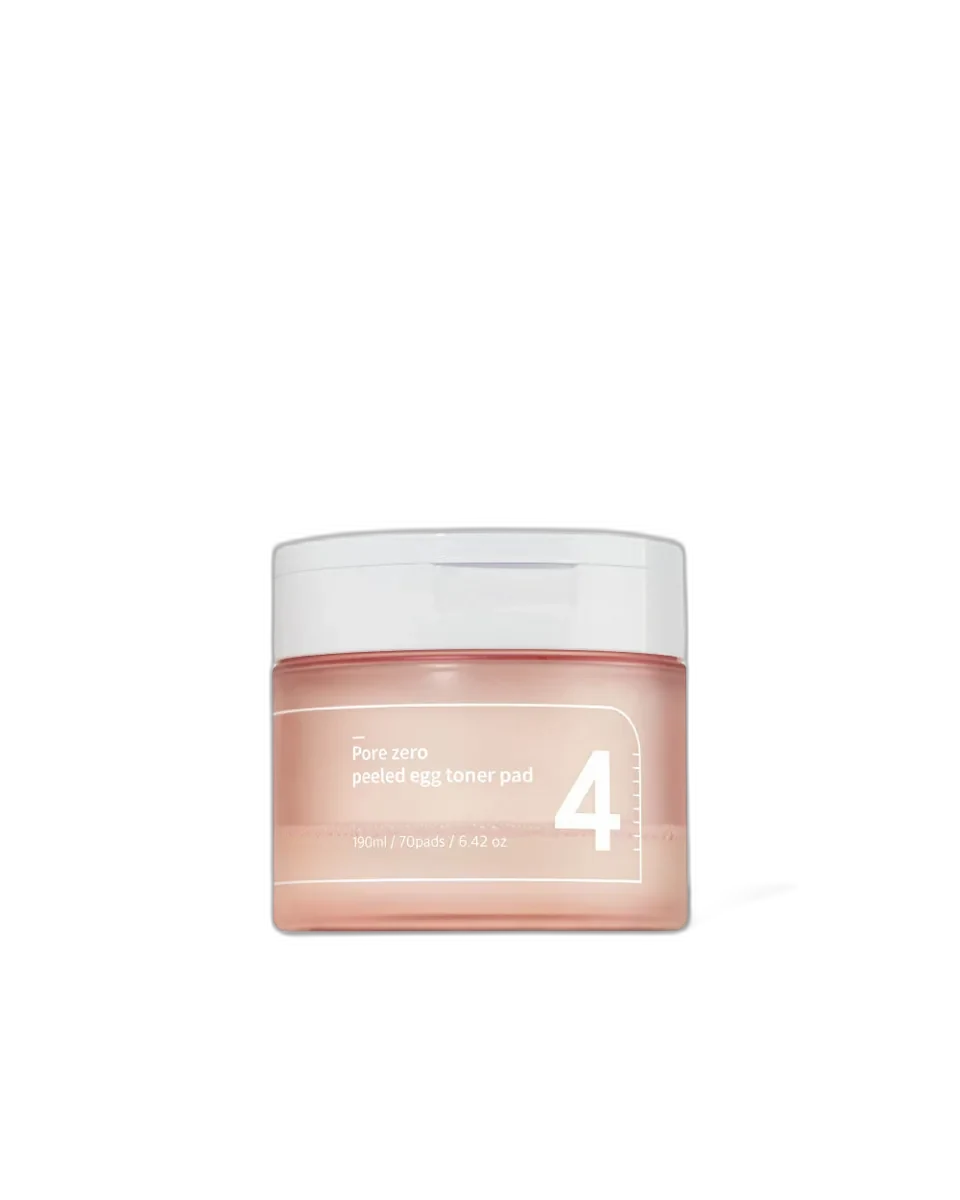
No. 4 Pore Zero Peeled Egg Toner Pad
K-Beauty Pore-Clearing Cult Classic
 Verified reviewer
Pros & cons.
- +PHA and LHA dual-acid system provides gentle yet effective exfoliation uncommon in toner pads
- +Dual-textured pad combines physical and chemical exfoliation in one convenient step
- +Panthenol and allantoin provide active soothing to counterbalance exfoliation
- +Immediately noticeable smoother skin texture after first use
- +Effective at resolving blackheads and closed comedones with consistent use
- +Good value at approximately 29 cents per pad for 70 pads
- +Compact jar format with tweezers makes storage and travel easy
- −Ethanol listed third in the formula can contribute to dryness and barrier disruption
- −Contains fragrance in an exfoliating product which adds unnecessary irritation risk
- −Not suitable for sensitive dry or eczema-prone skin due to alcohol and acids
- −May cause temporary purging of existing clogged pores during first weeks
- −Physical exfoliation side could be too rough if pressed too hard on reactive skin
The full review.
Korean beauty culture prizes skin that looks like a freshly peeled hard-boiled egg: smooth, poreless, luminous, and even. Numbuzin targets this exact look with the No. 4 Pore Zero Peeled Egg Toner Pad. The name is effective K-beauty marketing: specific and visual without being clinical.
The format is simple. Seventy dual-sided cotton pads sit in a round jar, soaked in a lightweight toner essence. One side has a subtle waffle texture for gentle physical exfoliation; the other is smooth cotton for patting toner into skin. The pad works to scrub, then smooth.
The chemical exfoliation uses an interesting pairing. Gluconolactone is a polyhydroxy acid—the gentlest chemical exfoliant class—that dissolves dead skin cell bonds and binds water to the skin. It is the only acid class that exfoliates and hydrates simultaneously, making it suitable for regular use. Capryloyl salicylic acid, or LHA, adds another dimension. Developed by L’Oréal research, LHA is a fatty acid ester of salicylic acid. It penetrates pores more slowly than free BHA, dissolving sebum plugs via a sustained-release mechanism that reduces irritation risk.
The PHA-plus-LHA combination is uncommon. Most exfoliating toner pads use the AHA/BHA pairing—glycolic or lactic acid for surface exfoliation and salicylic acid for pores. By using these gentler versions, Numbuzin created a pad for frequent use without the recovery days required by stronger acid pads.
Panthenol is high in the ingredient list. Vitamin B5 is an effective soothing and barrier-repair ingredient; its prominent position shows Numbuzin prioritizes tolerability. Trehalose adds hydration protection, allantoin calms micro-irritation from exfoliation, and sodium hyaluronate prevents skin from feeling stripped.
Using these pads is satisfying. The embossed side provides enough texture to feel dead skin being removed. Patting the remaining essence into skin with the smooth side leaves a clean, smooth canvas that improves subsequent product absorption. Skin feels smoother after one use, and pores appear less congested.
With regular use—two to three times per week for oily skin, once a week for normal—effects increase. Blackheads loosen and clear more easily. Closed comedones resolve more readily. Overall skin texture becomes finer and more even. While no single product achieves the peeled egg look, these pads move toward it.
The ingredient list requires scrutiny. Ethanol is third in the formula, indicating a high concentration. In an exfoliating product for potentially sensitive skin, alcohol is a curious choice. It aids drying and active penetration but can cause barrier disruption and dryness with frequent use. Oily skin may tolerate this well, but dry or sensitized skin should proceed with caution.
Fragrance is also near the end of the INCI. Like ethanol, it has no functional purpose here and adds sensitization risk. Since Numbuzin created a completely clean, fragrance-free formula for the No. 4 Mineral Toner, the fragrance here is an inconsistency.
Ethanol and fragrance prevent this from being a universally recommendable exfoliating pad. The PHA and LHA combination is gentle and effective. The panthenol and allantoin provide well-considered soothing support. The dual-sided pad design is clever. However, these irritants limit the audience to resilient oily and combination skin types.
At around twenty dollars for seventy pads, the value is strong at roughly twenty-nine cents per pad. A jar lasts five to ten weeks. The jar packaging with included tweezers is hygienic, and the compact size travels well.
For oily and combination skin seeking peeled-egg smoothness, these pads are an effective step. They exfoliate without aggression, smooth without stripping, and clear pores without the drama of stronger acid treatments. The ethanol and fragrance are notable flaws.
Ingredient analysis.
Full INCI list
Water, Methylpropanediol, Ethanol, Butylene Glycol, 1,2-Hexanediol, Glycerin, Panthenol, Betaine, Trehalose, Glycereth-26, Polyglyceryl-10 Laurate, Ammonium Acryloyldimethyltaurate/VP Copolymer, Gluconolactone, Sodium Citrate, Sodium Hyaluronate, Allantoin, Disodium EDTA, Capryloyl Salicylic Acid, Pinus Palustris Leaf Extract, Ulmus Davidiana Root Extract, Oenothera Biennis (Evening Primrose) Flower Extract, Pueraria Lobata Root Extract, Fragrance
Skin match.
The science.
The Science
The PHA and LHA combination draws on distinct exfoliation mechanisms. Gluconolactone (PHA) was studied in a 2004 publication in Dermatologic Surgery that demonstrated comparable efficacy to 8% glycolic acid for improving fine lines and texture, with significantly less stinging and irritation. PHAs' larger molecular size (molecular weight ~178 g/mol for gluconolactone vs ~76 g/mol for glycolic acid) means slower, more gradual penetration — reducing the peak irritation that occurs when smaller AHA molecules flood the stratum corneum rapidly.
Capryloyl salicylic acid (LHA) was originally developed by L'Oréal and studied for its unique pharmacokinetic profile. Research published in the Journal of the European Academy of Dermatology and Venereology in 2009 showed that LHA provided comparable comedolytic activity to 5% benzoyl peroxide with lower irritation scores. The fatty acid chain attached to the salicylic acid molecule creates a slow-release effect — LHA deposits on the skin surface and gradually hydrolyzes, delivering salicylic acid over an extended period rather than in a single dose.
The combination of surface-acting PHA and pore-penetrating LHA creates a dual-depth exfoliation approach. PHA works on the superficial stratum corneum to remove dead cells and smooth texture, while LHA penetrates into the follicular canal to dissolve sebum plugs — addressing both surface texture and pore congestion simultaneously.
Panthenol's protective role in this formula is supported by research in the American Journal of Clinical Dermatology (2002), which documented its ability to improve stratum corneum hydration, reduce transepidermal water loss, and accelerate epidermal wound healing — all relevant when using chemical exfoliants that temporarily thin the stratum corneum.
References
- Polyhydroxy Acids: Dermatologic Applications — Dermatologic Surgery (2004)
- Efficacy of Capryloyl Salicylic Acid in Comedonal Acne — Journal of the European Academy of Dermatology and Venereology (2009)
Dermatologist Perspective
Dermatologists would view the PHA/LHA combination favorably as a gentler alternative to traditional AHA/BHA exfoliation, particularly for patients prone to irritation from glycolic or salicylic acid. Board-certified dermatologists frequently recommend LHA-based products for patients with comedonal acne who cannot tolerate standard BHA concentrations. However, the ethanol content would be a concern — dermatologists generally advise against alcohol in exfoliating products, as the combination can accelerate barrier disruption. The product is best positioned as a 2-3 times weekly treatment for resilient oily skin, and dermatologists would emphasize the importance of following with hydration and wearing SPF after use.
Where it fits in your routine.
After cleansing, use the included tweezers to take one pad. Use the embossed (textured) side first. Wipe the face in gentle circular motions, focusing on the T-zone and areas with visible pores or congestion. Flip to the smooth side and pat the remaining toner essence into the skin. Follow with a hydrating toner or serum and moisturizer. Use 2-3 times per week for oily/combination skin, or once per week for normal skin. Do not use on the same night as retinol or strong acid treatments. Apply SPF the following morning.
At about $20 for 70 pads, each use costs $0.29. This price is competitive for an exfoliating toner pad containing both PHA and LHA. The jar lasts 5-10 weeks based on how often you use it, making it a cost-effective pore-care tool. The dual-sided pad format combines exfoliation and toning in one step to save time and product. No other brand offers this specific PHA + LHA combination at a lower price.
Oily and combination skin with enlarged pores, blackheads, closed comedones, or rough texture. Use this if AHA/BHA exfoliants feel too harsh but you want more activity than a basic toner. It also works as a pre-makeup skin prep step for smoother application.
Avoid these pads if you have dry, sensitive, rosacea-prone, or eczema-prone skin. The ethanol and exfoliating acids overwhelm compromised barriers. Adding these pads to a routine with strong retinoids or prescription exfoliants risks over-exfoliation. Fragrance-averse users should look elsewhere.
Product details.
Dual-sided pads use one embossed/textured side for physical exfoliation and one smooth cotton side for toning. They contain a lightweight, watery toner essence.
A mild clean fragrance is noticeable but not overpowering. It dissipates quickly after application.
A round screw-top jar holds 70 pre-soaked pads in 190ml of toner essence. The compact jar travels easily. It includes tweezers for hygienic pad retrieval.
The embossed side provides a gentle scrubbing sensation. Skin feels smoother to the touch after the first pad. Some users feel mild tingling from the LHA; this is normal. Temporary purging of existing clogged pores may occur during the first 1-2 weeks.
5-10 weeks depending on frequency of use (2-3 times weekly vs daily)
12 months
All Year
The backstory.
The 'peeled egg' concept — referencing the smooth, poreless appearance of a freshly peeled boiled egg — is a beloved K-beauty skin goal. Numbuzin's toner pad became one of the brand's first viral hits by packaging this aspiration into a convenient, satisfying format. The product's popularity helped establish Numbuzin as a credible K-beauty brand in Western markets.
About Numbuzin
Emerging Brand (2–5 years)Numbuzin launched in 2019 via Korean beauty startup Benow. This toner pad was an early release and is now one of the brand's most popular products, though independent clinical validation beyond brand-sponsored testing is limited.
Common myths.
Toner pads cause too much irritation for daily use because they use both physical and chemical exfoliation.
The pad's texture is gentle; it uses embossed cotton instead of abrasive material. The mild PHA and low-concentration LHA create moderate exfoliation intensity. Most oily and combination skin types can use these 2-3 times weekly, but daily use requires caution.
LHA is salicylic acid under a different name.
LHA (capryloyl salicylic acid) is a salicylic acid fatty acid ester with a larger molecular structure. It enters the skin slower than free salicylic acid, which provides sustained pore-clearing action and less irritation. L'Oréal research originally developed LHA, and it has a clinical profile distinct from standard BHA.
FAQ.
How often should I use the Numbuzin Peeled Egg Toner Pads?
Use 2-3 times per week for oily skin with clogged pores. Once a week works for normal skin or maintenance. Avoid daily use unless your skin is very resilient; the PHA and LHA combination can over-exfoliate with excessive use. Always follow with hydrating products and use sunscreen the next morning.
Can I use the Numbuzin Toner Pads with retinol?
Do not use these pads on the same night as retinol or other strong exfoliants. The PHA and LHA in the pads plus retinol cause over-exfoliation and barrier damage. Alternate nights — use the toner pads 2-3 times per week and retinol on other nights.
What is the difference between the embossed and smooth sides of the pad?
The embossed (textured) side provides mild physical exfoliation. Use gentle circular motions to lift sebum and dead skin cells. The smooth side pats the remaining toner essence into skin for a toning and hydrating finish. Use the embossed side first, then flip to the smooth side.
Will the Numbuzin Toner Pads cause purging?
Some users experience mild purging during the first 1-2 weeks. The PHA and LHA accelerate turnover of existing clogged pores. This shows as small whiteheads or blackheads surfacing faster than usual. This is temporary and typically resolves as the skin adjusts.
Are the Numbuzin Peeled Egg Toner Pads good for acne?
These pads work well for comedonal acne — blackheads, whiteheads, and closed comedones. LHA penetrates pores to dissolve sebum plugs and PHA smooths the surface. They work less effectively for inflammatory acne (red, swollen pimples), which needs targeted treatments like benzoyl peroxide or prescription actives.
What the community says.
"Noticeably smoother skin after first use"
"Helps closed comedones come to a head faster"
"Dual-sided pad design is clever and effective"
"Great for prepping skin before makeup"
"Contains ethanol which can be drying for some"
"Fragrance is unnecessary in an exfoliating product"
"Can be too potent for daily use on sensitive skin"
"Strong exfoliation may cause temporary purging"
People also looked at.