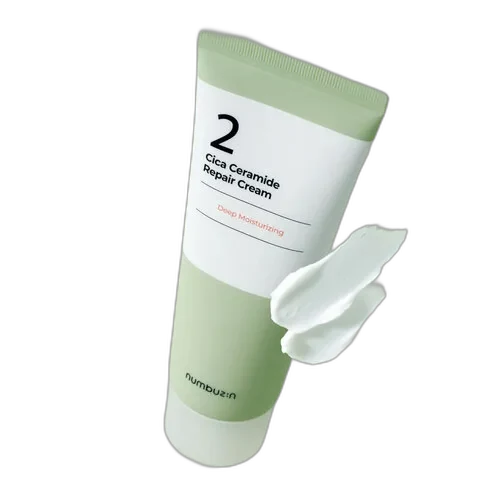
No. 2 Cica Ceramide Repair Cream
K-Beauty Barrier Repair Hero
 Verified reviewer
Pros & cons.
- +Disclosed 10,000 ppm ceramide NP with cholesterol and phytosphingosine for complete barrier lipid repair
- +Full-spectrum centella complex with four isolated actives rather than generic extract
- +Buttery texture melts on contact and absorbs without greasy or heavy residue
- +Fragrance-free and essential-oil-free for genuinely sensitive skin compatibility
- +Effective post-retinol and post-exfoliation buffer that soothes without neutralizing treatments
- +Dual-weight hyaluronic acid provides both surface and deeper hydration layers
- +Strong value at approximately $20 for a clinically-informed barrier repair formula
- −Jar packaging is less hygienic and less stable than airless pump alternatives
- −60 mL size depletes in 2-3 months with twice-daily use, limiting long-term value
- −Niacinamide at approximately 1% is below effective standalone concentration for brightening
- −Several botanical extracts add ingredient list length without clear functional contribution
- −Contains trace denatured alcohol, which may concern ingredient-sensitive consumers
The full review.
Most ceramide products use trace concentrations to rely on name recognition rather than efficacy. When Numbuzin reformulated No. 2 cream in 2022 and disclosed a 10,000 ppm ceramide NP concentration, they showed their math.
That 10,000 ppm figure equals 1% ceramide NP. Ceramides do not work on a more-is-better scale. The supporting cast matters more. The skin’s intercellular lipid matrix uses a roughly 3:1:1 ratio of ceramides, cholesterol, and free fatty acids. Disrupting this ratio creates an expensive moisturizer. Replicating it achieves genuine barrier repair. Numbuzin’s formula includes cholesterol and phytosphingosine alongside the ceramide NP—the three components dermatological research identifies as critical to mimic the skin’s natural lipid structure. This uses the same formulation approach as prescription-adjacent barrier repair products that cost significantly more.
The centella complex is notable because Numbuzin did not take the easy route. Most cica products use generic centella asiatica extract. This formula uses four isolated active compounds: madecassoside, asiaticoside, madecassic acid, and asiatic acid. Each has a different mechanism—madecassoside provides anti-inflammatory action, asiaticoside stimulates collagen synthesis, and the two acids aid wound healing and antioxidant defense. Independent testing is required to verify if these concentrations are optimized, but including all four signals a formulator who understands centella’s pharmacology.
In the jar, the cream looks thick, opaque, and balm-like. The texture changes on contact. It melts with the warmth of your hands, turning from a dense cream into a lightweight formula that absorbs within thirty seconds. It leaves no sticky residue, no heavy film, and no sense of sitting on the surface. Shea butter is the third ingredient and provides the initial thickness, but the silicone and emulsifier system ensures it sinks in. This texture explains why Korean formulation chemistry has a devoted following.
The soothing effect is noticeable at the first application. If your skin is irritated from over-exfoliation, retinoid irritation, wind-burned winter dryness, or a sensitive skin barrier, this cream works. The combination of bisabolol (a chamomile-derived anti-inflammatory), the centella complex, and beta-glucan creates a multi-pathway calming system that addresses redness and reactivity. Users who use this after retinol or chemical exfoliant nights report it buffers irritation without neutralizing treatment benefits.
Niacinamide is on the ingredient list but requires expectation management. At approximately 1%, it is below the 2-5% range where most studies show significant brightening or oil-control benefits. In this formula, niacinamide likely supports the skin by upregulating its own ceramide production, which complements the ceramide NP. If you want standalone niacinamide benefits, this is not the product.
Packaging
The packaging has limitations. Jar packaging exposes the product to air and fingers, which affects ingredient stability. Ceramides and centella actives are reasonably stable, but an airless pump would better preserve the formula over the 12-month use period. The 60 mL size is small for a cream used twice daily; you will likely finish it in two to three months, which affects the value.
Common Complaints
Some botanical extracts further down the list—fig fruit extract, kelp extract, and amaranthus seed extract—act more like a K-beauty ingredient flex than functional additions. They are not harmful, but their concentrations are likely too low to affect performance. The cream works because of its ceramide-cholesterol-phytosphingosine backbone and its centella complex, not because of trace amounts of eclipta prostrata leaf.
Conflicts With
Alcohol (denatured) appears near the end of the ingredient list. Its position suggests a concentration well below 1%, likely acting as a solvent for a botanical extract rather than a drying agent. At this level, it is not a concern for most skin types.
Best for
At roughly $20 for 60 mL, the value is strong. You get a barrier repair formula built on science—the ceramide-cholesterol-fatty acid trio, a multi-compound centella complex, dual-weight hyaluronic acid, and shea butter—at a price lower than many competitors with less sophisticated formulations. Numbuzin is an emerging brand without decades of clinical track record, but the formulation of this product shows an understanding of barrier science rather than just ingredient list padding.
Ingredient analysis.
Full INCI list
Water, Glycerin, Butyrospermum Parkii (Shea) Butter, Cetearyl Alcohol, Dipropylene Glycol, Caprylic/Capric Triglyceride, Hydrogenated Poly(C6-14 Olefin), Methyl Trimethicone, 1,2-Hexanediol, Niacinamide, Olus Oil, Phenyl Trimethicone, Hydrogenated Polydecene, Palmitic Acid, Glyceryl Stearate SE, Ceramide NP, Centella Asiatica Extract, Madecassoside, Asiaticoside, Madecassic Acid, Asiatic Acid, Ficus Carica Fruit Extract, Laminaria Japonica Extract, Eclipta Prostrata Leaf Extract, Acmella Oleracea Extract, Ulmus Davidiana Root Extract, Amaranthus Caudatus Seed Extract, Hydrogenated Lecithin, Sodium Hyaluronate, Macadamia Integrifolia Seed Oil, Elaeis Guineensis Oil, Adansonia Digitata Seed Oil, Persea Gratissima Oil, Stearic Acid, Cetearyl Olivate, Sorbitan Olivate, Behenyl Alcohol, C12-16 Alcohols, Alpha-Bisabolol, Silica, Microcrystalline Cellulose, Cetearyl Glucoside, Butylene Glycol, Ammonium Acryloyldimethyltaurate/VP Copolymer, Glyceryl Polymethacrylate, Cellulose Gum, Cholesterol, Fructooligosaccharides, Disodium EDTA, Beta-Glucan, Myristic Acid, Hydrolyzed Hyaluronic Acid, Glucose, Alcohol, Phytosphingosine, Ethylhexylglycerin
Skin match.
The science.
The Science
The scientific foundation of this cream rests on the ceramide-cholesterol-fatty acid model of barrier repair, which has been the gold standard in dermatological research for decades. A landmark 1996 study by Imokawa et al. in the Journal of Investigative Dermatology established that ceramides are the dominant lipid class in the stratum corneum's intercellular matrix, comprising approximately 50% of the lipid content. Subsequent research demonstrated that the most effective barrier repair formulations mimic the skin's natural lipid ratio of approximately 3:1:1 ceramides to cholesterol to free fatty acids.
This formula delivers all three components: Ceramide NP at a disclosed 10,000 ppm, cholesterol, and phytosphingosine (a sphingoid base that the skin converts into additional ceramides). The inclusion of phytosphingosine is particularly noteworthy — beyond serving as a ceramide precursor, it has demonstrated antimicrobial properties against Propionibacterium acnes in vitro.
The centella asiatica complex represents a more targeted approach than generic extract. Madecassoside, the primary active, has been shown in multiple studies to promote wound healing through stimulation of collagen type I synthesis and inhibition of the inflammatory NF-kB pathway. A 2012 study published in the International Journal of Molecular Sciences documented madecassoside's ability to accelerate wound healing in both in vitro and animal models. Asiaticoside complements this by stimulating collagen synthesis through a different pathway — activating TGF-beta signaling.
The dual hyaluronic acid system (sodium hyaluronate at standard molecular weight plus hydrolyzed hyaluronic acid at lower molecular weight) follows the principle that different molecular weights address different layers of the skin. Standard-weight HA forms a hydrating film on the surface, while the smaller hydrolyzed form penetrates into the epidermis for deeper hydration. A 2012 study in the Journal of Clinical and Aesthetic Dermatology confirmed that multi-weight HA formulations provide superior hydration compared to single-weight alternatives.
References
- Decreased level of ceramides in stratum corneum of atopic dermatitis: an etiologic factor in atopic dry skin? — Journal of Investigative Dermatology (1991)
- Madecassoside, the main active compound of Centella asiatica, on wound healing — International Journal of Molecular Sciences (2012)
- Novel hyaluronic acid dermal fillers: clinical and dermal considerations — Journal of Clinical and Aesthetic Dermatology (2012)
Dermatologist Perspective
Board-certified dermatologists frequently recommend ceramide-containing moisturizers for patients with compromised barriers, eczema, and retinoid-induced irritation. The inclusion of cholesterol and phytosphingosine alongside ceramide NP in this formula aligns with the approach dermatologists consider most effective — mimicking the skin's natural lipid composition rather than relying on ceramide alone. Dermatologists would note that this cream's fragrance-free formulation makes it suitable for post-procedure use and for patients with rosacea-prone skin. The centella complex adds anti-inflammatory benefits that dermatologists often look for in a recovery cream. While the brand lacks the clinical pedigree of legacy dermatologist-developed lines, the formulation science is sound and the disclosed concentration adds a level of transparency that dermatologists appreciate.
Where it fits in your routine.
Cleanse, then apply toner and serums. Use a spatula or clean fingers to scoop a pea-sized amount; a spatula is better for this jar. Warm the cream in your palms for a few seconds until it melts and thins. Press and pat the cream into your face and neck. Let it absorb for 30 seconds. Use morning and evening. Apply sunscreen in the AM. In the PM, use this as your final step or layer an occlusive sleeping pack on top for extra barrier support.
At approximately $20 for 60 mL, this cream offers strong value for a barrier repair formula that includes disclosed ceramide concentration, a multi-lipid approach, and a full-spectrum centella complex. The single size option means no bulk discount is available, and the jar will last roughly 2-3 months with twice-daily use — putting the monthly cost at around $7-10. For an emerging K-beauty brand, the price appropriately reflects the quality without premium inflation. The formulation competes with products in the $35-50 range on ingredient quality alone, making this a genuine value pick for barrier repair.
This works for anyone with a compromised skin barrier—from over-exfoliation, retinoid use, environmental damage, or sensitive skin. It suits those seeking a K-beauty barrier cream with transparent ingredient concentrations and a fragrance-free formula.
Very oily or highly acne-prone skin types may find the shea butter base too thick. The ~1% concentration of niacinamide lacks the strength for brightening or oil control. Skip this if you prefer pump or tube packaging over jars.
Product details.
Unscented. It has no added fragrance or essential oils. The base ingredients have a faint, neutral cream scent.
A wide-mouth glass jar uses a screw-top lid. The numbered, white, minimalist design matches Numbuzin's branding. Jar packaging is less stable for the ceramide and centella actives than airless pump alternatives. Finish satinnon-greasydewy
The cream feels lightweight despite its thick appearance. It melts on warm skin and absorbs in about 30 seconds. Skin feels instantly soothed. There is no tingling, stinging, or adjustment period. Users with compromised barriers see improvement within the first few days of consistent use.
2-3 months with twice-daily face application
12 months
All Year
The backstory.
Part of Numbuzin's No. 2 line dedicated to barrier repair and skin calming. The current version is a renewed formula that upgraded the ceramide concentration to 10,000 ppm and refined the centella complex. The product gained traction in Korean skincare communities as a post-procedure and post-retinol recovery cream before expanding internationally through Olive Young.
About Numbuzin
Emerging Brand (2–5 years)Numbuzin launched in 2019 as a K-beauty brand under Benow. It grew fast via Olive Young and social media. The formulations use well-studied ingredients, but the brand lacks independent clinical data and relies on consumer validation and viral buzz.
Common myths.
Ceramide creams are only for dry skin types.
Ceramides are part of the barrier structure for all skin types. Even oily or combination skin benefits from ceramide replenishment after using stripping cleansers or aggressive actives. This cream absorbs lightly, making it workable for non-dry skin types, though very oily skin may prefer a lighter ceramide serum.
Higher ceramide concentration improves barrier repair.
Ceramides work best with cholesterol and free fatty acids at a 3:1:1 ratio to mimic the skin's natural lipid composition. This formula uses all three components (ceramide NP, cholesterol, phytosphingosine); the balance matters more than high ceramide concentration alone.
FAQ.
Is the Numbuzin No. 2 Cica Ceramide Repair Cream good for acne-prone skin?
The formula is fragrance-free and gentle, but cetearyl alcohol and palm oil can be comedogenic for highly acne-prone skin. If your skin tolerates thick creams without breakouts, the ceramide and centella combination helps repair acne-damaged barriers. Patch test first if you are prone to closed comedones.
Can I use this cream with retinol or tretinoin?
Yes — this is a primary use case. The ceramide-cholesterol-phytosphingosine trio repairs retinoid-induced barrier damage, while the centella complex soothes inflammation. Apply your retinoid first, wait a few minutes, then layer this cream on top to buffer and repair.
How much ceramide is in the Numbuzin No. 2 cream?
Numbuzin uses 10,000 ppm of Ceramide NP, a 1% concentration. This amount is significant because the formula also contains cholesterol and phytosphingosine — the two other lipids essential for effective barrier repair. This three-lipid approach matters more than Ceramide NP concentration alone.
Is this cream moisturizing enough for winter?
This cream hydrates mild to moderate dryness using a shea butter base, dual hyaluronic acids, and ceramide complex. In harsh winter climates or for very dry skin, layer a heavier occlusive or sleeping pack on top. Some users find the 60 mL jar insufficient as a standalone winter moisturizer.
What's the difference between the original and renewed Numbuzin No. 2 formula?
The renewed formula, available since 2022, increases the ceramide NP concentration to 10,000 ppm. It also refines the centella calming complex to use four isolated actives (madecassoside, asiaticoside, madecassic acid, asiatic acid) instead of basic centella extract. The reformulated texture absorbs faster. ---
What the community says.
"Game-changer for compromised and over-exfoliated skin barriers"
"Buttery texture melts into skin without feeling greasy or heavy"
"Effectively calms redness and irritation from active ingredients"
"Absorbs quickly despite rich consistency"
"Fragrance-free formula gentle enough for reactive sensitive skin"
"Jar packaging is less hygienic than a pump or tube"
"60 mL size runs out quickly with twice-daily use"
"May not be sufficiently hydrating for very dry skin in harsh winter climates"
"Contains some botanical extracts with unclear functional benefit"
"Niacinamide concentration too low for standalone brightening effects"