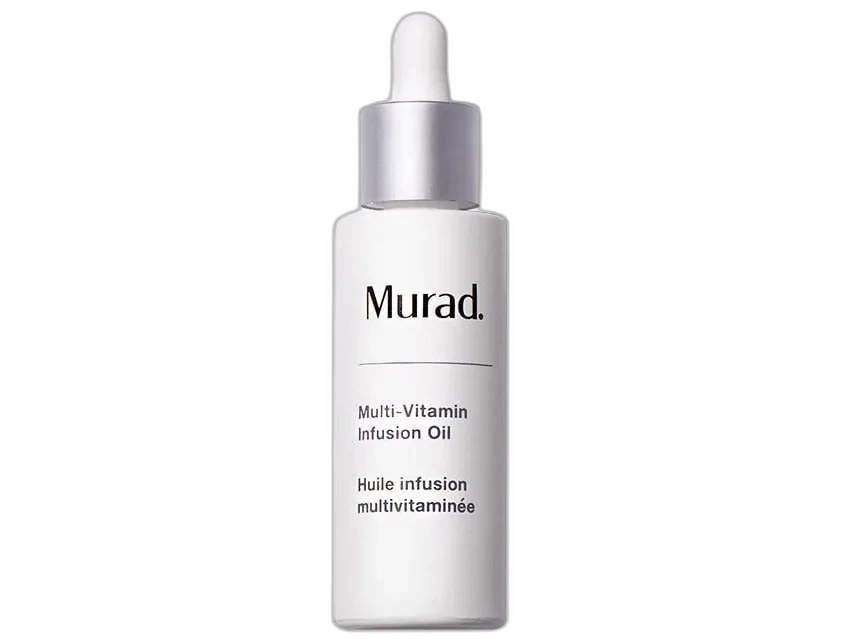
Multi-Vitamin Infusion Oil
Multi-Vitamin Glow Booster
 Verified reviewer
Pros & cons.
- +Six vitamins (A through F) in oil-soluble forms optimized for lipid-based delivery
- +Absorbs within 30 seconds with no greasy residue — remarkably lightweight for a face oil
- +Immediate visible glow and radiance enhancement from first application
- +Jojoba and squalane base mimics skin's natural lipids for seamless integration
- +Works beautifully mixed with moisturizer or foundation for dewy effect
- +Silicone-free and paraben-free formula
- −Strongly polarizing herbal scent that some users find off-putting
- −Fragrance components (limonene, linalool, citral) may irritate sensitive skin
- −Retinyl linoleate is a weak retinoid — don't expect retinol-level anti-aging results
- −Premium price at 2 per ounce for a face oil
- −Not suitable for oily or acne-prone skin types
The full review.
Dr. Howard Murad has spent decades arguing that skincare is healthcare, and the Multi-Vitamin Infusion Oil is perhaps the purest expression of that philosophy in his entire range. The concept is disarmingly simple: if your body benefits from a daily multivitamin, why shouldn’t your skin? It’s the kind of reasoning that either makes you nod in recognition or roll your eyes — but the formula itself is more sophisticated than the elevator pitch suggests.
The vitamin lineup runs from A to F, and what makes this more than a marketing gimmick is that each vitamin is present in its oil-soluble form. This matters because oil-soluble vitamins are absorbed through the lipid bilayer of the skin’s surface, reaching target cells more efficiently than their water-soluble counterparts would in an oil medium. Tetrahexyldecyl ascorbate (vitamin C) is the standout — stable, lipophilic, and effective at brightening without the pH sensitivity issues that plague L-ascorbic acid serums. Retinyl linoleate (vitamin A) is gentler than retinol but still communicates with retinoid receptors. Panthenyl triacetate converts to provitamin B5 for hydration and soothing. Tocopherol and tocopheryl acetate deliver dual vitamin E protection. And the deep cuts — 7-dehydrocholesterol (provitamin D) and pomegranate sterols (vitamin F, the essential fatty acids) — go beyond what most face oils even attempt.
The carrier oil blend is equally considered. Jojoba seed oil, the second ingredient, is technically a wax ester whose molecular structure mimics human sebum. This means it integrates with the skin’s own lipids rather than sitting on top as a greasy film. Squalane adds a skin-identical emollient. Moringa and bilberry seed oils contribute their own fatty acid profiles and antioxidants. The result is an oil that absorbs with startling speed — within 30 seconds, the skin feels soft and luminous rather than slick.
The instant glow effect is the product’s most compelling selling point for the undecided. This isn’t the kind of face oil where you apply it, wait twenty minutes, and hope something’s happening underneath. You see the radiance immediately. Skin looks healthier, more alive, slightly dewy in a way that photographs beautifully. Mix two drops with your foundation and the result is that “I just have good skin” effect that takes far more effort to achieve with powders and primers.
Over weeks of consistent use, the deeper benefits start to show. Skin texture smooths out. Dullness lifts. Fine lines soften, not dramatically, but enough that you notice the difference when you skip it for a few days. The vitamin C component contributes gradual brightening, though anyone expecting dramatic dark spot correction will need a more concentrated vitamin C treatment.
The honest limitation is the retinoid component. Retinyl linoleate is several conversion steps away from the retinoic acid that actually triggers cell turnover. It’s a gentle, entry-level vitamin A that provides some anti-aging signaling, but it’s not going to deliver the visible results of retinol or tretinoin. If anti-aging is your primary goal, this oil should complement a stronger retinoid, not replace one.
And then there’s the scent. The herbal, earthy, unmistakably botanical fragrance is the most polarizing thing about this product. Some users find it grounding and spa-like. Others describe it in terms that are less flattering. The fragrance comes from a combination of added parfum and the natural scent of the botanical oils, and it is not subtle. It fades within a few minutes, but if you’re scent-sensitive, this is a serious consideration. The presence of limonene, linalool, and citral as fragrance components also raises the irritation risk for reactive skin types.
At 2 for one ounce, this is a premium face oil. A professional-size option exists for those who commit, offering better per-ounce value. Given the multi-vitamin approach and the speed of absorption, the cost-per-use is reasonable if you’re using it as your primary evening oil — 3-5 drops nightly means a bottle lasts 3-4 months. But if you’re comparing it to simpler, single-ingredient oils like pure squalane or jojoba, the price gap is significant.
The Multi-Vitamin Infusion Oil is best understood as a nourishing treatment layer rather than a standalone anti-aging product. It excels at restoring radiance to dull, depleted skin, providing a fast-absorbing lipid base for fat-soluble vitamins, and making your complexion look immediately healthier. It won’t replace your retinoid, your dedicated vitamin C serum, or your moisturizer — but as the nutritional bridge between your water-based treatments and your final moisture step, it fills a role that few other products attempt so comprehensively.
Formula
Ingredient analysis.
Full INCI list
Caprylic/Capric Triglyceride, Simmondsia Chinensis (Jojoba) Seed Oil, C9-12 Alkane, Moringa Oleifera Seed Oil, Tocopheryl Acetate, Vaccinium Myrtillus Seed Oil, Squalane, Tetrahexyldecyl Ascorbate, Retinyl Linoleate, Panthenyl Triacetate, Salicylic Acid, Zea Mays (Corn) Oil, Oryza Sativa (Rice) Bran Extract, Punica Granatum Sterols, Hexylresorcinol, Helianthus Annuus (Sunflower) Extract, Rosmarinus Officinalis (Rosemary) Leaf Extract, Tocopherol, Coco-Caprylate/Caprate, 7-Dehydrocholesterol, Water (Aqua), Limonene, Linalool, Citral, Fragrance (Parfum).
Skin match.
The science.
The Science
This oil uses a fat-soluble vitamin delivery strategy based on skin biology. The stratum corneum's lipid matrix — made of ceramides, cholesterol, and fatty acids — favors the absorption of lipophilic compounds. Research in the Journal of Investigative Dermatology shows that tetrahexyldecyl ascorbate, the oil-soluble vitamin C in this formula, penetrates skin more effectively than L-ascorbic acid and stays stable in lipid-based formulations. Once absorbed, keratinocytes enzymatically convert it to free ascorbic acid to participate in collagen synthesis and melanin inhibition.
Dermatological literature documents jojoba seed oil's structural similarity to human sebum wax esters. A study in the International Journal of Molecular Sciences confirmed jojoba oil enhances skin barrier function and modulates sebum production. This makes it one of the few plant oils suited for facial use across skin types. In this formula, jojoba works as both a functional carrier oil and an active barrier-repair ingredient.
Squalane works as a skin-identical emollient because its molecules correspond to human squalene, which makes up approximately 12% of the skin's surface lipids. Research in the International Journal of Cosmetic Science demonstrated that topical squalane application reduces transepidermal water loss and improves skin elasticity without comedogenic effects.
Pomegranate sterols (vitamin F) provide punicic acid, a conjugated linolenic acid with anti-inflammatory properties. Research in the British Journal of Nutrition shows punicic acid modulates inflammatory pathways in skin cells, supporting the formula's claims of redness relief and its nutritional approach.
Dermatologist Perspective
Dermatologists note that the skin's lipid barrier needs both structural lipids (ceramides, cholesterol) and nutritional inputs (fat-soluble vitamins) to function optimally. Board-certified dermatologists recognize that oil-based delivery systems can increase the bioavailability of vitamins A, C, and E compared to water-based vehicles. This product's multi-vitamin approach aligns with the clinical understanding that antioxidant networks — not single antioxidants — provide more comprehensive protection against oxidative stress. Dermatologists typically recommend face oils like this one as an evening treatment layer for patients with dry or mature skin, noting the gentle retinoid content makes it appropriate for retinoid-naive patients who aren't ready for prescription-strength vitamin A.
Where it fits in your routine.
Apply 3-5 drops to clean skin in the evening after water-based serums and before moisturizer. Warm the oil in your palms for a few seconds, then press it onto the face and neck. Mix it with your night cream to dilute the scent and ease application. For daytime use, apply 2-3 drops before moisturizer and sunscreen. It also works when mixed with foundation for a dewy, skin-like finish.
At 2 for 1.0 fl oz, this price sits at the top of the treatment face oil market. A larger professional-size option exists and offers better per-ounce value for frequent users. Using 3-5 drops per night, a standard bottle lasts about 3-4 months. This makes the daily cost around /bin/bash.60-/bin/bash.80 — a fair price for a multi-active treatment. The six-vitamin formula combines several individual supplements into one step. However, users seeking brightening or anti-aging benefits may see more potent results from dedicated vitamin C serums or retinol products at similar prices.
Dry, dull, or dehydrated skin types want a multi-active treatment oil for immediate radiance and cumulative nutritional benefits. This works for users who simplify their routine by using multiple fat-soluble vitamins in one fast-absorbing step.
People with oily or acne-prone skin, fragrance-sensitive individuals (the scent is strong and contains multiple allergens), and those seeking aggressive anti-aging results will find the retinoid in this formula too gentle for visible wrinkle reduction on its own.
Product details.
This lightweight, fast-absorbing oil has a silky, non-greasy finish. It feels like a dry oil rather than a traditional face oil and melts into skin within 30 seconds.
Noticeable herbal, slightly earthy fragrance that some compare to patchouli. Polarizing — some find it pleasant and spa-like, others find it overwhelming. Fades within a few minutes.
A glass dropper bottle uses Murad's branded pipette. This dropper applies 3-5 drops precisely.
The first application has a noticeable herbal scent that fades quickly. This oil absorbs fast for a face oil — skin feels soft, plump, and luminous within 30 seconds. It leaves no heaviness or greasy film. Results show immediately as a subtle glow.
3-4 months with nightly use of 3-5 drops
12 months
fall winter
The backstory.
Dr. Murad's philosophy of "inclusive health" — the idea that beauty is a side effect of wellness — directly influenced this product. Rather than targeting a single skin concern, the Multi-Vitamin Infusion Oil was designed to nourish skin holistically, the way a multivitamin supplement supports overall health. The A-through-F vitamin approach reflects that philosophy.
About Murad
Legacy Brand (20+ years)Dr. Howard Murad, a board-certified dermatologist and trained pharmacist who treated over 50,000 patients, founded Murad in 1989. The brand pioneered clinical-grade skincare for direct-to-consumer sales and has a strong reputation in professional dermatology settings.
Common myths.
Face oils make oily skin worse and cause breakouts.
The primary oils in this formula — jojoba (a wax ester that mimics sebum) and squalane (a skin-identical lipid) — are non-comedogenic and help regulate oil production. But the extra plant oils and thick formula suit dry to normal skin better; oily skin types may want to skip this one.
You don't need a face oil if you already use a moisturizer.
Oils and moisturizers work differently. Moisturizers use water-binding humectants and occlusives. This oil delivers fat-soluble vitamins (A, C, E) in a format that improves skin penetration. Use it before or with a moisturizer to add a lipid-nutrition layer that water-based products cannot replicate.
FAQ.
Can I use Murad Multi-Vitamin Infusion Oil in the morning?
Yes, but most users prefer it at night. The lightweight texture absorbs fast enough for daytime use — apply 2-3 drops before moisturizer and sunscreen. The dewy finish also works well mixed with foundation for a luminous look. Always use SPF over it during the day.
What vitamins are in Murad Multi-Vitamin Infusion Oil?
The oil contains six vitamins: Vitamin A (retinyl linoleate), Vitamin B5 (panthenyl triacetate), Vitamin C (tetrahexyldecyl ascorbate), Vitamin D (7-dehydrocholesterol), Vitamin E (tocopherol and tocopheryl acetate), and Vitamin F (pomegranate sterols/essential fatty acids). Every vitamin uses an oil-soluble form for an oil-based delivery system.
Will this oil break me out?
Jojoba and squalane are the primary oils in this formula. Both are non-comedogenic and work for most skin types. However, the plant oils (moringa, bilberry, corn) and essential fatty acid content may cause issues for acne-prone skin. Patch test on your jawline for one week before full-face use.
Does Murad Multi-Vitamin Infusion Oil have a strong scent?
Yes — the herbal, slightly earthy fragrance is polarizing. Some users like the spa-like scent, while others find it overwhelming, like patchouli. Both fragrance components and natural botanical extracts create the scent. It usually fades within a few minutes of application.
Can I mix this oil with my moisturizer?
Mixing 2-3 drops into your night cream is a popular use. This dilutes the fragrance, extends the product's life, and distributes vitamins evenly across your face. It also works mixed with foundation for a dewy, skin-like finish.
Community
What the community says.
"Absorbs quickly without leaving a greasy residue"
"Gives skin an immediate healthy glow"
"Works beautifully as a primer under makeup"
"Softens fine lines over consistent use"
"Lightweight despite being an oil"
"Strong herbal scent that some find off-putting"
"Expensive for a face oil at this size"
"Fragrance components may irritate sensitive skin"
"Retinyl linoleate is a weaker retinoid form"
"Not hydrating enough for very dry skin on its own"
People also looked at.