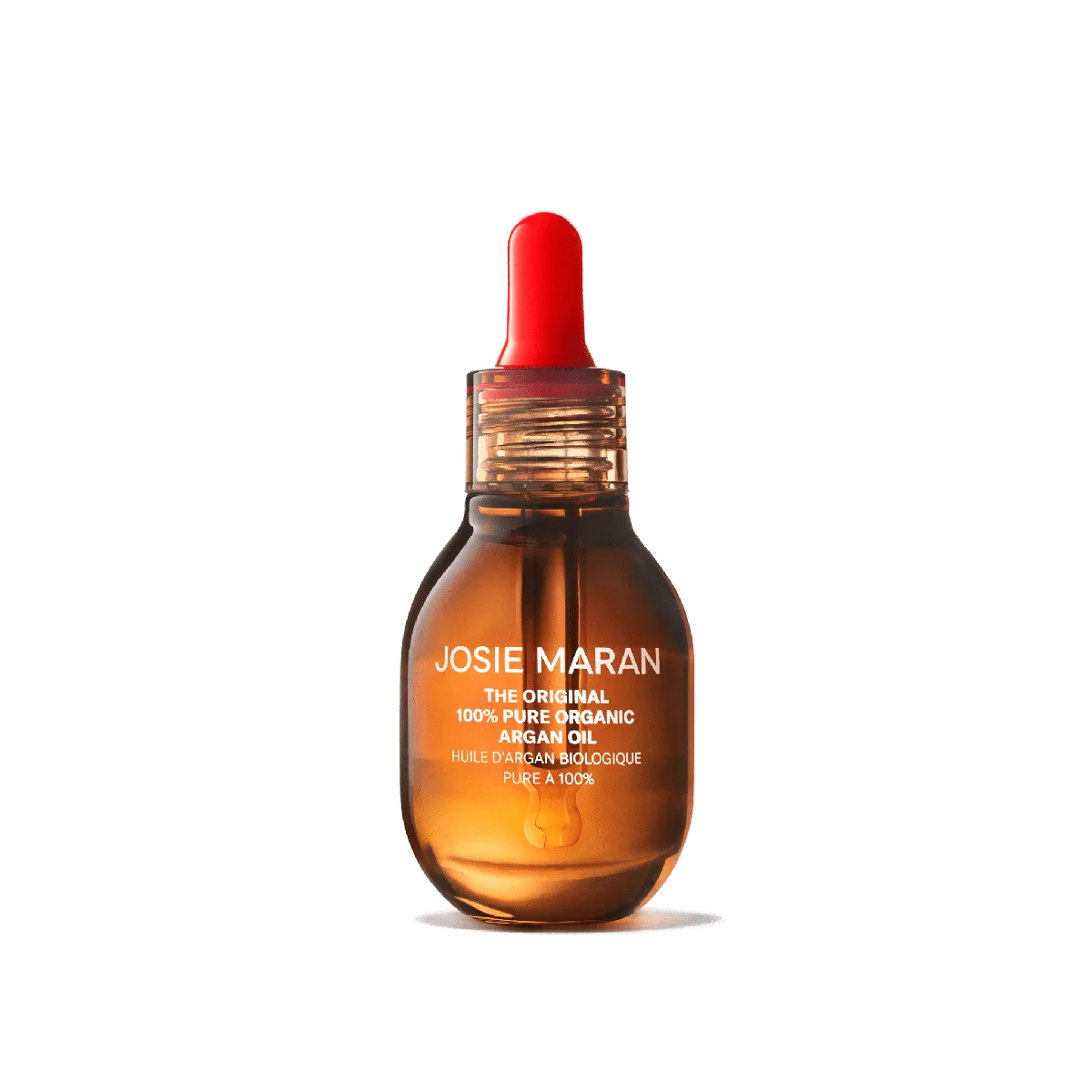
100% Pure Argan Oil
Clean Beauty Pioneer
 Verified reviewer
Pros & cons.
- +Single ingredient with complete sourcing transparency and traceability
- +Absorbs remarkably fast for a pure oil — no greasy residue
- +Genuine multi-use versatility for face, hair, nails, and lips
- +Non-comedogenic despite being 100% oil — suitable for most skin types
- +First cold-pressed extraction preserves maximum nutrient potency
- +Refillable packaging available through the brand's sustainability program
- +Rich in vitamin E and essential fatty acids with documented skin benefits
- −Significant price premium over generic argan oil options
- −Small 1 oz bottle runs out in 6-8 weeks with daily facial use
- −May not provide sufficient moisture alone in very dry climates
- −Pure oil format means no additional actives like peptides or vitamins
- −Short 6-month PAO means the oil can oxidize if not used promptly
The full review.
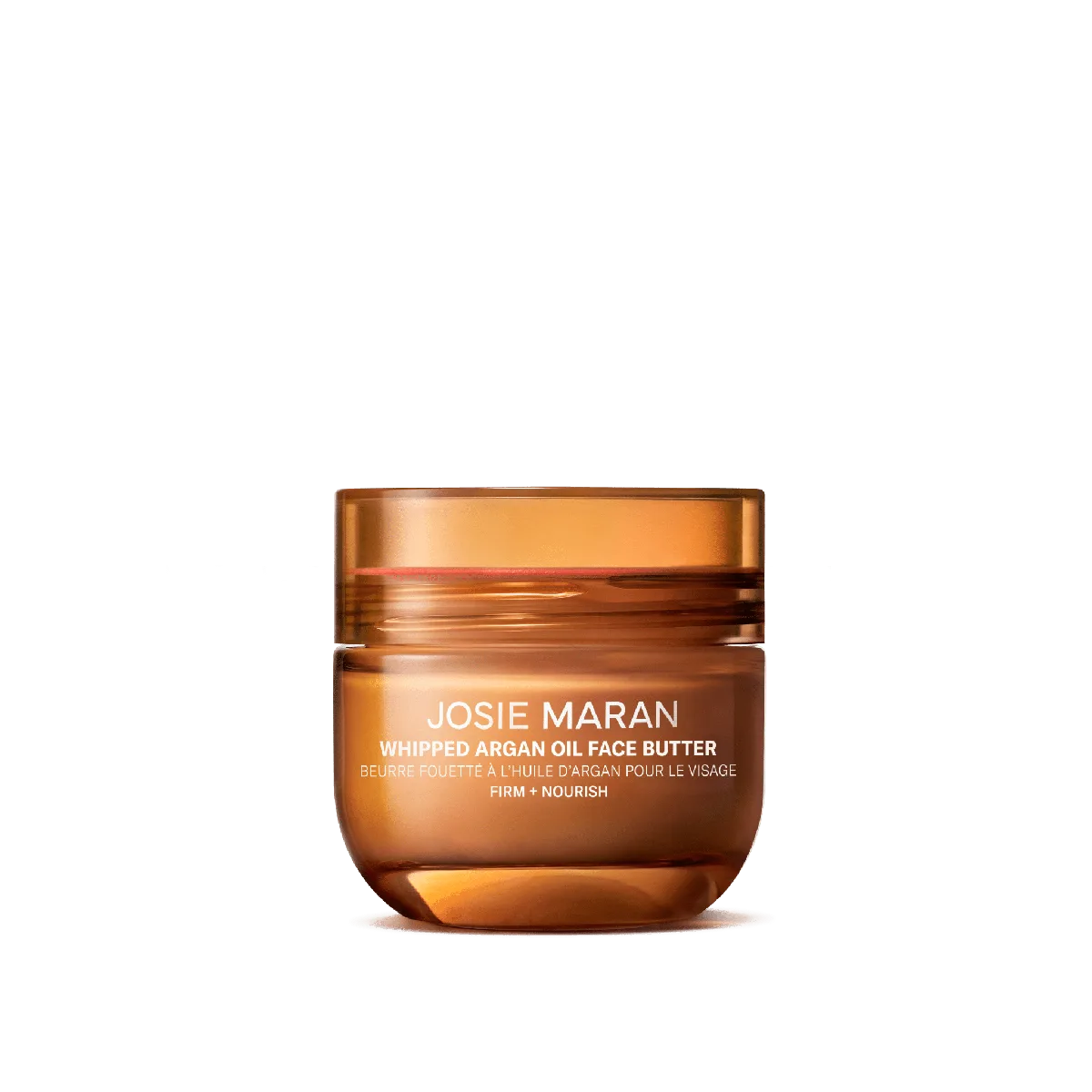
In 2007, Josie Maran walked into Sephora with a glass bottle containing one ingredient and asked them to sell it for $39. No complex peptide blend, no proprietary technology, no clinical study with a chart showing percentage improvements. Just oil from a nut that grows on a tree in Morocco. The idea was either brilliantly simple or simply crazy, and the fact that the product is still on shelves — and still a bestseller — nearly two decades later suggests the former.
The ingredient list is the shortest in skincare: Argania Spinosa Kernel Oil. That’s it. One hundred percent argan oil, organic, first cold-pressed, sourced from a UNESCO Biosphere Reserve in Morocco. There is no filler, no fragrance, no preservative, no emulsifier. This means every drop you apply is pure active ingredient, which is both the product’s defining virtue and the reason it demands more scrutiny than a multi-ingredient formula. When there is only one ingredient, sourcing quality is everything.
Argan oil’s skin benefits rest on its fatty acid profile. It contains approximately 43-49% oleic acid (a monounsaturated omega-9 that penetrates skin and reinforces the lipid barrier), 29-36% linoleic acid (an essential omega-6 that regulates sebum and supports barrier repair), and meaningful concentrations of vitamin E (tocopherols, primarily gamma-tocopherol) and squalene. This composition makes it remarkably compatible with human skin — it absorbs quickly, integrates with the existing lipid matrix, and provides nourishment without the heavy, occlusive feeling of many plant oils.
The absorption speed is genuinely impressive. Despite being a pure oil, it sinks into skin within 30-60 seconds, leaving behind a soft glow rather than a greasy sheen. This is partly due to the relatively high linoleic acid content — oils with higher linoleic-to-oleic ratios tend to absorb faster and feel lighter than those dominated by oleic acid. The result is a face oil that behaves more like a hydrating serum than a traditional occlusive treatment.
Multi-use versatility is a central selling point, and it’s legitimate. Two to three drops on the face provide daily moisture and radiance. Applied to damp hair ends, it tames frizz and adds shine without weight. Rubbed into cuticles, it softens and conditions. Patted onto lips, it serves as a treatment balm. This versatility is not marketing stretching — argan oil’s lipid profile genuinely benefits skin, hair, and nails through the same mechanisms of fatty acid delivery and antioxidant protection.
The sourcing story deserves attention because it directly impacts product quality. Josie Maran’s argan oil is first cold-pressed, meaning the kernels are mechanically pressed without heat or chemical solvents. This preserves the maximum concentration of tocopherols and essential fatty acids, which degrade significantly under heat extraction. The oil is traceable to specific cooperatives in Morocco, and the 2024 rebrand introduced refillable packaging designed by sustainability architect William McDonough. This isn’t greenwashing — the refill tins represent a genuine reduction in packaging waste.
The value question is the product’s most contentious aspect. At $39 for 1 oz, you’re paying a significant premium over generic argan oils, which can be found for $10-15 per ounce from various sources. The premium reflects three things: certified organic sourcing from a UNESCO-protected region, first cold-pressed extraction that preserves potency, and full supply chain traceability. Whether these factors justify a three to four times price premium is a personal calculation. If you’re using argan oil primarily for hair or body, a more economical option might serve you equally well. If you’re applying it daily to your face and want confidence in sourcing and extraction quality, the premium has a rational basis.
As a standalone moisturizer, this oil works beautifully for normal to dry skin in moderate climates. In very dry or cold environments, it may not provide sufficient moisture on its own — layering it under a heavier cream or using it to boost your existing moisturizer is a better approach. Oily skin types can still benefit, but should start with one to two drops mixed into moisturizer rather than applied directly.
The product that launched clean beauty at Sephora has aged remarkably well, not because it’s changed, but because it didn’t need to. In an industry that celebrates complexity, this bottle of pure argan oil makes a quiet, convincing case that sometimes the best ingredient list is the shortest one.
Formula
Ingredient analysis.
Full INCI list
Argania Spinosa (Argan) Kernel Oil
Skin match.
The science.
The Science
Argan oil's skin benefits are among the most well-documented of any plant oil. The oil's fatty acid composition — approximately 43-49% oleic acid and 29-36% linoleic acid — makes it uniquely suited for topical skin application. A study published in Clinical Interventions in Aging in 2015 by Boucetta et al. investigated the effects of dietary and cosmetic argan oil on postmenopausal women's skin elasticity, finding significant improvements in skin elasticity after 60 days of topical application. The study attributed these effects to the oil's tocopherol content and essential fatty acid profile.
Linoleic acid, a key component of argan oil, plays a critical role in skin barrier function. Research published in the Journal of Clinical and Aesthetic Dermatology has demonstrated that topical linoleic acid supplementation can reduce comedone size in acne-prone skin, supporting argan oil's non-comedogenic reputation. Skin that is deficient in linoleic acid — common in acne-prone individuals — produces sebum that is more viscous and pore-clogging; argan oil's linoleic acid content helps restore a healthier sebum composition.
The tocopherol content of cold-pressed argan oil is particularly noteworthy. Argan oil contains approximately 620 mg/kg of tocopherols, predominantly gamma-tocopherol, which has demonstrated superior antioxidant activity compared to alpha-tocopherol in some in vitro studies. A review published in the Journal of Pharmacy and Pharmacology documented argan oil's anti-inflammatory and antioxidant properties, supporting its traditional use for skin healing and protection.
References
- Effect of dietary and/or cosmetic argan oil on postmenopausal skin elasticity — Clinical Interventions in Aging (2015)
Dermatologist Perspective
Dermatologists widely recognize argan oil as a well-tolerated, effective emollient suitable for most skin types. Board-certified dermatologists note that argan oil's balanced oleic-to-linoleic acid ratio makes it one of the few plant oils that works across the skin type spectrum — nourishing enough for dry skin, lightweight enough for combination skin, and non-comedogenic enough for acne-prone skin. Dermatologists recommend using argan oil as a complement to rather than replacement for evidence-based actives like retinoids and vitamin C. Its emollient properties make it an excellent vehicle for buffering irritating treatments.
Where it fits in your routine.
Apply 2-3 drops to clean, damp skin morning and evening. Press into face and neck with palms; do not rub. Layer over water-based serums (hyaluronic acid, vitamin C) and under heavier creams. Mix directly into moisturizer for a lighter application. For hair, apply 1-2 drops to damp ends. For cuticles, massage one drop into each nail bed. Store in a cool, dark place and use within 6 months of opening.
At $39 for 1 oz, this single-ingredient product has a premium price. The cost covers USDA Organic certification, first cold-pressed extraction from a UNESCO-protected source, full supply chain traceability, and the brand's sustainability practices (refillable packaging). Generic argan oils at $10-15/oz offer similar basic benefits but lack these sourcing guarantees or extraction quality. One bottle lasts 6-8 weeks for daily facial use — about $5-6 per week. Josie Maran's 18-year track record with this specific product and 100% founder-ownership show the premium reflects quality commitment rather than marketing inflation.
This pure, traceable, multi-purpose face oil works for dry, aging, or dull skin. It suits people who value ingredient transparency and sustainable sourcing. It is ideal for clean beauty enthusiasts wanting the simplest ingredient list. It also works well to buffer retinol or other irritating treatments.
Budget-conscious shoppers can find comparable pure argan oil for less. Those needing a comprehensive anti-aging routine require more actives than a single oil provides. People with fungal acne should avoid oleic acid-rich oils.
Product details.
This lightweight, golden oil absorbs almost immediately and leaves no greasy film. Although it is 100% oil, the dry-touch quality feels more like a serum than a traditional face oil.
Pure argan oil has a faint, natural nutty aroma. It is subtle and disappears within minutes. There are no added fragrances.
A glass bottle with a dropper cap allows precise application. Dark-tinted glass protects the oil from UV degradation. A 2024 relaunch uses more sustainable packaging designed with sustainability architect William McDonough. Refill tins reduce waste.
The oil absorbs into skin within 30-60 seconds. This is fast for a pure oil. It provides immediate luminosity and softness. Skin feels nourished but lacks sticky or heavy residue. No adjustment period is needed; results start from application one.
6-8 weeks with twice-daily facial application of 2-3 drops from the 1 oz bottle
6 months
All Year
The backstory.
Josie Maran discovered argan oil during her modeling career, when Moroccan women on set used it as an all-purpose beauty treatment. She spent three years developing a sourcing partnership that would be both sustainable and traceable before launching the product in 2007. It was a radical bet — a $39 bottle containing a single ingredient, in an era when prestige skincare was defined by complex formulas and proprietary technologies. The gamble paid off: it became Sephora's first clean beauty product and remains the brand's bestseller nearly two decades later.
About Josie Maran
Established Brand (5–20 years)Josie Maran founded her namesake brand in 2007 and became the first clean beauty brand at Sephora. The brand used petrochemical-free and paraben-free positioning years before these became industry standards. The 100% Pure Argan Oil was the first single-ingredient face oil in luxury beauty. The brand is 100% founder-owned and has approximately $150M in annual revenue.
Common myths.
Pure oils will clog pores and cause breakouts.
Argan oil is non-comedogenic. Its linoleic acid content (29-36%) helps regulate sebum production. Studies show oils high in linoleic acid benefit acne-prone skin by restoring the lipid balance that overactive sebaceous glands disrupt.
All argan oils are the same — brand doesn't matter.
Argan oil quality changes based on sourcing, extraction method, and storage. Cold-pressed oil has more tocopherols and essential fatty acids than heat-extracted or solvent-extracted oil. Josie Maran's oil is cold-pressed from a traceable source, which distinguishes it from bulk argan oils.
FAQ.
Is Josie Maran Argan Oil worth the price compared to cheaper argan oils?
The premium price reflects sourcing quality (first cold-pressed from a UNESCO-protected Moroccan forest) and full traceability. These factors impact tocopherol and essential fatty acid content. Generic argan oils often use heat extraction that degrades active compounds. The price is justified if you prioritize sourcing transparency and maximum potency.
Can I use Josie Maran Argan Oil on oily skin?
Yes — argan oil is non-comedogenic. Its high linoleic acid content (29-36%) helps regulate sebum production. Mix 1-2 drops into your moisturizer instead of applying it directly. Use it at night until you see how your skin responds.
Can I use argan oil with retinol?
Argan oil's emollient and antioxidant properties work well with retinol. Apply retinol to clean skin first, wait 10-15 minutes, then apply 2-3 drops of argan oil on top. The argan oil buffers irritation and locks in moisture that retinol depletes.
How should I store Josie Maran Argan Oil?
Store in a cool, dark place away from direct sunlight. The tinted glass bottle offers UV protection, but do not leave it in a hot bathroom or direct sun. Pure argan oil lasts about 6-12 months after opening. If it smells off, it has oxidized and you must replace it.
Can I use Josie Maran Argan Oil on my hair?
Yes — many users use this product this way. Apply 1-2 drops to damp hair ends to tame frizz, add shine, and nourish dry or damaged hair. It also works as a pre-wash hair treatment if you apply it generously and leave it for 20-30 minutes before shampooing.
Community
What the community says.
"Absorbs remarkably fast without feeling greasy"
"Gives instant radiance and glow to skin"
"Multi-use versatility — face, hair, nails, cuticles"
"Noticeable improvement in fine lines and elasticity"
"Single ingredient with nothing questionable"
"Expensive compared to generic argan oil"
"Small bottle runs out quickly with daily use"
"Not enough moisture alone for very dry climates"
"Oily skin types may find it too much without buffering"
People also looked at.