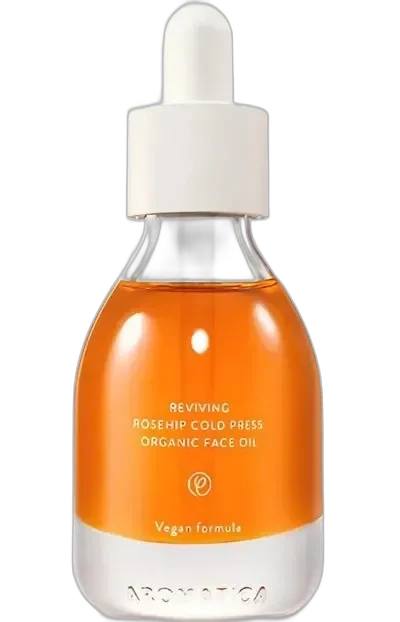
Organic Rose Hip Oil
Single-Ingredient Rosehip Standard
 Verified reviewer
Pros & cons.
- +100% rosehip fruit oil — no carriers, no fillers, no fragrance
- +USDA Organic certified and EWG Verified
- +High linoleic acid content (around 51%) makes it well-tolerated by acne-prone skin
- +Natural trans-retinoic acid and carotenoid content support cellular turnover
- +Documented evidence for improving scars, post-inflammatory marks, and pigmentation
- +Faster absorption than most facial oils due to the linoleic-dominant fatty acid profile
- +Strong value at around twenty-eight dollars for 30ml of certified-organic single-source oil
- +Amber glass dropper bottle protects the light-sensitive oil from oxidation
- −Earthy, slightly nutty scent can be off-putting on first use
- −Pure formula oxidizes faster than blended alternatives — 6 months from opening
- −Glass dropper bottle is fragile in transit
- −30ml only — no larger size for committed nightly users
- −Trace retinoid content is too low to substitute for dedicated retinol products
Ingredient analysis.
Full INCI list
Rosa Canina (Rosehip) Fruit Oil
Skin match.
The science.
The Science
Rosehip oil from Rosa canina has a strong evidence base in cosmetic dermatology. Its fatty acid profile contains approximately 51% linoleic acid, with linolenic acid (around 19%) and oleic acid (around 20%) making up most of the rest. This linoleic-dominant profile helps acne-prone skin tolerate it; research shows acne-prone sebum lacks linoleic acid, and topical linoleic acid helps normalize the lipid profile. Cold-pressed rosehip contains trace trans-retinoic acid (the same molecule as prescription tretinoin) and pro-vitamin A carotenoids like beta-carotene and lycopene. These concentrations are lower than dedicated retinoid treatments, but they aid rosehip's documented effects on pigmentation regulation and cellular turnover. Small clinical studies show improved surgical scar appearance, post-inflammatory hyperpigmentation, and pregnancy stretch marks after 6-12 weeks of consistent topical rosehip application. Vitamin C adds antioxidant activity, and the polyphenol fraction adds anti-inflammatory effects. Cold-pressing preserves these bioactives, whereas solvent extraction degrades them—making the processing method as important as the source for rosehip oil performance.
Dermatologist Perspective
Dermatologists view rosehip oil as a good supporting treatment for superficial scars, post-inflammatory marks, and mild hyperpigmentation. Board-certified dermatologists note that rosehip's natural fatty acid profile makes it one of the few facial oils suitable for acne-prone skin, as most other oils are oleic-dominant and can worsen acne. They acknowledge the trace retinoid content but do not consider it a substitute for dedicated retinol or tretinoin treatment. Dermatologists recommending rosehip oil usually suggest it as a complementary treatment with sunscreen and retinoids, especially for patients treating post-acne scarring or preventing pregnancy stretch marks. The single-ingredient certified-organic format of this Aromatica product follows the advice to use pure cold-pressed rosehip instead of blended or stabilized versions when bioactivity matters.
Where it fits in your routine.
Apply two to four drops as your final or near-final evening skincare step. Warm the drops between fingertips and press them into your face and neck. Pressing helps the oil absorb without disturbing underlying products. For best absorption, apply to slightly damp skin or layer over a hydrating serum. Do not use with strong actives like high-percentage AHAs or vitamin C in the same routine; alternate them on different nights. Skip morning use under sunscreen, as facial oils can interfere with SPF film formation. Store in a cool dark place. Discard within six months of opening or sooner if the scent turns rancid.
At around twenty-eight dollars for thirty milliliters of 100% certified-organic single-source rosehip oil, this offers good value in the facial oil category. Comparable certified-organic rosehip oils from Western brands usually cost forty to sixty dollars for the same volume. Cheaper alternatives are usually blended formulations with lower rosehip concentrations. The 30ml size lasts about three to four months using two to four drops nightly, costing roughly seven to nine dollars per month. The trade-off versus blended alternatives is a shorter open-jar life — about six months versus twelve to eighteen — but the pure formula's bioactive payoff is meaningful. This provides strong value for users who want authentic rosehip rather than a rosehip-themed blend.
Use this for pure single-ingredient rosehip oil—especially for post-inflammatory marks, acne scarring, mild hyperpigmentation, surgical scar recovery, or pregnancy stretch mark prevention. It works for acne-prone skin needing a facial oil that won't cause breakouts. Choose this if you value organic certification and ingredient transparency over stabilized convenience.
People who dislike earthy or nutty scents and want a perfumed facial oil. Anyone who cannot finish the bottle within six months of opening. Users seeking a facial oil with broader botanical actives — this contains rosehip and only rosehip. Anyone expecting this to replace dedicated retinol or vitamin C treatments.
Product details.
Lightweight golden-orange oil absorbs fast and feels drier than most facial oils
Distinct earthy, slightly nutty rosehip scent that fades within minutes
Amber glass bottle with dropper — protects the light- and oxygen-sensitive oil
The oil has a noticeable earthy, slightly nutty scent that surprises users expecting floral or perfumed notes. The scent fades minutes after application. The oil absorbs faster than most facial oils; its high linoleic acid content makes it feel drier than oleic-heavy oils like marula or argan. Skin looks immediately glowier and feels softer. This gentle treatment oil requires no purging or adjustment period and works from day one.
Apply 2-4 drops to face and neck nightly for 3-4 months.
6 months
All Year
The backstory.
Aromatica launched its Organic Rosehip Oil in the early 2010s as one of the brand's foundational single-ingredient facial oils. The decision to release a 100% rosehip product (rather than the cheaper blended approach most brands take) was a brand-identity statement about ingredient transparency. The oil has been continuously sold without reformulation for over a decade and remains one of Aromatica's bestsellers.
About Aromatica
Established Brand (5–20 years)Aromatica launched in South Korea in 2003, gaining early recognition with single-ingredient organic facial oils. The Organic Rosehip Oil has been in the brand's lineup for over a decade and is one of the few certified-organic, single-source rosehip oils in the K-beauty market.
Common myths.
All rosehip oils are essentially the same.
Cold-pressed single-source rosehip differs from blended or solvent-extracted versions. Cold pressing preserves the natural retinoids and vitamin C that provide rosehip its skincare credentials; solvent extraction degrades them.
Rosehip oil has enough retinol to work like a retinol treatment.
Rosehip has trace amounts of trans-retinoic acid and pro-vitamin A carotenoids. These concentrations are too low to replace a dedicated retinol or tretinoin product. It is a supportive ingredient, not a primary anti-aging active.
FAQ.
Is Aromatica Organic Rose Hip Oil 100% rosehip?
Yes. The INCI has one ingredient — Rosa canina fruit oil — and contains no carrier oils, preservatives, or additives. This is one of the few rosehip oils on the K-beauty market that is undiluted.
Will rosehip oil clog pores?
No. Rosehip oil has high linoleic acid levels (around 51%), an omega-6 that acne-prone skin often lacks. It has a low comedogenicity rating and most skin types, including oily and acne-prone, tolerate it well.
Can rosehip oil help with acne scars?
Yes — rosehip oil contains trans-retinoic acid and essential fatty acids that improve post-inflammatory marks and superficial scarring. Consistent use shows visible improvement in 4-8 weeks.
Why does this oil have such a strong earthy scent?
The scent comes from the natural rosehip fruit oil. Cold-pressed organic rosehip has an earthy, slightly nutty smell, unlike the perfumed rosehip products most consumers expect. The scent fades minutes after application; this shows authenticity rather than a defect.
How long does the oil last after opening?
About six months. Pure rosehip oil oxidizes faster than synthetic alternatives because of its high polyunsaturated fatty acid content. Store in a cool dark place, keep the cap tightly closed, and discard if the scent turns rancid or the color darkens significantly.
Can I use this oil under sunscreen?
Apply it at night. Facial oils interfere with sunscreen film formation in the morning and reduce SPF performance. The oil's linoleic acid also works better at night when skin repairs itself.
Is rosehip oil safe during pregnancy?
Yes. The trace retinoid content is too low to cause pregnancy concerns, and rosehip oil is widely recommended for pregnancy stretch mark prevention and post-partum skin recovery. Confirm with your prescribing doctor if uncertain.
What the community says.
"Visible scar and stretch mark improvement over time"
"Lightweight oil that absorbs faster than expected"
"Natural earthy scent that fades quickly"
"Genuine certified-organic single-ingredient formula"
"Strong earthy scent that some users find off-putting on first use"
"Glass dropper bottle is fragile in transit"
"Oxidizes faster than synthetic oils — needs to be used within 6 months of opening"
People also looked at.