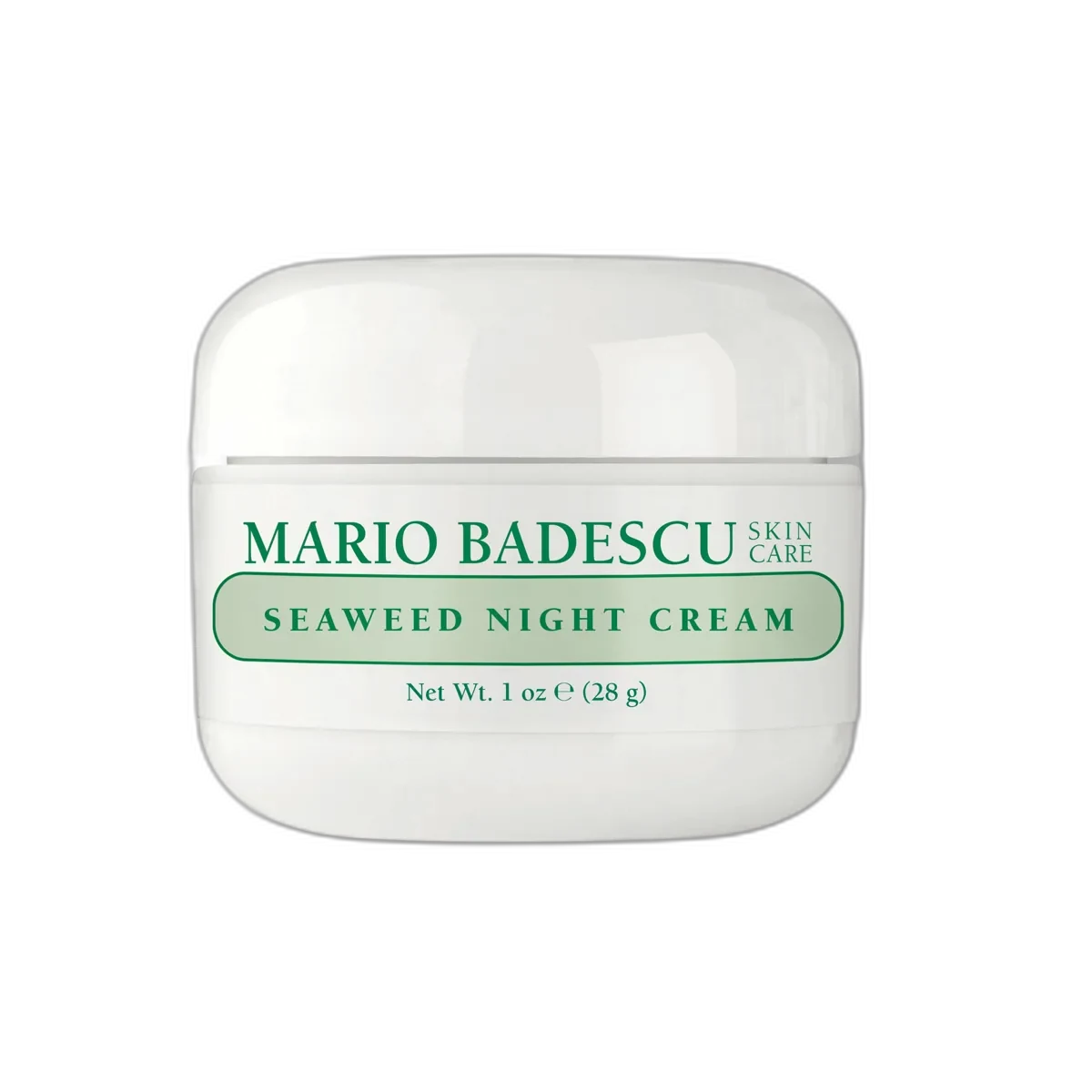
Seaweed Night Cream
The $22 La Mer Conversation
 Verified reviewer
Pros & cons.
- +Multi-pathway humectant system with glycerin, hyaluronic acid, and collagen delivers genuine overnight hydration
- +Bladderwrack extract provides fucoidan polysaccharides and phlorotannin antioxidants with clinical evidence
- +Endorsed by board-certified dermatologist Dr. Marisa Garshick for its hydrating and anti-inflammatory profile
- +Lightweight texture absorbs quickly without heavy greasiness for a night cream
- +Accessible price point for a seaweed-based moisturizer with marine collagen and hyaluronic acid
- +Skin feels noticeably softer and more hydrated by morning from the first use
- −Seven disclosed fragrance allergens make this one of the more heavily fragranced products in the line
- −Contains diazolidinyl urea (formaldehyde-releasing preservative) alongside methylparaben and propylparaben
- −Isopropyl myristate rated three to five on comedogenicity scale — problematic for acne-prone skin
- −Small one-ounce jar requires monthly repurchase with nightly use
- −Topical collagen and elastin cannot rebuild structural proteins — anti-aging claims are surface-level only
- −Synthetic colorants create the green hue, not the seaweed extract
The full review.
The comparison to La Mer defines the product’s origin story. The Hollywood Reporter called it one of the best La Mer alternatives. StyleCaster called it a rival. SheKnows said it was just as good. The core claim behind these endorsements is true in one specific way: both products use seaweed-family ingredients. Mario Badescu uses Fucus vesiculosus (bladderwrack) extract. La Mer uses a proprietary fermented blend built on giant sea kelp. They are like two wines made from different grapes in different countries — same kingdom, different everything else.
Stripped of the La Mer conversation, the Seaweed Night Cream is a competent multi-humectant night cream with seaweed benefits at an accessible price. That is worth discussing on its own merits.
The formula uses three hydration pathways. Glycerin sits high on the INCI list at an estimated four to six percent, acting as a water-drawing humectant. Sodium hyaluronate provides a second pathway; its low-molecular-weight hyaluronic acid penetrates the upper epidermis. Collagen adds a third layer as a surface-conditioning film-former that creates a plump, soft feeling upon waking. An emollient base of stearic acid, cetyl alcohol, and isopropyl myristate sits above this, creating an occlusive barrier that prevents the humectants from evaporating overnight.
The bladderwrack extract is seventh on the INCI list. This is enough to be functional, though not at the concentrations used in clinical trials. A 2002 study by Fujimura and colleagues in the Journal of Cosmetic Science found that one percent topical Fucus vesiculosus extract applied twice daily for five weeks improved skin elasticity. A 2021 review in Marine Drugs confirmed that fucoidan-rich seaweed extracts inhibit collagenase, reduce matrix metalloproteinase expression, and improve collagen synthesis. The ingredient has credentials. Whether this cream contains enough to deliver those benefits is unknown because the concentration is undisclosed.
Using it is pleasant and straightforward. The cream is mint green due to synthetic colorants, not the seaweed. It applies smoothly, absorbs within a minute, and leaves a slight dewy film that is neither heavy nor sticky. By morning, skin feels softer. The multi-humectant approach works. Collagen and elastin do not rebuild structural proteins from the outside, but they create a noticeable film-forming softness for dry and normal skin types.
Board-certified dermatologist Dr. Marisa Garshick has spoken positively about this product. She noted the bladderwrack extract’s ability to calm inflammation and irritation, the marine collagen’s firming effect, and the sodium hyaluronate’s hydration boost. This is a meaningful endorsement from a credible source regarding the formula’s functional profile.
But the ingredient list has problems the press ignores. The fragrance profile is extensive. Beyond the general Parfum listing, the INCI discloses seven fragrance allergens: linalool, citronellol, geraniol, limonene, benzyl salicylate, amyl cinnamal, and hexyl cinnamal. For a product worn on the face all night, this is a high allergen load. Diazolidinyl urea — a formaldehyde-releasing preservative — sits alongside methylparaben and propylparaben. These are not dangerous at used concentrations, but they reflect a preservative philosophy the industry has largely moved past.
Isopropyl myristate is high on the INCI list and most likely to cause problems for acne-prone users. Rated three to five on the comedogenicity scale, it helps the cream absorb quickly but may trigger breakouts. The brand markets the product as oil-free. This is technically accurate because isopropyl myristate is an ester, not an oil, but it is practically misleading for consumers who equate oil-free with non-comedogenic.
The jar is small. One ounce of night cream used nightly on the face and neck lasts one to two months. At twenty-two dollars per jar, the annual cost adds up. The per-ounce cost is reasonable for a specialty night cream, but the repurchase frequency may surprise buyers.
The Seaweed Night Cream delivers overnight hydration through a multi-pathway approach using a marine botanical with scientific credentials at an accessible price. It is a good night cream. It is not La Mer, and it does not need to be. Its value is being a twenty-two-dollar product that does twenty-two dollars’ worth of work, though the fragrance and preservative choices belong to an earlier era.
Formula
Ingredient analysis.
Full INCI list
Aqua, Glycerin, Isopropyl Myristate, Stearic Acid, Propylene Glycol, Cetyl Alcohol, Fucus Vesiculosus Extract, Hydrolyzed Elastin, Collagen, Sodium Hyaluronate, Glyceryl Acrylate/Acrylic Acid Copolymer, Carbomer, Parfum, Sodium Chloride, Phenoxyethanol, Potassium Sorbate, Methylparaben, Propylparaben, Sodium Benzoate, Triethanolamine, Diazolidinyl Urea, Benzyl Alcohol, Benzyl Salicylate, Linalool, Citronellol, Amyl Cinnamal, Hexyl Cinnamal, Geraniol, Limonene, Mica, CI 77891 (Titanium Dioxide), CI 19140 (Yellow 5), CI 42090 (Blue 1), CI 77288 (Chromium Oxide Greens)
Skin match.
The science.
The Science
Bladderwrack (Fucus vesiculosus) provides this cream's scientific credibility. A 2002 study by Fujimura and colleagues in the Journal of Cosmetic Science showed that applying one percent topical bladderwrack extract twice daily for five weeks decreased skin thickness (measured by ultrasound) and improved skin elasticity (measured by Cutometer). The study suggests this works by increasing integrin expression and fibroblast activity in collagen structures.
A 2021 review by Pangestuti and colleagues in Marine Drugs examined fucoidan-rich seaweed extracts. They found these extracts inhibit intracellular collagenase, reduce matrix metalloproteinase expression, and improve collagen synthesis. The review also showed clinical efficacy for age spot reduction and skin brightness, specifically naming Fucus vesiculosus as a beneficial seaweed species.
A 2024 study in PMC evaluated Fucus vesiculosus samples for cosmetic potential. It showed antioxidant activity, hyaluronidase inhibition, tyrosinase inhibition, and anti-inflammatory properties, which supports its use in anti-aging and skin-brightening formulations.
The collagen component has less evidence for topical use. Oral collagen supplementation shows consistent anti-aging benefits in multiple systematic reviews, but topical collagen molecules are usually too large to penetrate the stratum corneum and reach the dermal layer where structural collagen is synthesized. In this formula, collagen works mainly as a surface humectant and film-forming agent.
References
- Treatment of human skin with an extract of Fucus vesiculosus changes its thickness and mechanical properties — Journal of Cosmetic Science (2002)
- Anti-Photoaging and Potential Skin Health Benefits of Seaweeds — Marine Drugs (2021)
Dermatologist Perspective
Board-certified dermatologist Dr. Marisa Garshick endorses this product. She notes that the bladderwrack extract calms inflammation and irritation, the marine collagen firms the skin surface, and the sodium hyaluronate boosts hydration. Dermatologists generally see Fucus vesiculosus as a promising marine botanical with antioxidant and anti-inflammatory properties. However, the extensive fragrance allergen profile and formaldehyde-releasing preservative mean most dermatologists would recommend patch testing or suggest alternatives for patients with contact dermatitis. The topical collagen and elastin claims describe surface conditioning rather than structural anti-aging.
Where it fits in your routine.
Cleanse your skin, then apply any toner and treatment serums. Scoop a pea-to-dime-sized amount from the jar and press or massage it into your face and neck as the final nighttime step. Wait one minute for absorption before lying down. Layer under a heavier occlusive balm if you have extra-dry skin. Use nightly. Wash hands before dipping into the jar to keep the product hygienic.
At twenty-two dollars for one ounce, the Seaweed Night Cream is competitively priced for a specialty night cream containing marine botanicals, collagen, and hyaluronic acid. Each use costs about seventy-five cents to one dollar per night. A 0.5-ounce travel size costs less. For a legacy brand with nearly sixty years of heritage and a dermatologist endorsement, the value is fair—though the small jar size requires frequent repurchase. The 'La Mer alternative' positioning adds perceived value, but consumers should judge the formula on its own merits rather than the luxury comparison.
This works for dry or normal skin seeking affordable seaweed-based night cream with multi-humectant hydration. If the La Mer conversation interested you and you want seaweed skincare without the luxury price, this is a credible, dermatologist-endorsed starting point.
Skip this if you have acne-prone skin (isopropyl myristate is comedogenic), sensitive skin or rosacea (seven fragrance allergens), or concerns about parabens and formaldehyde-releasing preservatives. Skip this if you are vegan—the formula contains animal-derived collagen and elastin. If you need a larger jar for nightly use, the one-ounce size requires monthly repurchase.
Product details.
It smells like fresh seaweed. The light fragrance contains multiple disclosed fragrance allergens and dissipates shortly after application.
Small white plastic jar with green accents. Synthetic colorants make the cream mint green, not the seaweed extract. Users must dip fingers into the jar, which raises hygiene concerns for some. Finish dewysatin What to Expect on First Use The mint green cream applies smoothly and absorbs in one to two minutes. Skin feels comfortable and lightly coated, not heavy. By morning, skin looks dewy and plump and feels softer. There is no adjustment period or purging. The fragrance is noticeable but pleasant for those who tolerate it. How Long It Lasts 1-2 months with nightly application (1 oz size) Period After Opening 12 months
fall winter Certifications Cruelty-Free Background
The backstory.
The Seaweed Night Cream reflects Mario Badescu's European apothecary sensibility — using marine botanicals that have been valued in European skincare traditions for centuries. When the Hollywood Reporter, StyleCaster, and SheKnows independently positioned it as a La Mer alternative, the product found a second life as the accessible entry point to seaweed-based skincare. Board-certified dermatologist Dr. Marisa Garshick's endorsement added clinical credibility to what had been a quietly sold salon product.
About Mario Badescu
Legacy Brand (20+ years)Mario Badescu started in 1967 in New York City. The Seaweed Night Cream has been on the market for over fifteen years. Multiple publications call The Seaweed Night Cream an affordable alternative to luxury seaweed-based moisturizers. Board-certified dermatologist Dr. Marisa Garshick praises its bladderwrack and hyaluronic acid formulation.
Common myths.
The green color comes from the seaweed extract.
Synthetic colorants — Yellow 5, Blue 1, and Chromium Oxide Greens — create the mint green hue, not the bladderwrack extract. These dyes add cosmetic color to match the seaweed branding but have no skincare function.
The collagen in this cream rebuilds your skin's collagen.
Topical collagen molecules are too large to reach the dermal layer where structural collagen forms. The collagen in this formula works as a surface humectant and film-forming agent to improve morning softness and plumpness, but it does not stimulate collagen synthesis or replace lost structural collagen.
FAQ.
Is the Mario Badescu Seaweed Night Cream really comparable to La Mer?
Multiple publications call it an affordable alternative. Both use seaweed-family ingredients (bladderwrack versus La Mer's proprietary Miracle Broth), but the formulations differ. The Mario Badescu cream uses glycerin, hyaluronic acid, and collagen to provide hydration at a fraction of the price, but it lacks the proprietary fermented blend and nutrient-rich formulation of La Mer.
Is this night cream good for acne-prone skin?
No — the formula contains isopropyl myristate, which rates three to five on the comedogenicity scale and causes breakouts. It also has multiple fragrance allergens and a formaldehyde-releasing preservative. People with acne-prone skin should use a non-comedogenic, fragrance-free night moisturizer.
Why is the Seaweed Night Cream green?
Synthetic colorants (Yellow 5, Blue 1, and Chromium Oxide Greens) create the mint green color, not the seaweed extract. These dyes reinforce the marine branding but have no skincare function.
Does the collagen in this cream actually work?
Topical collagen works as a surface humectant and film-forming agent to make skin feel softer and look plumper. But topical collagen molecules are too large to reach the dermal layer where structural collagen forms. Retinoids, vitamin C, or peptides work better to stimulate collagen.
Is this cream fragrance-free?
No — this is one of the most heavily fragranced products in the Mario Badescu line. The INCI list shows Parfum plus seven individual fragrance allergens (linalool, citronellol, geraniol, limonene, benzyl salicylate, amyl cinnamal, hexyl cinnamal). People with fragrance sensitivity should avoid this product.
Community
What the community says.
"Skin feels noticeably softer and more hydrated by morning"
"Lightweight for a night cream — absorbs without heavy greasiness"
"Affordable alternative to luxury seaweed-based moisturizers"
"Distinctive mint green color and pleasant spa-like scent"
"Multi-humectant system with glycerin, hyaluronic acid, and collagen"
"Extensive fragrance allergen profile makes it unsuitable for sensitive skin"
"Isopropyl myristate contradicts oil-free claims and can trigger breakouts"
"Contains diazolidinyl urea (formaldehyde-releasing preservative) and parabens"
"Small one-ounce jar goes quickly for a nightly moisturizer"
"Topical collagen and elastin have limited evidence for structural anti-aging"