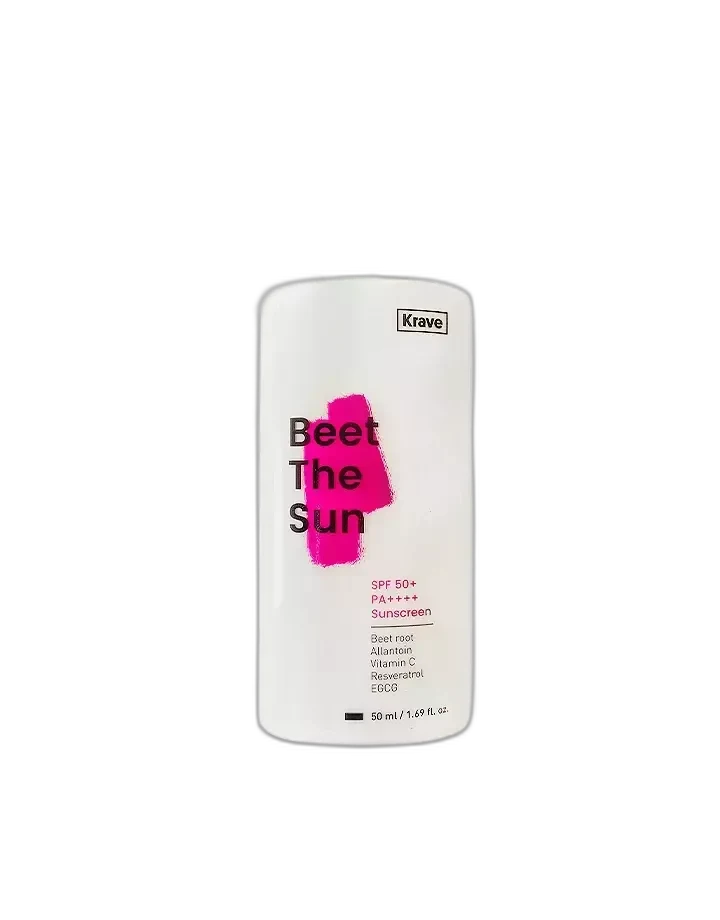
Beet The Sun SPF 50 Sunscreen
Next-Gen SPF Redemption
 Verified reviewer
Pros & cons.
- +Five next-generation UV filters including Mexoryl SX for comprehensive broad-spectrum protection
- +Eight-form hyaluronic acid complex provides substantial, multi-depth hydration
- +Alcohol-free formula with oat extract and beta-glucan for sensitive skin comfort
- +Invisible, silk-soft finish with zero white cast on all skin tones
- +Hydrating enough to potentially replace a separate moisturizer in humid conditions
- +Excellent value for the sophistication of the UV filter and hydration systems
- +Fragrance-free and B Corp certified brand with sustainable packaging
- −Not available in the US due to non-FDA-approved UV filters
- −Very limited review data as a 2024 launch product
- −Cetearyl alcohol may cause reactions in rare sensitive individuals
- −No independent third-party SPF verification publicly available yet
- −Silicone content (Caprylyl Methicone, Polysilicone-15) may not suit silicone-averse users
The full review.
There is a certain kind of product launch that feels less like marketing and more like an apology. When KraveBeauty released the reformulated Beet The Sun SPF 50 PA++++ for international markets in 2024, every aspect of the formula read like a response to specific criticism — as if Liah Yoo had taken every comment from the 2021 SPF controversy, every complaint about the original Beet Shield, and every limitation of the interim SPF 40, and used them as a brief.
The UV filter system is the most immediately impressive change. The original Beet Shield used three next-gen filters. This version uses five. The core Tinosorb S (Bis-Ethylhexyloxyphenol Methoxyphenyl Triazine) and Uvinul A Plus (Diethylamino Hydroxybenzoyl Hexyl Benzoate) remain, joined by Ethylhexyl Triazone for UVB. But the two additions are significant: Terephthalylidene Dicamphor Sulfonic Acid — better known as Mexoryl SX — brings a water-soluble UVA filter that distributes differently on the skin surface than the oil-soluble filters, providing a more even protection profile. Polysilicone-15 adds UVB coverage through a silicone-bound cinnamate. Five filters from four different chemical classes, covering UVA and UVB through multiple mechanisms with overlapping absorption spectra. This is not a budget filter system.
The base formula has been rebuilt entirely around hydration rather than the original’s alcohol-antioxidant philosophy. The EGCG, resveratrol, and sodium ascorbyl phosphate trio is gone, replaced by a different approach: eight forms of hyaluronic acid spanning different molecular weights and modifications. Standard sodium hyaluronate and hyaluronic acid handle surface hydration. Hydrolyzed sodium hyaluronate and hydrolyzed hyaluronic acid penetrate deeper. Potassium hyaluronate and sodium acetylated hyaluronate provide sustained-release moisture. Dimethylsilanol hyaluronate and hydroxypropyltrimonium hyaluronate bind to skin proteins for lasting hydration even through environmental stress. It is, by any measure, one of the most thorough hyaluronic acid complexes found in a sunscreen.
The supporting cast has been thoughtfully chosen. Avena Sativa oat kernel extract — an ingredient with well-documented soothing and barrier-supporting properties — provides the calming base that the original’s alcohol undermined. Beta-glucan adds anti-inflammatory and wound-healing support. Cynara Scolymus artichoke leaf extract contributes antioxidant activity, and Camellia Sinensis leaf water (green tea) carries over a trace of the original’s antioxidant identity. Biosaccharide Gum-1 provides prebiotic support for the skin microbiome. Every addition addresses a specific need rather than padding the ingredient list.
Texturally, this is the best version KraveBeauty has produced. Without alcohol driving rapid evaporation, the formula relies on its emulsion system — Polyglyceryl-3 Distearate, Glyceryl Stearate, and Caprylyl Methicone — to deliver a silk-soft, lightweight feel that absorbs quickly and sets into a genuinely invisible finish. It looks like skin, not sunscreen. Multiple reviewers on Cult Beauty describe it as moisturizing without heaviness, and several note they skip their separate moisturizer entirely when using this product. No white cast, no greasiness, no pilling.
The beetroot extract is still there — because it would not be a Beet The Sun without it — though positioned more modestly in the formula than in previous versions. Its betalain antioxidants provide supplementary photoprotection, but this formula is no longer asking one ingredient to carry the antioxidant load. The burden has been distributed across oat, beta-glucan, green tea water, artichoke, and vitamin E (tocopherol).
The significant limitation is geographic: this formula is available only in international markets. The UV filters — particularly Mexoryl SX, Tinosorb S, and Uvinul A Plus — are not FDA-approved for sunscreen use in the United States. US consumers are limited to the SPF 40 version, which uses an entirely different filter system. This is a regulatory reality, not a brand choice, but it means the best KraveBeauty sunscreen is not available to the brand’s home market.
At approximately $21 for 50 mL, this competes favorably with European pharmacy sunscreens that use similar filter technology but typically cost more. For a five-filter system with an eight-form hyaluronic acid complex, the pricing is generous — reflecting KraveBeauty’s commitment to accessibility even as the formulation has become significantly more sophisticated.
The Beet The Sun SPF 50 PA++++ represents what responsible brand evolution looks like. A product was found wanting, the brand took accountability, and three years of reformulation produced something measurably better in every dimension — better filters, better base, better skin benefits, better comfort. It is too new to have a long-term track record, and the review count is still growing, but the formula itself suggests that KraveBeauty’s hardest years produced its best work.
Formula
Ingredient analysis.
Full INCI list
Water (Aqua/Eau), Butyloctyl Salicylate, Dibutyl Adipate, Ethylhexyl Triazone, Glycerin, Terephthalylidene Dicamphor Sulfonic Acid, Bis-Ethylhexyloxyphenol Methoxyphenyl Triazine, Polyglyceryl-3 Distearate, Tromethamine, 1,2-Hexanediol, Pentylene Glycol, Diethylamino Hydroxybenzoyl Hexyl Benzoate, Cetearyl Alcohol, Polysilicone-15, Methylpropanediol, Potassium Cetyl Phosphate, Polymethylsilsesquioxane, Caprylyl Methicone, Glyceryl Stearate, Poly C10-30 Alkyl Acrylate, Sodium Acrylates Crosspolymer-2, Inulin Lauryl Carbamate, Carbomer, Beta Vulgaris (Beet) Extract, Acrylates/C10-30 Alkyl Acrylate Crosspolymer, Glyceryl Stearate Citrate, Ethylhexylglycerin, Cynara Scolymus (Artichoke) Leaf Extract, Avena Sativa (Oat) Kernel Extract, Polyquaternium-51, Camellia Sinensis Leaf Water, Polyether-1, Beta-Glucan, Hydrogenated Lecithin, Propanediol, Biosaccharide Gum-1, Tocopherol, Butylene Glycol, Dimethylsilanol Hyaluronate, Hydrolyzed Hyaluronic Acid, Hydrolyzed Sodium Hyaluronate, Potassium Hyaluronate, Hyaluronic Acid, Sodium Hyaluronate, Sodium Hyaluronate Crosspolymer, Hydroxypropyltrimonium Hyaluronate, Sodium Hyaluronate Dimethylsilanol, Sodium Acetylated Hyaluronate
Skin match.
The science.
The Science
This reformulation uses five UV filters from four chemical classes to create spectral redundancy. Bis-Ethylhexyloxyphenol Methoxyphenyl Triazine (Tinosorb S) offers the broadest coverage from 280-400nm and shows 98.4% photostability after 50 MEDs per BASF data. Diethylamino Hydroxybenzoyl Hexyl Benzoate (Uvinul A Plus) targets UVA protection in the 320-400nm range. Ethylhexyl Triazone provides UVB absorption. Terephthalylidene Dicamphor Sulfonic Acid (Mexoryl SX) is the key addition—a water-soluble UVA filter patented by L'Oréal that absorbs in the 290-390nm range. Because it is water-soluble, Terephthalylidene Dicamphor Sulfonic Acid (Mexoryl SX) sits in the emulsion's aqueous phase, complementing oil-soluble Tinosorb S and Uvinul A Plus to create a uniform protection layer on the skin.
The eight-form hyaluronic acid complex uses molecular weight to control skin penetration depth. Standard sodium hyaluronate (high molecular weight) hydrates the surface and supports barrier function. Hydrolyzed forms penetrate deeper, with low-molecular-weight HA reaching the viable epidermis. Sodium acetylated hyaluronate has higher skin affinity due to its acetyl group, which retains moisture longer. Hydroxypropyltrimonium hyaluronate is cationically modified to bind to the anionic skin surface and resist wash-off. A 2020 study in the Journal of Cosmetic Dermatology shows multi-weight HA formulations provide better hydration than single-weight preparations.
Botanical additions—oat kernel extract, beta-glucan, and artichoke leaf extract—provide anti-inflammatory activity: oat uses avenanthramides, beta-glucan uses macrophage activation, and artichoke uses cynarin-mediated antioxidant activity.
Dermatologist Perspective
Dermatologists favoring broader access to modern UV filters see this formulation as a model for daily sunscreen. Board-certified dermatologists note the five-filter system uses overlapping absorption spectra to provide robust protection; if one filter degrades, the others maintain coverage. The alcohol-free base with oat and beta-glucan meets dermatological recommendations for patients with reactive skin or those using irritating topical treatments. Dermatologists specializing in cosmetic dermatology note that multi-weight hyaluronic acid in a sunscreen addresses the dehydration daily sunscreen use can cause, helping patients follow daily SPF recommendations.
Where it fits in your routine.
Apply a nickel-sized amount as the final step in your morning skincare routine. The hydrating formula feels comfortable even when applied heavily. Let it set for one minute before applying makeup. Reapply every two hours during sun exposure. In humid conditions, the hydrating base works as both a moisturizer and sunscreen.
At about $21 for 50 mL, this five-filter sunscreen with an eight-form hyaluronic acid complex offers excellent value. European pharmacy sunscreens using Mexoryl SX — specifically La Roche-Posay's Anthelios line — usually cost $25-40 for similar sizes and simpler hydration systems. The botanical soothers and multi-weight HA complex make this one of the strongest value propositions in the international premium sunscreen market. Shipping to the US adds cost and complicates the value equation for American consumers.
International skincare enthusiasts seeking cutting-edge UV filter technology in a hydrating, skin-friendly base. It works well for normal, dry, or dehydrated skin needing hydration and protection. Users who liked the original Beet Shield's ethos but wanted a gentler formula will find this is the product they need.
US residents without access to international retailers, people seeking mineral-only sunscreens, and anyone sensitive to Mexoryl SX or Tinosorb-family filters. The hydrating formula is too dewy for those wanting a completely matte finish on very oily skin.
Product details.
This lightweight, milky-fluid lotion spreads easily and absorbs to a silk-soft, barely-there finish. It is more hydrating than the original Beet Shield.
No added fragrance. Subtle, clean base scent that dissipates immediately.
50 mL tube uses sustainable packaging that meets KraveBeauty's B Corp commitments.
It applies with a silky, serum-like feel despite its high SPF rating. It does not sting, tingle, or feel heavy. The hyaluronic acid complex plumps skin within minutes. It sets to a virtually invisible finish that neither shines nor mattes — it just looks like well-hydrated skin.
2-3 months with daily face application
12 months
All Year
The backstory.
After the painful 2021 discontinuation of the original Beet Shield and subsequent launch of the US-only SPF 40, KraveBeauty went back to the lab to create a sunscreen worthy of the Beet The Sun name for international markets. The result uses five UV filters (adding Mexoryl SX to the Tinosorb/Uvinul foundation), swaps the original's alcohol-antioxidant base for a hydrating system built on eight forms of hyaluronic acid, and adds botanical soothers like oat extract and beta-glucan.
About Krave Beauty
Emerging Brand (2–5 years)Liah Yoo, a former AmorePacific strategist and skincare YouTuber with 1.2 million subscribers, founded KraveBeauty in 2017. The brand earned B Corp certification in 2024 and rebuilt credibility by transparently addressing the 2021 SPF testing controversy.
Common myths.
This formula is the same as the discontinued original Beet Shield, now in new packaging.
The formula is completely different. The UV filter system adds Mexoryl SX, the alcohol-free base has eight forms of hyaluronic acid, and the antioxidant complex uses different ingredients (oat, artichoke, beta-glucan instead of EGCG and resveratrol).
More forms of hyaluronic acid means better hydration.
Multiple molecular weights of HA hydrate different skin depths. However, total concentration matters more than the number of variants. This formula's approach is well-considered but is not automatically superior to a single high-quality HA at an appropriate concentration.
FAQ.
Is the new Krave Beauty Beet The Sun SPF 50 available in the US?
No. The SPF 50 PA++++ version uses UV filters (Tinosorb S, Mexoryl SX, Uvinul A Plus) not yet FDA-approved. International retailers like Cult Beauty sell it. The US-specific version is the Beet The Sun SPF 40, which uses FDA-approved filters.
How is the new Beet The Sun SPF 50 different from the original Beet Shield?
The new formula adds Mexoryl SX as a fifth UV filter, replaces the alcohol base with an eight-form hyaluronic acid hydrating system, and swaps the EGCG-resveratrol antioxidant complex for oat extract, beta-glucan, artichoke extract, and green tea water. It's a ground-up reformulation.
Does the Krave Beauty Beet The Sun SPF 50 leave a white cast?
No. All five UV filters in this formula are organic (chemical) filters. They absorb UV light instead of reflecting it, so no white cast appears on any skin tone. Reviewers describe the finish as invisible and silk-soft.
Is this sunscreen hydrating enough to replace moisturizer?
Yes, for many users—especially in humid conditions. The eight-form hyaluronic acid complex hydrates well, and several reviewers skip moisturizer entirely when using this product. For dry skin or winter conditions, a light moisturizer underneath still helps.
Has the SPF been independently tested this time?
KraveBeauty used improved testing protocols for this reformulation to address the 2021 controversy. The brand commits to transparency regarding SPF verification, but independent third-party test results for this version are not yet widely published.
What the community says.
"Silk-soft invisible finish with no white cast"
"Feels moisturizing without heaviness"
"Works beautifully under makeup"
"Noticeable hydration improvement throughout the day"
"Only available internationally, not in the US market"
"Too few reviews to establish long-term consensus"
"Price slightly higher than the US SPF 40 version"
Featured in.
People also looked at.