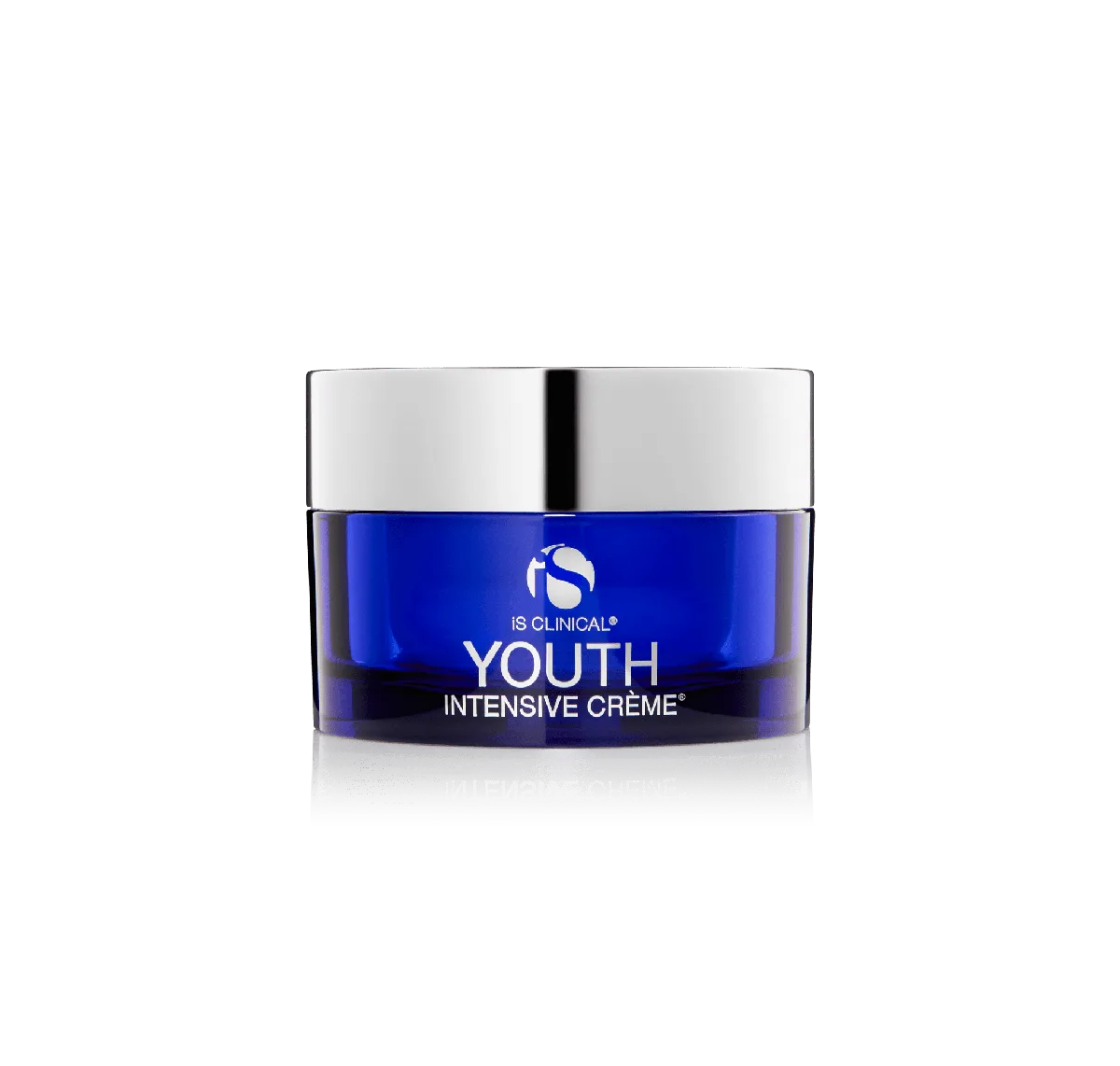
Youth Intensive Crème
Luxury Anti-Aging Icon
 Verified reviewer
Pros & cons.
- +Extraordinarily comprehensive formula addressing collagen, antioxidant, exfoliation, and brightening pathways simultaneously
- +Copper peptide system with GHK-fragment and copper lysinate for targeted collagen remodeling
- +Superoxide dismutase provides catalytic antioxidant protection that vitamins alone cannot match
- +Stabilized vitamin C offers superior penetration and shelf stability
- +Five-source botanical AHA blend provides gentle surface renewal
- +Rich yet absorbs well on dry and aging skin
- +Centella triterpenoids add anti-inflammatory support
- −At $256 for 1.7 oz, one of the most expensive moisturizers on the market
- −Contains citrus essential oils that can irritate sensitive skin
- −Too rich for oily skin types
- −Jar packaging exposes formula to air
- −Contains soy isoflavones — allergen concern
- −Not fragrance-free despite clinical positioning
The full review.
The Youth Intensive Crème is iS Clinical’s statement piece. It is the product that says, in the language of biochemistry, ‘we are going to address every pathway of skin aging we know about, and we are going to do it in one formula.’ Whether you find that ambition inspiring or excessive depends on your relationship with your bathroom shelf and your bank account.
The formula reads like a dermatology textbook’s table of contents. Copper peptides for collagen synthesis and tissue remodeling. Superoxide dismutase for enzymatic antioxidant defense. Stabilized vitamin C (tetrahexyldecyl ascorbate) for brightness and photoprotection. Centella triterpenoids for anti-inflammatory support. Botanical AHAs from five sources for surface renewal. Soy isoflavones for estrogen-mimicking skin-thickening effects. Licorice root for brightening. Retinyl palmitate for gentle vitamin A activity. It is, by any measure, one of the most ingredient-dense moisturizers on the market.
The copper peptide system is the formula’s anchor. Tripeptide-1 (the GHK fragment) is listed ninth in the INCI, and copper lysinate/prolinate appears near the end — together they provide the signaling molecule and the copper ion that work in concert to stimulate collagen, elastin, and glycosaminoglycan production. This is the same GHK peptide used across iS Clinical’s range, but here it operates within a richer matrix of complementary actives.
Superoxide dismutase provides antioxidant protection through a fundamentally different mechanism than vitamins C and E. As an enzyme, it catalytically converts superoxide radicals — it does not get ‘used up’ in the way stoichiometric antioxidants do. In a formula that already contains vitamin C (stabilized) and vitamin E, the addition of SOD creates a genuinely layered antioxidant network that addresses free radical damage from multiple angles.
The botanical AHA blend — drawing from sugar cane, bilberry, sugar maple, lemon, and orange — provides gentle resurfacing that keeps the skin surface renewed while the peptides work on deeper structural repair. This combination of surface exfoliation with deeper collagen stimulation creates a synergy where results build on each other: fresh surface cells better display the improved collagen beneath.
On the skin, this is a rich cream. Not heavy in the way petroleum-based products feel, but substantial — it coats, it nourishes, it settles into a velvety layer that makes dry skin immediately comfortable. There is a natural scent from the chamomile and citrus oils — pleasant if you like botanical aromas, potentially irritating if you have sensitive skin. This is the formula’s most divisive choice: essential oils in a clinical product. They serve functional purposes (the chamomile provides anti-inflammatory activity), but they also limit the product’s suitability for reactive skin.
Results follow the dual-speed pattern of AHA plus peptide formulas. Within the first two to three weeks, the exfoliating botanicals produce smoother texture and improved brightness. By eight to twelve weeks, the peptide and vitamin C activity shows up as improved firmness, softer fine lines, and a healthier overall skin quality. The cream works particularly well in fall and winter when dry skin needs both active treatment and protective moisture.
The price demands honest discussion. At $256 for 1.7 ounces, this is one of the most expensive moisturizers in the professional skincare market. A 3.5 oz size at $420 offers better per-ounce value for committed users. The counterargument — and it has some merit — is that this single product replaces what might otherwise require separate peptide, AHA, vitamin C, and antioxidant products. If your current anti-aging routine involves four or five separate products, the consolidation argument becomes more financially compelling.
But let us be candid: you can build an effective anti-aging routine for considerably less. What you are paying for here is the convenience of consolidation, the pharmaceutical-grade sourcing, and the specific combination of actives — particularly the superoxide dismutase and copper peptide system — that few other products replicate. Whether that justifies the premium is a personal calculation, not a dermatological one.
Ingredient analysis.
Full INCI list
Water/Aqua/Eau, Hyaluronic Acid, Caprylic/Capric Triglyceride, Vaccinium Myrtillus Fruit/Leaf Extract, Glycerin, Urea, Glucose, Guanidine HCl, Tripeptide-1, Saccharum Officinarum (Sugar Cane) Extract, Salix Alba (Willow) Bark Extract, Glyceryl Dilaurate, Tetrahexyldecyl Ascorbate, Dimethicone, Cetyl Alcohol, Dipalmitoyl Hydroxyproline, Superoxide Dismutase, Ormenis Multicaulis Oil, Citrus Aurantium Dulcis (Orange) Peel Oil, Phospholipids, Retinyl Palmitate, Tocopheryl Acetate, Pantothenic Acid, Acer Saccharum (Sugar Maple) Extract, Citrus Aurantium Dulcis (Orange) Fruit Extract, Citrus Medica Limonum (Lemon) Fruit Extract, Asiaticoside, Asiatic Acid, Madecassic Acid, Ascorbyl Palmitate, PEG-8/SMDI Copolymer, Dipotassium Glycyrrhizate, Soy Isoflavones, Ethylbisiminomethylguaiacol Manganese Chloride, Hexylene Glycol, Ethylhexyl Palmitate, Silica Dimethyl Silylate, Butylene Glycol, Cetearyl Alcohol, Ceteareth-20, Glyceryl Stearate, PEG-100 Stearate, Carbomer, Xanthan Gum, PVP, Panthenol, Triethanolamine, Disodium EDTA, Caprylyl Glycol, Methylglucoside Phosphate, Copper Lysinate/Prolinate, 1,2-Hexanediol
Skin match.
The science.
The Science
The Youth Intensive Crème uses a GHK copper peptide system. Research in BioMed Research International (2015) shows GHK peptides stimulate collagen I and III synthesis, increase decorin production, and upregulate growth factor expression. Copper lysinate/prolinate provides bioavailable copper for copper-dependent enzymatic processes that cross-link collagen.
Tetrahexyldecyl ascorbate (THDA) is a stable, lipophilic form of vitamin C. Research in the Journal of Cosmetic Dermatology shows THDA penetrates the lipid barrier better than water-soluble L-ascorbic acid and converts to active ascorbic acid inside cells.
Superoxide dismutase provides enzymatic antioxidant defense by catalytically dismutating superoxide radicals. Studies in the Journal of Investigative Dermatology document how topical SOD protects against UV-induced damage.
Soy isoflavones (genistein and daidzein) provide phytoestrogenic activity. Research in the Journal of the American Academy of Dermatology shows topical isoflavones increase dermal collagen, hyaluronic acid content, and epidermal thickness via estrogen receptor activation in skin cells. This active is relevant for perimenopausal and postmenopausal skin, where declining estrogen causes collagen loss and thinning.
References
- GHK Peptide as a Natural Modulator of Multiple Cellular Pathways in Skin Regeneration — BioMed Research International (2015)
Dermatologist Perspective
Dermatologists often recommend the Youth Intensive Crème for patients with moderate to advanced photoaging needing a comprehensive treatment moisturizer. Board-certified dermatologists note the formula's breadth—covering peptide signaling, enzymatic antioxidant protection, chemical exfoliation, and phytoestrogenic support—makes it valuable for postmenopausal patients with estrogen-related skin changes. The soy isoflavones address a mechanism most anti-aging products overlook.
Where it fits in your routine.
Apply a small amount to clean skin. Smooth it evenly over the face and neck. Use morning and evening. Apply sunscreen in the morning. Layer it over lighter treatment serums. Let it absorb fully before applying makeup.
At $256 for 1.7 oz, the Youth Intensive Crème is a top-tier clinical moisturizer. The 3.5 oz size costs $420 ($120/oz) and offers better per-ounce value. The formulation is complex; sourcing pharmaceutical grade specialty ingredients like superoxide dismutase and copper lysinate/prolinate costs more. For patients replacing four or five separate products, this consolidation makes financial sense.
Adults with dry to normal skin facing moderate to advanced aging signs who want one comprehensive anti-aging moisturizer. It works well for perimenopausal and postmenopausal skin.
People with sensitive, rosacea-prone, or oily skin. Anyone with soy allergies. Budget-conscious consumers get effective anti-aging results with less expensive products.
Product details.
ormenis multicaulis oil and citrus peel oils create a subtle, natural citrus and chamomile scent.
Frosted glass jar with screw-top lid.
It nourishes and comforts immediately. Skin feels soft and deeply moisturized. The AHA complex causes a slight tingle that subsides quickly.
2-3 months with twice-daily application to face and neck
12 months
fall winter
The backstory.
The Youth Intensive Crème represents the pinnacle of iS Clinical's formulation philosophy — the idea that aging skin needs a comprehensive nutritional and reparative approach rather than a single-ingredient solution. Developed as the brand's flagship luxury moisturizer, it was designed for patients who wanted one product that addresses every major aging pathway simultaneously.
About iS Clinical
Established Brand (5–20 years)iS Clinical was founded in 2002 by biochemists Bryan Johns and Alec Call under the Innovative Skincare umbrella. The brand is widely used in dermatology offices and medical spas, with multiple peer-reviewed clinical studies supporting its formulations.
Common myths.
Expensive moisturizers do not work better than affordable ones.
Price alone does not guarantee results. This formula's ingredient list is more complex and scientifically layered than most moisturizers at any price point. The cost reflects pharmaceutical-grade sourcing of specialty ingredients like superoxide dismutase and copper peptides.
The botanical AHAs in a moisturizer can't do much.
In this formula, the AHAs complement the other ingredients — they promote gentle surface renewal so the deeper-acting peptides and antioxidants penetrate and work more effectively.
FAQ.
What is the difference between Youth Intensive Creme and Reparative Moisture Emulsion?
Youth Intensive is thicker and has more active exfoliants, soy isoflavones, and copper lysinate. It costs more at $256 vs $116. Reparative is lighter, uses Extremozyme technology, and works better for sensitive or post-procedure skin.
What the community says.
"Luxuriously rich texture that transforms dry, dull skin"
"Noticeably firmer and more radiant skin over time"
"Absorbs better than expected for such a rich cream"
"Works beautifully as a night cream for aging skin"
"Extremely expensive at $256 for 1.7 oz"
"Contains citrus essential oils that may irritate sensitive skin"
"Too rich for oily or combination skin types"
"Contains soy"