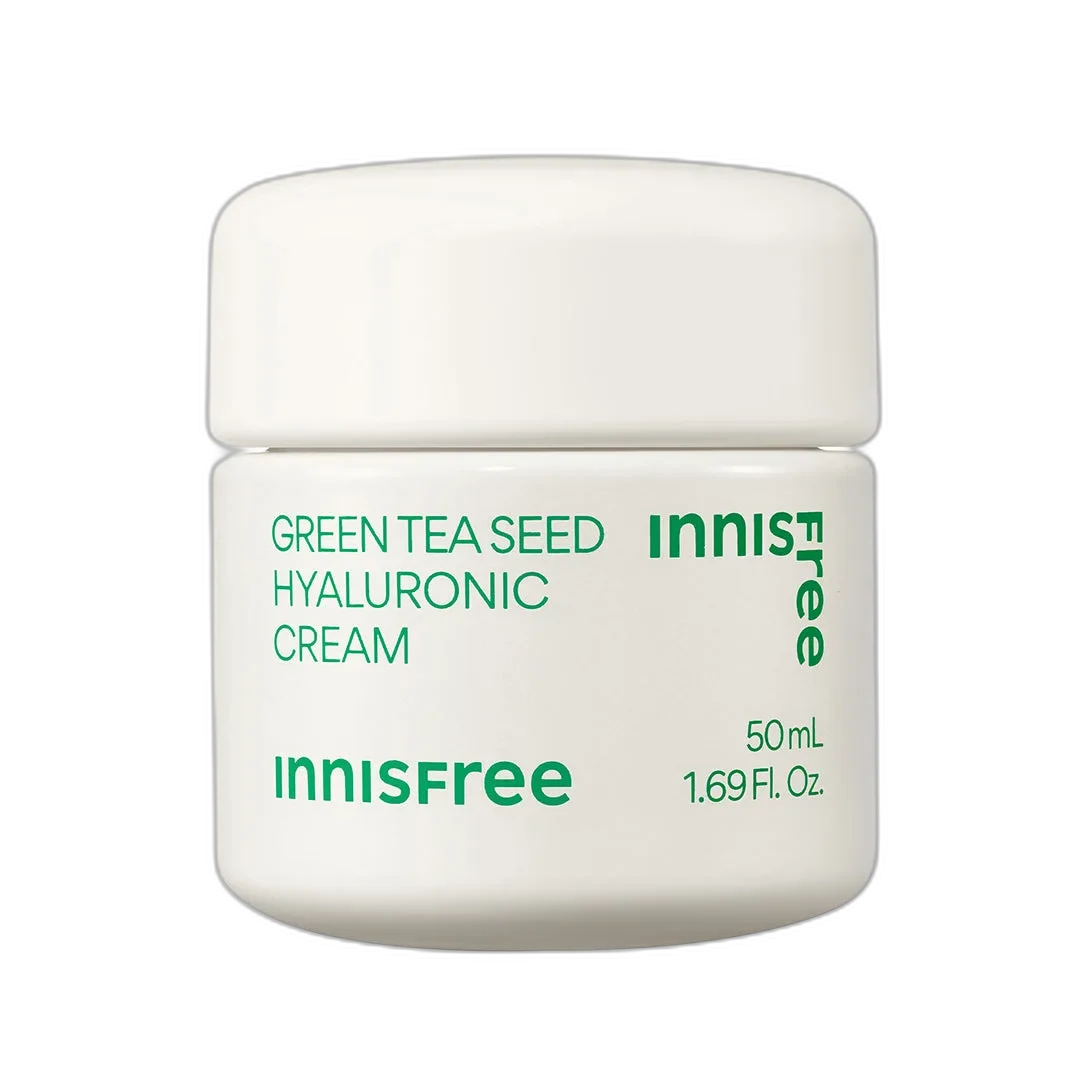
Green Tea Seed Hyaluronic Cream
K-Beauty Barrier Builder
 Verified reviewer
Pros & cons.
- +Ceramide-cholesterol-phytosphingosine triad mirrors proven barrier repair lipid science
- +Five types of hyaluronic acid provide multi-depth hydration in a single cream
- +Fragrance-free US formulation makes it genuinely suitable for sensitive and reactive skin
- +Lactobacillus ferment lysate adds microbiome support not found in most barrier creams
- +Light, airy texture absorbs quickly without the heavy feel typical of barrier repair products
- +Three size options with the 80 mL offering strong per-unit value at $0.50/mL
- +16-year lineage of iterative reformulation demonstrates genuine product evolution
- −Jar packaging exposes actives to air and bacteria with each use
- −Brand claims 'silicone-free' but INCI list clearly contains three silicone derivatives
- −May not provide sufficient occlusion for severely dry skin in harsh winter conditions
- −Newer 2024 reformulation has limited long-term user feedback compared to predecessor
- −Contains Camellia sinensis seed oil — not suitable for fungal acne-prone skin
Ingredient analysis.
Full INCI list
Water / Aqua / Eau, Propanediol, Glycerin, Stearyl Dimethicone, Methyl Trimethicone, Pentaerythrityl Tetraethylhexanoate, Butylene Glycol Dicaprylate/Dicaprate, Glyceryl Polymethacrylate, 1,2-Hexanediol, Polymethylsilsesquioxane, Squalane, Hydroxyethyl Acrylate/Sodium Acryloyldimethyl Taurate Copolymer, Polyglyceryl-3 Methylglucose Distearate, Carbomer, Hydrogenated Lecithin, Cholesterol, Glyceryl Stearate, Tromethamine, Sodium Stearoyl Glutamate, Lactobacillus Ferment Lysate, Hyaluronic Acid, Panthenol, Allantoin, Sodium Metaphosphate, Camellia Sinensis Seed Oil, Cetearyl Alcohol, Xanthan Gum, Glyceryl Caprylate, Butylene Glycol, Ethylhexylglycerin, Sorbitan Isostearate, Sodium Hyaluronate, Camellia Sinensis Leaf Extract, Madecassoside, Lactic Acid, Dextrin, Theobroma Cacao (Cocoa) Extract, Hydrolyzed Hyaluronic Acid, Sodium Hyaluronate Crosspolymer, Camellia Sinensis Seed Extract, Ceramide NP, Tocopherol, Phytosphingosine, Sodium Acetylated Hyaluronate
Skin match.
The science.
The Science
The Innisfree Green Tea Seed Hyaluronic Cream uses established dermatological science for barrier repair. The ceramide-cholesterol-phytosphingosine combination follows the work of Imokawa et al. Their research in the Journal of Investigative Dermatology shows that stratum corneum lipids—mostly ceramides, cholesterol, and free fatty acids in a 3:1:1 ratio—maintain barrier integrity and prevent transepidermal water loss.
The multi-weight hyaluronic acid system uses research showing different HA molecular weights perform distinct skin functions. Pavicic et al. (2011) published in the Journal of Drugs in Dermatology that topical HA of varying molecular weights improves skin hydration, elasticity, and roughness; low-molecular-weight HA penetrates deeper and has bio-stimulatory effects. The sodium hyaluronate crosspolymer creates a viscoelastic surface network that resists wash-off and extends surface hydration.
The lactobacillus ferment lysate uses the emerging postbiotic approach to skin care. A 2023 randomized study in Scientific Reports shows that topical application of a ferment lysate formulation decreases transepidermal water loss and improves skin hydration markers over 30 days, reinforcing the barrier through microbiome modulation.
The green tea component (Camellia sinensis) has extensive antioxidant evidence. Katiyar et al. (2001) showed in Archives of Dermatology that green tea polyphenols, specifically EGCG, provide photoprotective effects by inhibiting UV-induced oxidative stress and inflammatory pathways. Innisfree's proprietary Beauty Green Tea, screened from 2,401 Korean green tea varieties, has 1.67 times more theanine than standard green tea, though published literature has not independently verified this claim.
Madecassoside, a triterpene glycoside from Centella asiatica, has documented wound healing and anti-inflammatory properties. Research in Phytomedicine shows madecassoside promotes collagen synthesis and inhibits inflammatory cytokine production, making it a logical choice for a barrier-repair formula for compromised, potentially inflamed skin.
References
- Efficacy of cream-based novel formulations of hyaluronic acid of different molecular weights in anti-wrinkle treatment — Journal of Drugs in Dermatology (2011)
- Skin photoprotection by green tea: antioxidant and immunomodulatory effects — Archives of Dermatology (2001)
- Topical application of Lactobacillus ferment lysate decreases TEWL and improves skin hydration — Scientific Reports (2023)
Dermatologist Perspective
Dermatologists recognize the ceramide-cholesterol-phytosphingosine combination as established barrier repair science. The multi-weight hyaluronic acid approach matches current layered hydration theories, and madecassoside adds evidence-based anti-inflammatory support. Board-certified dermatologists would value the fragrance-free US formulation, which removes a common sensitizer from a product for compromised barriers. The lactobacillus ferment lysate is a newer ingredient category with growing clinical evidence. Overall, this formula is a well-constructed barrier repair cream that dermatologists could recommend for patients with dry, dehydrated, or barrier-compromised skin.
Where it fits in your routine.
Apply a nickel-sized amount to cleansed, toned skin. Use it as the last step before sunscreen in the morning and the final step in your evening routine. Use the included spatula instead of fingers to keep the jar hygienic. Pat the cream gently into the face and neck; it melts on contact and does not need vigorous rubbing. Layer over the matching Green Tea Seed Hyaluronic Serum for extra barrier support. In dry winter conditions, apply a thin layer of an occlusive balm over dry areas to seal it.
At $30 for 50 mL, this cream is priced competitively for its complex ingredients. The ceramide-cholesterol-phytosphingosine triad, five types of HA, squalane, postbiotic, and madecassoside make a formula that Western clinical brands charge much more for. The 80 mL size at $40 offers the best value at $0.50/mL — about 33% more product for only 33% more money. For a fragrance-free, vegan, cruelty-free barrier cream sold at Sephora, this shows K-beauty's best value: sophisticated formulation at accessible pricing.
This works for anyone with a weakened moisture barrier, chronic dehydration, or skin that feels tight and reactive after cleansing. It suits sensitive skin types seeking fragrance-free barrier repair and K-beauty enthusiasts moving from basic hydrating creams to a more sophisticated barrier-repair formula.
This product contains several Malassezia-feeding ingredients, so those with fungal acne should avoid it. The silicone base and cream format feels heavy on very oily skin; a gel or gel-cream works better. The formula contains three silicone derivatives, even if the brand's marketing claims suggest otherwise.
Product details.
This light, airy gel-cream hybrid feels cushiony on application and absorbs to a comfortable, non-sticky finish.
Unscented — the current US formulation has no added fragrance or essential oils
Green-tinted glass jar has a screw-top lid and includes a spatula. Sizes include 30 mL, 50 mL, and 80 mL. Innisfree's sustainability commitment makes it recyclable.
The first application feels light and hydrating, providing immediate plumping. The cream melts on contact and absorbs within one minute. It causes no stinging, tingling, or adjustment period. Skin looks more luminous within 24 hours of first use.
2-3 months with twice-daily facial application (50 mL size)
12 months
All Year
The backstory.
Innisfree's Green Tea Seed Cream has been reformulated five times since the line's 2008 debut, with each generation incorporating advances in K-beauty science. The 2024 hyaluronic version represents the most significant evolution yet, adding a five-type HA complex, a dedicated barrier complex, and postbiotic technology while removing fragrance from the US formulation — a 16-year journey from simple green tea moisturizer to sophisticated barrier-repair cream.
About Innisfree
Established Brand (5–20 years)Innisfree launched in 2000 as Amorepacific's nature-focused K-beauty brand, using Jeju Island botanicals. The Green Tea Seed line has been the flagship since 2008. This hyaluronic cream is the fifth generation of reformulation—a 16-year evolution from the original Green Tea Seed Cream.
Common myths.
Five types of hyaluronic acid work five times better than one.
Multiple HA molecular weights address different skin depths — large molecules hydrate the surface, small ones penetrate deeper — but the benefit is about coverage, not multiplication. The five types work across more layers of the skin, but the total hydration depends on overall HA concentration, which Innisfree does not disclose.
This cream contains silicones, so it must clog pores.
The silicones in this formula (stearyl dimethicone, methyl trimethicone, polymethylsilsesquioxane) are non-comedogenic. They form a breathable occlusive film instead of blocking pores. Silicones are some of the best-studied non-clogging ingredients in cosmetic science. Innisfree lists this product as safe for acne-prone skin.
FAQ.
Is the Innisfree Green Tea Seed Hyaluronic Cream fragrance-free?
The current US formulation sold at Sephora and innisfree.com is fragrance-free and lacks added parfum or essential oils. Earlier Korean-market versions used citrus and herbal essential oils. Check with Asian retailers to ensure you get the updated formulation.
How does this cream compare to the original Innisfree Green Tea Seed Cream?
The 2024 hyaluronic version is a major upgrade. It adds five types of hyaluronic acid, a barrier complex (ceramide NP + squalane + green tea seed oil), cholesterol, phytosphingosine, and lactobacillus ferment lysate — ingredients absent from early versions. The formula also removed fragrance for the US market. It is a new product built on the same green tea foundation.
Can I use this cream if I have acne-prone skin?
Innisfree lists this product as suitable for acne-prone skin. The non-comedogenic silicone base does not clog pores. The ceramide and hyaluronic acid ingredients support barrier repair, which helps acne-prone skin maintain its defenses. However, several ingredients may feed Malassezia yeast, so it is not fungal acne safe.
Is the Innisfree Green Tea Hyaluronic Cream enough for dry skin?
This cream hydrates moderate dryness using its five-type HA system and ceramide barrier complex. For severe dryness, especially in winter, layer a hydrating serum underneath (like the matching Green Tea Seed Hyaluronic Serum) to add the moisture this lightweight formula lacks alone.
What size should I buy?
The 30 mL ($18) size works well for trialing the product. The 50 mL ($30) is the standard size and lasts 2-3 months. The 80 mL ($40) has the best value at $0.50/mL compared to $0.60/mL for the standard size — buy this if you like the formula.
Community
What the community says.
"Light, airy texture provides deep hydration without heaviness"
"Leaves skin visibly glowing and bouncy the morning after application"
"Fragrance-free formula suits sensitive skin well"
"Multiple size options including a value 80 mL jumbo"
"Works beautifully under makeup as a hydrating base"
"Noticeable improvement in barrier strength within the first week"
"May not provide enough moisture for very dry skin in winter"
"Contains silicones which some consumers prefer to avoid"
"Jar packaging is less hygienic than pump alternatives"
"Newer reformulation has limited long-term user data compared to predecessor"