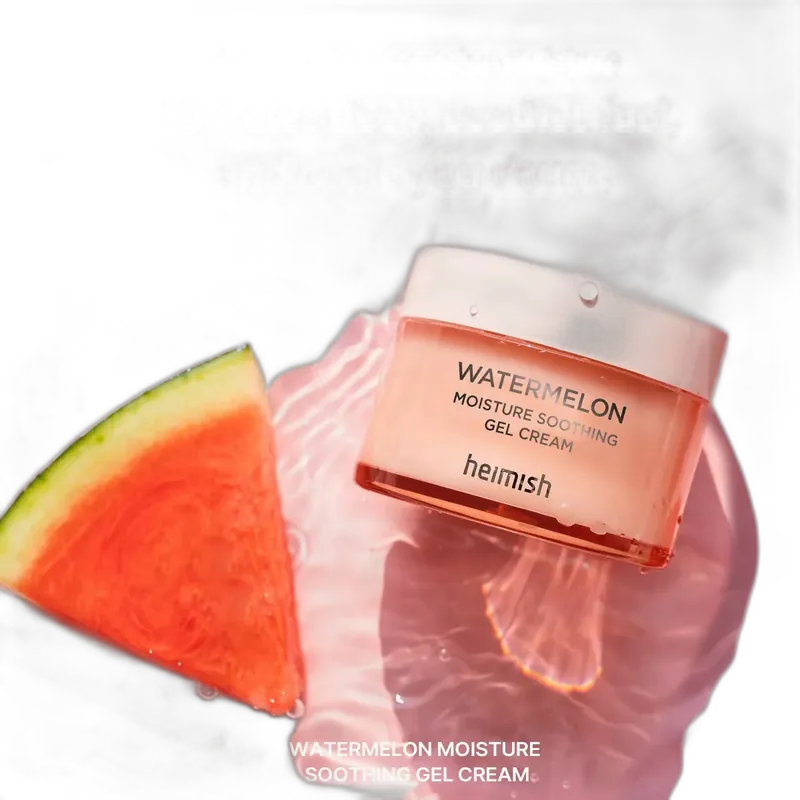
Watermelon Moisture Soothing Gel Cream
Lightweight Hydration Hero
 Verified reviewer
Pros & cons.
- +Watermelon extract at second INCI position provides genuine antioxidant and hydrating benefits
- +Ceramide NP plus phytosphingosine create a real barrier-repair system in a lightweight format
- +Completely fragrance-free — rare for watermelon-themed skincare products
- +Absorbs in seconds with no tackiness, residue, or pilling under sunscreen
- +Suitable for nearly all skin types including sensitive and acne-prone
- +Generous 110ml size lasts 2-3 months of twice-daily use
- −May not provide sufficient moisture for very dry skin in cold or dry climates
- −Contains dimethicone and phenyl trimethicone — not silicone-free
- −Watermelon extract, while beneficial, is not as transformative as actives like retinoids or vitamin C
- −Witch hazel leaf extract may concern those with very reactive skin, though concentration appears mild
The full review.
The watermelon skincare trend peaked around 2020. Suddenly, every brand from luxury to drugstore launched pink, fruit-scented products with watermelon slices. Most of those products disappeared. The Heimish Watermelon Moisture Soothing Gel Cream remains because it uses the ingredient seriously.
Watermelon extract is second on the INCI list—right after water. This means Heimish uses a high percentage of this ingredient instead of just using it for label claims. Citrullus lanatus fruit extract contains lycopene (a potent antioxidant), citrulline (an amino acid involved in nitric oxide production and skin circulation), and vitamins that condition the skin. It is not a miracle ingredient. But at this concentration, it works: it provides lightweight hydration and antioxidant protection in a water-based vehicle that oily and combination skin types find comfortable.
Ceramide NP elevates this gel cream from pleasant to smart. Ceramide NP is one of the key ceramides found naturally in the stratum corneum. It works with phytosphingosine, a sphingoid base that builds ceramides. Together, they create a mini barrier-repair system in a weightless moisturizer. This formulation choice matters for the long term: your skin barrier gets stronger with consistent use even as the product feels like nothing on your face.
The hydration architecture is layered. Glycerin and sorbitol act as humectants to draw water to the skin. Sodium hyaluronate adds another hydration layer. Trehalose—a sugar molecule that protects cells from dehydration stress—is a popular K-beauty ingredient that adds a subtle protective quality. Dimethicone and phenyl trimethicone provide a light occlusive layer to prevent evaporation, while moringa seed oil and shea butter add emollient depth without making the texture thick.
The texture works well for the target audience. The gel-cream consistency is bouncy, cool, and almost transparent with a faint pink tint. It disappears into the skin within seconds. It leaves no tackiness, no film, and no shine—just hydrated, comfortable skin ready for sunscreen or makeup. This formula solves problems for anyone whose moisturizers pill under SPF or leave a midday grease slick.
The fragrance-free formulation is notable. While other watermelon products smell like a candy shop, Heimish omitted fragrance entirely. This was not the obvious commercial choice because fragrance sells, but it was the right choice for a product for all skin types, including sensitive. The result is a product that smells like very little, which is what fragrance-sensitive users need.
Witch hazel leaf extract is the one ingredient to note. While it appears in modest amounts and the leaf extract is milder than witch hazel distillate, it can be astringent and potentially irritating for very sensitive skin. No reviewers report irritation from this product, suggesting the concentration is gentle enough for most users.
At approximately twenty-five dollars for 110ml, the price is fair for the formulation quality, though not as much of a bargain as Heimish’s cleansing products. It is a mid-range K-beauty moisturizer. The generous tube size means it lasts two to three months with twice-daily use.
The Heimish Watermelon Moisture Soothing Gel Cream did what the best trend-inspired products do: it took a popular ingredient, built an excellent formula, and lasted long after the trend cooled. If you want lightweight hydration with real barrier-repair benefits and zero fragrance, this is one of the most thoughtful options in K-beauty.
Ingredient analysis.
Full INCI list
Water, Citrullus Lanatus (Watermelon) Fruit Extract, Glycerin, Dimethicone, Butylene Glycol, Phenyl Trimethicone, Sorbitol, Moringa Oleifera Seed Oil, Hamamelis Virginiana (Witch Hazel) Leaf Extract, Hydrangea Macrophylla Leaf Extract, Aloe Barbadensis Flower Extract, Ceramide NP, Aloe Barbadensis Leaf Extract, Sodium Hyaluronate, Coptis Japonica Extract, Melia Azadirachta Leaf Extract, Coccinia Indica Fruit Extract, Solanum Melongena (Eggplant) Leaf Extract, Butyrospermum Parkii (Shea) Butter, Curcuma Longa (Turmeric) Root Extract, Corallina Officinalis Extract, Ocimum Sanctum Leaf Extract, Phytosphingosine, Candida Bombicola/Glucose/Methyl Rapeseedate Ferment, Tocopherol, Hydrogenated Lecithin, 1,2-Hexanediol, Trehalose, Hydroxyacetophenone, Acrylate/C10-30 Alkyl Acrylate Crosspolymer, Tromethamine, Ammonium Acryloyldimethyltaurate/VP Copolymer, Glyceryl Acrylate/Acrylic Acid Copolymer, Caprylyl Glycol, Octyldodecanol, Oleyl Alcohol, Glycine Soja (Soybean) Sterols, Disodium EDTA
Skin match.
The science.
The Science
Watermelon (Citrullus lanatus) extract has gained research attention for its lycopene content — a carotenoid antioxidant that neutralizes singlet oxygen and peroxyl radicals. A study published in the Journal of Agricultural and Food Chemistry (2002) found that watermelon contains 40% more lycopene per serving than tomatoes. When applied topically, lycopene helps protect against UV-induced oxidative damage, complementing (but not replacing) sunscreen protection.
The ceramide NP and phytosphingosine combination represents an evidence-based approach to barrier repair. Ceramides comprise approximately 50% of the stratum corneum's lipid matrix, and their depletion is associated with barrier dysfunction, increased transepidermal water loss, and susceptibility to irritation. A study published in the Journal of Clinical Investigation (1996) by Holleran et al. demonstrated that topical application of ceramides accelerates barrier recovery. Phytosphingosine serves as a precursor in the ceramide biosynthesis pathway — research in the Journal of Lipid Research has shown that phytosphingosine supplementation supports the skin's natural ceramide production, creating a more comprehensive barrier-repair mechanism than ceramide application alone.
Trehalose, the natural disaccharide included in this formula, has a unique ability to protect biological membranes under stress conditions. Research published in Biophysical Journal (2004) demonstrated that trehalose stabilizes lipid bilayers during dehydration by replacing water molecules in hydrogen-bonding interactions with membrane phospholipids. In skincare, this translates to enhanced resilience against environmental dehydration stress — particularly relevant for the exposed facial skin this product targets.
References
- Lycopene content in watermelon — Journal of Agricultural and Food Chemistry (2002)
- Topical ceramides and barrier recovery — Journal of Clinical Investigation (1996)
Dermatologist Perspective
Dermatologists increasingly recommend ceramide-containing moisturizers for patients with compromised barriers, and the inclusion of both ceramide NP and its precursor phytosphingosine makes this formula particularly interesting from a barrier-repair standpoint. Board-certified dermatologists note that lightweight, fragrance-free gel creams are ideal for patients with oily or combination skin who struggle to find moisturizers that hydrate without contributing to congestion or breakouts. The fragrance-free formulation is also a positive for dermatologists managing patients with contact dermatitis or fragrance sensitivity who still need daily moisturization.
Where it fits in your routine.
Apply a nickel-sized amount to the face and neck after toner and serum, morning and evening. The gel-cream texture absorbs fast and layers well — use one layer for warm weather or oily skin, and two layers for extra hydration in cooler months. In the morning, wait 1-2 minutes for absorption before applying sunscreen.
At about 5 for 110ml, this gel cream is a mid-range K-beauty moisturizer. The ceramide NP and phytosphingosine combination adds value that justifies the price; many Western brand ceramide moisturizers cost more for less volume. Using it twice daily lasts 2-3 months, so the monthly cost is about 12. The formulation quality offers fair value, given the fragrance-free status and barrier-repair ingredients.
Oily, combination, and normal skin types want a lightweight, fragrance-free moisturizer that repairs the skin barrier. It works well for sensitive skin, retinoid users needing gentle moisturization, and anyone who finds traditional creams too heavy for daily use.
Dry skin types needing thick, occlusive moisturizers year-round will use this. Those avoiding silicones should skip it. This is a hydrator and barrier supporter, not an active treatment for visible anti-aging or brightening results.
Product details.
This lightweight, bouncy gel-cream has a slightly pink-tinged transparent appearance. It applies smoothly and absorbs fast without tackiness or residue.
Unscented — no added fragrance. Watermelon extract and botanical ingredients leave a very faint natural scent.
Tube format with a flip-top cap. The 110ml size is large for a K-beauty moisturizer and works for twice-daily use.
This lightweight gel feels cool and sinks in fast. The watermelon extract refreshes skin immediately. It has no fragrance, no stinging, and no heaviness. Skin feels hydrated and bouncy within minutes.
2-3 months with twice-daily face application
12 months
spring summer
The backstory.
The Watermelon Moisture Soothing Gel Cream arrived during the K-beauty watermelon skincare wave that peaked around 2020-2021, when brands were racing to capitalize on the ingredient's antioxidant and hydrating properties. Heimish's version distinguished itself by going fragrance-free and including barrier-repair ceramides — a more substantive approach than the sugar-scented watermelon products flooding the market.
About Heimish
Established Brand (5–20 years)Heimish launched in 2016 in Seoul and is famous for its All Clean cleansing line. The Watermelon Moisture Soothing Gel Cream moved the brand into lightweight moisturizers, using the watermelon skincare trend that grew in K-beauty during the early 2020s.
Common myths.
Watermelon extract is just water with marketing
Watermelon extract has lycopene (a potent antioxidant), citrulline (an amino acid that supports circulation), and vitamins A, B6, and C. It is about 92% water, but the other components provide skin-conditioning and antioxidant benefits — especially at the concentration shown by its second position on this INCI list.
Gel creams don't provide enough moisture for real hydration
This gel cream uses humectants (glycerin, sorbitol, hyaluronic acid, trehalose), emollients (dimethicone, moringa oil, shea butter), and barrier-repair agents (ceramide NP, phytosphingosine). The texture is light, but the multi-layered moisture-retention system works for most skin types.
What the community says.
"Lightweight texture that hydrates without feeling heavy or greasy"
"Fragrance-free formula suitable for sensitive skin"
"Absorbs quickly and layers well under sunscreen"
"Cooling and soothing — perfect for summer use"
"Generous 110ml size offers good value"
"May not be moisturizing enough for very dry skin in winter"
"Contains silicones which some consumers prefer to avoid"
"Watermelon extract benefits are more hydrating than transformative"
"Jar packaging would have been preferable to tube for this texture"