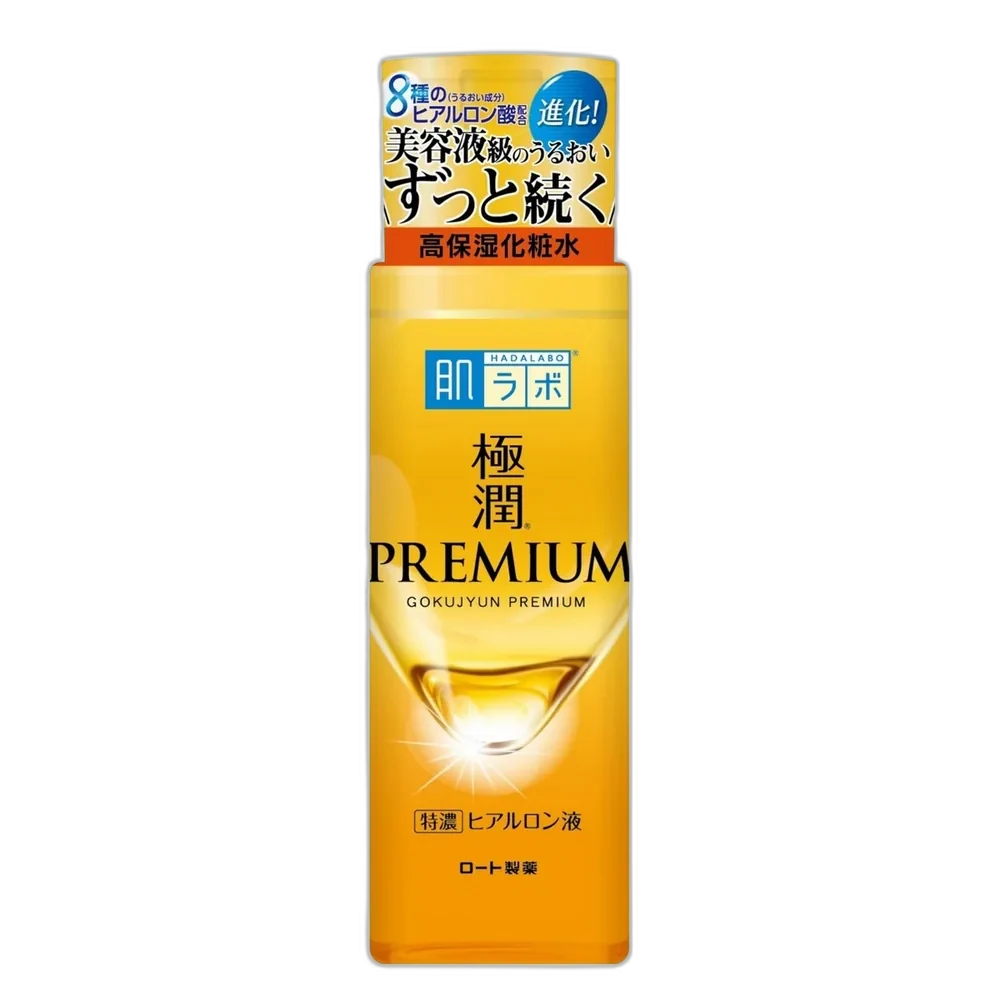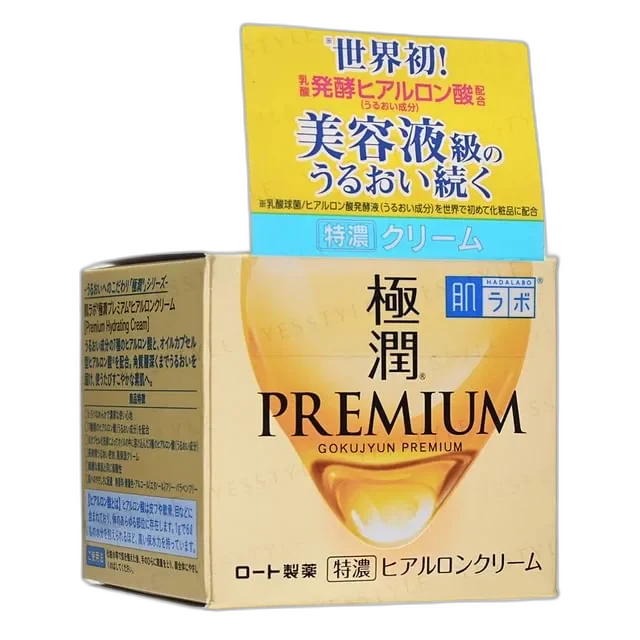
Gokujyun Premium Hyaluronic Acid Cream
J-Beauty Hydration Powerhouse
 Verified reviewer
Pros & cons.
- +Seven distinct hyaluronic acid forms create multi-depth hydration unlike any competing product
- +Sacran super-hydrator holds 6,100x its weight in water for additional moisture binding
- +Pharmaceutical-grade formulation from a company with 125+ years of R&D heritage
- +Fragrance-free, paraben-free, and alcohol-free for sensitive skin compatibility
- +Rich shea butter base provides effective occlusive moisture seal
- +Exceptional value at ~$16 for formulation complexity that would cost $50+ from Western brands
- −Too rich for oily skin — consider the lighter Premium Lotion instead
- −Jar packaging is less hygienic than tube or airless pump alternatives
- −Contains dimethicone, which some users prefer to avoid
- −Limited availability outside Asian beauty retailers
- −Not cruelty-free certified — Rohto's testing policies vary by market
The full review.
Rohto Pharmaceutical has been making hyaluronic acid products since before most current skincare brands existed. The company, founded in Osaka in 1899, launched Hada Labo in 2004 with a singular obsession: hyaluronic acid in every conceivable form and application. Two decades later, the Gokujyun Premium Cream represents the apex of that obsession — a moisturizer that contains not one, not two, but seven distinct forms of hyaluronic acid, each selected for its specific molecular weight, electrical charge, and skin penetration profile. It’s the kind of formulation that could only come from a pharmaceutical company that treats hyaluronic acid the way a sommelier treats grape varietals.
The seven HA forms aren’t a marketing gimmick — they represent genuinely different technologies. Standard sodium hyaluronate forms a hydrating film on the skin surface. Hydrolyzed (nano) hyaluronic acid has been broken into small enough fragments to penetrate into the deeper stratum corneum. Sodium acetylhyaluronate is an acetylated form with enhanced lipophilicity, meaning it absorbs into the skin more readily than standard HA. Hydroxypropyltrimonium hyaluronate carries a positive charge that makes it cling to the negatively charged skin surface, resisting removal even through washing. Sodium hyaluronate crosspolymer is a 3D-structured HA network that provides sustained, time-release hydration. Fermented HA (Lactococcus ferment/hyaluronic acid ferment filtrate) has been pre-processed by bacteria for enhanced bioavailability and microbiome-supporting benefits. And hydrolyzed sodium hyaluronate provides intermediate-depth delivery.
The result is a hydration system that addresses moisture at every accessible depth of the skin simultaneously. Surface-level film hydration, mid-depth humectant binding, deeper penetration via nano and acetylated forms, sustained release, and electrostatically bonded moisture that resists being disrupted. It’s the skincare equivalent of an orchestra playing a symphony rather than a solo instrument — every HA type contributes its part to a fuller, more complete hydration picture.
Beyond the HA complex, the supporting cast is well-chosen. Shea butter, positioned high in the ingredient list, provides the occlusive seal that prevents all that carefully deposited moisture from evaporating. Without occlusion, humectants are a bucket with holes — they draw water in, but it escapes just as readily. The shea butter closes those holes. Glycerin adds another humectant layer through a different molecular mechanism than HA. And sacran — Aphanothece sacrum exopolysaccharides — is a Japanese-exclusive super-hydrator that can hold up to 6,100 times its weight in water, roughly six times the capacity of standard hyaluronic acid. It’s derived from a freshwater cyanobacterium that’s been used in Japanese traditional practices for centuries, and Rohto’s research team incorporated it as an additional moisture-binding dimension.
The texture is unambiguously rich. This is a thick, dense cream that scoops out of the jar with weight and substance. But here’s where Rohto’s formulation skill shows: despite the initial density, the cream transforms as you work it into your skin. The thick gel-cream transitions into something silkier and more absorbent, ultimately settling into a dewy, non-greasy finish that belies the richness of what you just applied. The dimethicone contributes to this transformation, providing the slip that makes a dense cream feel lighter than it has any right to.
For dry skin, this cream is a revelation. The kind of deep, lasting hydration it provides goes well beyond what single-HA or basic humectant moisturizers can achieve. Winter skin that typically feels tight and papery by midday stays comfortable and supple. Dehydrated skin — which can coexist with any skin type — responds with visible plumping and reduced fine dehydration lines. Normal skin gets a boost of cushioned moisture that creates that coveted ‘mochi skin’ effect — bouncy, resilient, and well-hydrated.
For oily skin, this is almost certainly too much. The combination of shea butter, olive fruit oil, dimethicone, and various emollient esters creates a richer product than oily skin needs. If you have oily skin and want the multi-HA technology, Hada Labo’s Premium Lotion (a lightweight hydrating toner) delivers a similar HA complex in a much lighter format.
Packaging
The jar packaging is the one notable compromise. While Hada Labo typically includes a small spatula for hygienic dispensing, jar packaging exposes the product to air and potential contamination with each use. For a cream packed with sensitive hyaluronic acid derivatives, a tube or airless pump would better preserve ingredient integrity. It’s a common J-beauty packaging convention, but it’s worth noting.
Best for
At approximately sixteen dollars for 50 grams, the value is remarkable. The HA technology in this cream — seven distinct derivatives, fermented HA, sacran, pharmaceutical-grade formulation — would command fifty to a hundred dollars from a Western luxury brand. Rohto’s pharmaceutical manufacturing scale and direct-to-consumer distribution in Asia keeps the price accessible without compromising formulation quality. For anyone who cares about what’s actually in their moisturizer rather than what’s printed on the marketing materials, this is one of the most impressive price-to-ingredient ratios in skincare.
Ingredient analysis.
Full INCI list
Water, Butylene Glycol, Glycerin, Butyrospermum Parkii (Shea) Butter, Dipropylene Glycol, Caprylic/Capric Triglyceride, Isostearyl Isostearate, Cetyl Alcohol, Sodium Hyaluronate, Hydrolyzed Hyaluronic Acid, Sodium Acetylhyaluronate, Hydroxypropyltrimonium Hyaluronate, Sodium Hyaluronate Crosspolymer, Lactococcus Ferment/Hyaluronic Acid Ferment Filtrate, Hydrolyzed Sodium Hyaluronate, Aphanothece Sacrum Exopolysaccharides, Olea Europaea (Olive) Fruit Oil, Phytosteryl Macadamiate, Arginine, Phytosteryl/Isostearyl/Cetyl/Stearyl/Behenyl Dimer Dilinoleate, Polyglyceryl-6 Polyricinoleate, Pentylene Glycol, Dimethicone, Cetyl Phosphate, Carbomer, Caprylhydroxamic Acid, Propanediol, Stearyl Alcohol, Phenoxyethanol
Skin match.
The science.
The Science
This formula uses a multi-weight hyaluronic acid approach based on research showing different HA molecular weights interact with skin at different depths. A 2011 study in the Journal of Drugs in Dermatology shows that applying varying HA molecular weights simultaneously improves skin hydration more effectively than any single molecular weight alone. Standard HA (>1,000 kDa) forms a surface film, medium-weight HA (50-1,000 kDa) penetrates the upper stratum corneum, and hydrolyzed nano HA (<50 kDa) reaches deeper epidermal layers.
Rohto's proprietary 'Super Hyaluronic Acid', sodium acetylhyaluronate, has approximately twice the moisture-retaining capacity of standard sodium hyaluronate in the company's published research. Its acetyl group modification increases lipophilicity and skin affinity. Hydroxypropyltrimonium hyaluronate's cationic charge enables electrostatic binding to the anionic skin surface. This creates a persistent hydrating film that resists removal, as shown in comparative wash-off studies.
Sacran (Aphanothece sacrum exopolysaccharides) is a mega-molecular polysaccharide with high water-retention capacity. Research in the International Journal of Biological Macromolecules (2016) shows sacran forms thin films with exceptional moisture-binding properties—holding up to 6,100 times its dry weight in water, compared to approximately 1,000 times for standard HA. Japanese pharmaceutical research also documents its anti-inflammatory properties.
The fermented HA (Lactococcus ferment/hyaluronic acid ferment filtrate) uses bacterial fermentation to pre-process HA into smaller, more bioavailable fragments and produce beneficial metabolites. This follows research showing fermented skincare ingredients support the skin microbiome while delivering active benefits.
Dermatologist Perspective
Dermatologists see multi-weight hyaluronic acid formulations as an advancement in topical hydration technology. Board-certified dermatologists note the multi-HA approach in this cream solves a limitation of single-weight HA products: no single molecular weight provides surface hydration, mid-depth moisture binding, and deep penetration at once. Dermatologists favor the inclusion of an occlusive component (shea butter), as humectants work best when paired with occlusive agents that prevent moisture loss. Dermatologists commonly recommend this type of intensely hydrating cream as part of a barrier-repair strategy for patients with chronic dryness, eczema-prone skin in remission, or dehydration from retinoid use.
Where it fits in your routine.
Use the included spatula or clean fingers to scoop a small amount (about the size of a pearl). Warm the product between your palms and press it into the face and neck after all other skincare steps. Apply sunscreen in the AM. A little goes a long way — the thick formula spreads further than expected. For maximum hydration, layer it over Hada Labo Gokujyun Premium Lotion or any hydrating toner.
At about $16 for 50g, this cream provides high value for its complex formula. Seven forms of hyaluronic acid, sacran, fermented HA, shea butter, and pharmaceutical-grade quality control usually cost $40-100 from Western skincare brands. The 50g jar lasts 2-3 months if used twice daily. Buying through Asian beauty online retailers may increase shipping costs, but the price-to-ingredient ratio remains high even with those fees.
Dry and normal skin types want the most thorough hydrating cream at an accessible price. It works for winter dryness, retinoid-induced dryness, or chronic dehydration. J-beauty enthusiasts can get Rohto Pharmaceutical's most advanced HA technology in one product.
Choose the Gokujyun Premium Lotion if you have oily skin and need lightweight hydration. Use this if you prefer silicone-free formulas or require cruelty-free certification. This option avoids jar packaging for better hygiene.
Product details.
Completely unscented — no fragrance, colorants, or mineral oil.
Small jar with a screw-top lid. Often includes a hygienic spatula. The jar format preserves ingredients less effectively than a tube or airless pump. Finish dewy, satin, non-greasy
The first application shows a thick cream that feels denser than typical J-beauty products. The seven HA forms create layered moisture — immediate surface hydration followed by deeper moisture over the first 15-20 minutes. Skin feels cushioned and plump without heaviness.
2-3 months with twice-daily face application
12 months
fall winter
The backstory.
Hada Labo has spent two decades refining hyaluronic acid technology, and the Gokujyun Premium Cream represents the pinnacle of that focus. Where most brands add HA as a single ingredient, Rohto Pharmaceutical's R&D team has systematically explored every derivative and modification of hyaluronic acid — different molecular weights, different charges, different delivery mechanisms — and combined the best-performing variants into one formula. The inclusion of sacran, a Japanese-exclusive super-hydrator from freshwater algae, reflects Rohto's pharmaceutical heritage of sourcing novel bioactives.
About Hada Labo
Established Brand (5–20 years)Rohto Pharmaceutical Co., Ltd., a Japanese pharmaceutical company founded in 1899, created Hada Labo in 2004. The brand uses a 'Perfect and Simple' philosophy to focus on effective formulations with few unnecessary ingredients. Hada Labo's hyaluronic acid products have topped Japanese rankings for years, backed by the parent company's 125 years of pharmaceutical expertise.
Common myths.
Different forms of hyaluronic acid are marketing — they all work the same way.
Different HA forms have different molecular weights and properties. Standard sodium hyaluronate forms a surface film, hydrolyzed HA penetrates deeper, cationic HA bonds to skin electrostatically, and crosspolymer HA provides time-release hydration. Using multiple forms hydrates different skin depths simultaneously.
Japanese skincare products are only for Asian skin types.
Skin biology is the same across all ethnicities. Hada Labo's hyaluronic acid formulations work universally because they target hydration mechanisms common to all human skin. Hada Labo's popularity grew globally because the products work regardless of ethnicity.
FAQ.
What are the seven types of hyaluronic acid in Hada Labo Premium Cream?
The seven forms are: standard sodium hyaluronate, hydrolyzed (nano) hyaluronic acid for deep penetration, sodium acetylhyaluronate for enhanced absorption, hydroxypropyltrimonium hyaluronate (cationic HA that bonds to skin), sodium hyaluronate crosspolymer for sustained release, fermented hyaluronic acid for bioavailability, and hydrolyzed sodium hyaluronate for intermediate penetration.
Myth
Is Hada Labo Premium Cream too heavy for oily skin?
Reality
For most oily skin types, yes — the shea butter, olive oil, and dimethicone create a richer texture than oily skin typically needs. Consider Hada Labo's lighter Gokujyun Premium Lotion (a hydrating toner) instead, which provides the same multi-HA technology in a lighter, water-based format.
How to Use
Can I use Hada Labo Premium Cream with retinol?
Yes — the thick, hydrating formula pairs well with retinol. Apply your retinol product first, then layer this cream on top to lock in moisture and buffer irritation. The seven forms of hyaluronic acid counteract dryness caused by retinol.
About Sacran
What is sacran and why is it in this cream?
Sacran is a mega-molecular polysaccharide from Aphanothece sacrum, a freshwater cyanobacterium native to Japan. It holds up to 6,100 times its weight in water—about six times more than standard hyaluronic acid. Rohto uses it as an extra hydration layer alongside the seven HA forms.
Where to Buy
Where can I buy Hada Labo Gokujyun Premium Cream?
Buy the cream through Asian beauty online retailers like YesStyle, Stylevana, and Amazon (imported from Japan). Western brick-and-mortar stores have less stock. The Japanese version has the most up-to-date formulation with all seven HA types.
What the community says.
"Seven types of hyaluronic acid provide unmatched hydration depth"
"Rich but non-greasy texture absorbs well"
"Fragrance-free and gentle for sensitive skin"
"Excellent value for the pharmaceutical-grade formulation"
"Dramatically reduces winter dryness and flakiness"
"Too rich for oily or humid-climate skin"
"Contains dimethicone which some prefer to avoid"
"Jar packaging exposes product to air and contamination"
"Can be difficult to find outside Asian beauty retailers"