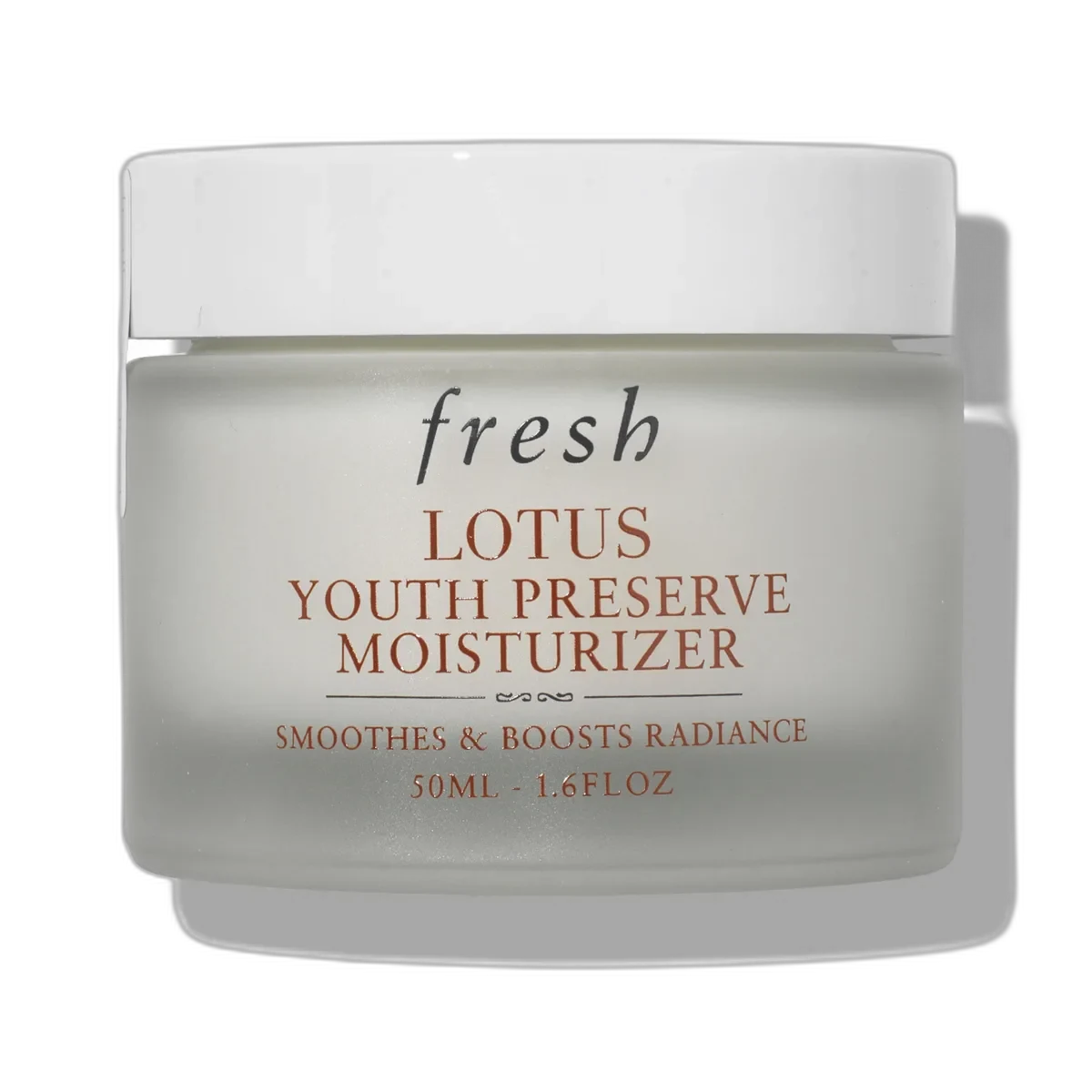
Lotus Youth Preserve Moisturizer
Allure Award Winner
 Verified reviewer
Pros & cons.
- +Exceptionally lightweight texture absorbs instantly and layers perfectly under SPF and makeup
- +Silicone-free reformulation appeals to clean beauty preferences without sacrificing texture
- +Adenosine provides evidence-backed anti-wrinkle support behind the scenes
- +Polyglutamic acid creates an effective moisture-retaining surface film
- +Multi-humectant system with glycerin, betaine, sodium PCA, and PGA covers hydration well
- +Mini size available at $17 for low-commitment trial
- +Allure Best of Beauty award-winning formula
- −Lotus and star fruit extracts lack independent peer-reviewed evidence for anti-aging claims
- −Lemon peel oil introduces phototoxic risk and fragrance allergens unnecessarily
- −Glass jar packaging is impractical and unhygienic for daily use
- −Price-to-ingredient ratio favors brand premium over formulation value
- −Not hydrating enough for dry skin types as a standalone moisturizer
- −Brand is not cruelty-free due to China market requirements
The full review.
Somewhere around 2020, Fresh quietly reformulated the Lotus Youth Preserve Moisturizer. Out went the hyaluronic acid and dimethicone. In came polyglutamic acid and sunflower seed oil. The jar stayed the same. The price stayed the same. The lotus extract — the entire reason this product exists — stayed the same. If you weren’t reading ingredient lists, you’d never know anything changed. Which raises a question worth asking: does it matter?
The Lotus Youth Preserve has always occupied a specific niche in the anti-aging landscape. It’s the moisturizer you buy when you’re not quite ready for retinol, when ‘anti-aging’ still feels like a category you’re visiting rather than living in. Fresh positions it as preventive care — protecting what you have rather than rebuilding what you’ve lost. And in that framing, it works reasonably well.
Texture
The texture is its strongest selling point. This is a genuinely lightweight cream that absorbs almost instantly and leaves a satin finish that works beautifully under sunscreen and makeup. The reformulation’s removal of dimethicone means it now achieves this without silicones — a move that reads as both market-savvy and actually beneficial for users who find silicones congesting. The new formula relies on its emollient blend — caprylic/capric triglyceride, ethylhexyl palmitate, sunflower seed oil — to provide the slip and moisture that dimethicone previously handled.
Myth
Glycerin leads the active hydration effort at an estimated four to five percent concentration. It’s joined by betaine, a natural osmolyte that stabilizes cell hydration, sodium PCA, and the newly added sodium polyglutamate. This last ingredient is the reformulation’s headliner — Fresh markets it as a humectant that outperforms hyaluronic acid in water retention. The claim has some basis: polyglutamic acid’s high molecular weight allows it to form an effective moisture-retaining film on the skin surface. But calling it an upgrade over hyaluronic acid is an oversimplification. Low-molecular-weight hyaluronic acid penetrates deeper into the skin; PGA works more at the surface. They’re different tools for different jobs, and the swap is better described as a lateral move than an improvement.
Reality
The lotus extract — Nelumbo nucifera — is the product’s identity ingredient, and it’s worth being honest about what it brings. Lotus contains flavonoids and polyphenols with documented antioxidant activity in laboratory settings. Fresh’s proprietary ‘Super Lotus’ complex is positioned as the formula’s anti-aging engine. But independent peer-reviewed research specifically validating topical lotus extract for anti-aging in human skin is thin. The extract likely provides some antioxidant benefit, and it certainly won’t hurt, but the marketing weight it carries exceeds the evidence weight behind it.
Works for
The real anti-aging workhorse in this formula is adenosine, buried further down the ingredient list but backed by genuine clinical evidence. Multiple studies have demonstrated that topical adenosine promotes collagen synthesis and reduces wrinkle depth at concentrations as low as 0.04 percent. It won’t deliver the transformation of retinol, but for a prevention-focused product, it’s a legitimate active doing real work while the lotus gets the credit.
Best for
Star fruit leaf extract, cucumber extract, and vitamin E round out the botanical cast. They contribute antioxidant support at what appear to be modest concentrations based on their positions in the ingredient list. Nice-to-haves, not game-changers.
Scent
The scent is where this product will either charm you or lose you. Lemon peel oil gives the cream a fresh, spa-like citrus-cucumber aroma that most users find pleasant. But lemon peel oil contains furanocoumarins with phototoxic potential, and it generates limonene and citral — both EU-listed fragrance allergens that must be declared on labels above certain thresholds. For an anti-aging product that users will apply in the morning before sun exposure, the inclusion of a potentially phototoxic citrus oil is a head-scratcher. Fresh could achieve a similar sensory experience with safer alternatives.
Common Praise
Performance-wise, this delivers on hydration and texture improvement within the first week. Skin looks more radiant, feels softer, and has a smoothness that makes it a genuinely good canvas for makeup. Over several weeks, the adenosine contribution may provide modest wrinkle-depth improvement. But if you’re looking for visible anti-aging transformation — the kind where you see real change in fine lines and firmness — this formula doesn’t have the actives to deliver that. No retinoid, no vitamin C, no AHA, no peptides with robust clinical evidence.
Packaging
The packaging remains a glass jar — beautiful, heavy, and impractical. No spatula, no pump option, no travel-friendly alternative. At forty-five dollars, this is more accessible than many Fresh products, and the availability of a seventeen-dollar mini makes trial commitment reasonable.
Common Complaints
The Allure Best of Beauty award on the packaging tells you this product has fans, and those fans aren’t wrong. As a daily lightweight moisturizer that hydrates, protects with antioxidants, and provides a gorgeous texture, it delivers. But the ‘Youth Preserve’ positioning implies a level of anti-aging potency that the ingredient list doesn’t fully support. It’s a nice moisturizer with a beautiful story about lotus flowers. Just don’t expect the lotus to do what retinol does.
Ingredient analysis.
Full INCI list
Aqua (Water), Glycerin, Propylene Glycol Dicaprylate/Dicaprate, Cetearyl Alcohol, Pentylene Glycol, Caprylic/Capric Triglyceride, Ethylhexyl Palmitate, C10-18 Triglycerides, Betaine, Polyglycerin-3, Nelumbo Nucifera Extract, Citrus Limon (Lemon) Peel Oil, Averrhoa Carambola Leaf Extract, Cucumis Sativus (Cucumber) Fruit Extract, Helianthus Annuus (Sunflower) Seed Oil, Tocopherol, Cetearyl Glucoside, Sorbitol, Caprylyl Glycol, Potassium Cetyl Phosphate, Behenyl Alcohol, Carbomer, Silica, Sodium PCA, Cetyl Alcohol, Stearyl Alcohol, Butylene Glycol, Pentaerythrityl Tetraisostearate, Sodium Hydroxide, Xanthan Gum, Adenosine, Sodium Polyglutamate, Sodium Phytate, Propanediol, Caramel, Chlorphenesin, Sodium Metabisulfite, Potassium Sorbate, Sodium Benzoate, Limonene, Citral
Skin match.
The science.
The Science
Adenosine is the most scientifically substantiated ingredient in this formula. It is a nucleoside with well-documented topical anti-aging activity. A randomized, placebo-controlled trial in the Journal of Cosmetic Science (Abella et al., 2007) shows that applying topical adenosine twice daily significantly reduces skin roughness. Shaikh et al. (2016) explained the mechanism in the British Journal of Pharmacology: adenosine A2A receptor stimulation promotes collagen type I and type III synthesis in human dermal fibroblasts via cAMP/PKA and beta-catenin signaling. This provides a mechanistic basis for the cream's wrinkle-smoothing claims.
Sodium polyglutamate is the reformulation's key addition. This fermentation-derived polymer has a high water-binding capacity. Its molecular weight (typically around 2,000 kDa) means it works as a surface-level humectant, forming a moisture-retaining film instead of penetrating deeply. While some marketing claims it is superior to hyaluronic acid, the two ingredients work through different mechanisms at different skin depths. PGA excels at immediate surface hydration and texture smoothing; low-molecular-weight HA penetrates the stratum corneum more effectively for deeper hydration. Swapping HA for PGA in this formula changes the hydration approach rather than providing an objective upgrade.
Nelumbo nucifera (lotus) extract contains quercetin, kaempferol, and other flavonoids with antioxidant activity in laboratory assays. However, independent research has not yet explored how in vitro antioxidant capacity translates to clinically meaningful anti-aging benefits when applied topically. Fresh's claims for their Super Lotus complex rely on brand-conducted consumer perception studies rather than published peer-reviewed clinical trials. The antioxidant contribution is plausible but lacks independent quantification for this specific formulation.
Citrus limon peel oil is notable from a photobiology perspective. Expressed lemon peel oil contains bergapten and other furanocoumarins that cause phototoxic reactions when skin meets UV radiation. The concentration in this formula is likely below the IFRA-recommended phototoxic threshold, but the ingredient adds risk to a product for daytime use. This is especially true for consumers concerned about skin aging, which UV exposure drives.
References
- Formulation, characterization, and efficacy of an adenosine-containing dissolvable film for a localized anti-wrinkle effect — Journal of Cosmetic Science (2007)
- Adenosine A(2A) receptor promotes collagen type III synthesis via beta-catenin activation in human dermal fibroblasts — British Journal of Pharmacology (2016)
Dermatologist Perspective
Dermatologists generally view lightweight antioxidant moisturizers as reasonable preventive care for younger patients not yet using retinoids or aggressive anti-aging treatments. Board-certified dermatologists note that adenosine has a legitimate evidence base for modest anti-wrinkle effects, making it a reasonable inclusion. However, dermatologists would likely recommend stronger actives — retinoids, vitamin C, or AHAs — for patients wanting visible improvement in fine lines and skin texture. Most dermatologists would find the lemon peel oil concerning, as they advise against photosensitizing ingredients in daytime products, particularly for patients worried about aging.
Where it fits in your routine.
Apply a dime-sized amount to clean skin every morning and evening after cleansing and treatment serums. Press it into the face and neck using upward motions. In the morning, use sunscreen SPF 30 or higher, as the lemon peel oil content increases sun sensitivity. At night, use it as the final step for normal skin or layer it under a thick night cream for drier skin. The quick absorption and smooth finish make it a good makeup primer.
At $45 for 1.6 ounces — about $28 per ounce — this costs less than most Fresh products. It remains premium for a moisturizer using inexpensive, common active ingredients (glycerin, adenosine, polyglutamic acid). The lotus and star fruit extracts add uniqueness but lack proven value. A $17 0.5 oz mini is a reasonable trial option. The same price buys moisturizers with stronger anti-aging actives and better evidence bases. The value rests on texture, brand experience, and the Allure award — intangibles that matter to some consumers more than others.
Normal to combination skin types in their late twenties to mid-thirties want a lightweight, daily anti-aging moisturizer that focuses on prevention rather than repair. This silicone-free formula works well for users without fragrance sensitivities who want a spa-like sensory experience.
Avoid the lemon peel oil and potential comedogenic ingredients if you have fragrance sensitivities, rosacea, or acne-prone skin. Mature skin seeking visible wrinkle reduction needs stronger actives than this formula provides. Budget-conscious shoppers find similar hydration at a fraction of the price.
Product details.
This lightweight, silky cream feels soft and slightly fluffy. It absorbs in 30 seconds to a minute without leaving grease. The texture is thinner than typical anti-aging creams.
Lemon peel oil and cucumber extract create a light, fresh cucumber-and-citrus scent. Most users find the scent pleasant and spa-like. It fades minutes after application.
A frosted glass jar has a pale green-tinted lid, matching the Lotus line's botanical aesthetic. The jar looks good but requires finger contact with the product. It includes no spatula. This format is not ideal for travel.
The first application feels hydrating and refreshing. The lightweight texture absorbs fast and leaves skin soft and slightly dewy. Most users feel no stinging or irritation, but those sensitive to citrus oils may feel a mild tingle. The smoothing effect shows immediately — skin feels softer and looks more radiant after the first use.
Apply to face and neck twice daily for 6-8 weeks. A 0.5 oz mini is available for trial.
12 months
spring summer
The backstory.
The Lotus Youth Preserve is Fresh's entry-level anti-aging moisturizer, designed as a prevention-focused product for consumers in their late twenties to early thirties who want to start an anti-aging regimen without the heaviness or clinical intensity of retinol-based products. The recent reformulation added polyglutamic acid and removed silicones, modernizing the formula while keeping the lotus-centric identity intact.
About Fresh
Legacy Brand (20+ years)Lev Glazman and Alina Roytberg founded Fresh in 1991 as a Boston apothecary. LVMH acquired the brand in 2000. Fresh uses botanical-forward formulations, but consumer perception studies support its claims instead of independent peer-reviewed research on proprietary complexes.
Common myths.
Lotus extract reverses signs of aging.
Lotus (Nelumbo nucifera) has flavonoids and polyphenols with antioxidant properties that protect skin from environmental damage. However, limited independent clinical research shows the anti-aging efficacy of topical lotus extract. The adenosine in this formula has the strongest evidence for wrinkle reduction.
Polyglutamic acid is always better than hyaluronic acid.
Polyglutamic acid has a higher molecular weight and forms a better surface film, but low-molecular-weight hyaluronic acid penetrates deeper. They work differently: PGA hydrates and smooths the surface, while HA hydrates deeper layers. Swapping HA for PGA in the reformulation is a lateral move, not an upgrade.
FAQ.
Is the Fresh Lotus Youth Preserve Moisturizer good for oily skin?
The lightweight texture suits combination skin, but the formula uses oils and emollients — caprylic/capric triglyceride, ethylhexyl palmitate, sunflower seed oil — that feel too thick for oily skin. Some users report it works for oily skin in cooler months but feels too heavy in summer.
Does the Fresh Lotus Youth Preserve Moisturizer really reduce wrinkles?
Clinical evidence shows the adenosine in this formula reduces wrinkles modestly over 4-8 weeks of consistent use. The lotus and star fruit extracts provide antioxidant protection to help prevent new damage. This is a prevention and maintenance product; it does not reverse wrinkles like retinol or professional treatments.
Is the Fresh Lotus Youth Preserve Moisturizer fragrance-free?
No. The formula uses citrus limon (lemon) peel oil, limonene, and citral — all fragrance components. The scent is light citrus-cucumber, but these ingredients irritate sensitive skin and are EU-listed fragrance allergens. This is not the best choice for fragrance sensitivities.
What changed in the Fresh Lotus Youth Preserve reformulation?
The current formula replaces sodium hyaluronate with sodium polyglutamate (polyglutamic acid), removes dimethicone (making it silicone-free), adds sunflower seed oil, and swaps the preservative system from phenoxyethanol to chlorphenesin. The lotus extract and adenosine remain. This reformulation follows current clean beauty trends.
Can I use the Fresh Lotus Youth Preserve Moisturizer with retinol?
Yes. The formula's hydrating and antioxidant ingredients buffer retinol irritation. Apply retinol first, wait a few minutes, then layer this moisturizer on top. Glycerin, betaine, and polyglutamic acid maintain hydration while retinol works. Always use sunscreen the next morning.
Is there a mini size of the Fresh Lotus Youth Preserve Moisturizer?
Yes — a 0.5 oz (15 ml) mini costs about $17. This lets you test the formula before buying the full-size 1.6 oz ($45) jar. Because of the fragrance content and potential breakouts, testing the mini first is a smart move.
Community
What the community says.
"Lightweight and fast-absorbing without feeling greasy"
"Works beautifully as a makeup primer base"
"Pleasant spa-like cucumber and citrus scent"
"Noticeable hydration boost and improved skin radiance"
"Silicone-free formula appeals to clean beauty preferences"
"Good for normal to combination skin in warmer months"
"Price is steep relative to formulation quality and botanical evidence"
"Contains lemon peel oil and fragrance allergens that limit sensitive skin use"
"Some users report breakouts especially on the chin area"
"Glass jar packaging is neither hygienic nor travel-friendly"
"Anti-aging claims feel overstated for the botanical-focused ingredient list"
"Not hydrating enough for genuinely dry skin types"