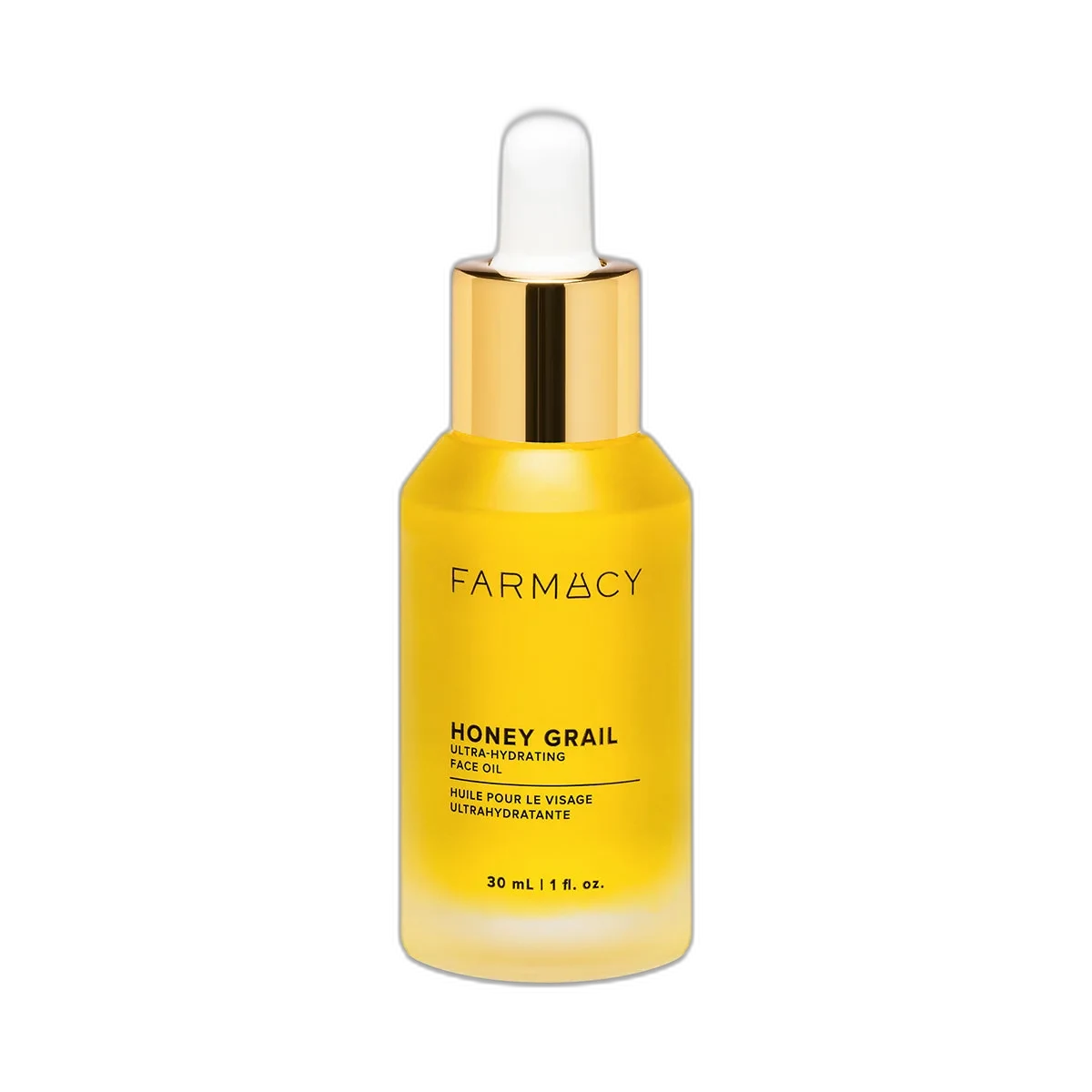
Honey Grail Ultra-Hydrating Face Oil
Bee-Powered Glow Oil
 Verified reviewer
Pros & cons.
- +Bee-derived trinity of honey, propolis, and royal jelly provides multi-pathway skin nourishment
- +Diverse botanical oil blend covers the full essential fatty acid spectrum including rare omega-7
- +Produces an immediate lit-from-within glow that persists into the next morning
- +Independently tested and certified non-comedogenic despite containing coconut oil derivatives
- +Leaping Bunny certified cruelty-free with clean beauty formulation standards
- +Silicone-free and paraben-free with minimal synthetic ingredients
- +Sea buckthorn included as both fruit and seed oil for complete nutrient extraction
- −Contains bergamot essential oil which is a known photosensitizer
- −Thicker sticky texture during absorption may deter lightweight oil enthusiasts
- −Contains coconut oil as the fourth ingredient which some acne-prone skin reacts to
- −Not vegan due to bee-derived ingredients including honey propolis and royal jelly
- −Premium price of $48 for a 1 oz bottle adds up with daily use
The full review.
Honey Grail looks almost alchemical in its bottle. The golden oil catches light like liquid amber, and unscrewing the dropper cap releases a warm, genuine honey fragrance. This face oil does not pretend to be clinical or invisible; it announces itself. For the right skin type and season, it earns that drama.
Farmacy centers its brand on bee-derived ingredients, but Honey Grail expresses this philosophy most purely. While other products in the line use honey extract as a supporting player, Honey Grail gives it top billing alongside propolis and royal jelly. This bee-ingredient trilogy provides humectant hydration, anti-inflammatory protection, and amino acid nourishment through three distinct biochemical pathways. This is not a honey-scented oil; it is an oil built on what honey, propolis, and royal jelly do for skin.
The carrier oil blend shows intentional formulation. Instead of using a single oil, the team composed a blend spanning the essential fatty acid spectrum. Sea buckthorn—included as both fruit and seed oil to capture different fatty acid profiles—delivers omega-7 and carotenoids. Rosehip seed oil brings linoleic acid and traces of natural trans-retinoic acid for tone-evening. Evening primrose oil contributes gamma-linolenic acid for anti-inflammatory soothing. Sunflower seed oil adds linoleic acid for lightweight barrier support. Each oil contributes to the fatty acid profile rather than serving marketing buzzwords.
Opinions on the texture divide, and for good reason. This is not a lightweight, watery oil like squalane or jojoba. It pours thick with a viscosity that evokes honey, feeling rich, glossy, and slightly tacky on the skin. That tackiness resolves within one to two minutes as the oil absorbs, leaving a dewy, luminous finish. During absorption, the feel is heavier than what light-oil devotees prefer. This is a winter evening oil, not a summer morning one.
The glow is immediate. Pressing three to four drops into the skin after a serum creates a lit-from-within radiance that lasts until the next morning. Skin feels softer, more supple, and more comfortable, especially skin battling winter dryness or dehydration. Daily use over weeks results in skin that looks healthier, more resilient, and less prone to tight, flaky patches.
The ingredient list is mostly clean, with two exceptions. First, bergamot fruit oil. This citrus essential oil contains bergapten, a furanocoumarin that causes photosensitivity and phototoxic reactions under UV light. Farmacy does not specify if their bergamot oil is bergapten-free. Including a known photosensitizer in a daily-use product without clear SPF guidance prioritizes fragrance over caution.
Second, coconut oil. The primary coconut-derived ingredients here are fractionated forms (cocoglycerides, caprylic/capric triglyceride) which are less comedogenic than whole coconut oil, but Cocos Nucifera Oil is the fourth ingredient. Farmacy’s independent non-comedogenic testing is reassuring, but acne-prone skin types should use caution.
At $48 for one ounce, Honey Grail sits in the premium face oil category. The botanical oil blend and bee-derived actives offer more complexity than many competitors at this price. The 2021 Procter & Gamble acquisition has not visibly altered the formula. One ounce lasts two to three months at three to four drops daily, making the annual cost approximately $200-290.
Honey Grail feels distinct. The honey, propolis, and royal jelly combination is not a gimmick; each ingredient provides different benefits, and the botanical oil blend covers a wider fatty acid spectrum than most single-oil or two-oil formulas. For dry and normal skin types seeking an effective oil with personality, Honey Grail delivers. Just wear your sunscreen.
Formula
### About BrandName

*About Honest Beauty*


### PM routineIngredient analysis.
Full INCI list
Cocoglycerides, Caprylic/Capric Triglyceride, Octyldodecanol, Cocos Nucifera (Coconut) Oil, Crambe Abyssinica Seed Oil, Ethylcellulose, Oenothera Biennis (Evening Primrose) Oil, Helianthus Annuus (Sunflower) Seed Oil, Hibiscus Sabdariffa Seed Oil, Rosa Moschata Seed Oil, Honey Extract, Propolis Extract, Royal Jelly Extract, Hippophae Rhamnoides Oil, Hippophae Rhamnoides Seed Oil, Helianthus Annuus (Sunflower) Extract, Citrus Aurantium Bergamia (Bergamot) Fruit Oil, Tocopherol, Oryza Sativa (Rice) Bran Extract, Water, Rosmarinus Officinalis (Rosemary) Leaf Extract, Flavor (Aroma).
Skin match.
The science.
The Science
The three bee-derived ingredients in this formula — honey extract, propolis, and royal jelly — each operate through distinct biochemical mechanisms that justify their combined inclusion. Honey extract functions as a natural humectant due to its high sugar content, drawing moisture into the skin while its natural hydrogen peroxide production provides mild antimicrobial activity. A review published in the Journal of Cosmetic Dermatology (2013) documented honey's wound-healing, anti-inflammatory, and moisturizing properties in topical applications.
Propolis, the resinous substance bees produce to seal their hives, contains over 300 identified compounds including flavonoids, phenolic acids, and terpenoids. Its anti-inflammatory and antimicrobial properties have been documented in multiple studies, with a review in Evidence-Based Complementary and Alternative Medicine demonstrating topical propolis's efficacy in reducing inflammatory markers and supporting wound healing.
Sea buckthorn oil is one of the few plant sources of palmitoleic acid (omega-7), a fatty acid that is naturally present in human skin and decreases with age. Research published in the Journal of Ethnopharmacology demonstrated that sea buckthorn oil promotes wound healing, reduces inflammation, and provides photoprotective antioxidant benefits. The inclusion of both fruit and seed oil fractions captures different nutrient profiles — the seed oil is higher in linoleic and alpha-linolenic acids, while the fruit oil concentrates palmitoleic acid and carotenoids.
Evening primrose oil's therapeutic value derives primarily from its gamma-linolenic acid (GLA) content. A study published in the International Journal of Cosmetic Science found that topical GLA application improved skin barrier function and reduced transepidermal water loss in subjects with dry skin, supporting its role as a barrier-repair ingredient in this blend.
References
- Honey in dermatology and skin care: a review — Journal of Cosmetic Dermatology (2013)
Dermatologist Perspective
Board-certified dermatologists generally view botanical face oils as beneficial supplementary moisturizers for dry and normal skin types, and the Honey Grail's diverse oil blend provides a well-rounded essential fatty acid profile. Dermatologists particularly note the inclusion of evening primrose and rosehip oils for their anti-inflammatory and barrier-repair properties. However, dermatologists consistently flag the bergamot essential oil as a concern — it is a well-documented photosensitizer that can cause hyperpigmentation and phototoxic reactions with UV exposure. Patients are typically advised to use this product in the evening only, or to ensure rigorous daily SPF application if used in the morning.
Guidance
Where it fits in your routine.
Dispense 3-4 drops into clean palms and warm by pressing hands together. Press the oil into clean, slightly damp skin after water-based serums. Use it alone, under moisturizer, or mix it into moisturizer for a lighter feel. Apply as the final evening step to seal in preceding treatments. Because of the bergamot oil, follow morning use with broad-spectrum SPF 30+. Start with 2 drops and increase based on skin needs.
At $48 for 1 fl oz, the Honey Grail costs as much as mid-to-upper prestige face oils. The formula uses bee-derived actives, dual-fraction sea buckthorn, and four botanical oils, offering more ingredient diversity than many similar-priced competitors. However, you can buy several of these oils pure for much less, and the one-ounce bottle lasts two to three months with daily use. The value depends on Farmacy's specific blend ratios and the convenience of a curated formula, which may or may not justify the premium over mixing your own oils.
Dry and normal skin types want an effective face oil with botanical complexity and a warm, natural honey fragrance. This thick oil works for seasonal dryness, dehydration, or dull skin and uses a clean beauty formulation.
Oily and acne-prone skin types sensitive to coconut oil derivatives, people with bee product allergies, fragrance-sensitive individuals, and those wanting unscented or lightweight, fast-absorbing face oils should avoid this. The thick texture also feels heavy in hot, humid climates.
Product details.
Bergamot and rosemary add subtle botanical undertones to a warm, natural honey fragrance. The scent is noticeable and pleasant, but not for users who prefer unscented products.
A glass dropper bottle with a gold cap matches Farmacy's farm-luxe aesthetic. The dropper dispenses product well, but the thick viscosity prevents it from dripping as freely as lighter oils.
The first use shows a thicker oil than most face oils on the market. This golden liquid has a honey scent and feels slightly tacky during application, but absorbs in 1-2 minutes. Skin looks dewy and glowy immediately. It requires no adjustment period and works for daily use from day one.
2-3 months with daily use of 3-4 drops
12 months
fall winter
The backstory.
The Honey Grail emerged from Farmacy's founding philosophy of combining farm-sourced ingredients with cosmetic science. The brand's fascination with bee-derived actives — evidenced across their product line — reaches its purest expression here, where honey, propolis, and royal jelly are suspended in a carrier of botanical oils selected for their essential fatty acid diversity.
About Farmacy
Established Brand (5–20 years)Farmacy launched in 2015 using a farm-to-face philosophy that pairs sustainably sourced ingredients with scientific formulation. Procter & Gamble acquired the brand in 2021. Farmacy has built credibility via Sephora placement and clean beauty certification, but its track record is shorter than legacy dermatologist-developed brands.
Common myths.
Face oils will make oily skin worse and cause breakouts.
Independent tests confirm this specific formula is non-comedogenic. Because it contains coconut oil with a high individual comedogenic rating, acne-prone individuals should patch test despite the non-comedogenic claim. The fractionated coconut oil base (cocoglycerides and caprylic/capric triglyceride) is lighter than whole coconut oil.
Honey in skincare is a gimmick; it does not benefit the skin.
Honey extract, propolis, and royal jelly each offer researched benefits. Honey is a natural humectant that heals wounds, propolis has documented anti-inflammatory and antimicrobial activity, and royal jelly contains unique proteins and fatty acids. This formula uses the combination for multi-mechanism skin nourishment.
What the community says.
"Beautiful golden glow and immediate radiance after application"
"Absorbs well despite thick honey-like consistency"
"Excellent for combating winter dryness and dehydration"
"Pleasant natural honey scent that feels luxurious"
"Non-comedogenic despite containing coconut oil"
"Thicker and stickier texture than expected for a face oil"
"Bergamot essential oil is photosensitizing and concerning for some users"
"Contains coconut oil which some acne-prone skin reacts to"
"Price is high for a 1 oz bottle of botanical oils"
"Can feel heavy in warm humid weather"
People also looked at.