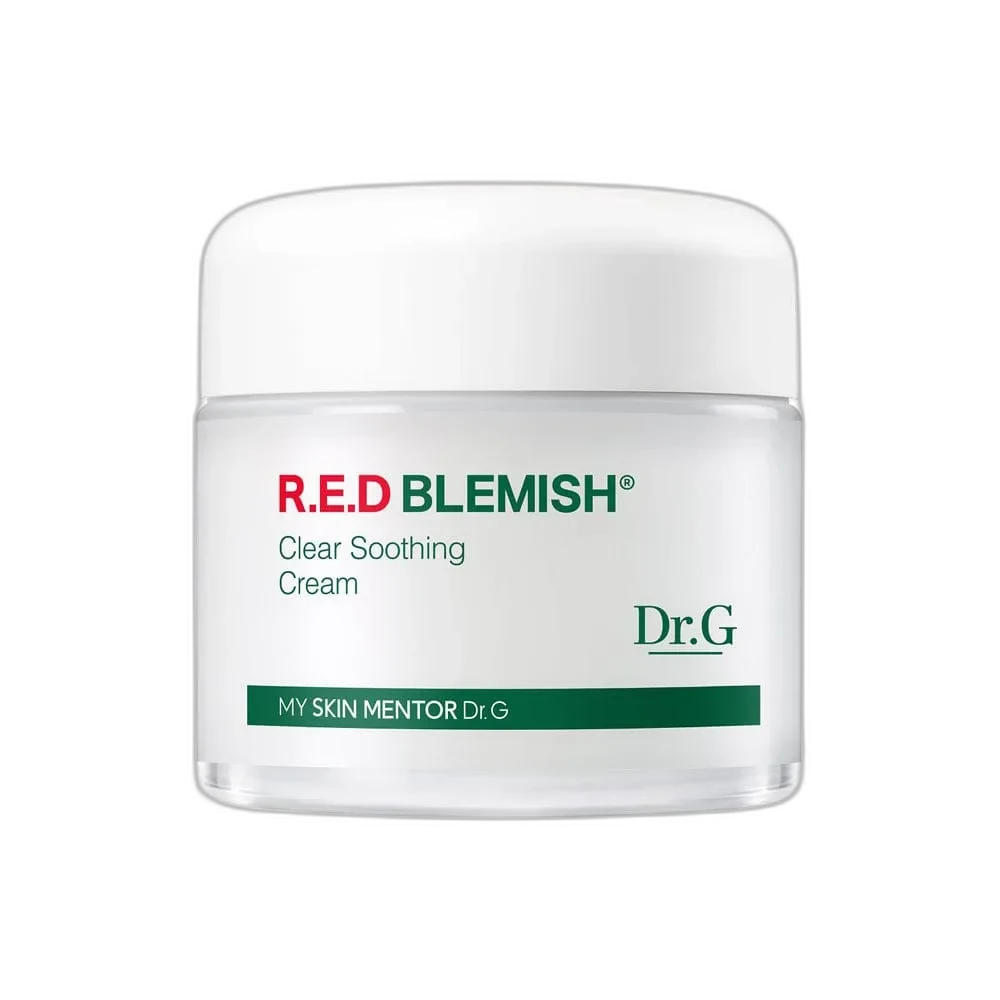
Red Blemish Clear Soothing Cream
Sensitive Skin Staple
 Verified reviewer
Pros & cons.
- +5-cica centella complex covers both whole-plant and isolated actives
- +Functional 5% niacinamide dose for barrier and post-acne mark fading
- +Fragrance-free and alcohol-free for reactive skin
- +Lightweight gel-cream texture works for combination and oily skin
- +Calms redness and soothes active breakouts effectively
- +Pairs well with retinoids and acid treatments as a recovery step
- +Over a decade of market validation and tens of thousands of reviews
- −Not rich enough for very dry skin in winter
- −70ml tube empties in 2-3 months with twice-daily use
- −Silicone finish isn't for users who prefer oil-based moisturizers
- −Not a standalone treatment for moderate-to-severe acne or rosacea
The full review.
This product built the Red Blemish line and defines Dr.G in K-beauty discussions. The cream has topped Korean drugstore bestseller charts for nearly a decade, earning tens of thousands of reviews and a reputation as a reliable sensitive-skin moisturizer from Korea. It earns this reputation through specific formulation choices. The soothing core features centella asiatica extract plus all four isolated triterpenoid actives — madecassoside, madecassic acid, asiaticoside, and asiatic acid — which Dr.G calls a ‘5-cica complex.’ Most cica creams use only the whole-plant extract and skip these more expensive isolated compounds. Using both provides synergistic phytochemistry from the extract and higher-purity doses of the plant’s best-characterized anti-inflammatory actives via the isolated molecules. Dipotassium glycyrrhizate adds a second soothing mechanism; this licorice-derived compound targets a mild cortisol-like pathway without topical steroid side effects. Beta-glucan and EGCG (from apple fruit extract) complete the anti-inflammatory botanical layer. The niacinamide is often overlooked. It is the fifth ingredient in the INCI list, meaning it sits at a meaningful concentration — widely reported around 5%. This is well into the functional range for barrier support and modest brightening of post-inflammatory hyperpigmentation. This makes the cream useful beyond acute soothing: for acne-prone users, it calms active breakouts and fades dark marks simultaneously. Most cica creams lack this second function. Panthenol supports barrier recovery and reduces the TEWL that worsens irritated skin. The base uses isoparaffins and silicones instead of heavy oils or butters. This gives the cream a lightweight gel-cream texture that works for combination, oily, and reactive skin — a rare breadth for this category. The finish is semi-matte and non-greasy, working well under sunscreen and makeup. This cream is not a heavy occlusive for very dry skin. The lightweight base hydrates most skin types, but you may need to layer a richer cream on top for significant dryness or a damaged barrier in winter. It also does not substitute for prescription acne or rosacea treatment in moderate-to-severe cases; it supports those treatments but does not replace them. This cream excels as an everyday soothing moisturizer for skin that flares periodically, combination oily users with acne and post-acne marks, early-stage rosacea, reactive skin triggered by weather, stress, or product rotation, and people recovering from overused actives. For these needs, it is one of the most reliable single-product purchases in K-beauty. The fragrance-free, alcohol-free formulation is notable because Dr.G’s Brightening Up Sun contains both. This cream shows the brand’s serious approach to sensitive skin.
Ingredient analysis.
Full INCI list
Water (Aqua/Eau), Glycerin, Butylene Glycol, C13-16 Isoparaffin, Niacinamide, C12-14 Isoparaffin, 1,2-Hexanediol, Hydrogenated Polydecene, Pentylene Glycol, Vinyl Dimethicone, Caprylyl Methicone, Hydroxyethyl Acrylate/Sodium Acryloyldimethyl Taurate Copolymer, Panthenol, Acrylates/C10-30 Alkyl Acrylate Crosspolymer, Dimethiconol, Polymethylsilsesquioxane, Tromethamine, Dipotassium Glycyrrhizate, Glyceryl Acrylate/Acrylic Acid Copolymer, Ethylhexylglycerin, Xanthan Gum, Disodium EDTA, Beta-Glucan, Centella Asiatica Extract, Madecassoside, Pyrus Malus (Apple) Fruit Extract, Epigallocatechin Gallate, Asiaticoside, Asiatic Acid, Madecassic Acid
Skin match.
The science.
The Science
This cream combines two proven strands of dermatological research. Centella asiatica's triterpenoid compounds — madecassoside, asiaticoside, asiatic acid, and madecassic acid — have documented anti-inflammatory and wound-healing effects. Research in journals like Archives of Dermatological Research shows they reduce inflammatory cytokines and support epidermal barrier repair. Studies on madecassoside specifically show effects on TGF-beta signaling and collagen synthesis for post-inflammatory recovery. The brand includes both the whole extract and isolated triterpenoids because whole-plant synergy differs from single-compound potency; using both provides a broader mechanism of action than either alone. Niacinamide at approximately 5% sits within the well-studied range for barrier support, reduction of TEWL, sebum regulation, and mild interference with melanosome transfer for post-inflammatory hyperpigmentation. Clinical research in the British Journal of Dermatology shows visible improvement in pigmentation and barrier function at this concentration over 8-12 weeks. Dipotassium glycyrrhizate is a water-soluble licorice derivative that inhibits 11-beta-hydroxysteroid dehydrogenase to produce a gentle cortisol-like soothing effect. Panthenol is a pro-vitamin B5 that skin converts to pantothenic acid, a documented humectant and barrier-support ingredient used in clinical wound-healing products.
Dermatologist Perspective
Dermatologists often recommend centella-based moisturizers for patients with post-inflammatory redness, mild-to-moderate rosacea, and acne-related reactivity. Pairing centella and niacinamide in one product matches clinical patterns where dermatologists use these ingredients for acne-prone patients needing barrier support and post-inflammatory mark management. Dermatologists frequently suggest fragrance-free and alcohol-free moisturizers for reactive and compromised skin, and this cream meets both criteria. Clinicians note that while soothing creams like this one do not substitute for prescription treatments in moderate-to-severe conditions, they support comprehensive regimens by reducing baseline reactivity and supporting barrier function during active treatment. Dr.G's Red Blemish line is a common over-the-counter option for sensitive-skin patients in Korean dermatology clinics.
Where it fits in your routine.
Apply after cleansing, toning, and any serums. Dispense a pea-sized amount, warm it between fingertips, and pat onto the face and neck. The gel-cream texture spreads easily; a small amount covers the whole face. Use in the morning before sunscreen and at night as the final step (or before a heavier occlusive if your skin needs more hydration). Use as a targeted soothing treatment on active breakouts or irritated areas if you prefer a different moisturizer for the rest of the face.
At around $30 for 70ml, the cream is priced fairly for an imported K-beauty product with this formulation depth. Western brands offering centella-plus-niacinamide moisturizers in this category often cost $40-60 for similar formulas; Dr.G is cheaper and delivers comparable or better actives. A 70ml tube lasts roughly 2-3 months with twice-daily facial use. This makes the monthly cost around $12, a reasonable price for a sensitive-skin daily moisturizer. Korean retailers sell larger sizes and occasional value packs at slightly better per-unit pricing for committed users.
Combination, oily, and normal skin types with acne-related redness, post-acne marks, mild rosacea, or reactive skin use this. It works for anyone using retinoids or exfoliants who needs a soothing companion moisturizer, or for sensitive skin that flares from stress, weather, or product rotation.
Very dry skin in winter conditions will find this cream too lightweight for hydration alone. Skip this if you have moderate-to-severe rosacea or acne requiring prescription treatment — this cream supports those regimens but does not substitute for them.
Product details.
Lightweight gel-cream that spreads into a cushioned, semi-matte finish
Neutral, essentially odorless
Standard squeeze tube
Users typically see less afternoon flush and softer post-breakout marks in the first week. The gel-cream absorbs in 30 seconds to a semi-matte finish. It has no tingling, stinging, or adjustment period; the product is designed to not irritate already-reactive skin.
About 2-3 months with twice-daily facial use
12 months
All Year
The backstory.
The Red Blemish Clear Soothing Cream became Dr.G's line-anchor product shortly after its mid-2010s launch, riding the Korean skincare wave of centella-focused 'cica' products. It's been reformulated multiple times to add more isolated cica actives and remains one of the most consistently recommended products in Korean sensitive-skin forums nearly a decade later.
About Dr.G
Established Brand (5–20 years)Dr.G launched in 2003 as a dermatologist-developed Korean brand for sensitive skin. The Red Blemish Clear Soothing Cream has been the brand's flagship for nearly a decade and stays on Korean drugstore bestseller charts.
Common myths.
Cica creams are only useful for rosacea.
Centella works through a non-specific anti-inflammatory mechanism. It treats any inflammatory redness, such as post-acne, post-retinoid, post-sun, and post-procedure redness. This cream targets 'blemish' users specifically.
The niacinamide in this cream is too low to do anything.
It sits fifth in the INCI list at a meaningful concentration. This is around 5%, which works for barrier support and modest brightening.
FAQ.
Is Dr.G Red Blemish Clear Soothing Cream good for acne?
It does not treat acne directly. The 5% niacinamide regulates sebum and barrier function, while the centella complex calms inflammation near active breakouts. Consistent use over 8-12 weeks also fades post-acne marks.
Can it replace a regular moisturizer?
Yes for combination, oily, and normal skin — the gel-cream texture hydrates these skin types. Very dry skin needs a thicker cream layered on top or a heavier night cream.
Is it safe for rosacea?
Yes — the fragrance-free, alcohol-free formulation with concentrated centella and dipotassium glycyrrhizate targets the specific inflammatory pathways that cause rosacea redness. It is common in Korean rosacea care routines.
Is it fungal acne safe?
Yes — the formula lacks most fatty alcohols, esters, and polysorbates that feed malassezia. Individual tolerance varies, so patch test if you manage fungal acne.
What's the difference between this and the Soothing Active Essence?
The essence is a light, watery layer for use under other products. The cream is a complete moisturizer with a slightly thick gel-cream texture. Use the essence as a serum and the cream as a moisturizer to use both.
Can I use it with retinol?
Yes — this works well when layering with retinol. The centella and panthenol offset retinoid irritation, and the niacinamide supports barrier function during adjustment.
Does it leave a sticky or greasy finish?
No. The gel-cream dries to a non-greasy, semi-matte finish because of the silicone content. It wears comfortably under makeup and sunscreen.
What the community says.
"Calms redness quickly"
"Lightweight gel-cream texture"
"Doesn't break out acne-prone skin"
"Helps fade post-acne marks"
"Fragrance-free"
"Not moisturizing enough for very dry skin"
"Small 70ml tube"
"Silicone finish not for everyone"