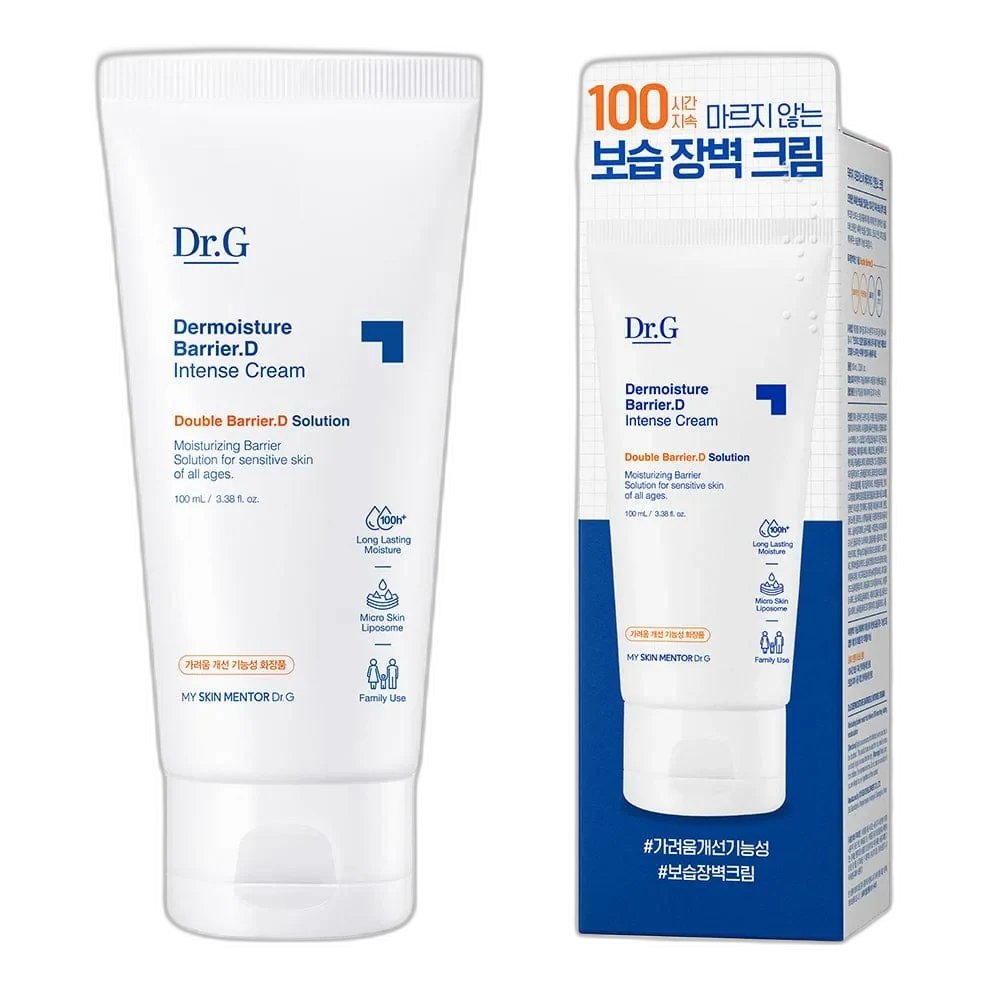
Dermoisture Barrier.D Intense Cream
K-Beauty Barrier-Repair Bargain
 Verified reviewer
Pros & cons.
- +Biomimetic three-ceramide complex with cholesterol rivals premium derm brands
- +Dual urea humectant system provides hydration and mild smoothing
- +Colloidal oatmeal is a rare inclusion at this price point
- +Madecassoside and centella complex provides serious anti-inflammatory action
- +Fragrance-free and suitable for eczema-prone and reactive skin
- +Exceptional value — comparable quality to creams costing twice as much
- +Rich but absorbent texture that doesn't feel heavy after application
- −Jar packaging is less hygienic than pump alternatives
- −Shea butter content makes this less suitable for oily or acne-prone skin
- −Rich texture may feel heavy in humid summer conditions
- −Contains oats — patch test if you have oat allergies
The full review.
Finding an affordable K-beauty cream formulated with actual barrier-repair science is a pleasant surprise. Most cheap Korean moisturizers market a single ingredient like snail mucin, mugwort, or one ceramide type. They work fine, and you pay accordingly. Dr.G’s Dermoisture Barrier.D Intense Cream happens when a Korean pharmacy brand formulates above its weight class. The ingredient list resembles a La Roche-Posay or Avène product more than a $32 K-beauty jar, and the performance matches the ingredients rather than the price.
The lipid complex is notable. This cream contains ceramide NP, ceramide AP, and ceramide EOP with cholesterol and phytosphingosine. This combination reflects the biomimetic lipid research Dr. Peter Elias and colleagues pioneered in the 1990s. That research showed the specific ratio of ceramides to cholesterol to free fatty acids matters more for barrier recovery than total lipid content. A biomimetic 3:1:1 ratio heals faster than any single lipid alone, while inverted ratios can slow recovery. Most affordable moisturizers skip this specificity and use only a single ceramide type. This formula includes three types plus supporting lipids, the approach used by premium dermatological brands. Whether Dr.G hits the exact ratio is hard to verify without the full formulation, but using these three components together shows the formulator read the same research as premium brands.
The humectant and softening components are equally thoughtful. Glycerin acts as the primary water-binding humectant. Sodium hyaluronate provides surface and mid-depth hydration. The dual urea system—standard urea plus hydroxyethyl urea—makes this cream genuinely interesting. Urea is an underrated ingredient in dermatological moisturizers; it provides humectant action at low concentrations and a mild keratolytic effect at higher ones to smooth rough, thickened texture from chronic dryness. It is a standard ingredient in medical-grade European moisturizers (Eucerin uses urea extensively) but appears less often in K-beauty. Its presence shows the Dr.G formulator approached barrier repair from a clinical angle rather than a cosmetic one.
The soothing and anti-inflammatory ingredients are impressive for the price. Madecassoside and centella asiatica extract provide cica’s wound-healing and anti-inflammatory signaling. Colloidal oatmeal is also included. This detail matters because colloidal oatmeal is an FDA-recognized skin protectant that provides itch relief and anti-inflammatory action through avenanthramides. It rarely appears in affordable moisturizers because it is expensive and requires careful formulation. Including it shows a dermatologist-founded brand understands the molecule’s function rather than just marketing signals. Panthenol, beta-glucan, allantoin, bisabolol, and tocopherol round out the formula.
The texture suits a barrier-repair cream for dry and sensitive skin. It is thick and cushiony in the jar but spreads easily, absorbs well, and leaves a soft satin finish instead of a greasy layer. Users with compromised barriers typically report immediate cooling and less redness within the first week, with full barrier-repair effects appearing over two to six weeks depending on the damage. It layers well over K-beauty serums and ampoules and works as a buffering moisturizer over retinoids at night for users needing both collagen support and barrier care.
A few caveats exist. The jar packaging is functional but less hygienic than an airless pump; use clean fingers or a small spatula. The shea butter and rich emollient base make this better for dry, normal, and sensitive skin than for oily or acne-prone users; the texture targets hydration rather than oil control. In humid summer climates, it may feel heavy, though it works year-round in temperate climates. While it is fragrance-free, users with oat allergies should patch test due to the colloidal oatmeal.
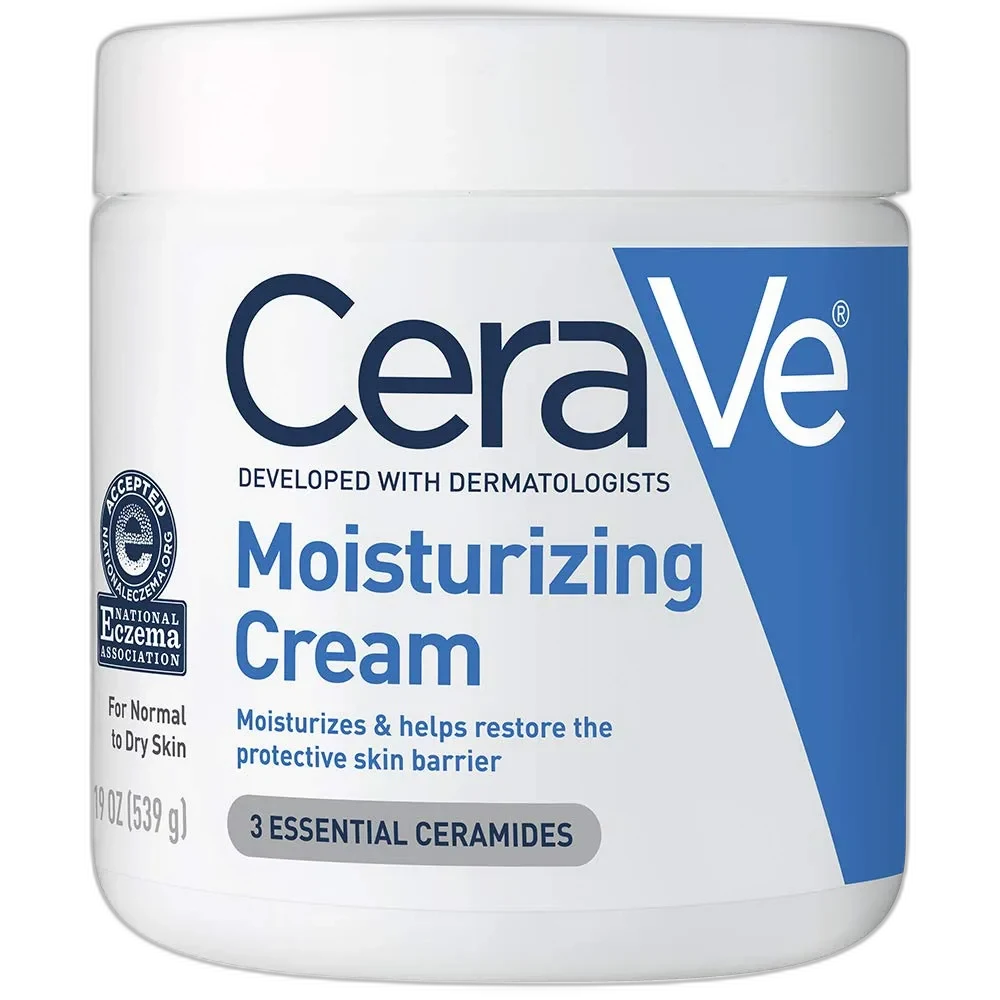
The value is clear. At $32 for 100ml, this costs roughly a third of comparable premium barrier creams like La Roche-Posay Toleriane Double Repair, Avène Tolerance Control, or Vanicream Moisturizing Cream for similar sizes, with comparable ingredient sophistication. CeraVe Moisturizing Cream costs less and covers ceramide basics, but lacks the urea complex, cica components, and colloidal oatmeal. If you want an upgrade from CeraVe without premium derm brand prices, this is a defensible move. For users with compromised barriers, eczema-prone dryness, or post-treatment recovery, the ingredient combination and price are unusually strong. Dr.G is not a flashy K-beauty brand found on most TikTok lists, but it is a reliable Korean pharmacy workhorse, and this cream earns its reputation.
Ingredient analysis.
Full INCI list · pH 5.5
Water/Aqua/Eau, Glycerin, Butyrospermum Parkii (Shea) Butter, Caprylic/Capric Triglyceride, Cetearyl Alcohol, Propanediol, Dimethicone, Squalane, Panthenol, Niacinamide, Ceramide NP, Ceramide AP, Ceramide EOP, Cholesterol, Phytosphingosine, Hydroxyethyl Urea, Urea, Sodium Hyaluronate, Centella Asiatica Extract, Madecassoside, Beta-Glucan, Allantoin, Bisabolol, Colloidal Oatmeal, Tocopherol, Glyceryl Stearate, PEG-100 Stearate, Xanthan Gum, Carbomer, Sodium Hydroxide, Disodium EDTA, Caprylyl Glycol, Phenoxyethanol, Ethylhexylglycerin
Skin match.
The science.
The Science
The ceramide-cholesterol-free fatty acid complex in this cream reflects foundational barrier lipid research. A 1993 paper by Man and Elias in the Journal of Clinical Investigation demonstrated that a biomimetic ratio of skin lipids produces faster barrier recovery than any single lipid alone, while inverted ratios can actually delay healing. Subsequent work through the 1990s and 2000s established that different ceramide subtypes (NP, AP, EOP, and others) contribute distinct functions to stratum corneum lipid organization, supporting the multi-ceramide approach used in this formulation. Urea's role as both a humectant and mild keratolytic is well-established in dermatological practice. A 2012 review in the Journal of Wound Care examined urea-containing formulations and confirmed their efficacy for dry, rough, compromised skin across a range of conditions. Colloidal oatmeal is FDA-recognized as a skin protectant and its anti-inflammatory activity is documented through avenanthramides — a 2015 paper in the Journal of Drugs in Dermatology reviewed multiple clinical studies showing colloidal oatmeal's efficacy in atopic dermatitis, pruritus, and barrier repair. Madecassoside, the purified triterpene fraction of Centella Asiatica, has been studied for wound-healing signaling and collagen modulation, with a 2008 paper in the Journal of Dermatological Science demonstrating measurable effects on fibroblast activity. Niacinamide's ability to stimulate endogenous ceramide synthesis has been confirmed in controlled studies. Panthenol's contribution to barrier lipid synthesis and immediate soothing is documented across cosmetic and medical literature. Together, the ingredient roster reflects a comprehensive and evidence-aligned approach to barrier restoration that would not look out of place in a premium pharmaceutical-grade moisturizer.
Dermatologist Perspective
Dermatologists frequently emphasize that effective barrier repair requires replacing the specific lipid components that compromised skin has lost, controlling inflammation, and providing humectant hydration. The formulation strategy in this cream addresses all three principles — the biomimetic ceramide complex, the madecassoside and colloidal oatmeal anti-inflammatory layer, and the dual urea humectant system collectively reflect approaches dermatologists use when counseling patients with chronic dryness, sensitivity, eczema, or post-procedure recovery. Board-certified dermatologists often note that the ceramide-cholesterol ratio matters more than the presence of ceramides alone, which is one reason single-ceramide products sometimes underperform expectations on severely compromised skin. The inclusion of colloidal oatmeal, a drug-monograph skin protectant with documented itch-relief activity, is particularly notable at this price point. For patients with eczema, compromised barriers, or reactive skin who are looking for an accessible and effective daily moisturizer, this type of formulation represents a strong at-home option.
Where it fits in your routine.
Apply morning and evening as your final hydration step, after serums and treatments. Use a pea to almond-sized amount via a clean spatula or fingertip. Warm it briefly between fingertips, then press into face and neck. It works best on damp skin to lock in hydration from previous layers. At night, layer over retinoids to buffer. It is safe for morning use under sunscreen. Apply more generously during active barrier recovery, winter dryness, or post-procedure healing.
At $32 for 100ml, the ingredient sophistication offers exceptional value. Comparable premium derm-brand options — La Roche-Posay Toleriane Double Repair, Avène Tolerance Control, Eucerin Advanced Repair — cost $25-45 for similar or smaller sizes, and most lack the full multi-ceramide complex plus the cica and colloidal oatmeal combination. CeraVe Moisturizing Cream is cheaper (around $18 for a similar size) but only covers ceramide basics without the urea system or the anti-inflammatory layer. Smaller travel sizes exist, which helps test tolerance before buying the full jar. Using this well-formulated cream twice daily for three to four months costs about $0.15-0.20 per use.
Users with dry, sensitive, compromised, or eczema-prone skin want an effective, affordable barrier-repair cream. It works well for K-beauty routine users needing a high-performing final moisturizer, retinol users needing a buffering cream, and winter-skin sufferers in cold climates. It also works for post-treatment recovery and general barrier maintenance.
Users with oily or very acne-prone skin will find the shea butter too thick and need gel-cream alternatives. Users with confirmed oat allergies must avoid this due to the colloidal oatmeal content. Those who prefer pump packaging over jars have better options, though the jar works for most users with clean application habits.
Product details.
Rich, cushiony cream with a cooling application feel
Fragrance-free
White jar with screw-top lid, 100 ml; smaller travel sizes also available
The first application provides immediate cooling and deep hydration. The thick texture absorbs more fully than it feels in the jar, leaving a soft satin finish instead of a heavy greasy layer. Users with compromised barriers often see visible redness reduction within the first few uses.
About 3-4 months with twice-daily face application
12 months
fall winter
The backstory.
Dr.G launched this cream in 2015 as the flagship of the Dermoisture Barrier.D line, targeting the Korean market's growing awareness of 'sensitive skin' as a distinct category requiring specialized care. Over the following decade, it became one of the brand's bestsellers, driven by word-of-mouth among Korean users dealing with winter dryness, compromised barriers from over-exfoliation, and post-treatment recovery. The formula has been refined through multiple updates to add newer barrier-repair ingredients.
About Dr.G
Established Brand (5–20 years)Dr.G (Dr. Gowoonsesang) was founded in 2003 and has been a pharmacy staple in South Korea for over two decades. Backed by dermatologist Dr. Ahn Gun-Young, the brand has built a reputation for sensitive-skin-focused barrier repair formulas popular in K-beauty routines.
Common myths.
K-beauty barrier creams are all basically the same formula
K-beauty barrier creams vary widely in quality. This one uses three ceramide types and cholesterol in a biomimetic ratio. Most affordable K-beauty options skip this level of formulation sophistication, using only a single ceramide or a proprietary extract.
A barrier cream in a jar can't be as effective as one in a pump
Jar packaging slightly compromises preservation by exposing active ingredients to air and fingers. However, a well-preserved jar formulation like this one stays stable for months of regular use. The texture and efficacy do not change; use clean fingers or a spatula to scoop.
FAQ.
How does this compare to CeraVe Moisturizing Cream?
Both are ceramide-based barrier creams at similar prices. CeraVe uses ceramides 1, 3, and 6-II. The Dr.G formula uses ceramides NP, AP, and EOP plus cholesterol and phytosphingosine. Dr.G also has madecassoside, colloidal oatmeal, and dual urea. Both have comparable quality; pick based on skin type and texture preference.
***
Is this cream suitable for eczema-prone skin?
Yes — the colloidal oatmeal, ceramide complex, and madecassoside treat the barrier dysfunction and inflammation seen in eczema. The fragrance-free formulation helps eczema-prone users. Consult your dermatologist before using any new product during active eczema flares.
***
Can I use this cream over retinol?
Yes, it layers well as a buffering moisturizer over retinoid treatments. The ceramide complex offsets retinol-induced barrier compromise, and the soothing ingredients calm retinol-associated redness. Apply after your retinoid absorbs for a few minutes.
***
Will this cream feel too heavy for oily skin?
Likely yes — the shea butter and thick emollient base suit dry, normal, and combination skin best. Oily users usually prefer gel-cream or lotion textures. However, very dehydrated oily skin still gains from the barrier-repair effects, especially at night in dry climates.
***
Is this cream safe during pregnancy?
Yes — the formula lacks retinoids, salicylic acid, or other restricted ingredients. Ceramides, urea, niacinamide, and cica are safe for pregnancy. Always confirm with your OB before using new products.
***
Why is there urea in a face cream?
Urea is a humectant that pulls moisture into skin. At higher concentrations, urea has mild keratolytic effects to soften rough, thickened skin. In a barrier-repair cream, urea hydrates and smooths the dry, rough texture common in compromised skin. It is a well-established dermatological ingredient.
***
Community
What the community says.
"Deeply hydrating without heaviness"
"Calms reactive and irritated skin"
"Fragrance-free"
"Excellent value for the ingredient quality"
"Rich texture may feel heavy in summer"
"Contains shea butter (not ideal for acne-prone)"
"Jar packaging less hygienic than airless pump"