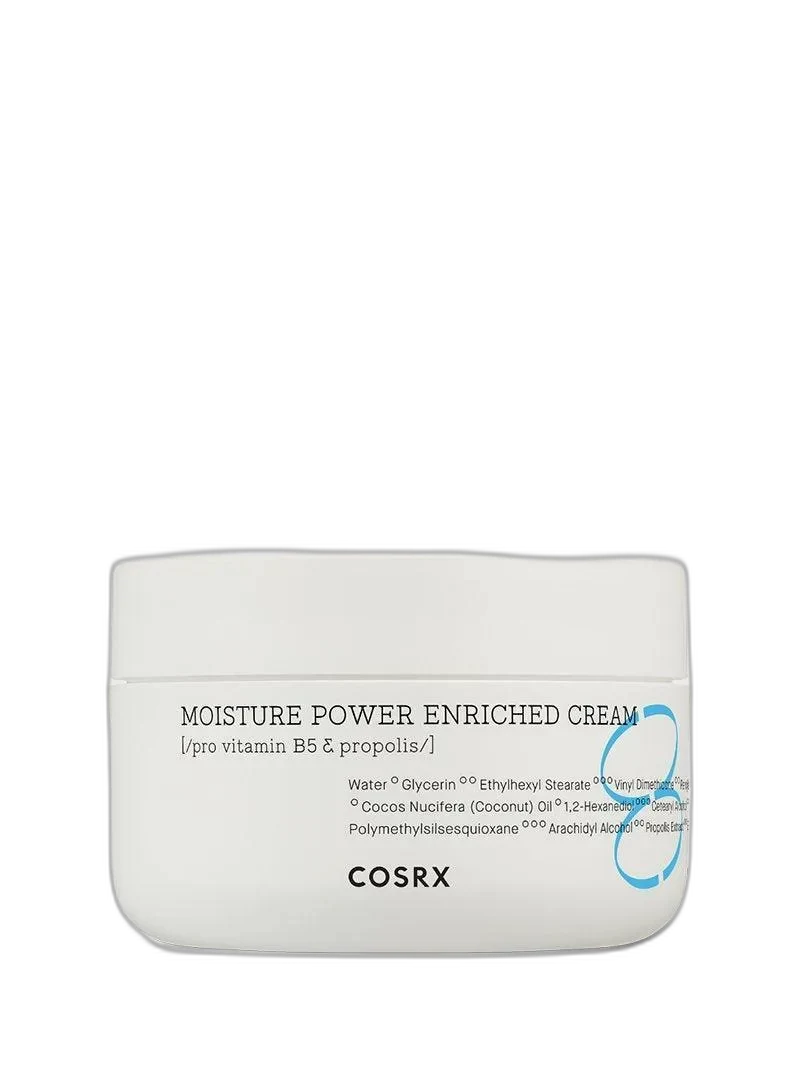
Hydrium Moisture Power Enriched Cream
Barrier Repair Workhorse
 Verified reviewer
Pros & cons.
- +Genuine lipid-repair complex with Ceramide NP, cholesterol, and glycosphingolipids — not just token ceramide inclusion
- +Triple-weight hyaluronic acid delivers hydration at multiple skin depths simultaneously
- +Velvety, luxurious texture that feels premium despite the accessible price point
- +Panthenol and propolis provide proven soothing and anti-inflammatory benefits
- +Fragrance-free and dermatologist-tested — suitable for sensitized and post-procedure skin
- +Works effectively as both a daytime moisturizer and a night cream
- +Excellent retinol buffer — the barrier-repair ingredients help counteract retinoid irritation
- −Contains coconut oil (comedogenic rating 4/5) — risky for acne-prone or oily skin
- −Not vegan due to propolis extract (bee-derived ingredient)
- −Jar packaging is less than ideal for ingredient stability and hygiene
- −50ml size depletes relatively quickly for a twice-daily cream at $25
- −Contains silicones, which some users prefer to avoid
The full review.
For years, barrier repair belonged to pharmacy brands. If your skin was compromised, sensitized, or peeling from retinol, you used CeraVe or La Roche-Posay and accepted a clinical, no-frills experience. K-beauty owned the sensorial side—smooth textures, innovative formats, and glass-skin looks—but rarely made serious lipid-repair formulas. The COSRX Hydrium Moisture Power Enriched Cream, launched in 2019, occupies both spaces.
The cream’s lipid architecture is what makes it interesting. Ceramide NP is not alone; it includes cholesterol and glycosphingolipids, the two other essential parts of the skin’s intercellular lipid matrix. Research shows ceramides work best when paired with cholesterol and free fatty acids in ratios that mimic the skin’s natural composition. A 2021 study in Skin Pharmacology and Physiology (Danby et al.) showed that a lipid mixture with Ceramide NP and diverse-chain fatty acids significantly restored barrier function impaired by topical corticosteroids. This cream contains the supporting cast that makes ceramides work, not just a label claim.
COSRX layers a ‘Water Blanket System’ over this lipid foundation: panthenol acts as the humectant, plus three molecular weights of hyaluronic acid—standard HA, sodium hyaluronate, and hydrolyzed HA. This multi-weight approach is more than marketing. Research on hyaluronic acid penetration shows lower molecular weight forms reach deeper into the epidermis, while high molecular weight HA forms a hydrating film on the surface. Using all three creates a hydration gradient from the surface to deeper layers. Panthenol, with decades of barrier-repair evidence in Proksch et al.’s 2017 review, connects the hydration and repair systems.
Propolis extract adds anti-inflammatory benefits for sensitized skin. A 2022 systematic review and meta-analysis in Evidence-Based Complementary and Alternative Medicine (Ribeiro et al.) confirmed propolis helps skin healing through flavonoid-driven anti-inflammatory and antimicrobial effects. Here, propolis acts as a calming agent to prevent inflammation from undermining barrier repair.
Texture
The texture shows its K-beauty DNA. Despite the heavy-duty barrier-repair ingredients, this cream does not feel medical. It is velvety—almost implausibly so for a functional product. Silicones (vinyl dimethicone and polymethylsilsesquioxane) create a smooth, silky spread that melts into skin without the heavy, greasy finish of a ceramide cream containing coconut oil. It feels like a thick lotion that vanishes on contact, leaving a satin finish that sits under sunscreen without pilling.
Scent
Regarding the coconut oil: Cocos nucifera oil is sixth on the INCI list, meaning a significant concentration. With a comedogenic rating of 4 out of 5, this is a concern for acne-prone or oily skin. COSRX likely used it for emollient and skin-softening properties; the silicone-based delivery matrix may mitigate the comedogenic risk. However, this is not a gamble for everyone. If coconut oil causes breakouts, skip this. The Green Tea Gel Cream from the same line is the acne-safe alternative.
Best for
The cream works well for its target: dry, sensitive, and compromised skin. Dry patches soften within days. The tight, flaky feeling of dehydrated skin in winter fades within the first week. By week four, skin feels more resilient and less reactive to minor irritants that caused redness. This is barrier repair you feel, not just a marketing promise.
Packaging
The jar packaging is a recurring COSRX blind spot. A cream with ceramides, cholesterol, and propolis—all sensitive to oxidation—needs an airless pump. The screw-top jar works but is not ideal for hygiene or ingredient stability. At $25 for 50ml, the price is fair for the formula but not cheap. K-beauty retailers often discount it to $18-22, where the value is better.
This cream earns respect through formulation, not marketing. COSRX did not print ‘CERAMIDE BARRIER COMPLEX’ in bold on the box; the lipid trio sits quietly in the middle of the ingredient list. For dry and sensitive skin types wanting K-beauty texture and Western-grade barrier science, the Hydrium Moisture Power Enriched Cream is a thoughtful option at this price. Check the ingredient list first if coconut oil is your nemesis.
Ingredient analysis.
Full INCI list
Water, Glycerin, Ethylhexyl Stearate, Vinyl Dimethicone, Pentylene Glycol, Cocos Nucifera (Coconut) Oil, 1,2-Hexanediol, Cetearyl Alcohol, Panthenol, Polymethylsilsesquioxane, Arachidyl Alcohol, Propolis Extract, Hydroxyethyl Acrylate/Sodium Acryloyldimethyl Taurate Copolymer, Polyglyceryl-6 Stearate, Butylene Glycol, Carbomer, Behenyl Alcohol, Glyceryl Stearate, Tromethamine, Dimethiconol, Caprylyl Glycol, Arachidyl Glucoside, Hydrogenated Lecithin, Ceramide NP, Ethylhexylglycerin, Xanthan Gum, Sucrose Stearate, Polyglyceryl-6 Behenate, Sodium Polyacrylate Starch, Stearic Acid, Palmitic Acid, Sodium Hyaluronate, Cholesterol, Hyaluronic Acid, Glycosphingolipids, Hydrolyzed Hyaluronic Acid
Skin match.
The science.
The Science
This formula uses a three-component lipid system: Ceramide NP, cholesterol, and glycosphingolipids. The stratum corneum needs a specific ratio of ceramides, cholesterol, and free fatty acids to keep its barrier intact. When harsh cleansers, environmental damage, or eczema disrupt this ratio, transepidermal water loss increases and irritants enter the skin. A 2021 study in Skin Pharmacology and Physiology (Danby et al.) shows that a lipid mixture with Ceramide NP and diverse fatty acid chain lengths restores barrier function impaired by topical corticosteroids. This confirms multi-lipid approaches work better than single-ceramide formulations.
The triple-weight hyaluronic acid system hits different penetration depths. Research on hyaluronic acid molecular weight shows lower molecular weight forms (like the hydrolyzed HA in this formula) penetrate deeper into the epidermis, while standard high molecular weight HA forms a hydrating surface film. Sodium hyaluronate, the salt form, provides intermediate penetration. This stratified approach maximizes both immediate surface hydration and sustained deeper moisturization.
Extensive research supports Panthenol's barrier-repair properties. Proksch et al.'s 2017 review in The Journal of Dermatological Treatment covered 70 years of evidence and documented how dexpanthenol improves skin hydration, reduces transepidermal water loss, and maintains skin softness and elasticity. In a randomized controlled trial by the same group, dexpanthenol accelerated barrier repair after experimental irritation more than a vehicle alone.
Propolis extract provides anti-inflammatory support via its flavonoid and phenolic acid content. A 2022 systematic review and meta-analysis in Evidence-Based Complementary and Alternative Medicine (Ribeiro et al.) evaluated propolis in wound-healing contexts. It confirmed propolis works as an anti-inflammatory, antimicrobial, and angiogenesis-promoting agent—properties that support skin recovery in this barrier-repair context.
References
- A Lipid Mixture Enriched by Ceramide NP with Fatty Acids of Diverse Chain Lengths Contributes to Restore the Skin Barrier Function Impaired by Topical Corticosteroid — Skin Pharmacology and Physiology (2021)
- Topical use of dexpanthenol: a 70th anniversary article — The Journal of Dermatological Treatment (2017)
- Use of propolis for skin wound healing: systematic review and meta-analysis — Evidence-Based Complementary and Alternative Medicine (2022)
- Ceramides in Skin Health and Disease: An Update — Biomolecules (2021)
Dermatologist Perspective
Dermatologists value multi-lipid formulations for barrier repair. This cream's use of Ceramide NP, cholesterol, and glycosphingolipids matches current stratum corneum biology. Board-certified dermatologists often recommend ceramide-containing moisturizers for eczema, post-procedure sensitivity, and retinoid-induced dryness. The panthenol and propolis add anti-inflammatory support that dermatologists note helps calm reactive skin. One concern dermatologists would flag is the coconut oil content—patients with acne or comedone-prone skin should use caution despite the otherwise excellent formulation profile.
Where it fits in your routine.
After cleansing and applying toners, essences, and serums, warm a small amount (about the size of a blueberry) between fingertips. Press it gently into your face and neck, targeting dry or irritated areas. Do not rub, as rubbing disrupts the ceramide film. In the AM, wait 1-2 minutes before applying sunscreen. In the PM, use this as the final step or seal with a sleeping mask for dry skin. When using retinol, apply this cream after your retinoid absorbs to buffer irritation.
At $25 for 50ml, this cream costs more than most COSRX products but stays below Western ceramide creams with similar ingredients. The formulation—genuine lipid-repair trio, triple-weight HA, panthenol, and propolis—outperforms its price. K-beauty retailers often sell it for $18-22, offering excellent value for a sophisticated barrier-repair cream. The small jar size lowers the value; a 100ml option would improve the cost-per-use. COSRX's 13-year track record justifies the price—the brand has earned consumer trust through consistent formulation quality.
This cream works for dry, sensitive, or compromised skin seeking K-beauty texture and barrier-repair ingredients. It suits retinol users needing a buffer, winter-skin sufferers, and anyone with a moisture barrier damaged by over-exfoliation or harsh products.
Those with oily or acne-prone skin should approach with caution due to the coconut oil content. Vegan consumers should note the propolis extract. If you prefer silicone-free or oil-free formulas, the Hydrium Green Tea Gel Cream from the same line is a better fit.
Product details.
Fragrance-free with no discernible scent.
White cylindrical jar with a screw-top lid follows the Hydrium line's clean, minimalist aesthetic. It does not include a spatula.
The velvety texture feels soft and high-end for the price. It provides immediate comfort upon first application. There is no adjustment period, purging, or tingling. Dry patches look smoother within the first few days of use.
2-3 months with twice-daily application
12 months
fall winter
The backstory.
COSRX designed this as the Hydrium line's richer counterpart to the Green Tea Gel Cream, recognizing that their dry-skin customers needed more than water-based hydration. Launched in 2019, it brought ceramide-based barrier repair into COSRX's characteristically minimalist, affordable framework — a space previously dominated by CeraVe and La Roche-Posay in the West.
About COSRX
Established Brand (5–20 years)COSRX launched in 2013 in South Korea. It has a strong reputation in K-beauty for effective, minimalist formulations. Skincare communities and beauty professionals widely recommend the brand, though extensive user feedback validates its products more than proprietary clinical research.
Common myths.
Coconut oil in moisturizers always causes breakouts.
Coconut oil has a 4/5 comedogenic rating and affects acne-prone skin, but its effect depends on concentration and the formula matrix. In this cream, it is one of several emollients inside a silicone-based delivery system that may reduce direct pore contact. People with known coconut oil sensitivity should patch test.
Use a dedicated ceramide cream; regular moisturizers do not repair the barrier.
Any well-formulated moisturizer provides barrier support. This cream uses Ceramide NP, cholesterol, and glycosphingolipids to offer targeted lipid replacement that simpler formulas lack. This combination mirrors the skin's natural lipid ratio. It works better for compromised barriers than ceramide alone.
FAQ.
Is the COSRX Hydrium Moisture Power Enriched Cream good for acne-prone skin?
Use caution — this cream contains coconut oil, which has a comedogenic rating of 4/5. The formulation is gentle and fragrance-free, but people with acne-prone or oily skin should patch test first or choose the oil-free Green Tea Gel Cream from the Hydrium line instead.
Can I use this cream with retinol?
Yes — this cream's ceramide-cholesterol lipid complex and panthenol work well with retinol treatments. Apply your retinol first, wait a few minutes, then layer this cream on top. The barrier-supporting ingredients buffer retinol irritation and maintain skin hydration.
Is the COSRX Hydrium Moisture Power Enriched Cream vegan?
No — this cream contains propolis extract, a bee-derived ingredient. COSRX is cruelty-free and does not test on animals, but this specific product is not vegan. The Green Tea Gel Cream in the same line is both cruelty-free and vegan.
How does this compare to the COSRX Hydrium Green Tea Gel Cream?
The Moisture Power Enriched Cream is thick, using a ceramide-cholesterol complex and coconut oil for dry and sensitive skin. The Green Tea Gel Cream is lightweight and oil-free for oily and combination skin. These are the winter and summer options in the same line.
Does this cream contain silicones?
Yes — the formula uses vinyl dimethicone, polymethylsilsesquioxane, and dimethiconol. These silicones create a velvety texture and seal in moisture. They are non-comedogenic and most skin types tolerate them, but those seeking silicone-free formulas should look elsewhere.
Is this safe to use during pregnancy?
Yes — this cream lacks retinoids, salicylic acid, or other ingredients flagged as unsafe during pregnancy. Its fragrance-free formula uses barrier-repair ceramides and soothing panthenol to address the increased skin sensitivity many experience during pregnancy.
Can I use this as a night cream?
The thick texture and barrier-repair ceramide complex work well as a night cream when skin repair is most active. For very dry skin, apply a thin layer of sleeping mask or occlusive to seal in hydration overnight.
What the community says.
"Deep, long-lasting hydration without heaviness or greasiness"
"Velvety texture that melts into skin and feels luxurious"
"Excellent at calming redness and soothing irritated, sensitized skin"
"Works well as both a daytime and nighttime moisturizer"
"Effectively addresses dry patches and flaking within days"
"Good base under sunscreen without pilling"
"Contains coconut oil, which is comedogenic and may cause breakouts for acne-prone users"
"Some users report hydration evaporates quickly in very dry climates"
"50ml jar runs out relatively fast for a daily-use cream"
"Jar packaging is less hygienic than a pump or tube"