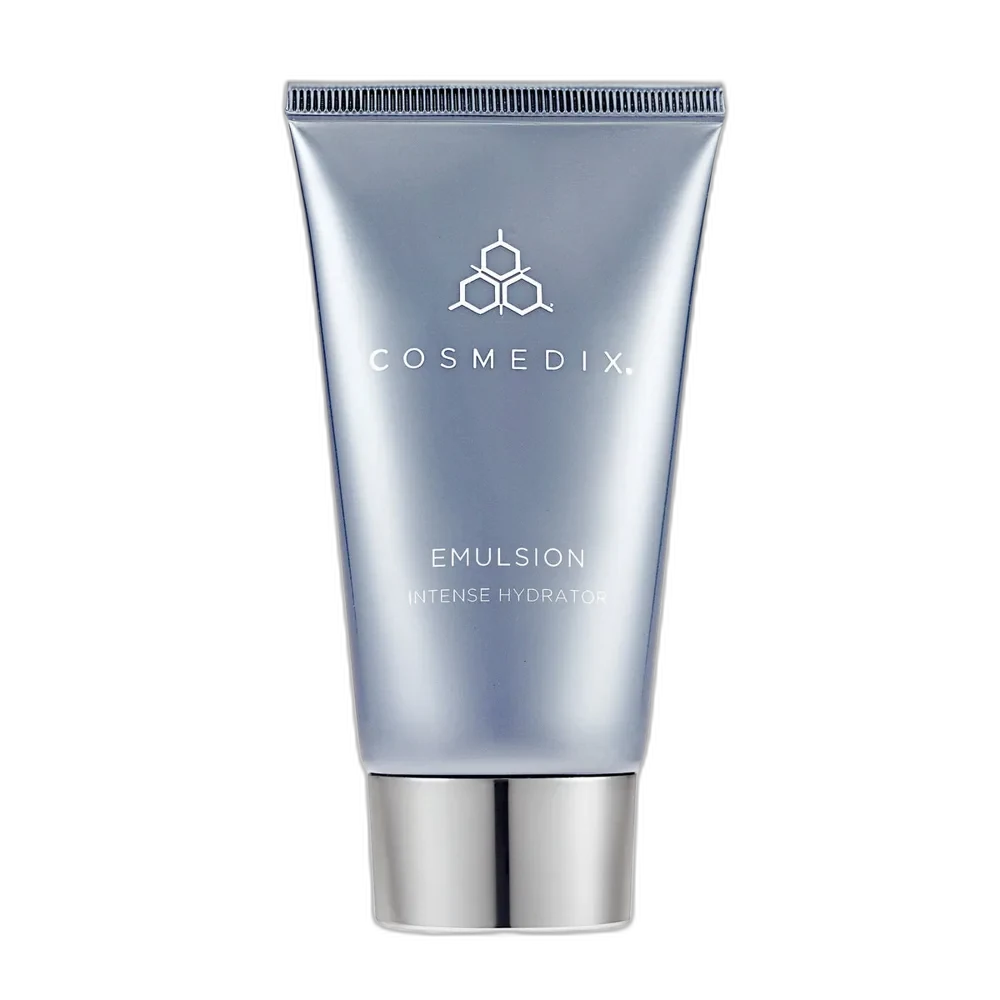
Emulsion Intense Hydrator
Post-Procedure Comfort Cream
 Verified reviewer
Pros & cons.
- +Lipid-led formula rebuilds barrier with squalane and essential fatty acid-rich oils
- +Immediate cushion and tightness relief on first application
- +Works fast on post-procedure and over-treated skin
- +Fragrance-free and free of the usual sensitizers
- +Pregnancy-safe for use during active-free windows
- +Satin finish layers cleanly under SPF without pilling
- −Expensive relative to comparable squalane and plant-oil barrier creams
- −Only one size offered — no value-tier larger jar
- −Too rich for oily or very congestion-prone skin
- −Shea butter may not suit the small subset of users with acne triggers
The full review.
There’s a moment every active-skincare user knows. You wake up the morning after stacking a glycolic toner under a retinoid, and your cheeks feel tight in a way that isn’t hydration tightness — it’s the tight, waxy feeling of a compromised barrier that’s quietly panicking. Your usual gel moisturizer won’t touch it. Your heavy winter cream feels like it’s smothering the problem instead of fixing it. You need something that will hand your skin back the exact lipids and water it lost overnight, then get out of the way. That is the specific moment Cosmedix Emulsion Intense Hydrator was built for.
Emulsion has been a fixture in the Cosmedix range for the better part of two decades, and it’s one of those products that never makes the internet’s best-of lists but quietly lives in the back bar of aesthetician studios everywhere. Cosmedix positions it as the recovery partner for clients using the brand’s retinol ladder, which tells you everything you need to know about who it’s really aimed at: people who are using actives seriously enough to occasionally blow past their skin’s tolerance. It’s not a morning-routine moisturizer for someone whose barrier is healthy and humming along. It’s a reset button.
The formula is lipid-led, which is the key distinction from most of the barrier creams you’ll find in a drugstore. Ceramide creams rebuild the barrier by supplying ceramides directly — a valid and well-studied approach. Emulsion takes a different path, handing the skin essential fatty acids and triglycerides that the stratum corneum can incorporate into its lipid matrix. Squalane anchors the lipid profile, mimicking the skin’s native sebum and sliding into the gaps between corneocytes. Shea butter provides occlusive scaffolding and fatty acid richness. Evening primrose oil brings gamma-linolenic acid, which supports barrier lipid synthesis. Rosehip oil contributes linoleic acid and trace natural provitamin A. Panthenol, sodium hyaluronate, allantoin, and bisabolol round out the humectant and calming layer. The overall effect is a cream that reads as rich without actually behaving as heavy.
On first application, Emulsion feels cushioned and substantial for about thirty seconds, then melts down into a satin finish that doesn’t feel wet or greasy. You can layer another product over it without pilling — though frankly, the whole point is that you shouldn’t need to. Tightness disappears within minutes. Over the next five to ten days of twice-daily use, the roughness and patchy redness of a compromised barrier typically start to resolve, and by the three-week mark most users report their skin feeling fully recovered. That timeline aligns with what you’d expect from barrier repair research: the corneocyte turnover cycle needs about four weeks to fully replace damaged lipid scaffolding, and a good barrier cream can shave several days off that recovery window by reducing ongoing transepidermal water loss during repair.
Where Emulsion stumbles is, predictably, price and fit. Sixty-two dollars for 1.7 ounces puts it firmly in the professional-channel premium tier. The ingredient deck is legitimately good, but it is not better than a number of less expensive creams built around the same squalane and plant oil philosophy. You are paying for the Cosmedix positioning, the professional distribution, and the specific formulation restraint that comes from a brand that’s had two decades to refine it. Whether that premium is worth it depends on whether you are the specific user Emulsion was built for — someone whose skincare routine regularly pushes barrier tolerance, someone who needs a reliable recovery cream they trust, someone who has tried cheaper alternatives and found them unreliable at the task.
It’s also worth being honest about who Emulsion is not for. Oily skin users will likely find it heavier than their baseline needs. Acne-prone users should patch test because shea butter is occasionally implicated in congestion, even though the overall formula is relatively balanced. Users whose skin tolerates a plain ceramide cream without fuss don’t need to upgrade to this. And people looking for a do-everything daily moisturizer with a treatment dimension (a retinoid, a dedicated vitamin C layer, growth factors) won’t find those here — Emulsion deliberately stays in its lane as a repair-focused hydrator.
For the person it’s actually built for, though, Emulsion earns its shelf space. It’s the cream that turns a retinoid-induced flare-up into a three-day detour instead of a two-week meltdown. It’s the cream that rescues your skin from a weekend of skiing or a transatlantic flight. It’s the cream your aesthetician hands you as you’re leaving after a peel. That is a specific and valuable role, and Cosmedix has been good at it for a long time.
Formula
### About Cosmedix
### Texture
### Scent
### Packaging
### Best Season
### Common Praise
### Common Complaints
### Pairs Well With
### Conflicts With
### Best for
### Works for
### Not ideal for
### AM routine
### PM routine
Ingredient analysis.
Full INCI list · pH 5.5
Aqua (Water), Caprylic/Capric Triglyceride, Glycerin, Cetearyl Olivate, Sorbitan Olivate, Squalane, Cetyl Alcohol, Shea Butter (Butyrospermum Parkii), Tocopheryl Acetate, Evening Primrose Oil (Oenothera Biennis), Rosehip Oil (Rosa Canina Fruit Oil), Panthenol, Sodium Hyaluronate, Allantoin, Bisabolol, Aloe Barbadensis Leaf Juice, Xanthan Gum, Phenoxyethanol, Ethylhexylglycerin, Disodium EDTA
Skin match.
The science.
The Science
Cosmetic dermatology research clearly identifies effective barrier repair strategies. The most evidence-backed approach replaces lost lipids—ceramides, cholesterol, and free fatty acids—in an approximately 1:1:1 ratio. Emulsion does not provide ceramides directly, but it delivers a meaningful fatty acid load via squalane, shea butter, evening primrose oil, and rosehip oil. Clinical studies on atopic skin show that gamma-linolenic acid from evening primrose oil supports barrier function and reduces transepidermal water loss over several weeks of topical use. Squalane is a proven non-comedogenic emollient that integrates with the skin's native sebum profile. Published data supports panthenol's role in barrier recovery, especially for irritant contact dermatitis and after aesthetic procedures; it is a reliable repair-supporting humectant in cosmetic literature. Sodium hyaluronate's water-binding behavior is well-characterized; when layered under lipid occlusives like those in this formula, it reduces surface water loss overnight. Bisabolol and allantoin provide documented anti-inflammatory and soothing action to calm redness and itching in compromised skin. No peer-reviewed trial compares this specific Cosmedix formula against comparable barrier creams—head-to-head testing is rare in the professional-channel tier and matters when weighing the price.
Dermatologist Perspective
Dermatologists routinely recommend lipid-rich moisturizers for patients recovering from procedures, using retinoids, or with compromised barriers from over-exfoliation. Clinical guidance typically emphasizes twice-daily application, avoiding further active ingredients during acute recovery, and gentle cleansing only. Aesthetician offices frequently sell products like Emulsion in post-procedure kits because the plant-oil and squalane-based lipid profile tolerates peels, microneedling, and resurfacing treatments well. Board-certified dermatologists note that consistent use matters more than specific lipid composition—any well-formulated barrier cream applied reliably twice a day supports recovery, and Emulsion's formulation meets that bar.
Where it fits in your routine.
Apply morning and night to damp skin after cleansing and hydrating serums. Press a dime-sized amount into the full face instead of rubbing. For active barrier recovery, use twice daily for at least three weeks before changing frequency. The formula layers cleanly under mineral or chemical sunscreens, so your morning routine stays the same. During acute recovery phases (post-peel, over-exfoliation), skip all active ingredients — retinoids, acids, vitamin C — until the barrier is visibly restored.
At $62 for 1.7 ounces, this sits in the premium professional-channel bracket. The ingredient deck is well-constructed, but clinical-positioned brands often offer similar lipid-led barrier creams for two-thirds the price. Cosmedix's premium price reflects professional distribution and formulation restraint, not a specific ingredient advantage on the label. For users whose active routines cause regular barrier stress, this reliability has value—a cream that consistently works beats a cheaper alternative that fails sometimes. For casual users, the math is harder to justify. No larger size exists, so committed users cannot access better per-ounce pricing.
Serious active skincare users occasionally exceed their barrier's tolerance. This lipid-led recovery cream works well for dry and sensitive skin types. It also suits clients in post-procedure recovery windows who need a reliable, fragrance-free barrier cream.
Oily or acne-prone users wanting a lighter daily moisturizer. Skip this if you already tolerate a less expensive ceramide-based cream, or if you want a moisturizer with a treatment component like retinol or vitamin C.
Product details.
Cushiony whipped cream that melts into skin with a soft satin finish
Faint lipid and botanical note; no added fragrance
An airless tube with a small dispensing opening prevents plant oils from oxidizing.
Provides cushion and tightness relief within minutes. Use more than a typical lightweight cream because the formula is thick — a dime-sized amount covers the full face.
Approximately 2.5–3 months with twice-daily face application
12 months
fall winter
The backstory.
Emulsion has been a fixture in the Cosmedix range since the brand's early years, positioned as the recovery partner for clients using the brand's retinol ladder. Aestheticians reach for it after peels and resurfacing sessions because the lipid profile mirrors what compromised skin needs most in the first 72 hours.
About Cosmedix
Cosmedix is a professional-channel brand founded in 2005. It uses lipid-replenishing and plant-derived actives and sells primarily through licensed aestheticians. The brand has a steady reputation in treatment rooms and a loyal following for its retinol ladder, but lacks published peer-reviewed clinical trials on its specific formulas.
Common myths.
Rich lipid creams always clog pores.
Shea butter is mildly comedogenic for some, but this formula uses squalane and linoleic-acid-rich oils that many acne-prone users tolerate well. Patch testing is wise for oily or congestion-prone skin.
Barrier creams only matter in winter.
Skin using retinoids, acids, or professional treatments faces year-round barrier stress. Emulsion targets that stress cycle, not just cold weather.
FAQ.
Is Emulsion Intense Hydrator good for oily skin?
Not ideally. Emulsion is a lipid-rich recovery cream using squalane, shea butter, and evening primrose oil. It works well on dry, dehydrated, or post-procedure skin. Oily users may find the texture too heavy for daily wear.
Can I use Emulsion after a chemical peel?
Yes — Emulsion works this way. Apply twice daily starting the day after your procedure (or as your provider directs). The plant oil and humectant blend supports barrier recovery.
Is Emulsion Intense Hydrator pregnancy safe?
Yes. The formula lacks retinoids, salicylic acid, or hydroquinone. Essential fatty acids and humectants are safe during pregnancy and breastfeeding.
Does Emulsion contain fragrance?
No added fragrance. Plant oils (evening primrose, rosehip) create a faint natural scent, but the formula uses no synthetic perfume.
How is Emulsion different from a basic ceramide cream?
A ceramide cream rebuilds the skin's lipid matrix by supplying ceramides directly. Emulsion uses a different approach, supplying essential fatty acids and triglycerides that the skin incorporates into the lipid layer. Both approaches work — Emulsion fits skin that tolerates plant oils well.
Is this moisturizer enough on its own or do I need a night cream?
For most users, Emulsion is thick enough for day and night use. If you live in a very dry climate or sleep in heated air, layer an occlusive balm on top at night to enhance recovery.
What the community says.
"Relieves tightness immediately"
"Calms over-treated skin"
"Cushiony but not heavy"
"Expensive for the size"
"Too rich for oily skin"
"Only one size offered"