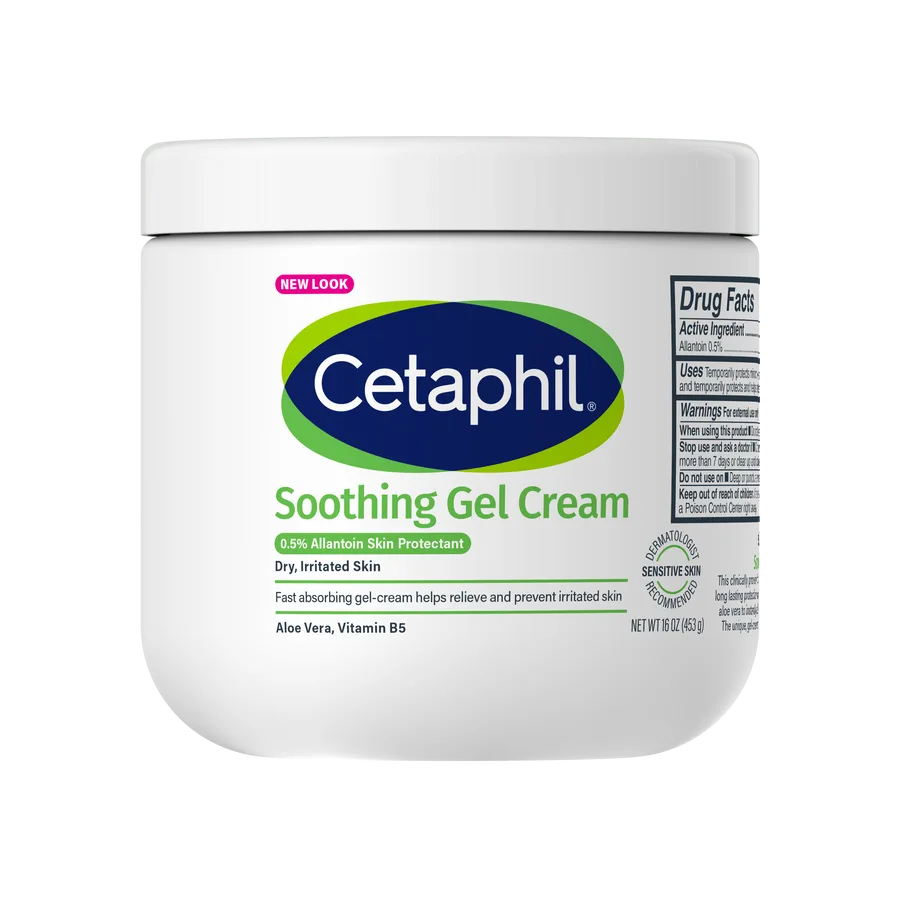
Soothing Gel-Cream with Aloe
Sensitive Skin Budget Hero
 Verified reviewer
Pros & cons.
- +FDA-regulated OTC skin protectant with pharmaceutical-grade manufacturing standards
- +Silicone-free formula uses a three-oil emollient system for naturalistic occlusion
- +Genuinely fragrance-free with no detectable scent whatsoever
- +Exceptional value at roughly one dollar per ounce for the sixteen-ounce size
- +Short seventeen-ingredient list minimizes potential sensitization triggers
- +Sunflower seed oil provides linoleic acid that supports ceramide synthesis in compromised barriers
- −Not moisturizing enough for severe dryness or harsh winter conditions without an occlusive layer
- −Slight tackiness on initial application from the allantoin protective film
- −Tub packaging requires finger-scooping which is less hygienic than a pump
- −Contains soybean oil and sorbitan oleate that are not fungal acne safe
- −Texture is more lightweight lotion than the gel-cream name suggests
The full review.
Most moisturizers sit in the cosmetics aisle under loose regulation. This one sits in a different regulatory category. The 0.5% allantoin earns an OTC drug classification from the FDA, meaning every batch meets pharmaceutical-grade Good Manufacturing Practice standards. This distinction doesn’t change the skin feel, but it confirms the consistency and quality control of the contents.
Cetaphil launched this gel-cream in early 2020 as the soothing option in a lineup that includes the Moisturizing Cream and various lotions. While those products focus on heavy-duty hydration, this formula focuses on calming irritated, reactive skin without weight. The silicone-free formulation is notable; most Cetaphil products use dimethicone for smoothness, but this one replaces silicones with a three-oil system of shea, sunflower, and soybean oils to provide occlusion via a more naturalistic ingredient profile.
The soothing strategy uses layers. Allantoin stimulates cell proliferation and suppresses inflammatory cytokines. Aloe barbadensis leaf juice powder—a concentrated form with more polysaccharides per gram than liquid aloe juice—provides a documented calming effect. Panthenol converts to pantothenic acid in the skin to improve hydration retention and support barrier recovery. Glycerin, listed second at a substantial concentration, provides the fundamental humectant work.
Texture
The texture is pleasant but the name is slightly off. “Gel-cream” suggests the bouncy, water-burst texture common in K-beauty. In practice, this is a lightweight lotion. It spreads easily, absorbs in one to two minutes, and leaves a soft satin finish. Some users report initial tackiness, likely from the allantoin forming a protective film on the skin surface. It resolves quickly and rarely bothers users.
Best for
The linoleic acid from sunflower seed oil is a key detail. Linoleic acid supports ceramide synthesis in the stratum corneum, which helps compromised barriers. Research links skin conditions like eczema and rosacea to linoleic acid deficiency in the skin’s lipid matrix. By supplying it topically via sunflower oil—a rich natural source—this formula addresses a specific biochemical gap instead of just adding generic moisture.
Not ideal for
The main limitation is moisturizing power. It provides adequate hydration for the face or mild body dryness. For severe dryness—cracked heels, sandpaper-textured eczema patches, or flaking winter skin—this is likely not rich enough alone. It is designed to soothe and protect, not to deeply occlude. Layering a heavier occlusive like Aquaphor or CeraVe Healing Ointment over dry areas is the smart move.
Who Should Buy
The value is high. You get sixteen ounces of a fragrance-free, paraben-free, silicone-free, OTC-grade soothing moisturizer for under seventeen dollars. That is roughly a dollar per ounce from a legacy dermatologist-recommended brand. A 3 oz travel size and 8 oz mid-size are also available. The economics work well for families with sensitive skin or anyone who uses body moisturizer quickly.
Works for
The ingredient list is short, with seventeen ingredients total. In skincare, brevity helps sensitive skin. Fewer ingredients mean fewer potential triggers, less formulation complexity, and more transparency. This formula does not hide actives behind processing agents or texture modifiers. What the label says is what you get.
Cetaphil does not make this product exciting. The packaging is clinical, the texture is utilitarian, and the marketing is restrained. But for people whose skin stings when applying most moisturizers, or those who have reacted to hyped products, this is one of the best options available at any price, especially at a dollar an ounce.
Ingredient analysis.
Full INCI list
Active Ingredient: Allantoin 0.5%. Inactive Ingredients: Water, Glycerin, Aloe Barbadensis Leaf Juice Powder, Butyrospermum Parkii (Shea) Oil, Caprylyl Glycol, Caprylyl/Capryl Glucoside, Citric Acid, Glycine Soja (Soybean) Oil, Helianthus Annuus (Sunflower) Seed Oil, Methylpropanediol, Panthenol, Pantolactone, Phenoxyethanol, Polyisobutene, Sodium Acrylate/Sodium Acryloyldimethyl Taurate Copolymer, Sorbitan Oleate, Tocopherol
Skin match.
The science.
The Science
The allantoin in this formula has more evidence than its reputation suggests. Allantoin stimulates fibroblast proliferation and extracellular matrix synthesis to promote wound healing and skin barrier repair. It works by suppressing pro-inflammatory cytokines like TNF-alpha and IL-6, which explains its soothing effects. The FDA recognizes allantoin as a skin protectant at 0.5-2% concentrations; this formula uses the minimum effective concentration.
Panthenol adds a second mechanism. When applied topically, panthenol penetrates the stratum corneum and converts to pantothenic acid (vitamin B5). This improves skin barrier function by stimulating lipid synthesis in keratinocytes. A narrative review in the Journal of the American Academy of Dermatology confirmed that panthenol reduces transepidermal water loss and improves stratum corneum hydration with consistent use.
The sunflower seed oil inclusion follows current research on essential fatty acid supplementation for compromised barriers. Sunflower seed oil is a top natural source of linoleic acid, a precursor to ceramide 1—a key structural lipid of the stratum corneum. Studies show that topical linoleic acid-rich oils improve barrier function in atopic dermatitis, where skin linoleic acid levels are characteristically depleted.
Dermatologist Perspective
Dermatologists value this product for its simplicity and OTC skin protectant classification, which offers more regulatory assurance than standard cosmetic moisturizers. Board-certified dermatologists often recommend gel-cream textures to patients who find traditional creams too heavy but need more than a basic lotion. The allantoin-aloe-panthenol combination is a well-characterized soothing triad that dermatologists use for post-procedure care, mild eczema maintenance, and general sensitive skin management. The silicone-free formula helps patients sensitive to dimethicone or cyclopentasiloxane.
Where it fits in your routine.
Apply liberally to clean, dry, or slightly damp skin on the face and body. Use morning and evening. A dime-sized amount works for the face. Use generous amounts on the body, especially on dry, irritated areas. Layer it under sunscreen in the morning or under a heavier occlusive at night for very dry patches. Wait one to two minutes to absorb before dressing. ### Value Assessment At roughly sixteen dollars for sixteen ounces, this offers exceptional value — about one dollar per ounce for an OTC-grade soothing moisturizer from a legacy dermatologist-recommended brand. The 3 oz travel size at around five dollars and the 8 oz mid-size offer more options. The economics suit families or volume-conscious consumers managing multiple sensitive skin types. The only value concern is if the lighter formula requires a second, heavier product for very dry areas — but the total cost stays competitive. ### Who Should Buy Anyone with dry, sensitive, or easily irritated skin seeking a lightweight, soothing moisturizer at an exceptional price point. It works for post-procedure care, eczema maintenance, and those who react to fragranced or silicone-heavy products. It is an excellent choice for families needing a shared, gentle moisturizer. ### Who Should Skip Oily and acne-prone skin types may react to the soybean oil and sorbitan oleate. Anyone with fungal acne should use an oil-free alternative. Those with severe dryness needing heavy-duty occlusion will find this too lightweight as a standalone product.
Product details.
This is fragrance-free with no detectable scent. It is one of the few moisturizers that smells like nothing.
Cetaphil uses teal and white branding. The product comes in 16 oz and 8 oz wide-mouth tubs or a 3 oz travel size squeeze tube. Finger-scooping from the tub is less hygienic than using a pump dispenser.
The gel-cream cools and calms skin immediately upon application. It absorbs within one to two minutes. Some users feel a slight tackiness that subsides. There is no tingling, burning, or adjustment period. Results show from the first use.
3-5 months with twice-daily face and body application (16 oz size)
12 months
All Year
The backstory.
Launched in early 2020 as part of Cetaphil's expansion into targeted body-care solutions for sensitive and stressed skin. The product fills the gap between Cetaphil's heavier Moisturizing Cream and lighter lotions, offering a gel-cream hybrid specifically designed to address the five signs of skin sensitivity: dryness, irritation, roughness, tightness, and weakened barrier. Its OTC drug classification reflects Cetaphil's pharmaceutical heritage through parent company Galderma.
About Cetaphil
Legacy Brand (20+ years)A pharmacist developed Cetaphil in 1947. It has been a dermatologist-recommended sensitive skincare staple for over 75 years. Galderma now owns the brand. Its products come from GMP-certified facilities and sell in pharmacies in about 100 countries.
Common myths.
Gel-creams don't provide enough hydration for dry skin
The glycerin-heavy base and three plant oils deliver clinically supported 24-hour hydration. Very dry skin in harsh climates may still need an occlusive layer, but the hydration foundation is solid.
Allantoin is just a filler ingredient in skincare
Allantoin is an FDA-recognized skin protectant at 0.5-2% concentrations. Peer-reviewed evidence shows Allantoin stimulates keratinocyte proliferation, downregulates pro-inflammatory cytokines, and accelerates wound healing. Using Allantoin as an active ingredient here meets pharmaceutical-grade standards.
FAQ.
Is Cetaphil Soothing Gel-Cream with Aloe good for eczema?
This gel-cream is not an eczema treatment, but its 0.5% allantoin skin protectant, anti-inflammatory panthenol, and soothing aloe work well for eczema-prone skin. The fragrance-free, hypoallergenic formulation minimizes triggers, and sustained hydration helps maintain the compromised barrier common in eczema.
Can I use Cetaphil Soothing Gel-Cream on my face?
Yes — the lightweight, non-comedogenic formula works on both face and body. But soybean oil and sorbitan oleate may affect acne-prone facial skin. Patch test first if you break out easily.
Is Cetaphil Soothing Gel-Cream pregnancy safe?
Yes — all ingredients, including the 0.5% allantoin, aloe, panthenol, and glycerin, are safe for pregnancy. The formula lacks retinoids, salicylic acid, or other pregnancy-restricted ingredients.
Why does Cetaphil Soothing Gel-Cream feel sticky?
Allantoin forms a protective barrier on the skin surface, which causes the slight tackiness some users notice. This is intended, as it acts as an OTC skin protectant. The feeling usually fades within a few minutes; applying a thinner layer minimizes it.
Is Cetaphil Soothing Gel-Cream with Aloe fungal acne safe?
No — this product contains soybean oil and sorbitan oleate. These oleic acid sources feed Malassezia yeast. If you have fungal acne, use an oil-free alternative.
What is the difference between Cetaphil Moisturizing Cream and Cetaphil Soothing Gel-Cream?
The Soothing Gel-Cream has a lighter texture and is silicone-free. It uses allantoin as an FDA-regulated skin protectant and aloe to soothe irritated skin. The Moisturizing Cream is thicker and uses petrolatum for deep hydration of very dry skin without the skin-protectant drug classification.
What the community says.
"Lightweight gel-cream texture absorbs fast without heaviness"
"Excellent for soothing irritated, redness-prone, and sensitive skin"
"Fragrance-free formula with no detectable scent"
"Outstanding value at sixteen ounces for under seventeen dollars"
"Provides lasting hydration without feeling heavy or greasy"
"Works well for eczema-prone skin on both face and body"
"Can feel sticky or tacky initially on some skin types"
"Not a true gel-cream texture — feels more like a lightweight lotion"
"May not be moisturizing enough for very dry skin in harsh winter conditions"
"Tub packaging requires scooping with fingers, less hygienic than a pump"
"Contains soybean oil which concerns some acne-prone users"