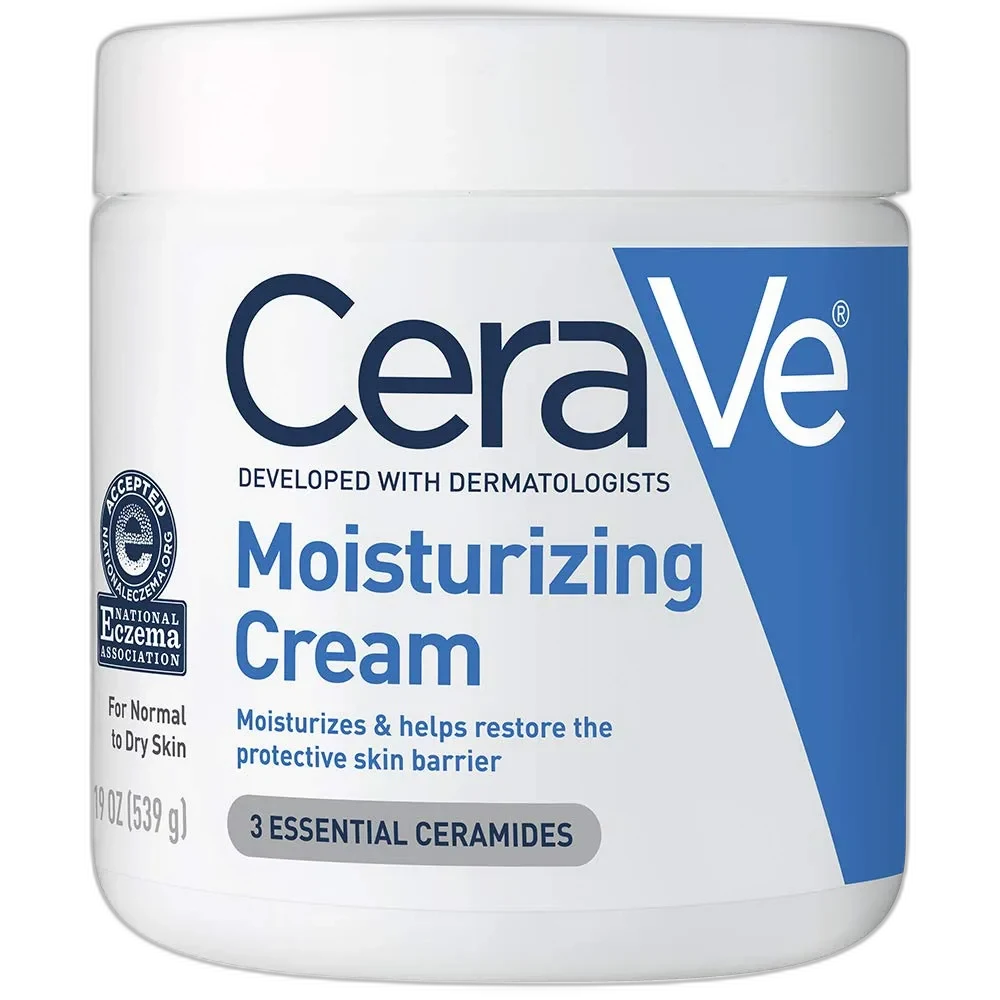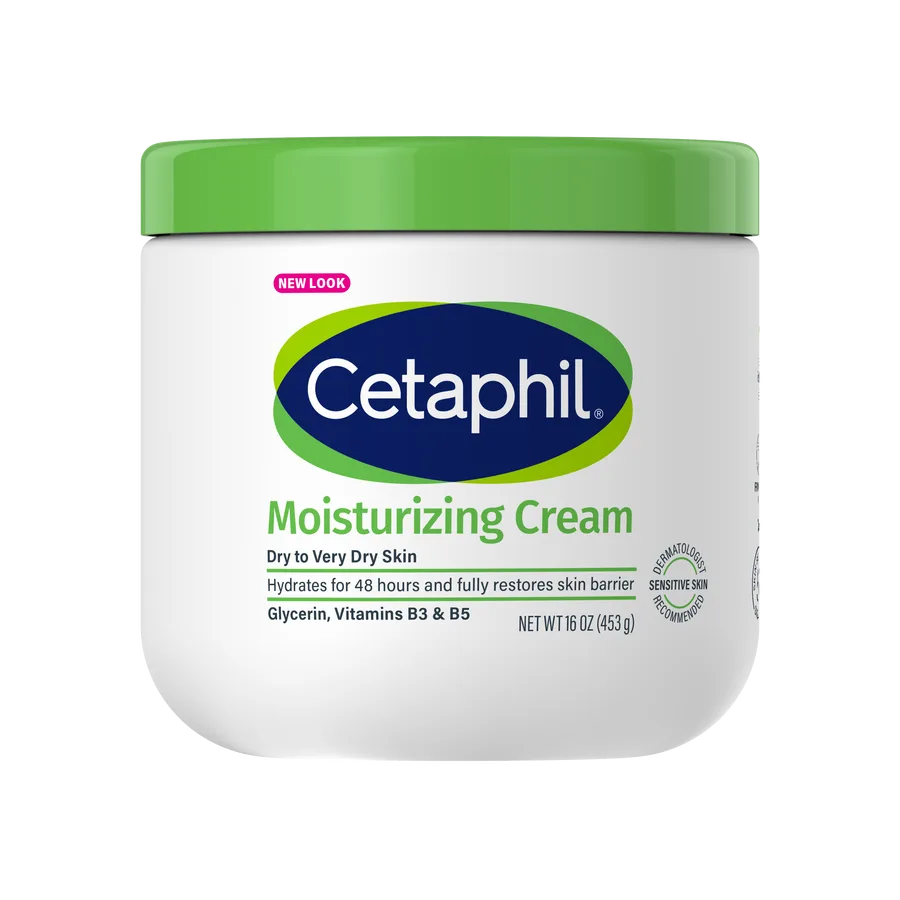
Moisturizing Cream
Derm Office Staple
 Verified reviewer
Pros & cons.
- +Petrolatum-glycerin core provides clinically proven 48-hour hydration with superior occlusive barrier
- +Niacinamide and panthenol actively rebuild the skin's own moisture-retention capabilities over time
- +National Eczema Association Seal of Acceptance validates safety for eczema-prone skin
- +Five size options from 1 oz to 20 oz accommodate every use case from travel to family use
- +Exceptional value at under $1 per ounce in the 16 oz size
- +Fragrance-free, paraben-free, and hypoallergenic for broad compatibility
- +75+ year track record of dermatologist recommendation provides unmatched clinical credibility
- −Contains sweet almond oil — a tree nut derivative that affects those with nut allergies
- −Too heavy for oily or acne-prone facial skin, especially in warm climates
- −Recent reformulation has caused reactions in some users sensitive to niacinamide or propylene glycol
- −Jar packaging requires dipping fingers in, which is less hygienic than pump dispensers
- −Petrolatum content may not suit consumers who prefer petroleum-free products
The full review.
Some skincare products become famous because a celebrity endorsed them, or because an algorithm propelled them into virality, or because their packaging photographs well on a bathroom shelf. Cetaphil Moisturizing Cream became famous because dermatologists kept writing its name on prescription pads next to instructions that read “apply liberally to affected areas.” There is no more honest endorsement in skincare than a doctor who has nothing to gain from the recommendation.
The story begins in 1947, when a Texas pharmacist created a simple emollient for patients with sensitive skin. That original formula — glycerin for moisture, petrolatum for sealing it in — was so effective in its simplicity that it barely changed for decades. Cetaphil became the brand dermatologists reached for when a patient’s skin was too reactive for anything else. Not exciting. Not Instagram-worthy. Just reliably, boringly effective.
The current Moisturizing Cream carries that DNA forward while adding a few ingredients that reflect what we’ve learned about skin barrier science since 1947. Niacinamide and panthenol — vitamins B3 and B5, respectively — now appear in the formula, and they’re not there for label appeal. Niacinamide has been shown in multiple studies to stimulate ceramide production in the stratum corneum, effectively improving the skin’s ability to hold onto moisture without external help. Panthenol penetrates the skin and converts to pantothenic acid, supporting the natural repair processes that chronically dry or eczema-prone skin struggles to complete on its own.
These additions transform the formula from a simple “seal and hydrate” moisturizer into something more like a barrier rehabilitation program. The glycerin still draws water into the stratum corneum. The petrolatum still provides the most effective occlusive seal available in cosmetic chemistry, reducing transepidermal water loss by up to 98 percent according to published research. But now the niacinamide is teaching the skin to rebuild its own lipid barrier, and the panthenol is accelerating the repair of whatever damage got the skin into trouble in the first place.
Sunflower seed oil and sweet almond oil contribute emollient fatty acids — linoleic and oleic acid — that fill in the cracks between skin cells. These plant oils add a softening dimension that pure petrolatum formulas sometimes lack. The result is a cream that manages to be intensely hydrating without feeling like you’ve slathered petroleum jelly on your skin, which is a more difficult formulation balance to strike than it might seem.
On the skin, this cream has a rich, velvety texture that’s thicker than a lotion but smoother and less sticky than an ointment. It spreads easily despite its density and absorbs within a minute or two, leaving skin feeling deeply moisturized with a soft, satin finish. There’s no fragrance — just a faint, clean scent from the base ingredients that disappears almost immediately.
The clinical performance matches the claims. Cetaphil states that moisture barrier improvement is measurable within three days, with complete barrier restoration within a week of consistent use. Having been tested extensively on eczema-prone and severely dry skin, these aren’t aspirational numbers — they’re the result of Galderma’s pharmaceutical-grade clinical testing protocols. The National Eczema Association seal of acceptance isn’t awarded casually.
Now for the honest complication. The reformulation that added niacinamide and panthenol also introduced sweet almond oil, which is a tree nut derivative. For the vast majority of users, this is a non-issue. But for anyone with a severe tree nut allergy, it’s a meaningful change from the original formula. Additionally, some users with very sensitive skin have reported stinging or redness with the reformulated version — likely a reaction to the niacinamide or propylene glycol at higher concentrations. If you’re among this group, the original formula was your formula, and it’s worth acknowledging that the reformulation may not serve everyone it used to.
The product is available in five sizes ranging from a 1 oz travel tube to a 20 oz family tub, which is the kind of range that suggests Cetaphil understands how its customers actually use this product. The 16 oz tub is the sweet spot for most people — large enough to last two to three months of daily face and body use, priced competitively enough that you don’t ration it. When a dermatologist tells you to “apply liberally,” they’re counting on a product being affordable enough that you actually will.
This is not a sexy moisturizer. It won’t make your bathroom look like a boutique hotel. It doesn’t have a cult following on social media or a waitlist or a limited-edition collaboration. What it has is 75 years of clinical validation, a formula that actually addresses why dry skin is dry rather than just covering it up, and a price point that puts barrier repair within reach of virtually everyone. In skincare, that kind of quiet competence is worth more than any amount of hype.
Ingredient analysis.
Full INCI list
Water, Glycerin, Petrolatum, Dicaprylyl Ether, Dimethicone, Glyceryl Stearate, Cetyl Alcohol, Helianthus Annuus (Sunflower) Seed Oil, PEG-30 Stearate, Panthenol, Niacinamide, Prunus Amygdalus Dulcis (Sweet Almond) Oil, Tocopheryl Acetate, Pantolactone, Dimethiconol, Acrylates/C10-30 Alkyl Acrylate Crosspolymer, Carbomer, Propylene Glycol, Disodium EDTA, Benzyl Alcohol, Phenoxyethanol, Sodium Hydroxide, Citric Acid
Skin match.
The science.
The Science
The glycerin-petrolatum combination at the core of this formula is a well-validated moisturizing strategy in dermatological science. Ghadially et al. (1992) quantified petrolatum's occlusive properties in a seminal study in the Journal of Clinical Investigation. Their work shows petrolatum reduces transepidermal water loss by up to 98% — more effectively than any other cosmetic ingredient — while the skin's own repair processes function beneath the occlusive layer.
Glycerin's humectant properties are equally well-established. A 2008 study by Fluhr et al. in the British Journal of Dermatology confirmed glycerin attracts water to the stratum corneum and influences skin cell maturation and corneocyte lipid envelope formation, providing benefits beyond simple moisture attraction.
Niacinamide adds a scientifically grounded upgrade to the classic formula. A pivotal 2000 study by Tanno et al. in the British Journal of Dermatology showed topical niacinamide stimulates ceramide synthesis and increases other intercellular lipid production in the stratum corneum. This mechanism helps eczema and chronically dry skin, where lipid deficiency drives barrier dysfunction.
Panthenol (provitamin B5) converts to pantothenic acid in the skin to participate in coenzyme A synthesis, which is essential for lipid metabolism and barrier repair. A 2002 study by Ebner et al. in the American Journal of Clinical Dermatology confirmed panthenol improves skin hydration, reduces transepidermal water loss, and accelerates barrier recovery after disruption.
The National Eczema Association accepts this formula after rigorous ingredient review and clinical testing. This confirms the complete formulation — not just individual ingredients — works for eczema-prone skin.
References
- Effects of topically applied niacinamide on the lipid composition and the level of ceramide in the stratum corneum — British Journal of Dermatology (2000)
- Clinical significance of the water retention and barrier function-improving capabilities of ceramide-containing formulations: A qualitative review — The Journal of Dermatology (2021)
Dermatologist Perspective
Dermatologists have recommended Cetaphil Moisturizing Cream for decades as a first-line moisturizer for dry, sensitive, and eczema-prone skin. Board-certified dermatologists note the petrolatum-based formula provides the heavy-duty occlusion severely dry skin requires. The addition of niacinamide and panthenol in the current formula adds a barrier-building dimension beyond simple moisture sealing. National Eczema Association acceptance makes this one of the few moisturizers clinicians recommend with confidence for eczema management as an adjunct to prescription therapy. Dermatologists often advise applying this cream to slightly damp skin after bathing to maximize glycerin's humectant action and seal in the maximum amount of water.
Where it fits in your routine.
For body: Apply a large amount to damp skin right after bathing or showering to lock in moisture. For face: Use as the last moisturizing step, after serums and treatments. For severely dry areas (hands, feet, elbows, heels): Apply a thick layer and let it absorb, or use as an overnight mask with cotton gloves or socks. Reapply as needed, especially after hand washing. In the morning, apply broad-spectrum SPF 30 or higher after facial application.
At about $17 for 16 oz, this is one of the most cost-effective clinically validated moisturizers. The per-ounce cost is roughly $1 — much less than prestige moisturizers charge for smaller amounts of comparable formulations. The five-size range lowers the per-ounce cost even more with the 20 oz tub. For families managing eczema or chronic dryness, where frequent, liberal application is medically necessary, this price removes the financial barrier to proper skin care. The reformulated ingredients — niacinamide, panthenol, plant oils — justify a higher price, but Cetaphil remains accessible. Galderma's pharmaceutical heritage means value comes from formulation science, not marketing margins.
Dry to very dry skin types needing serious hydration. Eczema sufferers seeking an NEA-accepted daily moisturizer. Parents needing a safe, gentle moisturizer for the whole family. Budget-conscious consumers wanting clinical-grade barrier repair without prestige markups. Anyone whose dermatologist says to 'moisturize more.'
People with oily or acne-prone skin who want a lighter, non-occlusive moisturizer. Anyone with a tree nut allergy must avoid this formula because it contains sweet almond oil. People who prefer petroleum-free products. Those who reacted to the reformulated version should ask their dermatologist for alternatives.
Product details.
Thick cream with a smooth, velvety consistency. It is heavier than a lotion but lighter than an ointment. It spreads easily and absorbs well. It leaves no oily or sticky residue despite the petrolatum content.
Fragrance-free with a very faint, clean base-ingredient scent
Sizes range from a 1 oz travel tube to a 20 oz tub. Most users choose the 16 oz jar format because the wide opening makes scooping easy. Jar packaging allows finger contact with the product, so use a spatula or hygienic dipping.
The cream provides immediate relief and soothes very dry or cracked skin upon application. It absorbs within 1-2 minutes and leaves no heavy, greasy film. Most users see significant hydration improvement within the first few days. Users with severely compromised barriers may feel slight stinging from the niacinamide or propylene glycol on first use, which typically resolves as the barrier repairs.
2-3 months with daily face and body application (16 oz size)
12 months
fall winter
The backstory.
The Cetaphil Moisturizing Cream has been a cornerstone of the brand since its earliest days, evolving from a simple pharmacy emollient into a clinically validated barrier-repair cream. The recent reformulation added niacinamide and panthenol — reflecting modern dermatological understanding of active barrier support — while maintaining the petrolatum-glycerin core that made the original formula a dermatologist favorite for decades.
About Cetaphil
Legacy Brand (20+ years)Cetaphil was created in 1947 by a pharmacist in Texas and has been a dermatologist-recommended staple for over 75 years. Now owned by Galderma, a global dermatology-focused pharmaceutical company, the Moisturizing Cream carries the National Eczema Association seal of acceptance.
Common myths.
Petrolatum clogs pores and is bad for your skin
Petrolatum is one of the most studied skincare ingredients. When formulated properly, it is non-comedogenic. It reduces transepidermal water loss by up to 98%, making it the most effective occlusive available. Dermatologists have recommended petrolatum-based moisturizers for decades, even on the face for dry and eczema-prone skin.
Thick creams are too heavy for facial use
Dry and very dry skin types often need a thick cream like this, especially in winter. Apply it to slightly damp skin using an appropriate amount. Oily skin types should avoid heavy creams on the face, but dry or eczema-prone skin benefits from the intense moisture barrier protection.
FAQ.
Can Cetaphil Moisturizing Cream be used on the face?
Yes — though marketed for the body, this cream is non-comedogenic and dermatologist tested for facial use. It works best on dry to very dry facial skin, especially during winter or after barrier-disrupting treatments. People with oily or acne-prone skin should use a lighter facial moisturizer instead.
Is Cetaphil Moisturizing Cream good for eczema?
Yes — it has the National Eczema Association Seal of Acceptance and is a top dermatologist-recommended moisturizer for eczema management. The petrolatum base provides the strong occlusive barrier eczema-prone skin needs, while niacinamide and panthenol support barrier repair. It works for both adults and children.
Does Cetaphil Moisturizing Cream contain nuts?
Yes — this formula contains Prunus Amygdalus Dulcis (Sweet Almond) Oil, which comes from tree nuts. Topical application differs from ingestion, but people with severe tree nut allergies should consult an allergist before use and may choose an alternative moisturizer.
How long does Cetaphil Moisturizing Cream hydrate?
Cetaphil claims 48-hour hydration, backed by the glycerin-petrolatum combination. Most users find the moisture lasts a full day, though they must reapply after washing or showering. The niacinamide and panthenol also improve the skin's moisture-retention ability over time.
What's the difference between Cetaphil Moisturizing Cream and Moisturizing Lotion?
The Moisturizing Cream is thick and uses a petrolatum-based formula for dry to very dry skin. The Moisturizing Lotion is light, absorbs fast, and works for normal to dry skin or those who want less occlusion. Use The Moisturizing Cream for severe dryness and winter; use The Moisturizing Lotion for everyday light hydration.
Is Cetaphil Moisturizing Cream safe during pregnancy?
Yes — all ingredients in this formula are safe for pregnancy and breastfeeding. This fragrance-free, paraben-free formula is a popular choice for pregnant women with dry, stretching skin. OB-GYNs frequently recommend it for pregnancy-related dryness and itching.
Did Cetaphil change the Moisturizing Cream formula?
Yes — Cetaphil updated the formula with niacinamide, panthenol, and sunflower seed oil to support the barrier. The glycerin-petrolatum base stays the same, but some users with very sensitive skin report reactions to the new ingredients. If you preferred the original formula, check the ingredient list before purchasing.
What the community says.
"Intense hydration that lasts all day"
"Non-greasy despite rich formula"
"Excellent for severe winter dryness and cracked skin"
"Safe for eczema-prone skin including children"
"Large tub size offers great value"
"Contains sweet almond oil which is a tree nut allergen"
"Some users find it too heavy for facial use in warm weather"
"Recent reformulation added ingredients some sensitive users react to"
"Petrolatum-based formula may not suit those avoiding petroleum products"