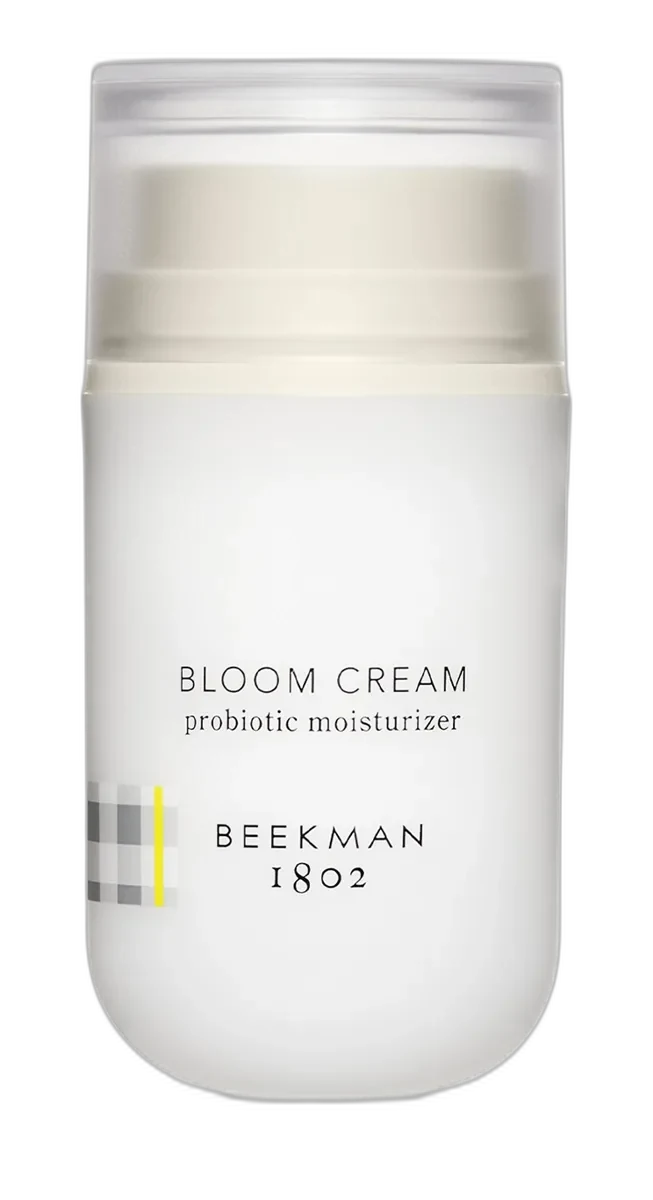
Bloom Cream Daily Face Moisturizer
Microbiome-Friendly Daily
 Verified reviewer
Pros & cons.
- +Fragrance-free and gentle enough for reactive, sensitive skin
- +Bifida ferment lysate and gluconolactone deliver meaningful barrier and PHA benefits
- +Distinctive goat-milk, colostrum and whey protein angle sets it apart
- +Light cream texture that layers well under makeup and SPF
- +Airless pump packaging protects the formulation
- +Strong real-world review volume across multiple retailers
- +Cruelty-free and manufactured in the US
- −Expensive compared with equally effective ceramide-based barrier creams
- −Evidence for goat milk and colostrum in topical skincare is still emerging
- −Contains milk proteins and honey, ruling out vegans and dairy-allergic users
- −50ml size goes quickly with twice-daily face-and-neck use
- −Not dramatic enough for very dry winter skin without a layered occlusive
The full review.
About Beekman 1802
Built around a farm.
Texture
In use, Bloom Cream is immediately pleasant. The texture is a light-to-medium whipped cream that spreads easily, sinks in within a minute or two, and leaves a soft satin finish that plays well under SPF and makeup.
Scent
There is essentially no fragrance — a very faint milk-and-honey note from the honey and botanical extracts, but nothing you would actively describe as scented.
Common Praise
The review-count social proof is genuinely strong here — thousands of user reviews across Sephora, Amazon and QVC, with a consistent pattern of sensitive skin users reporting excellent tolerability and dry-to-normal skin users finding it a pleasant everyday cream.
Common Complaints
What is consistently not in those reviews is ‘this changed my skin overnight.’ Bloom Cream is a quiet, background moisturizer that does its job well rather than a hero treatment, and reviews that expect more than that tend to be the disappointed ones. Set expectations accordingly and it is easy to enjoy.
Not ideal for
The one hard exclusion to mention: this cream contains milk proteins, whey protein and honey, and is not an option for anyone with a dairy allergy or who avoids bee products. It is also not a vegan product and Beekman 1802 does not position itself as one.
Ingredient analysis.
Full INCI list
Water (Aqua), Coco-Caprylate, Propanediol, Magnesium Sulfate, Polyglyceryl-4 Diisostearate/Polyhydroxystearate/Sebacate, Caprae Lac (Goat Milk), Colostrum, Bifida Ferment Lysate, Lactose, Milk Protein, Aloe Barbadensis Leaf Extract, Honey, Eryngium Alpinum (Blue Thistle) Flower Extract, Cucumis Sativus (Cucumber) Fruit Extract, Chamomilla Recutita (Matricaria) Flower Extract, Symphytum Officinale (Comfrey) Leaf Extract, Helianthus Annuus (Sunflower) Seed Oil, Niacinamide, Whey Protein, Gluconolactone, Caprylic/Capric Triglyceride, Polyglyceryl-3 Oleate, Diisostearoyl Polyglyceryl-3 Dimer, Dilinoleate, Zinc Stearate, Glycerin, Sodium Benzoate, Calcium Gluconate, Tocopherol, C10-18 Triglycerides, Lecithin
Skin match.
The science.
The Science
The moisturizer's most studied ingredients are not its primary marketing focus. Niacinamide has decades of published evidence for barrier repair, sebum modulation, and reducing transepidermal water loss, usually at 2-5% concentrations. Gluconolactone, a polyhydroxy acid, has extensive clinical literature as a mild exfoliant and antioxidant for sensitive skin; comparative studies show it matches glycolic acid efficacy with less irritation.
Bifida ferment lysate has built a solid evidence base over the last decade, specifically for barrier recovery and protection against environmental stressors. Research on postbiotic lysates from Japanese and European cosmetic groups shows effects on transepidermal water loss, lower irritant reactivity, and upregulated barrier-associated gene expression in reconstructed skin models. These non-living ferment fractions do not "rebalance the microbiome" like probiotics; instead, they deliver metabolites that support skin barrier function.
Evidence for goat milk and bovine or goat colostrum in topical skincare is much thinner. Goat milk contains lactic acid (a studied gentle AHA), medium-chain triglycerides, whey proteins, and a lipid profile that overlaps with human stratum corneum lipids, providing a plausible mechanism for emollient and mild exfoliating effects. However, clinical literature treating goat milk as a studied cosmetic ingredient is sparse, and much research is brand-commissioned rather than independent. Colostrum contains immunoglobulins and growth factors, but peer-reviewed dermatology literature does not strongly establish their efficacy or stability in a topical cream. The microbiome-and-dairy narrative is plausible, but the evidence base is early-stage compared to the ceramide-and-niacinamide literature used by most barrier creams.
This does not undermine the cream's usefulness—niacinamide, PHA, Bifida ferment lysate, and the emulsion structure all have solid backing—but the goat-milk story is a differentiating angle rather than the formula's evidence-backed engine.
Dermatologist Perspective
Dermatologists treating reactive, rosacea-prone, or post-procedure skin increasingly use postbiotic and probiotic-derived ingredients, like Bifida ferment lysate, due to emerging evidence in barrier recovery. This cream's combination of Bifida ferment, niacinamide and gluconolactone is a sensible formulation approach for a gentle daily moisturizer. Dermatologists typically view the goat milk and colostrum components as pleasant additions rather than evidence-driven hero ingredients. For patients with dry, sensitive or mildly compromised skin, this is a reasonable over-the-counter option—though patients with relevant allergies must be alerted to the milk proteins and honey. For acne-prone or very oily skin, dermatologists more commonly recommend a lighter gel moisturizer.
Where it fits in your routine.
Apply one to two pumps to clean skin morning and evening, after serums and treatments. Press and sweep the cream outward across the face and neck; it absorbs within one to two minutes. Follow with a broad-spectrum SPF in the morning. For very dry skin or winter conditions, layer a facial oil or balm on top to increase occlusion. The airless pump keeps the formulation fresh, allowing flexible storage. Use on damp skin after toner for better spreadability and hydration.
At $42 for 50ml, Bloom Cream sits in the prestige-adjacent moisturizer market. Dermatology-led barrier creams at much lower prices offer comparable core performance based on ingredient value. This premium pays for the distinctive formulation, the farm brand story, and the Bifida ferment lysate. The extra cost is defensible for shoppers wanting a moisturizer aligned with microbiome-support trends. Buyers prioritizing efficacy per dollar have cheaper, better-documented options. The airless pump packaging and meaningful actives prevent it from feeling overpriced—it earns most of its price tag—but it is not a value-focused buy.
Sensitive, reactive, or easily irritated skin types who appreciate fragrance-free formulations with gentle actives, and shoppers who are drawn to the microbiome-support positioning and the Beekman farm story. A solid pick for rosacea-adjacent skin that needs barrier support without fragrance or harsh ingredients.
This works for anyone with a dairy allergy, bee product sensitivity, or those avoiding animal-derived ingredients. Skip this if you want a maximal-value daily moisturizer; several well-studied ceramide-based options cost a fraction of the price and deliver comparable core performance.
Product details.
Light-to-medium cream with a soft, whipped consistency that melts into skin
Virtually unscented with a very faint milk-and-honey note
Airless pump bottle with a frosted white plastic housing
On first application the cream spreads easily and sinks in within a minute or two, leaving a soft unsticky finish that layers cleanly under makeup and SPF. No tingling or adjustment period. Most users notice reduced tightness and improved comfort within the first week, with more visible barrier improvements over several weeks of consistent use.
Approximately 2 months with twice-daily use on face and neck
12 months
All Year
The backstory.
Beekman 1802 began in 2008 when Brent Ridge (a physician and former Martha Stewart VP for Healthy Living) and Josh Kilmer-Purcell took over a historic farm in Sharon Springs, New York, and inherited a herd of goats from a neighbour who had fallen on hard times. The brand's original soap was literally made in the farm kitchen from their own goat milk, and nearly two decades later the Bloom Cream is a direct descendant of that origin story — scaled up, more sophisticated, and still built on goat milk as the central story ingredient.
About Beekman 1802
Established Brand (5–20 years)Brent Ridge (a physician and former Martha Stewart VP) and Josh Kilmer-Purcell founded Beekman 1802 in 2008 on a historic goat farm in Sharon Springs, New York. The brand built its reputation on goat milk skincare and led early mainstream interest in microbiome-focused formulation. Beekman 1802 sells widely at Sephora and QVC and has a large US retail footprint, but its clinical research portfolio is smaller than traditional dermatology-led brands.
Common myths.
Goat milk in skincare is marketing and has no real benefit.
Goat milk has lactic acid, medium-chain triglycerides, and a lipid profile similar to human skin lipids. Evidence for goat-milk-specific skincare benefits is emerging, not robust, but it is not pure marketing. A plausible mechanism explains its emollient and mild exfoliating effects.
Probiotic skincare rebalances your skin microbiome.
Ferment lysates like Bifida are non-living and do not colonize the skin. Evidence shows they support the barrier and reduce reactivity, but they do not change which microbes live on your face.
FAQ.
Is Beekman 1802 Bloom Cream good for sensitive skin?
Yes — it is fragrance-free, gentle, and uses a PHA exfoliant and probiotic ingredients that suit reactive skin. The main caveat is the milk proteins and honey, which can affect users with dairy or bee-product allergies.
Does Bloom Cream contain actual goat milk?
Yes — Caprae Lac (goat milk) is on the INCI. It joins colostrum and Bifida ferment lysate in the brand's signature dairy-based formulation approach.
Can I use Bloom Cream with retinol?
Yes, this is a sensible pairing. The cream's barrier-friendly formulation uses gluconolactone and niacinamide to buffer retinol irritation. It works as a good evening layer for anyone starting or scaling up a retinoid.
Is it suitable for oily or acne-prone skin?
It works, but the design targets dry and sensitive skin. Oily users may prefer a lighter gel moisturizer, but the formula is not thick and layers well under SPF for combination or mildly oily skin.
Is Bloom Cream vegan?
No — it has goat milk, colostrum, honey, and whey protein. Beekman 1802 is cruelty-free but not a vegan brand.
Is this moisturizer safe during pregnancy?
Yes. This formula has no actives that carry pregnancy concerns — the PHA is gentle and pregnancy-compatible, and the dairy-derived ingredients are applied topically.
How does it compare to CeraVe Moisturizing Cream?
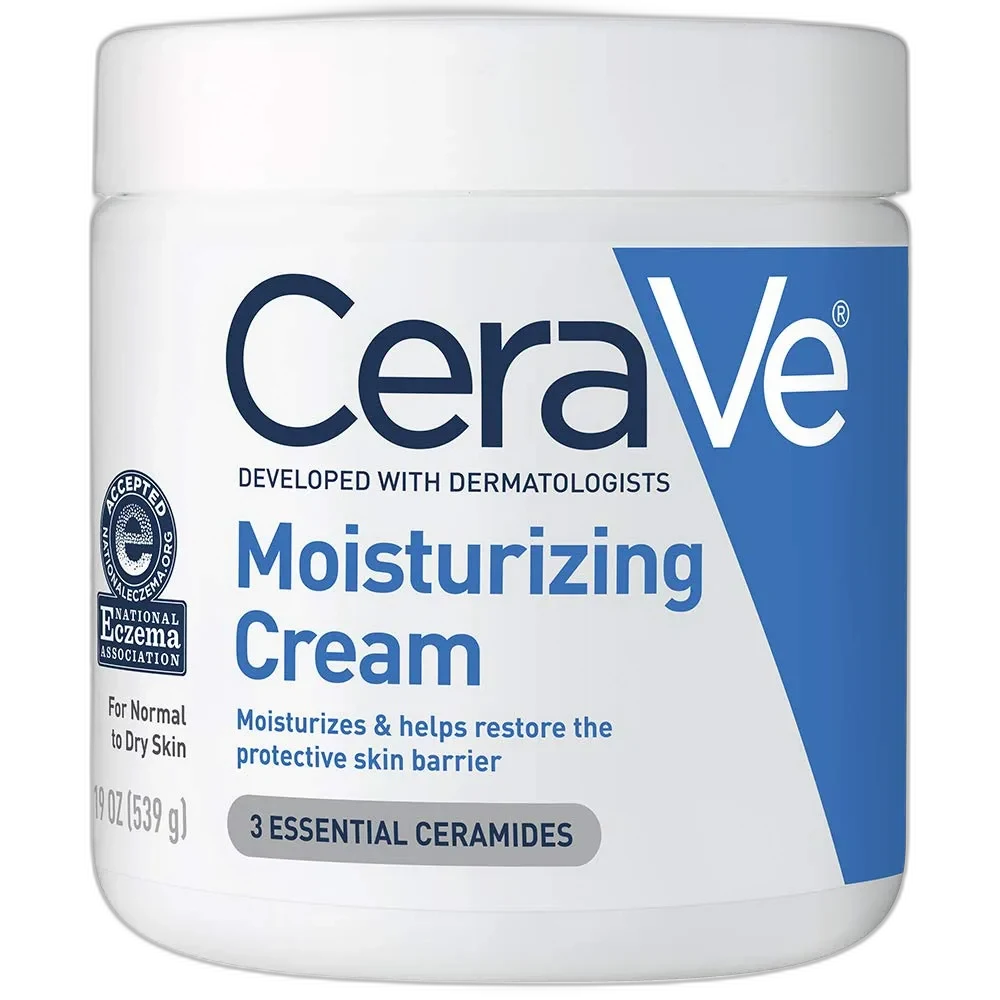
CeraVe is a drugstore-priced, clinically validated moisturizer centered on ceramides. Beekman 1802's Bloom Cream uses a complex microbiome-focused formula for roughly three times the cost — it has more ingredients but lacks the clinical track record and value proposition of CeraVe.
Community
What the community says.
"Gentle enough for very sensitive skin"
"Leaves skin soft without greasiness"
"Fragrance-free and low-drama"
"Distinctive goat-milk story"
"Works in both AM and PM"
"Expensive for a daily moisturizer"
"50ml size goes quickly"
"Not a dramatic hydrator for very dry winter skin"
"Dairy proteins rule it out for some"