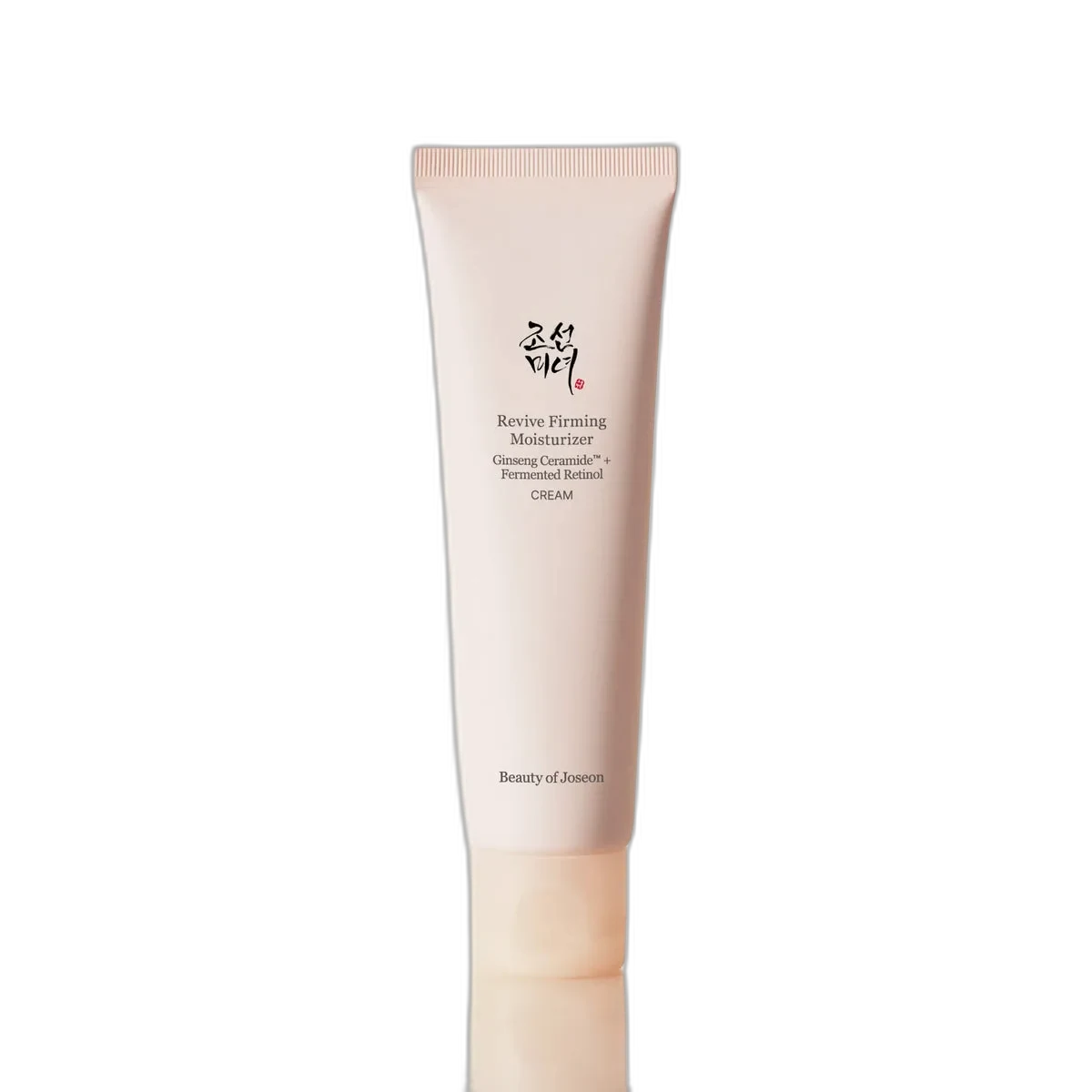
Revive Firming Moisturizer: Ginseng Ceramide + Retinol
K-Beauty Retinol Gateway
 Verified reviewer
Pros & cons.
- +Ceramide NP and phytosphingosine provide genuine barrier repair alongside retinol
- +Ultra-gentle fermented retinol suitable for absolute beginners and sensitive skin
- +Fragrance-free and silicone-free — two common irritant categories eliminated
- +Distinctive soft-bounce gel-cream texture absorbs quickly without residue
- +Multi-pathway anti-aging approach via retinol, ginseng, and adenosine
- +Elegant K-beauty formulation philosophy inspired by hanbang traditions
- −0.01% pure retinol may be too low to deliver meaningful anti-aging results alone
- −Contains palm oil derivatives which concern environmentally conscious consumers
- −Too new (January 2026 launch) for reliable long-term efficacy assessment
- −Not pregnancy-safe due to retinol content despite very low concentration
- −May feel too rich for very oily skin types despite gel-cream format
- −No independent clinical studies on this specific formulation yet
The full review.
Modern skincare balances retinol’s anti-aging benefits against its tendency to cause irritation. Beauty of Joseon launched a solution in January 2026 as the centerpiece of their Revive line. They prioritize gentleness by making the retinol almost imperceptible and surrounding it with barrier-supportive ingredients to neutralize irritation risk.
The math is simple: the formula contains 1% fermented retinol complex, yielding approximately 0.01% pure retinol—or 100 parts per million. Most over-the-counter retinol products use 0.1% to 1.0% pure retinol, and clinical studies on wrinkle reduction typically use 0.25% or higher. This is a very gentle introduction to retinoid chemistry.
Does this gentleness sacrifice efficacy? For retinol-specific benefits, probably. At 0.01%, you get some cell turnover stimulation, but visible anti-aging results—fine line reduction, texture improvement, and collagen-boosting—will be subtle and slow. You likely need three months or more of consistent use to notice them. If you want transformative retinol results, this product is not designed for that.
Beyond the retinol, Beauty of Joseon built a comprehensive barrier-repair and anti-aging moisturizer that uses retinol as a supporting player. Ceramide NP and phytosphingosine form the barrier restoration backbone. They replenish the skin’s lipid matrix by providing ceramides directly and promoting the skin’s own ceramide synthesis indirectly. A 2023 randomized controlled trial by Draelos et al. in the Journal of Drugs in Dermatology showed that ceramide-containing formulations significantly reduced transepidermal water loss and irritation when used with retinoid treatments, validating this retinol-plus-ceramide approach.
Panax ginseng root extract adds a traditional Korean hanbang dimension. Ginseng is more than heritage theater; a 2020 study in the Journal of Ginseng Research showed ginseng extract increased Type I collagen expression in fibroblasts, upregulated ceramide synthase 3, and reduced UV-induced MMP-1 (a collagen-degrading enzyme) by approximately 43.7%. These outcomes match retinol’s targets, suggesting ginseng provides a parallel anti-aging pathway that does not require retinoid receptor activation.
Adenosine adds a third anti-aging mechanism. Recognized in Korea as a functional cosmetic ingredient for anti-wrinkle claims, adenosine promotes collagen synthesis through a pathway distinct from retinol and ginseng. Sodium hyaluronate, squalane, allantoin, and dipotassium glycyrrhizate provide hydration, soothing, and anti-inflammatory activity.
The texture is a delight. This gel-cream has a soft-bounce consistency typical of well-formulated Korean moisturizers. It melts into the skin on contact and absorbs within about thirty seconds without leaving a film, stickiness, or residue. The finish is satin-to-dewy—hydrated but not shiny. It layers well under sunscreen in the morning and under sleeping masks at night.
The fragrance-free and silicone-free formulation is a meaningful choice. By omitting both, Beauty of Joseon reduces two common sources of cosmetic irritation, which matters in a retinol product where the barrier faces additional stress. The preservative system uses 1,2-hexanediol, caprylyl glycol, and ethylhexylglycerin—modern alternatives that keep the formula clean-label and stable.
At $24 for 60 mL, the price is standard for K-beauty products with this level of active ingredient sophistication. Beauty of Joseon’s credibility grew after their Relief Sun sunscreen went viral, and their entry into Sephora US signals mainstream recognition. However, Beauty of Joseon is a relatively young brand—founded in 2017 and revitalized in 2019—and lacks the decades of clinical heritage of legacy brands. The formulation quality is clear, but the long-term track record is still being written.
This moisturizer’s real value is not as a retinol product, but as a well-formulated barrier-repair moisturizer with retinol potential. If you are retinol-curious but anxiety-prone, this offers a safe entry. If you already use a stronger retinol serum, this works as an excellent buffer moisturizer applied after your retinoid. If you simply want a well-crafted, fragrance-free K-beauty gel-cream with ceramides, ginseng, and hyaluronic acid, the retinol is a bonus.
Ingredient analysis.
Full INCI list
Water, Glycerin, 2,3-Butanediol, Caprylic/Capric Triglyceride, Isononyl Isononanoate, Hydroxyethyl Urea, Elaeis Guineensis (Palm) Kernel Oil, 1,2-Hexanediol, Dipropylene Glycol, Polyglyceryl-2 Stearate, Acrylates/C10-30 Alkyl Acrylate Crosspolymer, Elaeis Guineensis (Palm) Oil, Tromethamine, Glyceryl Stearate, Hydroxyacetophenone, Stearyl Alcohol, Squalane, Caprylyl Glycol, Jojoba Esters, Camellia Japonica Seed Oil, Allantoin, Theobroma Cacao (Cocoa) Seed Extract, Ethylhexylglycerin, Xanthan Gum, Macadamia Ternifolia Seed Oil, Adenosine, Sodium Hyaluronate, Ceramide NP, Sodium Phytate, Butylene Glycol, Phytosphingosine, Retinol, Tridecane, Hydrogenated Lecithin, Panax Ginseng Root Extract, Coptis Japonica Root Extract, Tocopherol, Dipotassium Glycyrrhizate, Candida Bombicola/Glucose/Methyl Rapeseedate Ferment, Glycolipids
Skin match.
The science.
The Science
Clinical evidence supports the retinol-ceramide pairing in this formula. A 2023 randomized controlled trial by Draelos et al. in the Journal of Drugs in Dermatology shows that ceramide-containing formulations used with retinoid treatment significantly reduce transepidermal water loss, dryness, erythema, and scaling compared to retinoid use alone. This confirms that embedding retinol in a ceramide-rich matrix minimizes barrier disruption — the exact approach Beauty of Joseon uses.
Ceramide NP (also known as Ceramide 3) is a well-studied barrier lipid. A 2021 qualitative review by Kono et al. in The Journal of Dermatology confirms that ceramide-containing formulations consistently improve barrier function and water retention in multiple clinical studies.
Ginsenosides in ginseng have a growing evidence base for skin aging. A 2020 study in the Journal of Ginseng Research shows that red ginseng extract increased Type I collagen expression in dermal fibroblasts, upregulated ceramide synthase 3 and hyaluronan synthetase 2 in keratinocytes, and reduced UV-induced MMP-1 expression by approximately 43.7%. This collagen-supporting and enzyme-inhibiting activity works as an anti-aging mechanism independent of retinoid receptor activation.
A 2023 systematic review in the Journal of Ginseng Research confirms that ginsenosides show anti-aging, antioxidant, and anti-inflammatory functions across multiple in vitro and in vivo studies. This makes ginseng a credible anti-aging botanical, not just a traditional ingredient.
The fermented retinol delivery system uses Candida Bombicola, a yeast that produces sophorolipid biosurfactants. This fermentation approach aims to improve retinol encapsulation, stability, and skin penetration, though peer-reviewed data specific to this delivery method in topical retinol products is limited.
References
- Ceramide-Containing Adjunctive Skin Care for Skin Barrier Restoration During Acne Vulgaris Treatment — Journal of Drugs in Dermatology (2023)
- Effect of red ginseng NaturalGEL on skin aging — Journal of Ginseng Research (2020)
- Effect of anti-skin disorders of ginsenosides — A Systematic Review — Journal of Ginseng Research (2023)
- Clinical significance of the water retention and barrier function-improving capabilities of ceramide-containing formulations: A qualitative review — The Journal of Dermatology (2021)
Dermatologist Perspective
Dermatologists support pairing retinol with barrier-supportive ingredients like ceramides and phytosphingosine to address the main retinol complaint: irritation and barrier disruption. Board-certified dermatologists note that while the 0.01% pure retinol concentration in this product is low, it may still provide modest cell turnover benefits for retinol-naive skin. For patients who failed higher-concentration retinol products due to sensitivity, dermatologists may recommend this ultra-gentle formulation as a starting point before gradually increasing retinol strength. The ceramide-phytosphingosine combination matches barrier repair protocols common in dermatological practice.
Where it fits in your routine.
Apply a fingertip-sized amount to clean, dry skin after cleansing and toning in the evening. Massage it into the face and neck until absorbed. Add an occlusive or sleeping mask if desired. If using in the morning, apply SPF 50+ sunscreen last — this is non-negotiable with any retinol product, even at this low concentration. Use it daily from the start; you do not need the gradual introduction typical for higher-concentration retinol products.
At $24 for 60 mL, this product is reasonably priced for K-beauty, containing ceramides, retinol, ginseng, adenosine, and hyaluronic acid. The per-mL cost competes with other Korean moisturizers at this active ingredient tier. Value depends on your goal: it is well-priced as a barrier-repair moisturizer with anti-aging botanical support. As a retinol treatment, the 0.01% concentration makes retinol a marketing feature rather than a primary active; buyers seeking retinol efficacy may find more value in a dedicated retinol serum plus a simpler moisturizer. Beauty of Joseon is an emerging brand—the price reflects their Sephora partnership and growing credibility rather than decades of clinical validation.
Retinol beginners seeking the gentlest retinoid activity in a barrier-supportive formula. K-beauty enthusiasts wanting a ceramide-ginseng moisturizer with modern anti-aging actives. Users who experienced irritation from other retinol products and want a gentler approach. People who value fragrance-free, silicone-free formulations with hanbang heritage.
Retinol at 0.01% concentration won't provide visible anti-wrinkle results. Pregnant or breastfeeding individuals must avoid this because of the retinol. The oil-rich gel-cream format feels too heavy for very oily skin. Palm oil derivatives are present for those with fungal acne.
Product details.
Fragrance-free with no added scent. Botanical extracts leave a faint, neutral scent that is virtually undetectable on the skin.
A 60 mL tube uses Beauty of Joseon's signature aesthetic design to protect the retinol from light and air degradation. The clean, elegant K-beauty packaging matches the brand's Joseon Dynasty-inspired visual identity.
The gel-cream has a bouncy consistency that melts into the skin on contact. It absorbs fast — within 30-60 seconds — and leaves no film, stickiness, or residue. The ultra-low retinol concentration means no tingling, stinging, or adjustment period. The hyaluronic acid and glycerin base leaves skin feeling hydrated and plump immediately.
2-3 months with twice-daily facial application
12 months
All Year
The backstory.
Beauty of Joseon launched this moisturizer in January 2026 as the centerpiece of their Revive line, extending their hanbang-meets-modern-science philosophy into the retinol category. The brand deliberately chose an ultra-gentle fermented retinol approach, recognizing that their core audience — K-beauty enthusiasts who prioritize gentle, hydrating formulas — would be better served by a barrier-first retinol product than a high-concentration treatment.
About Beauty of Joseon
Emerging Brand (2–5 years)Goodai acquired Beauty of Joseon in 2019, following its 2017 founding. The brand uses traditional Korean hanbang (herbal medicine) philosophy and gained international fame via TikTok and its bestselling Relief Sun sunscreen. Now at Sephora US, Beauty of Joseon has K-beauty credibility but lacks independent clinical validation for its specific formulations.
Common myths.
All retinol products cause peeling, dryness, and a 'retinoid ugly' phase.
Retinol side effect severity depends on dose. At 0.01% pure retinol, this product rarely causes visible peeling or irritation for most users. The ceramide-phytosphingosine complex buffers barrier disruption. This makes it suitable for retinol beginners, but anti-aging effects work more subtly and slowly than with higher-concentration retinol products.
Ginseng in skincare is marketing; it has no effect.
Panax ginseng contains ginsenosides, which show anti-aging activity in multiple studies. A 2020 study in the Journal of Ginseng Research shows ginseng extract increases Type I collagen expression and upregulates ceramide synthase, while reducing UV-induced collagen-degrading enzymes by over 40%. This evidence proves ginseng is an anti-aging botanical, not just a marketing story.
FAQ.
Is Beauty of Joseon Revive Firming Moisturizer strong enough to reduce wrinkles?
The fermented retinol complex contains about 0.01% pure retinol. This is lower than the 0.1-0.5% concentrations used in most anti-aging studies. Any retinol helps cell turnover, but visible wrinkle reduction at this concentration is subtle and slow. Supporting ingredients (adenosine, ginseng, ceramides) add anti-aging activity, but expect less from this introductory retinol than a high-potency treatment.
Can I use this moisturizer if I've never used retinol before?
This formula targets retinol beginners. The 0.01% pure retinol concentration is one of the gentlest options. Ceramide-phytosphingosine barrier support reduces the irritation risk that stops many people from using retinol. Most users report no peeling, dryness, or sensitivity. It works well to introduce retinoid activity before you move to higher concentrations.
Is Beauty of Joseon Revive Moisturizer safe during pregnancy?
No — this product contains retinol, which doctors advise against during pregnancy or breastfeeding. Beauty of Joseon's own FAQ warns against use during pregnancy. Even at a low concentration, medical standards recommend avoiding all retinoid products during pregnancy as a precaution.
Can I use this in the morning or only at night?
The brand markets it for AM and PM, but retinol increases photosensitivity, so nighttime use is better. If you use it in the morning, you must use daily SPF 50+ sunscreen. For AM use, many users save the retinol for PM and use a simpler moisturizer in the morning.
What does 'fermented retinol' mean?
Beauty of Joseon uses a Candida Bombicola ferment delivery system to encapsulate the retinol. This biosurfactant-producing yeast creates a fermented complex (1% in the formula) that contains approximately 0.01% pure retinol. Fermentation improves retinol stability and skin absorption while reducing the irritation typical of free retinol.
What the community says.
"Lightweight gel-cream with a distinctive soft-bounce texture"
"Non-irritating retinol suitable for sensitive skin and beginners"
"Absorbs quickly without stickiness or greasy residue"
"Fragrance-free and silicone-free formulation"
"Gentle enough for daily use without dryness or flaking"
"Elegant K-beauty packaging and formulation philosophy"
"Very low retinol concentration may not deliver visible anti-aging results"
"Contains palm oil which concerns environmentally conscious consumers"
"Too new to have long-term efficacy data"
"May feel too rich for very oily skin types"
"Limited to one size option"