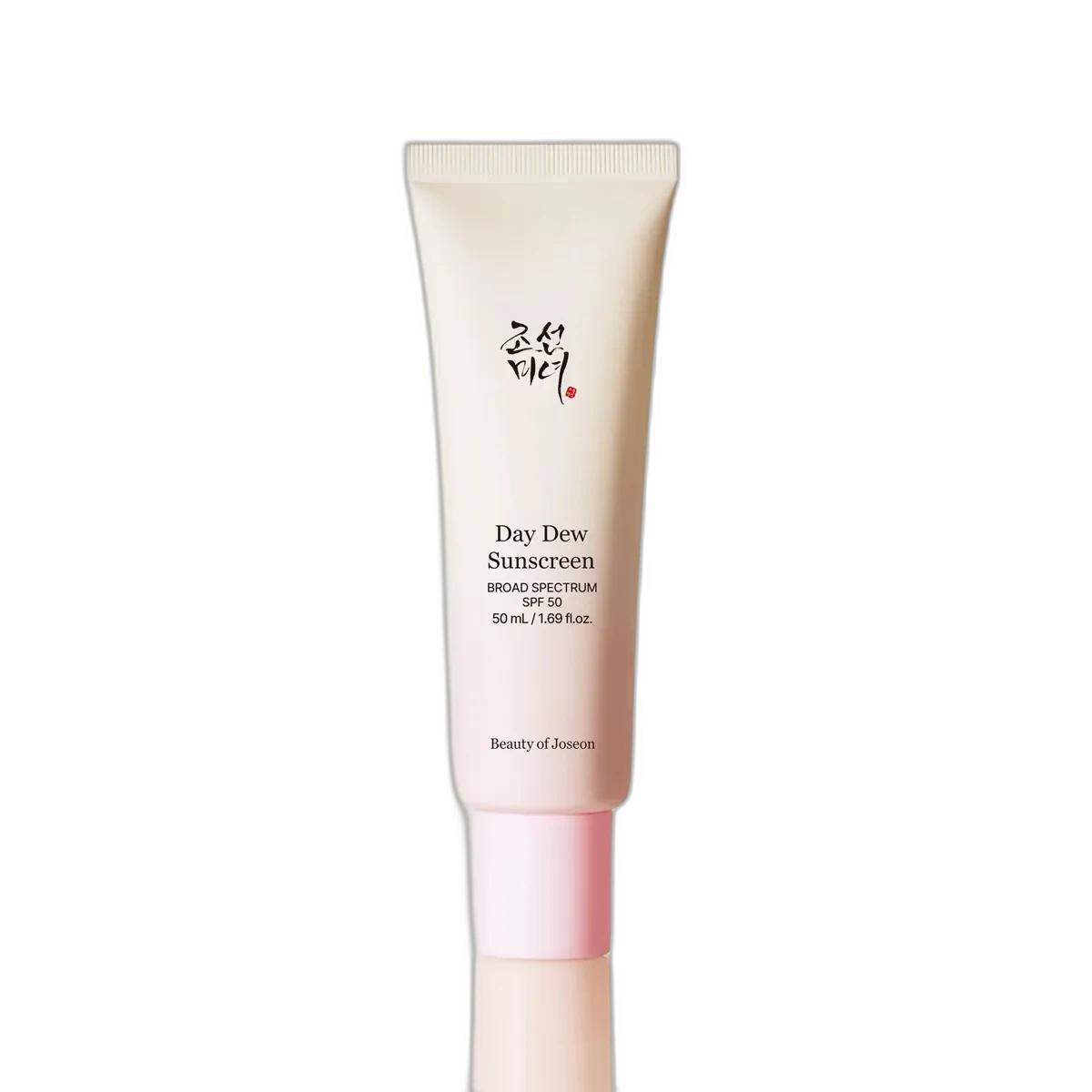
Day Dew Sunscreen SPF 50
K-Beauty Dewy SPF Darling
 Verified reviewer
Pros & cons.
- +SPF 50 broad-spectrum with 80 minutes water resistance at an accessible $18 price point
- +Beautiful dewy, glass-skin finish that makes daily sunscreen feel like a skincare treat
- +Niacinamide, hyaluronic acid, and panthenol add genuine skincare benefits to the SPF step
- +Zero white cast and zero eye stinging — comfortable for all-day wear
- +Fragrance-free, alcohol-free formula suitable for most skin types
- +Layers beautifully under cream and liquid makeup products
- +Lightweight emulsion texture spreads effortlessly without pilling
- −Dewy finish is too shiny for oily skin types, especially in humid climates
- −Contains homosalate and octocrylene — UV filters that face growing scrutiny
- −Not suitable for pregnancy — chemical UV filters are typically avoided as a precaution
- −50ml tube requires monthly repurchasing for diligent daily users
- −Dewy finish can interfere with matte and powder makeup application
The full review.
The Relief Sun turned Beauty of Joseon into a sunscreen brand. This product moved past K-beauty fandom into mainstream global beauty routines—a gentle, affordable, effective daily SPF that set a new category benchmark. When the brand announced the Day Dew, the question wasn’t if people would buy it, but if it could justify existing alongside a product that already does everything right.
The answer is finish philosophy. The Relief Sun dries to a natural, slightly matte finish—versatile, inoffensive, and suitable for most skin types. The Day Dew is unapologetically wet. It makes skin look like it just used a hydrating mist, as if you finished a seven-step routine even if you only splashed water on your face and applied this one product. This is the aesthetic for glass-skin fans. For those who hate shine, this is a dealbreaker.
About Beauty of Joseon
The UV protection system uses four chemical filters: avobenzone at 3% for UVA coverage, octocrylene at 5% for UVB protection and avobenzone stabilization, homosalate at 7% for additional UVB coverage, and octisalate at 5% for supplementary UVB absorption. This is a conventional, effective combination—the same foundational system used in many well-regarded Western sunscreens. The SPF 50 broad-spectrum rating and 80 minutes of water resistance make this a reliable daily protection option.
Reality
The skincare ingredient layer elevates this beyond a standard chemical sunscreen. Niacinamide appears high on the INCI list, suggesting a percentage that delivers its documented benefits—barrier strengthening, pore appearance reduction, and gradual brightening. Sodium hyaluronate (low-molecular-weight hyaluronic acid) provides the hydration that creates the dewy finish. Panthenol adds another humectant with documented soothing properties. Glycerin, a workhorse humectant, sits near the top of the formula to ensure substantial base-level hydration.
Texture
The texture differs immediately from the Relief Sun. While the Relief Sun feels like a lightweight lotion, the Day Dew feels like a thin emulsion—almost watery and easy to spread. It absorbs quickly but does not ‘dry down’ traditionally. Instead, it leaves a visible wet-look sheen that lasts during wear. On dry skin, this looks like healthy hydration. On normal skin, it looks luminous. On oily skin, it can look like moisturizer is sweating through.
Scent
The rice extract inclusion reflects the Beauty of Joseon identity, providing gamma-oryzanol antioxidant support to complement the UV filters. Tocopheryl acetate (vitamin E) adds another antioxidant layer. These are thoughtful inclusions that turn daily sunscreen application into a mild antioxidant treatment rather than just a protection step.
How to Use
Application is straightforward. The formula glides on without resistance, leaves no white cast, and does not sting the eyes—a notable advantage over many chemical sunscreens, especially those with avobenzone, which often causes eye irritation. The finish develops within two to three minutes: a clear, luminous sheen that photographs well and makes skin look lit from within.
Pairs Well With
The formula layers well under makeup, especially cream and liquid products that need a hydrated base. Powder foundation and matte products can look slightly patchy over the dewy layer, so you may need to adjust your technique. Many users use the Day Dew as their only base product and skip foundation—the luminous finish makes bare skin look intentional rather than unfinished.
Price
At $18 for 50ml, this is one of the most affordable SPF 50 sunscreens at Sephora, where other products cost two to three times more. The per-ounce value is strong, though the 50ml tube lasts six to eight weeks with proper daily application—roughly a $9-per-month habit, which is cheap for daily facial sunscreen.
Conflicts With
The tension in this product lies between ‘clean beauty’ trends and UV filter chemistry. Homosalate and octocrylene are not the most beloved chemical filters; both face regulatory scrutiny in Europe and skepticism in clean beauty circles. If you follow a strict clean/mineral-only sunscreen philosophy, this product is not for you. If you follow the scientific consensus that these filters are safe and effective at approved concentrations, and that daily sunscreen benefits outweigh theoretical absorption concerns, then this is an excellent daily SPF.
Ingredient analysis.
Full INCI list
Active Ingredients: Avobenzone 3%, Homosalate 7%, Octisalate 5%, Octocrylene 5%. Inactive Ingredients: Water, Butyloctyl Salicylate, Glycerin, Dimethicone, Poly C10-30 Alkyl Acrylate, VP/Eicosene Copolymer, Cetearyl Alcohol, Niacinamide, Sodium Stearoyl Glutamate, Ammonium Polyacryloyldimethyl Taurate, Hydroxyacetophenone, Phenoxyethanol, Tocopheryl Acetate, Panthenol, Pentaerythrityl Tetra-Di-T-Butyl Hydroxyhydrocinnamate, Xanthan Gum, Propanediol, Oryza Sativa (Rice) Extract, 1,2-Hexanediol, Sodium Hyaluronate
Skin match.
The science.
The Science
This product's four-filter UV system provides layered protection across the UV spectrum. Avobenzone (butyl methoxydibenzoylmethane) at 3% absorbs UVA radiation from 310-400nm; it is the only widely available chemical UVA filter approved for use in the US. Avobenzone is photolabile, but octocrylene fixes this through triplet-state quenching to stop the excited avobenzone molecule from degrading.
Homosalate at 7% and octisalate at 5% add UVB absorption in the 295-315nm range. Both ingredients face regulatory review. The European Commission's Scientific Committee on Consumer Safety (SCCS) issued a 2021 opinion recommending lower maximum concentrations for homosalate due to potential endocrine activity. The FDA's 2019 proposed sunscreen monograph also requested more safety data for both. Neither organization recommended removing these filters from the market; they requested more data, not withdrawal.
The humectant system — glycerin, sodium hyaluronate, and panthenol — creates the product's dewy finish by attracting and retaining moisture. A 2011 study in the Journal of Investigative Dermatology shows that sodium hyaluronate penetrates the stratum corneum and increases hydration in a dose-dependent manner. Panthenol (provitamin B5) converts to pantothenic acid in the skin to support lipid barrier synthesis — a 2002 study in the American Journal of Clinical Dermatology confirmed its wound-healing and barrier-repair properties.
Niacinamide's high position on the INCI list suggests a concentration high enough to deliver its benefits. Multiple studies, including a 2005 publication by Bissett and colleagues in the Journal of Cosmetic Dermatology, show that topical niacinamide at 2-5% improves skin barrier function, reduces redness, and regulates sebum production.
Dermatologist Perspective
Dermatologists endorse daily SPF 50 broad-spectrum sunscreen for skin health, and this product meets that standard at an accessible price. Board-certified dermatologists note that niacinamide and panthenol provide skin barrier support that builds with daily use, making this more beneficial than a sunscreen-only formula. Dermatologists often recommend the dewy finish for patients with dry or aging skin to minimize the look of fine lines via hydration. Dermatologists advise pregnant patients to use the brand's mineral-only tinted sunscreen during pregnancy, as chemical UV filters are typically avoided as a precaution despite no definitive evidence of harm.
Where it fits in your routine.
Apply a generous amount (about two finger-lengths for the face) as the last step of your morning skincare routine, once moisturizer absorbs. Spread it evenly over the face, neck, and ears. Wait 2-3 minutes for the finish to set before applying makeup. Reapply every 2 hours during extended sun exposure, or right after swimming or heavy sweating. Use a light dusting of translucent powder for a more matte finish.
At $18 for 50ml, the Day Dew Sunscreen provides high value for an SPF 50 product with active skincare ingredients. For comparison, Sephora sunscreens like Supergoop Unseen Sunscreen ($22/15ml) and Drunk Elephant Umbra Sheer ($36/30ml) cost much more per milliliter. The Day Dew Sunscreen offers more volume for less money and includes niacinamide, panthenol, and hyaluronic acid. The 50ml tube size limits value; daily users repurchase every 6-8 weeks. This makes the annual cost about $120-140, which stays below most premium sunscreens.
Dry-to-normal skin types wanting a glass-skin look and a hydrating, luminous sunscreen base. K-beauty enthusiasts who like Relief Sun but want a dewier version. Anyone seeking affordable, effective SPF 50 with skincare benefits and no white cast.
Oily skin types struggling with shine will find the dewy finish amplifies oiliness, especially in warm weather. People who avoid chemical UV filters or are pregnant should also avoid this. This sunscreen is for those who do not prefer a matte or natural finish, as the dewiness is intentional and persistent.
Product details.
This lightweight, creamy lotion has a fluid consistency. It spreads easily and absorbs quickly. It is thinner than the brand's Relief Sun and feels more like an emulsion than a traditional sunscreen cream.
Fragrance-free with minimal chemical sunscreen odor — much less noticeable than most avobenzone-based sunscreens
Slim white squeeze tube with gold accents and the brand's minimalist design. It is compact for travel and daily carry. The small opening controls dispensing.
The lotion spreads like a lightweight moisturizer without resistance, pilling, or a white cast. A dewy finish appears within minutes: skin looks plump, hydrated, and subtly luminous. Dry skin types find this sunscreen protective without being drying. Oily skin types may find the dewiness excessive, especially in the T-zone. It has no stinging, burning, or unpleasant smell.
6-8 weeks with daily facial application at recommended amount
12 months
fall winter
The backstory.
Beauty of Joseon's Relief Sun became the brand's breakout global hit, but its natural-matte finish didn't satisfy the growing 'glass skin' movement in K-beauty. The Day Dew was developed as a complementary offering for those who want the dewy, luminous look that Korean beauty is famous for — essentially splitting the sunscreen line into two aesthetic philosophies rather than trying to make one product do everything.
About Beauty of Joseon
Established Brand (5–20 years)Beauty of Joseon launched in South Korea in 2016 and is now a top K-beauty sunscreen brand. The Relief Sun SPF 50 is a global bestseller, while the Day Dew expands the brand into dewy-finish sunscreens for hydration-focused consumers.
Common myths.
Dewy sunscreens provide less protection than matte ones
The finish does not affect UV protection — UV filters and their concentrations determine that. This product provides SPF 50 broad-spectrum protection using the same four-filter system despite its dewy appearance. Humectants and emollients cause the dewiness, not lower UV filter content.
Chemical sunscreens are unsafe because they enter the bloodstream
FDA studies in 2019 and 2020 show certain chemical UV filters absorb systemically above the threshold for safety studies. However, 'exceeding the threshold for further study' does not mean 'unsafe.' The FDA did not recommend avoiding these filters; they requested more data. Current scientific consensus shows sun protection benefits outweigh the theoretical risks of systemic absorption.
FAQ.
What's the difference between Beauty of Joseon Relief Sun and Day Dew?
The Relief Sun has a natural-to-matte finish with rice and probiotic-focused ingredients, while the Day Dew delivers a distinctly dewy, luminous finish with hyaluronic acid, niacinamide, and panthenol. Both are SPF 50 broad-spectrum, but they use different UV filter systems — the Relief Sun uses a different combination of chemical filters. Choose Relief Sun for a natural finish or if you have oily skin; choose Day Dew if you want visible dewiness and have normal-to-dry skin.
Is Beauty of Joseon Day Dew Sunscreen safe for pregnancy?
This sunscreen uses chemical UV filters (avobenzone, homosalate, octisalate, octocrylene). Some dermatologists recommend avoiding these during pregnancy as a precaution. If you are pregnant and want a Beauty of Joseon sunscreen, the Daily Tinted Fluid Sunscreen uses zinc oxide (mineral-only) and is pregnancy-safe. Always consult your OB-GYN for personalized guidance.
Is the Day Dew Sunscreen water resistant?
Yes, it is water resistant for 80 minutes — the FDA's maximum allowed claim. This means the SPF protection lasts during swimming or sweating for up to 80 minutes before you reapply. The formula works well for outdoor activities without the heavy, waxy texture of many water-resistant sunscreens.
Can I skip moisturizer if I use the Day Dew Sunscreen?
Day Dew's glycerin, hyaluronic acid, and panthenol hydrate normal skin enough to skip a separate moisturizer, especially in humid climates. Dry skin still needs a lightweight moisturizer underneath, as sunscreen is not a sole hydration source. The niacinamide supports the barrier but does not replace a complete moisturizer.
Why does my Day Dew Sunscreen pill when I apply it?
Pilling typically occurs when silicone-based products interact with certain skincare layers underneath. The dimethicone in this formula can pill if applied over products with high concentrations of certain polymers or if too much product is used. Apply to fully absorbed skincare, use the recommended amount, and pat gently rather than rubbing vigorously.
Community
What the community says.
"Lightweight formula that feels like skincare, not sunscreen"
"Beautiful dewy finish that makes skin look hydrated and healthy"
"No white cast and layers beautifully under makeup"
"Fragrance-free and doesn't sting eyes"
"Water resistant for 80 minutes — holds up well for outdoor activities"
"Too dewy for oily skin — can exacerbate shine"
"Chemical UV filters may concern those who prefer mineral-only sunscreens"
"Small 50ml tube requires frequent repurchasing with daily use"
"Dewy finish can look greasy in humid climates"
"Homosalate and octocrylene are less favored UV filters in clean beauty circles"
People also looked at.