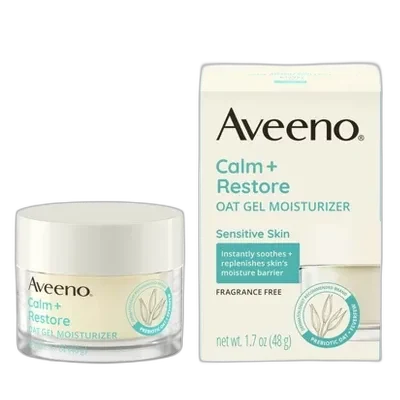
Calm + Restore Oat Gel Moisturizer
Sensitive Skin Soother
 Verified reviewer
Pros & cons.
- +Triple-botanical formula (oat, feverfew, centella) provides layered anti-inflammatory protection
- +Gel texture absorbs instantly — ideal for oily-sensitive and combination skin types
- +Fragrance-free, gentle formula with virtually zero irritation potential
- +Excellent post-treatment moisturizer after retinol, acids, or procedures
- +Strong drugstore value at approximately $20 for a multi-botanical formula
- +Works beautifully under sunscreen and makeup with no pilling
- +Prebiotic oat supports skin microbiome health
- −Not moisturizing enough for dry or very dry skin, especially in cold climates
- −Jar packaging is less hygienic than tube or pump alternatives
- −Not cruelty-free certified, which may deter some consumers
- −Contains synthetic beeswax and silicones that some clean-beauty consumers avoid
The full review.
Aveeno has used oats for nearly eighty years, starting in 1945 when the Musher brothers worked with the Mayo Clinic to create the first colloidal oat bath treatment. This is dermatological history, not marketing heritage. The Calm + Restore Oat Gel Moisturizer is the latest evolution in that lineage and is Aveeno’s most sophisticated oat formulation.
The formula uses oat’s proven calming properties and adds more. Feverfew — scientifically Chrysanthemum Parthenium — provides anti-inflammatory compounds, specifically parthenolide derivatives, which use a different mechanism than oat’s avenanthramides. Centella asiatica, the cica ingredient popular in K-beauty, adds a third layer of barrier support and inflammation control via triterpenoid compounds. Three botanicals use three distinct anti-inflammatory pathways to stop skin irritation.
The gel format targets a specific user. Most sensitive-skin moisturizers are thick creams because brands assume sensitive skin is dry. However, many oily-combination types have skin that is both reactive and acne-prone — they break out from thick creams but flush from harsh products. This gel works for them. It absorbs in seconds, leaves no residue, and sits under sunscreen and makeup without a trace.
Glycerin is the second ingredient and handles most of the hydration. It is not a glamorous ingredient, but at this concentration, it works by drawing water into the upper epidermis and keeping it there. Dimethicone creates a breathable, non-occlusive film that slows moisture loss without the suffocating feel of some silicone-heavy formulas. Panthenol strengthens the barrier from within, helping skin hold moisture more effectively over time.
The immediate experience is pleasant. The gel has a bouncy, jelly-like texture that feels cooling on application — a sensory signal of soothing, even if the cooling comes from evaporation and texture rather than an active cooling agent. Reactive skin responds fast. The tightness from a compromised barrier and the low-grade burning of sensitized skin quiet down within minutes. The effect is real and consistent.
This has value as a post-treatment moisturizer. After retinol, chemical exfoliants, or a bad-skin day, applying this gel helps the face relax. The formula lacks potential irritants, so nothing stings or triggers new reactivity.
The limitations are predictable. This is not a moisturizer for dry skin in a dry climate. The gel format prioritizes lightness over richness; in winter or arid conditions, it may not provide enough occlusion to prevent moisture loss. Users with dry skin should layer this under a heavier cream or use the Redness Relief Cream instead.
The jar packaging is a minor issue — a tube is more hygienic and portable. However, the gel formula is more resistant to bacterial contamination than a rich cream, so the practical risk is lower.
At roughly $20 for 1.7 ounces, the value is excellent. This is a multi-botanical moisturizer from a brand with dermatological credentials, priced for daily drugstore use. For sensitive-skinned consumers tired of paying $40+ for products that claim to soothe but deliver nothing, this gel delivers relief at an honest price.
Ingredient analysis.
Full INCI list
Water, Glycerin, Dimethicone, Cetearyl Olivate, Avena Sativa (Oat) Kernel Flour, Sorbitan Olivate, Polyacrylamide, Synthetic Beeswax, Phenoxyethanol, C13-14 Isoparaffin, Butylene Glycol, Dimethicone Crosspolymer, Panthenol, Chlorphenesin, Dimethiconol, Carbomer, Laureth-7, Chrysanthemum Parthenium (Feverfew) Flower/Leaf/Stem Juice, Ethylhexylglycerin, Sodium Hydroxide, Avena Sativa (Oat) Kernel Extract, Centella Asiatica Extract
Skin match.
The science.
The Science
Colloidal oat has some of the best-documented dermatological benefits among natural ingredients. A 2012 review in the Journal of Drugs in Dermatology examined oat's mechanisms and found that avenanthramides — phenolic compounds unique to oats — inhibit NF-kB activation and histamine release. In some clinical comparisons, these effects match 1% hydrocortisone. The FDA recognizes colloidal oatmeal as a skin protectant; it reduces pruritus, erythema, and barrier dysfunction in atopic dermatitis.
Johnson & Johnson, Aveeno's parent company, studied Feverfew (Chrysanthemum Parthenium). Published data shows feverfew extract reduces UV-induced erythema, inhibits pro-inflammatory cytokine release, and has potent antioxidant activity. A study in the Archives of Dermatological Research shows it reduces inflammatory markers in skin cells exposed to irritant stimuli.
Decades of research support Centella asiatica's wound-healing and anti-inflammatory properties. The triterpenoid compounds — madecassoside, asiaticoside, madecassic acid, and asiatic acid — stimulate collagen synthesis, inhibit inflammatory cascades, and strengthen the skin barrier. A 2019 review in Phytomedicine consolidated evidence from over 50 studies confirming centella's efficacy for skin barrier repair, wound healing, and anti-inflammatory activity.
Oat's prebiotic function in skincare is a newer research area. Studies in Clinical, Cosmetic and Investigational Dermatology show oat-based ingredients favorably modulate the skin's microbial ecosystem. They support beneficial bacteria and reduce pathogenic species dominance — a factor for sensitive and eczema-prone skin where microbial imbalance drives inflammation.
References
- Colloidal Oatmeal: History, Chemistry and Clinical Properties — Journal of Drugs in Dermatology (2012)
Dermatologist Perspective
Dermatologists frequently recommend Aveeno products for sensitive and eczema-prone skin, and this gel moisturizer follows that trend with a modern formulation update. Board-certified dermatologists note that the triple-botanical approach — combining oat's proven anti-inflammatory properties with feverfew and centella asiatica — provides multi-pathway soothing that single-ingredient formulas lack. Dermatologists who treat oily-sensitive skin appreciate the gel format, as traditional cream-based sensitive-skin products often underserve this skin type. The fragrance-free, hypoallergenic formulation meets dermatological recommendations for reactive skin.
Guidance
Where it fits in your routine.
Apply to clean, dry skin every morning and evening. Use a pea-sized amount for the whole face. Follow with sunscreen in the morning. In the evening, use it as the last step or layer it under a thicker night cream for more moisture. Use it as a soothing mask by applying a thick layer for 10-15 minutes.
At about $20 for 1.7 ounces, this formula offers great value with three clinically supported calming botanicals. Similar sensitive-skin gel moisturizers from Dr. Jart+ or First Aid Beauty usually cost $30-40 for the same size. The Aveeno also has a 0.5 oz travel size for testing. This gives sensitive skin premium-level soothing at a drugstore price.
This works for sensitive, reactive, or rosacea-prone skin needing a lightweight moisturizer that calms skin. It also suits oily-combination skin types needing moisture without heaviness, and anyone needing a gentle post-treatment recovery moisturizer.
People with very dry skin needing thick, occlusive moisture—especially in winter—will find this insufficient. This gel lacks long-lasting hydration for genuinely dry or dehydrated skin unless you layer additional products on top.
Product details.
This lightweight, bouncy gel applies with a cooling sensation. It absorbs within seconds and leaves skin soft and refreshed without residue or film.
No fragrance. Clean, neutral scent — virtually odorless.
A white jar with a green lid matches the Calm + Restore line design. The jar format is accessible but less hygienic than a tube or pump. The gel formula is less prone to contamination than a cream, which partially mitigates this concern.
The gel has a bouncy, water-gel consistency that feels cool on application. Skin absorbs it almost immediately. Reactive skin feels calmer within minutes, reducing tightness and discomfort. It does not sting even on compromised or recently exfoliated skin.
2-3 months with twice-daily face application
12 months
spring summer
The backstory.
Aveeno launched the Calm + Restore line in 2021 as an evolution of their sensitive skin range, moving beyond basic oat formulations to incorporate feverfew and centella asiatica. The gel format specifically targets the younger demographic of sensitive-skin consumers who associate cream moisturizers with heavy, old-fashioned skincare and prefer lightweight, fast-absorbing textures.
About Aveeno
Legacy Brand (20+ years)Aveeno launched in 1945, building its identity on oat-based skincare with dermatologist collaboration. Now owned by Johnson & Johnson, the brand uses extensive clinical research for its oat formulations and is a top dermatologist-recommended drugstore brand.
What the community says.
"Incredibly soothing on reactive, redness-prone skin"
"Lightweight gel texture absorbs instantly without greasiness"
"Great value for a sensitive-skin moisturizer"
"Works beautifully under makeup and sunscreen"
"Calms skin after acid treatments or retinol"
"Not moisturizing enough for dry or very dry skin"
"Some users wish it were thicker for winter use"
"Contains synthetic beeswax which some consumers prefer to avoid"